600D Oxford vs 900D Oxford: Material Comparison
Choose 900D Oxford when your custom pet carrier must hold a structured silhouette and survive corner scuffing: it reaches 30,000-50,000 Martindale abrasion cycles versus 15,000-25,000 for 600D. Choose 600D when the brand story is printed — it sublimates cleanly, costs roughly 35% less per metre and removes about 18% of packed fabric weight. Minimums run at MOQ 500 units per colourway, and both counts clear AQL 2.5 inspection before release.
Executive Summary
Oxford cloth is named for its weave: two yarns woven as one in both directions, producing the characteristic basket look. Everything a designer cares about — stiffness, sheen, print yield, cost, weight — follows from how heavy those yarns are and what is applied afterwards. Denier measures yarn mass, so 900D is not automatically "better"; it is simply heavier, firmer, more scuff-resistant and harder to print.
This comparison puts the two counts side by side on the properties that decide a private-label specification: finished grammage, tensile and tear strength, abrasion cycles, drape, water column after coating, decoration compatibility, cost index and landed freight impact. We finish with the hybrid specification most of our brand clients actually ship — a lighter body with a heavier base — and the protocol we use to settle the question inside a single sampling round. Commercial terms are identical either way: MOQ 500 pieces per colourway, pre-production samples in 6-10 working days, bulk production in 35-50 days, final random inspection at AQL 2.5. Samples are built at our SGS-verified partner facilities under ISO 9001 process control, so what you approve is what repeats.
Most private label pet bags fail on compliance paperwork rather than on construction, so the document pack is scheduled alongside the sample, not after it.
What Denier Actually Tells You — and What It Hides
Denier is a measurement of linear mass density: one denier equals one gram per 9,000 metres of yarn. So a 900D yarn is 50% heavier per unit length than a 600D yarn. That is the entire definition, and it says nothing on its own about weave density, coating weight, finishing or how either fabric will behave in your hands. Two suppliers quoting "600D Oxford" can deliver cloth that differs by 25% in finished GSM because one applies a heavier PU backing.
This is why we always specify the full stack in development rather than quoting a single number. A complete specification includes base yarn denier, weave construction expressed in picks per inch, whether the cloth is piece-dyed or yarn-dyed, the coating chemistry and its application weight in grams per square metre, any topical finish such as a durable water repellent, and the target finished GSM with an acceptable tolerance. Only then does a comparison mean anything.
The basket weave itself matters too. Oxford constructions in this category typically run plain weave with two warp yarns crossing two weft yarns, producing small diagonal floats that give the fabric its texture and — importantly for designers — its print character. That texture scatters light, which is why Oxford reads matte rather than shiny, and it is also why very fine detail in a printed logo tends to soften slightly at edges on heavier counts.
- 600D: lighter yarn, softer hand, better print detail, lower cost per metre, lower shipping weight
- 900D: heavier yarn, firmer structure, superior scuff resistance, higher perceived value, higher cost and weight
- Coating: frequently contributes more to final performance than the denier difference itself
- Weave density: a tight 600D can outperform a loose 900D in tear propagation
Perhaps the most useful thing to understand is that the perceived quality gap customers notice has less to do with yarn count than with how the fabric behaves at stress points — corners, base edges, strap attachment zones. A heavy count resolved those points better, which is where the design argument for 900D usually wins, and it can be won selectively rather than across the whole product.
Strength and Abrasion: Reading the Numbers Honestly
Shell fabric fails in this category in one of two ways. It either abrades through at contact points — corners dragged across pavement, base edges set down on concrete — or it tears once a small nick is created, most often by a claw. Those are different failure modes driven by different measurements, and specifying one without the other leaves a gap in the product.
Abrasion resistance is commonly reported in Martindale cycles or Wyzenbeek double rubs, both of which run a standard abradant across the fabric under a fixed load until a defined endpoint. Tear resistance is reported in newtons, tested by propagating an existing slit. Tensile strength, reported in newtons per strip, tells you comparatively little about field performance because almost nothing in normal use loads a panel to anywhere near its tensile limit.
| Property | 600D Oxford, PU coated | 900D Oxford, PU coated | What it means for your line |
|---|---|---|---|
| Finished grammage | 240-300 GSM | 340-420 GSM | Drives both perceived substance and carton weight |
| Abrasion, Martindale | 15,000-25,000 cycles | 30,000-50,000 cycles | Determines how corners look after a season out |
| Tear strength | 25-40 N | 45-70 N | Governs whether a claw nick becomes a rip |
| Water column | 600-1,000 mm | 800-1,500 mm | Both adequate; coating chemistry dominates the figure |
| Drape | Soft, relaxed | Firm, architectural | Decides whether product photography looks structured or casual |
| Print detail | Sharp, fine lines hold | Edges soften slightly | Material question for illustrative brand marks |
| Cost index | 1.0 | 1.4-1.6 | Typically supports a larger retail price step |
| Packed volume | Baseline | +15-20% | Measurable across a full container and in parcel shipping |
Test methods themselves are standardised so that results compare between labs, and the physical procedures referenced in most material datasheets are maintained by organisations such as ASTM International. When you review a supplier's report, check which method was used and whether the endpoint was fabric breakdown, yarn breakage or colour change — three very different definitions that produce three very different numbers from the same cloth.
The honest conclusion is that both counts exceed what ordinary companion-animal use demands. The real reason to move up is cosmetic longevity: a 900D corner still looks presentable after a year when a 600D corner has gone grey and fuzzy. If your brand's secondary market, resale photography or customer reviews matter to you, that cosmetic margin is a commercial asset rather than an engineering one.
Hand Feel, Silhouette and What the Camera Sees
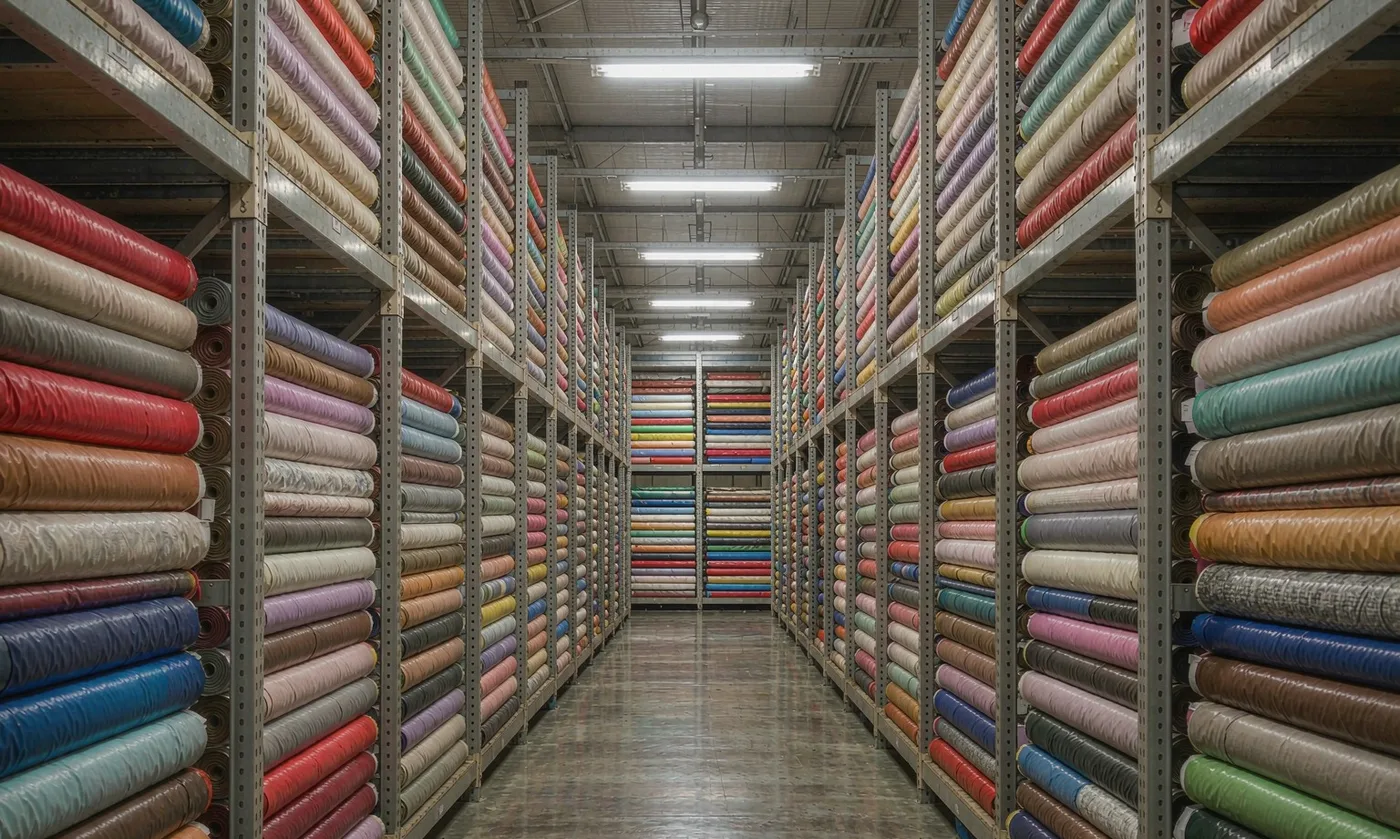
Hand feel is the property clients argue about most and document least, because it resists measurement. Practically, it decomposes into three things: bending stiffness, surface friction and recovery from compression. All three shift markedly between 600D and 900D, and each has a direct consequence for how the finished product photographs and how it stands on a shelf.
Bending stiffness determines whether an empty carrier stands square or slumps. A firmer 900D shell gives you the clean rectangular blocks that look premium in a three-quarter product shot, particularly for airline-style and structured weekender silhouettes. The same stiffness makes the product harder to compress into a compact retail carton, which is usually a packaging cost rather than a deal-breaker. A 600D shell slouches in a way that reads friendly and casual — excellent for sling and tote shapes, less convincing for a carrier whose whole proposition is protection.
Recovery from compression is subtler and more annoying when it goes wrong. Fold a 900D panel tightly for shipping and it can retain a crease line that relaxes over several days. This matters enormously for e-commerce: if your hero product arrives looking creased, the return rate rises regardless of material quality. We specify either flat-packing or loose rolling with internal tissue for stiff constructions, and we test pack-out by shipping cartons to ourselves before launch.
Surface friction contributes to how the fabric accepts and releases dust, hair and lint — the everyday reality of a pet product. Heavier Oxford weave tends to hold hair slightly more in its texture, so darker colourways see more visible lint in review photography. A brushed or calendered finish mitigates it, though it changes the matte read somewhat.
Acoustics are the last detail and the hardest to un-notice. Heavier coated fabrics rustle more audibly when handled, which some customers read as protective and others read as cheap; lighter constructions move quietly. If your brand films video content, record it during sampling, because microphone pickup exaggerates fabric noise beyond what the ear perceives in person.
Print, Embroidery and How Identity Survives Each Count
Decoration is where the choice becomes irreversible, because a logo technique chosen for one fabric can fail quietly on another. Start with dye-sublimation. It requires polyester substrate and heat; both counts accept it, but 600D delivers noticeably crisper fine detail because its flatter surface holds the dye at the boundary you drew. Fine serif lettering, hairline rules and small-scale repeating patterns all degrade as count increases.
Screen printing behaves differently and is more forgiving. On 900D the heavier texture can create a subtle mottling in large solid areas, which some designers deliberately exploit for a printed-canvas effect. Keeping ink coverage slightly heavier or choosing a plastisol rather than a water-based system usually resolves it.
Embroidery, by contrast, favours the heavier count. A dense embroidered crest needs a stable substrate to avoid puckering; 900D supports higher stitch counts without draw-in, while large fills on 600D often require a cutaway stabiliser that adds stiffness and cost in the very place you were trying to keep soft. If your identity is an embroidered emblem rather than a printed wordmark, the heavier shell is the better partner.
Attached identity elements — woven labels, rubber patches, debossed vegan-leather patches, metal badges — behave almost identically on both counts, since they carry their own substrate. For programmes uncertain about identity direction, we recommend deciding the decoration technique first and letting it select the fabric, rather than reverse.
Colour yield deserves a note here as well. Darker saturated shades hide print edges less forgivingly on lighter counts, because any registration drift is visible against the surrounding field; conversely, pastel and neutral bodies flatter fine detail on 600D in a way that heavy texture cannot match. If your palette leans into washed neutrals and your identity relies on typography, that combination points strongly toward the lighter count regardless of durability arguments.
Weight, Freight and True Landed Cost
A per-metre price comparison understates the true difference between the two counts, because fabric weight propagates into every downstream cost line. Start with consumption: a typical mid-size soft carrier consumes roughly 1.1 to 1.4 linear metres per unit depending on pattern efficiency. Multiply the GSM difference across that figure and each unit gains measurable mass.
That mass appears three times. It appears in ocean or air freight, where the differential across a full container is genuinely material at today's rates. It appears in parcel cost for direct-to-consumer brands, where crossing a weight breakpoint — often at 1 kg or 2 lb increments — can change shipping tier entirely. And it appears in the retail carton dimensions, since bulkier fabric packs less efficiently.
Set against that are the two benefits. First, the heavier construction frequently eliminates a component: many programmes specify an interlining or base stiffener with 600D that becomes unnecessary with 900D, so some of the material delta is recovered in the bill of materials. Second, the retail price step is real — customers are demonstrably willing to pay more for a product that feels substantial in the hand, and that feeling costs less to deliver in fabric than in hardware.
Inventory risk is a fourth consequence that rarely appears in a costing sheet. Heavier fabric means more capital tied up per unit in finished goods, and for brands carrying multiple colourways that difference compounds across the range. When a palette is expanded from three colours to six, the incremental carrying cost of the heavier count can exceed the value of its cosmetic longevity advantage for a first season.
Our standard working method is to cost both specifications fully — including interlining changes, carton optimisation and estimated freight — before recommending either. The answer often surprises the design team, frequently landing closer than the raw fabric price suggests.
Choosing a Coating System Alongside the Count
Coating is not a footnote to the denier decision; in many respects it dominates it. A PU coating keeps the fabric supple, adds little weight and maintains good cold-flex behaviour, meaning it stays manageable in winter conditions. A PVC backing adds rigidity, improves water column substantially, resists staining better and costs less — at the price of added weight, a slight sheen and a tendency to stiffen in cold weather.
For pet carriers specifically, coating also governs cleanability. A well-applied PU system sheds hair and surface soil far better than an uncoated face, and it is the difference between a wipe-down and a machine wash. Since most owners will not launder a carrier regularly, this is arguably the single most important performance property after ventilation.
- 600D + PU: softest hand, best print, adequate protection, the default for printed lines
- 600D + PVC: stiffer and more waterproof, lower cost, less pleasant tactility
- 900D + PU: structured but not plasticky, strong corners, premium hardware partner
- 900D + heavy PVC: maximum protection and rigidity, heaviest option, sheen increases
One practical detail often overlooked is how coating affects seam construction. A heavier PVC backing resists needle penetration, occasionally causing skipped stitches or audible friction at high sewing speeds, and it can seal needle holes less forgivingly than PU. We adjust needle size and seam allowance accordingly during sampling so that the production line partners build repeatable seams rather than fighting the material.
Chemical compliance deserves explicit attention, because some PVC formulations rely on plasticisers that are restricted in major markets. The substance restrictions administered by the European Chemicals Agency govern what can be placed on the EU market, and phthalate-free formulations are widely available at modest cost. Specifying them at development stage removes a recurring question from every future season.
The Hybrid Specification Most Brands Actually Ship
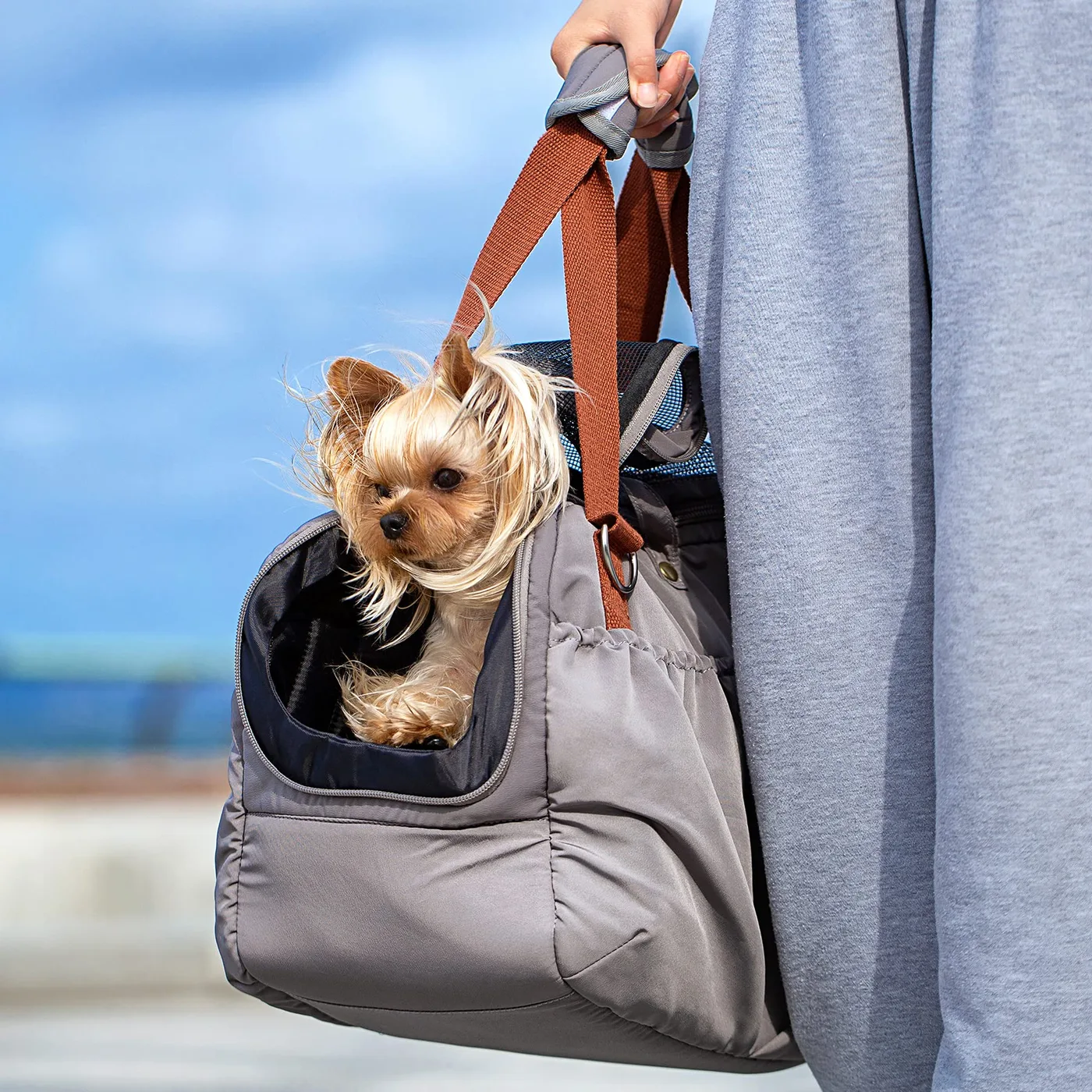
The clean answer to 600D vs 900D is usually "both in the same product." Placing abrasion-resistant material only where failure concentrates delivers most of the durability benefit at a fraction of the cost and weight penalty, and it is the specification we ship most often for mid-tier and premium programmes.
The standard hybrid assigns 900D to the base panel and the lower 40-60 mm of the side panels, plus the strap attachment reinforcement zones. Everything above — upper panels, top, recessed window surrounds — runs 600D. The two materials must be colour-matched in the same dye lot, which is straightforward for piece-dyed polyester and is handled by our production team as a normal part of the specification rather than an exception.
Visually, the transition can be concealed or celebrated. Many brands use it as a design line, colour-blocking the darker or heavier lower section deliberately, which turns a cost decision into a visible feature. That is the sort of move a brand consultant will push for, because it converts material engineering into a story.
Waste is the practical caveat: mixing counts reduces marker efficiency slightly, since pattern pieces cannot be nested across materials freely. Expect a small increase in consumption, typically 2-4%, which is almost always recovered by the material saving.
A second consideration is what the hybrid does to your bill of materials documentation. Retailers increasingly request full component declarations, and two shell fabrics means two line items with two test reports. It is a small administrative burden, but worth anticipating before a compliance submission deadline rather than during one.
Used thoughtfully, though, the hybrid also gives your design team a recurring idea: the lower section becomes a canvas for seasonal colourways while the upper body stays constant, so a new palette each spring costs only as much as half the panels. That is how several successful programmes keep a line visually fresh without retooling.
Deciding Inside One Sampling Round
The fastest way to settle this question is to sample both. Because tooling is identical and only material changes, a comparative sample pair adds no appreciable time: expect pre-production samples in 6-10 working days once the specification and colour standard are agreed, with bulk production at 35-50 days from approval.
We recommend evaluating paired samples against four concrete tests rather than an impression. Sit each one on a hard floor empty and photograph it from three metres, looking at whether the silhouette holds. Load it with roughly 8 kg of distributed weight and carry it for two minutes to feel how the shell transfers load. Drag the base corner across a concrete edge ten times and compare the result. Finally, compress it into the intended retail carton and check it after twenty-four hours.
- Document results with photographs taken under identical lighting, since memory of hand feel fades within hours
- Evaluate your actual decoration on each count, not a plain swatch
- Confirm colour match across both materials before committing to a hybrid
- Ask for the physical test report alongside the sample, not after it
The evaluation should also include whoever will sell the product, not only whoever designed it. Store staff and customer service teams handle returns, and their read of which version looks more repairable or more substantial often predicts sell-through better than internal preference. We suggest recording a short written rationale alongside each test result so the decision survives personnel changes.
Whatever you select, hold the specification in writing down to the coating weight. Repeat orders fail because someone changed the backing to save a cent, and the change is invisible until product arrives with a different hand. A frozen specification sheet reviewed seasonally is the cheapest insurance in this category.
How the Two Counts Age Across a Selling Season
Material comparisons made in a showroom are made on new fabric; customers judge the product after months of use. The differences that emerge over time are different from the ones visible on day one, and they are usually the reason a brand switches specification in its second year.
Abrasion manifests first at corners. On a 600D base this typically appears as a greyish halo where the surface texture has been flattened and the coating has begun to wear, becoming visible somewhere between six and twelve months of regular use depending on how the owner treats the product. The same corner in 900D usually retains reasonable appearance well past that point, because there is simply more yarn mass to lose before the weave becomes apparent.
Soiling presents the opposite story. Heavier textured constructions hold dust and hair marginally more tenaciously, especially in dark colourways, so a 900D shell can look dirtier day-to-day even while it wears better structurally. None of this is visible when comparing swatches, which is why we encourage clients to run the concrete tests described above rather than choose by feel alone.
Finally there is fading and ultraviolet behaviour, most relevant for products marketed near windows, patios or vehicles. Polyester is inherently better than nylon here, and both counts respond similarly; the real differentiator is whether solution-dyed yarn is specified, which improves light fastness substantially at a cost premium. Programmes built for outdoor positioning should put the light fastness requirement explicitly on the development sheet and verify it against a recognised method rather than assume it.
Production capability
- SGS-verified production space of 4,950 m², 149 machines, 7 assembly lines
- Pet carrier and pet bag output since 2014 from a 137-person team
- 200,000 units shipped monthly under BSCI and ISO 9001 systems
People Also Ask
Is 900D Oxford always better than 600D?
Not always. 900D wins on abrasion, tear strength and silhouette retention, reaching 30,000-50,000 Martindale cycles versus 15,000-25,000 for 600D. But it costs 1.4-1.6 times as much per metre, adds 15-20% packed volume and softens fine printed detail, which makes 600D better for graphics-led designs.
How much heavier is a 900D carrier?
Typically 15-20% more fabric mass for the same pattern, since finished grammage runs 340-420 GSM against 240-300 GSM for 600D. The effect is noticeable in e-commerce parcel tiers, where it can push a unit across a shipping weight breakpoint.
Can I print detailed artwork on 900D Oxford?
Yes, with adjustment. Fine lines soften on the heavier basket texture, so we recommend increasing line weights slightly, avoiding hairline serifs below roughly 1.5 mm, and testing the artwork physically before bulk. Embroidery actually performs better on 900D.
Which is easier to keep clean?
Coating matters more than denier here. A PU-coated surface in either count sheds hair and surface soil far better than bare weave. Heavier Oxford does tend to trap hair slightly more in its texture, which matters mainly for dark colourways in review photography.
Does the higher denier mean more waterproof?
Only indirectly. Water resistance comes from the coating rather than from yarn thickness. A PU-coated 600D typically achieves a 600-1,000 mm water column and a coated 900D reaches 800-1,500 mm, so specify the coating explicitly rather than relying on denier.
What is the minimum order for each fabric count?
MOQ is 500 units per colourway for both 600D and 900D Oxford. Because both are stock constructions with wide mill availability, colourways beyond standard shade cards can usually be matched without raising the minimum, though custom dye lots add time.
Frequently Asked Questions
What does the D in 600D actually mean?
It is denier, the mass in grams of 9,000 metres of yarn. So 900D yarn is 50% heavier per unit length than 600D yarn. It describes the yarn, not the finished fabric, which is why coating weight and weave density must be specified separately to compare materials properly.
How long does a comparative sample take?
Pre-production samples are produced in 6-10 working days for both counts. Sampling both simultaneously to compare hand feel costs no additional calendar time because the tooling is identical and only the cut material changes.
What are the bulk production terms?
Bulk production runs 35-50 days after sample approval and deposit. Stock colourways in either count generally finish at the shorter end of that range; custom-dyed shades or unusually heavy coated constructions extend the schedule toward the longer end.
Which inspection standard is used at shipment?
Final random inspection is performed to AQL 2.5 for major defects, with a separate zero-tolerance critical category. This catches shading between fabric panels, coating defects and seam faults before goods leave rather than at the destination warehouse.
Can both counts be colour-matched to the same Pantone?
Yes, and this is standard practice for hybrid specifications using two counts in one product. Both should be dyed or piece-matched in the same dye lot so the panels agree. Expect a small tolerance difference between the two textures even at a perfect dye match.
Do you recommend a base reinforcement either way?
With a 600D shell we almost always specify a reinforced base, either a heavier panel or an internal stiffener, since that surface takes the most abuse. With 900D the base often performs adequately on its own, which partially offsets the higher material cost.
Is either count acceptable for airline-compliant designs?
Yes, both are commonly used in airline-friendly soft carriers. Airline rules address dimensions, ventilation and containment rather than shell denier, though a firmer 900D shell helps a rigid-sided design satisfy under-seat dimension checks more consistently.
Which count holds shape better when empty?
900D. Higher bending stiffness lets an empty carrier stand square for photography and shelf presentation. A 600D shell will slouch attractively for sling and tote shapes but will not hold a crisp architectural silhouette without interlining.
Are recycled versions of both counts available?
Yes. Recycled polyester Oxford is available in both 600D and 900D with performance close to virgin fibre. There is a modest cost premium and slightly higher lot-to-lot shade variation, so plan tolerance expectations when matching to an existing product line.
How do I stop creases from shipping from showing?
Specify flat-packing or loose rolling rather than tight folding for any stiff 900D construction, and add internal tissue or light stuffing. We routinely ship cartons to ourselves during development to verify pack-out before a programme launches.
Does heavier fabric reduce the need for interlining?
Often yes. Many programmes that require foam-backed or non-woven interlining with a 600D shell find it unnecessary at 900D, because the shell itself supplies enough body. Removing an interlining recovers labour steps and part of the material cost difference.
Can the two counts be colour-blocked intentionally?
Yes, and it is one of the most effective design moves available here. A heavier darker lower section reads as a functional mudguard, turning a durability decision into a visible brand feature and often supporting a higher retail price.
What testing documentation can you supply?
We can provide third-party laboratory reports for abrasion, tear and tensile strength, colour fastness to rubbing and light, and water column results. Testing is performed to published standard methods so results are comparable across a programme's lifetime.
Is there a cost difference in sampling the two options?
No material fee difference is applied for comparative samples within an active programme; only courier handling applies. Because both counts use the same tooling and pattern, building two variants is an efficient way to resolve what is otherwise a subjective decision.
Talk to QUANZHOU JUNYUAN BAGS about a pet carrier program: MOQ 500 pieces per colourway, samples in 6-10 working days, bulk production in 35-50 days under AQL 2.5 inspection.
Get a free quote Request a sample