Carabiner Quick Clip for Custom Pet Carriers: Hardware Selection
A carabiner quick clip on a custom pet carrier should carry a working load rating of at least 150 N with a breaking strength above 1.2 kN, use a gate that survives 5,000 cycles, and never be rated for climbing or life-safety use. Specify an anodised aluminium or stainless body, a keylock nose, and a laser-marked brand mark on the spine.
The carabiner is the most emotionally loaded piece of hardware in the custom carrier catalogue. It signals outdoor credibility, it gives the owner something to clip, and it is the component most likely to be photographed in a close-up. It is also the component most likely to be specified carelessly, because it looks simple and carries no obvious rating on the product. Our production team specifies clips on four variables: rated working load, gate type and cycle life, material and finish, and nose geometry. Every clip is marked with its rating and every lot is batch-tested, because an unmarked clip invites misuse and misuse is a brand problem rather than a customer problem. Programmes run at MOQ 500 units per colorway, with samples in 6-10 working days and bulk across 35-50 days from approved sample and deposit. Finished goods are inspected to AQL 2.5 with a clip-specific tensile and gate-cycle check on every incoming lot. The commercial payoff is a component that customers describe in reviews and recognise across a range.
Personalized pet carrier work splits into two tracks: variable data such as a name, and fixed branding such as a woven label or patch.
The Carabiner as a Ritual Object
Customers do not buy a carabiner because they need to hang a bag from a hook. They buy it because clipping something feels good, and because the gesture signals a certain kind of life: outdoor, prepared, active. That emotional register is why a clip appears on products that will never be clipped to anything, and why it keeps appearing in product photography even when it is functionally redundant.
This matters for specification because it changes what "quality" means. A clip is judged by weight in the hand, by the sound it makes against a D-ring, by the resistance of its gate and by the precision of its finish — not by its tensile rating, which no customer will ever test. A programme that optimises only for strength will produce a clip that tests well and feels cheap.
The design brief should therefore be written in two halves. The engineering half covers load rating, gate cycles and material. The experiential half covers weight, sound, gate resistance and finish. Both halves are specifiable, and the second half is the one that drives reviews.
There is a brand-consistency argument as well. A clip is one of the few components that can carry a brand mark and remain visible across an entire range, because the same clip can be used on a tote, a backpack and a travel carrier. Standardising it builds recognition in the way a shared zipper puller does, but more visibly.
Sound is part of that signal and worth specifying deliberately. A clip tapping against a D-ring produces a bright metallic tick that reads as outdoor gear in one category and as annoyance in another. A silicone sleeve over the contact area, or an anodised finish that damps slightly, changes the character of the sound without changing the look. Decide which sound you want before the finish is chosen, because the two are linked, and because owners who walk with the product daily notice it even when they cannot identify what they are hearing.
Weight is the other half of the ritual and it is measurable. A clip that is too light reads as insubstantial, while one that is too heavy drags the strap and feels unbalanced, so the right weight is a function of the product rather than an absolute value. Weigh a few options in the hand against the actual webbing they will be attached to, because an identical clip feels noticeably different on a 20 mm strap than it does on a 38 mm one.
Load Ratings: What the Numbers on a Clip Actually Mean
Load ratings are the most misunderstood part of clip specification. A climbing carabiner carries a kilonewton rating measured along its major axis with the gate closed, and it is certified for life-safety use. An accessory clip carries a much lower rating and is not certified for any load-bearing safety application. The two look similar on a product page and are not remotely equivalent.
For a pet carrier accessory clip, the sensible specification is a working load of at least 150 N with a breaking strength above 1.2 kN on the major axis. That covers every realistic duty — hanging a bag from a hook, clipping a water bowl, attaching a leash as a secondary tether — with a large margin.
Two further ratings matter and are usually omitted. Minor-axis strength, measured across the narrow dimension, is dramatically lower than major-axis strength and is the failure mode when a clip is loaded sideways. Cross-loaded or open-gate strength is lower still. If a clip could realistically be loaded in either orientation, specify those numbers too.
Every clip should be marked with its rating and with a statement that it is not for climbing or life-safety use. That marking protects the brand, and it is the single cheapest risk-reduction measure available on any hardware component. Testing and rating conventions are standardised, and referencing recognised ASTM test standards keeps the specification unambiguous.
Safety factor deserves a stated number rather than an implied one. An accessory clip with a working load of 150 N and a breaking strength of 1.2 kN carries an eight-fold margin, which is appropriate for a component whose failure would be inconvenient rather than dangerous. Where a clip could plausibly be used to restrain an animal, the margin required is entirely different, and the correct answer is to specify a different product category rather than to over-rate an accessory clip and hope for the best. Naming that boundary in the specification is the cheapest risk decision available.
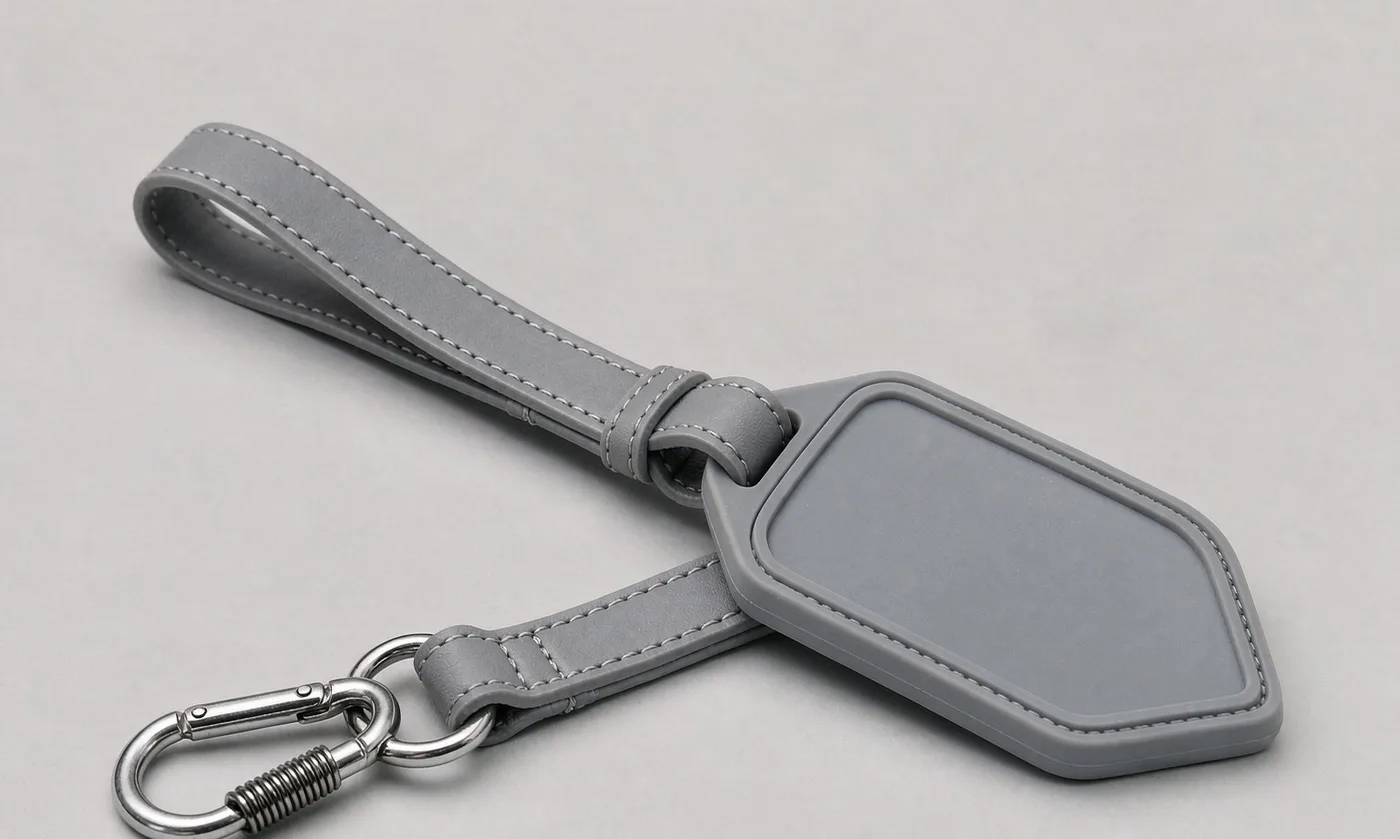
Shape and Gate Type: Choosing the Right Geometry
Clip shape is a functional decision with a strong style component. A D-shape loads along the spine, which is the strongest orientation, and reads as classic and outdoor. An oval distributes load centrally and reads softer and more symmetrical, which suits a fashion-led line. A pear or HMS shape is larger, easier to handle, and reads as technical and generous.
Gate type is the consequential choice. A solid gate is the simplest and strongest but is slower to operate. A wire gate is lighter, faster, and has a distinctive snap that customers associate with quality outdoor gear; it is also more prone to gate flutter under vibration. A keylock nose, which has no notch to catch, is the detail that separates a clip that snags on webbing from one that does not.
For a pet carrier, a wire gate with a keylock nose is usually the best combination of feel and function. It is light enough not to drag the strap down, it operates one-handed, and the keylock nose stops it catching on mesh, lining and webbing — which is the most common source of low-level irritation with clip hardware.
Gate resistance is worth specifying numerically. A gate that opens with under 5 N of force feels loose and may open unintentionally; one requiring more than 20 N feels stiff. The comfortable band is roughly 8-15 N, and it should be measured after cycling rather than only when new.
Gate flutter is the failure mode specific to wire gates and it is worth testing for explicitly. Under repeated low-amplitude vibration, such as walking with the bag, a light gate can oscillate audibly and occasionally unseat. A stiffer gate spring and slightly heavier wire solve it at the cost of a firmer opening action. Test by walking with a loaded sample for thirty minutes and listening, because flutter is audible and irritating long before it becomes a functional fault, and owners notice it immediately.
Material and Finish: Aluminium, Steel and Anodising
Aluminium is the default material for accessory clips. It is light, it anodises into a wide range of colours, and it feels warm in the hand. Stainless steel is heavier, stronger, and reads as industrial and premium; it suits a technical or marine-adjacent line but adds noticeable weight to a strap.
Anodising is the finish that matters most for brand purposes. It produces a hard, durable, coloured surface in almost any hue, it does not chip the way paint does, and it can be produced in a brand colour at modest minimums. An anodised clip in a signature colour is one of the most recognisable hardware signatures available to a private label line.
Colour consistency in anodising is a real risk. Anodised colour varies with alloy batch and bath conditions, so the only reliable control is a physical reference chip held by both the supplier and the assembly team, with each lot approved against it. Approving colour from a photograph or a Pantone number alone produces visible drift between orders.
Where the brand wants a documented colour reference for the range, aligning approvals to a recognised system such as Pantone colour standards gives both sides a common language, with the physical chip retained as the production standard.
Anodising thickness determines how long the colour lasts on a clip that rubs against webbing and hardware every day. A thin decorative anodising wears through at contact points within months, exposing bright aluminium beneath a coloured surface, which reads as damage rather than as honest wear. Specify a hard anodising for any clip in a contact position and accept the narrower colour range that comes with it, since a worn clip undermines the exact premium signal it was specified to create, and a narrower palette is the better commercial decision here.

Attachment Points: Where a Clip Belongs on a Carrier
A clip is only as good as the point it attaches to. The most common failure in clip specification is a strong clip on a weak anchor: a webbing loop tacked with a single line of stitching will fail long before the hardware does. Every clip anchor should be a bar-tacked box stitch on reinforced webbing, ideally with the webbing running continuously into a structural seam.
Placement should follow use. A clip at the shoulder strap carries a water bowl or a waste-bag dispenser and should sit where the hand naturally reaches, roughly at chest height. A clip at the side panel carries a leash or a travel bowl and should be low enough not to swing into the wearer's arm.
Number matters more than brands expect. One clip reads as a functional detail; two clips placed deliberately read as a system. Avoid four or more, which reads as tactical and starts to look like the product is compensating for something.
One caution specific to pet carriers: never place a clip where a pet can mouth it. A clip that swings within reach inside or near an opening will be chewed, and an anodised surface is not designed for that. Keep clips on the exterior and away from any mesh panel the animal can reach.
Webbing width compatibility is a frequent oversight. A clip designed for 25 mm webbing sits badly on 20 mm, twisting and loading the gate unevenly, and the mismatch shows in product photography long before it becomes a functional problem. Standardise on one webbing width for every clip anchor across the range, and check that the clip sits flat and centred under load, because a twisted clip is both a wear point and a visual defect that appears in every close-up the brand publishes.
Branding a Clip: Laser, Deboss and Anodised Colour
Three marking methods cover most programmes. Laser marking on an anodised aluminium body produces a crisp, permanent, contrast mark and is the best option for a logo or a rating statement. It adds a small per-unit cost and no tooling, which makes it viable even at modest volumes.
Debossing or stamping into the metal before anodising produces a mark that is flush with the surface and cannot wear off, and it is the most durable option. It requires a tooling investment and is therefore best reserved for a clip that will run across multiple seasons and multiple products.
Anodised colour is the third method and the one with the largest visual impact. A clip in a signature brand colour is recognisable at a glance and works across a range in a way that a small engraved mark does not. It carries a colour-matching discipline cost but no per-unit marking cost.
The most effective programmes combine two: an anodised body in a brand colour plus a laser-marked rating and a small wordmark on the spine. The colour does the recognition work at distance and the marking does the credibility work up close.
Marking legibility is constrained by available surface area. A clip spine offers a narrow strip, and a full logo at that scale becomes illegible, so the right approach is usually a wordmark reduced to its essential letterforms or a single glyph rather than a complete lockup. Test the mark at actual size on a physical clip rather than on screen, because a mark that reads perfectly on a monitor frequently disappears on a 6 mm anodised surface, and an illegible mark reads as a manufacturing artefact rather than as branding.
Testing Clips: Tensile, Gate Cycles and Corrosion
Three tests cover a clip programme. Tensile testing on the major axis establishes breaking strength: pull to failure on a calibrated rig and record the result against the specified minimum, typically above 1.2 kN for an accessory clip. Test a sample from every lot rather than relying on supplier data.
Gate cycle testing establishes durability: cycle the gate 5,000 times and re-measure gate resistance and gate closure. Acceptance should be no measurable deformation and gate resistance remaining inside the 8-15 N comfort band. A gate that loosens out of that band will feel worn within months.
Corrosion testing protects the finish: a 24-hour neutral salt spray followed by a visual check for pitting or anodising breakdown. Any clip destined for a coastal market, or for a product that will be washed, should pass this screen.
| Clip spec | Entry tier | Core tier | Premium tier |
|---|---|---|---|
| Material | Aluminium, anodised | Aluminium, hard anodised | Stainless or hard anodised |
| Gate | Solid gate | Wire gate, keylock nose | Wire gate, keylock, branded |
| Working load | 100 N | 150 N | 200 N plus |
| Breaking strength | 0.8 kN | 1.2 kN | 2.0 kN plus |
| Marking | None | Laser rating | Debossed mark plus rating |
| Colour | Stock black or silver | Anodised brand colour | Custom anodised, chip-controlled |
Where a brand wants independent confirmation of hardware performance, clip testing can be included in an accessories programme run through an independent laboratory such as SGS third-party testing, scheduled alongside fabric and trim testing so it adds no time to the critical path.
Sample size matters more than most people expect. Testing three clips from a lot of five thousand tells you very little about that lot, because hardware defects usually concentrate in one tooling cavity or one plating rack rather than distributing evenly. A sensible plan samples across cavities and across racks, and increases frequency whenever a supplier changes either. It costs marginally more and catches the failure modes that actually occur in production rather than the ones easiest to imagine in a specification meeting.
Cost, MOQ and Lead Time for Clip Programmes
Clip cost is dominated by material and finish rather than by quantity. A stock anodised aluminium clip in black or silver is a low-cost line item; a custom-anodised colour adds a dye-lot minimum; a stamped or debossed body adds tooling. The per-unit difference between entry and premium tiers is meaningful but small in absolute terms.
The schedule risk is in custom colour and custom tooling, both of which add lead time. Our recommendation is to launch with a stock finish in a brand-adjacent colour and move to custom anodising on the second order, once the product has proven itself and the colour has a confirmed future.
Commercials follow the standard frame: MOQ 500 units per colorway, samples in 6-10 working days, bulk across 35-50 days from approved sample and deposit, finished goods inspected to AQL 2.5. Clip lots receive an incoming tensile check on samples, a gate-cycle check and a salt spray screen, because a hardware lot variation is invisible until the product is in the field.
The commercial case rests on perceived value. A clip is one of very few components that raise a product's apparent price point by more than their cost, because customers read hardware quality as a proxy for overall quality.
Spare parts are a small programme decision with an outsized service effect. Holding a few hundred clips as spares costs very little, allows a replacement to be sent rather than a product returned, and removes the most common hardware complaint from the warranty queue altogether. For a brand building a reputation on durability, a spares policy is cheaper than a returns policy and far better for the customer relationship, because it converts a defect into a service interaction that most owners remember positively for years afterwards.
Accessory Ecosystems Built Around a Clip
The most interesting use of a clip is as the anchor of an accessory system. A carrier with a standardised clip interface can sell matching accessories — a travel bowl, a waste-bag pod, a treat pouch, a shoulder-strap pad — each of which attaches with the same gesture. That turns a single product into a small platform.
The commercial logic is attractive: accessories carry higher margin than bags, they create repeat purchase, and they deepen the relationship between customer and brand. They also require discipline, because an accessory system only works if the interface is genuinely standardised across the range.
Standardisation means one clip geometry, one attachment webbing width and one anchor construction across every product in the line. Mixed interfaces produce accessories that fit some products and not others, which generates returns and erodes the system's value.
Launched well, an accessory ecosystem also gives the brand a reason to communicate with customers between bag purchases. Launched badly — with three different clip sizes across one range — it becomes a source of complaints. The discipline is the product.
Sequencing the ecosystem matters as much as designing it. Launching a bag and four accessories together risks unsold accessory inventory; releasing accessories a season later, once the bag has proven itself, reduces that risk and gives the brand real data about which accessory customers actually ask for. The clip interface has to be specified from the first season regardless, because retrofitting a standard later is the mistake that ends accessory programmes before they start. Specify the interface early and release against demand rather than against ambition.
Why brands source here
- Pet carrier programs run since 2014; founding team in sewn goods since 2004
- SGS-verified production floor of 4,950 m² with 137 workers across 7 lines
- Monthly capacity of 200,000 units, audited to BSCI and ISO 9001
People Also Ask
Are carabiner clips on pet bags safe?
Yes as accessory hardware when rated and marked. They are not life-safety devices and should never be described as suitable for climbing or for restraining an animal.
What is the strongest carabiner shape?
A D-shape loaded along its spine is strongest in practical use. Oval shapes distribute load centrally and read softer; both are adequate for carrier accessory duty.
Why does my clip snag on the webbing?
Because the nose has a notch. Specify a keylock nose, which has no catch point and slides cleanly off webbing, mesh and lining.
Should clips be aluminium or steel?
Aluminium for weight and colour range, steel for strength and an industrial premium feel. Steel adds noticeable weight to a strap, which matters on a carried product.
How do I keep anodised colour consistent between orders?
Hold a physical reference chip approved by both supplier and assembly team, and approve every production lot against it rather than against a colour number.
Can I build an accessory range around a clip?
Yes, and it is commercially attractive if the interface is standardised. One clip geometry, one webbing width and one anchor construction across the whole line is the discipline that makes it work.
Do clips need corrosion testing?
Yes for any coastal market or washable product. A 24-hour neutral salt spray screen catches anodising breakdown and pitting before the product ships.
Frequently Asked Questions
What load rating should a carabiner clip on a pet carrier have?
Specify a working load of at least 150 N and breaking strength above 1.2 kN on the major axis, and mark the clip as not for climbing or life-safety use.
Are accessory carabiners safe for climbing or tethering a dog?
No. Accessory clips are not certified for life-safety or climbing use. Always mark them accordingly and never imply a load-bearing safety function in product copy.
Should I choose a wire gate or a solid gate?
A wire gate with a keylock nose suits most carriers: it is light, operates one-handed, and does not snag on webbing or mesh. Solid gates are stronger but slower to use.
What is a keylock nose and why does it matter?
A keylock nose has no notch to catch on material. It prevents the clip from snagging on webbing, lining and mesh, which is the most common low-level irritation with clip hardware.
Can carabiner clips be branded with my logo?
Yes. Laser marking suits most volumes and adds no tooling; debossing before anodising is the most durable option and suits a clip that will run across multiple seasons.
Can I get a clip in my brand colour?
Yes by anodising, which produces a durable coloured surface at modest minimums. Control colour with a physical reference chip approved on every lot rather than by number alone.
What is the right gate resistance for a clip?
Roughly 8-15 N measured after cycling. Under 5 N feels loose and may open unintentionally; above 20 N feels stiff in daily use.
How many clips should a pet carrier have?
One reads as a functional detail and two placed deliberately read as a system. Avoid four or more, which reads as tactical rather than designed.
Where should a clip be attached on a carrier?
At chest height on the shoulder strap for items the hand reaches for, and low on a side panel for a leash or bowl. Every anchor must be a bar-tacked box stitch on reinforced webbing.
Can a pet chew on the clip?
Yes if it is placed within reach. Keep clips on the exterior and away from any mesh panel the animal can mouth, because an anodised surface is not designed for that.
How many gate cycles should a clip survive?
Test to 5,000 cycles with no measurable deformation and gate resistance remaining inside the 8-15 N band. A gate that drifts out of that band will feel worn within months.
Does a custom clip change the MOQ or lead time?
The standard MOQ 500 units per colorway applies with samples in 6-10 working days. Custom anodising and debossing tooling add lead time, so launch stock and customise on reorder.
Talk to QUANZHOU JUNYUAN BAGS about a pet carrier program: MOQ 500 pieces per colourway, samples in 6-10 working days, bulk production in 35-50 days under AQL 2.5 inspection.
Get a free quote Request a sample