Cork Fabric: Vegan Leather for Custom Pet Carriers
Yes. Cork fabric is a genuine vegan leather for custom pet carriers: bark sliced to 0.6-1.2 mm and bonded to a knit backing gives a 380-520 g/m² sheet that takes deboss and screen-print logos at MOQ 500 units per colour. It runs about 30 percent lighter than PU leather of the same gauge, and no two panels repeat the same bark grain, which is exactly why designers specify it.
Executive summary. Cork works best as a feature panel on a structured carrier rather than as a full-body shell, because its bend radius and seam behaviour differ from coated synthetics. Plan the program as a two-material build: cork on the front face and lid, with 600D or recycled PET carrying the load-bearing panels and strap attachments. Commercial terms are stable and worth locking early: MOQ 500 pieces per colourway, sampling in 6-10 working days once the backing and finish are confirmed, bulk production in 35-50 days after sample approval, and final inspection at AQL 2.5 with a booked third-party check before container loading. Budget a shade-banding tolerance in writing, since natural bark tone drifts between harvest lots and cannot be dyed to a single flat value. For retail buyers, pair the material story with REACH and Prop 65 declarations plus an OEKO-TEX certificate on the backing cloth. Structure the sample programme in three rounds, material first and sewn prototype last, so that grain, logo method and edge finish are settled before any cutting begins.
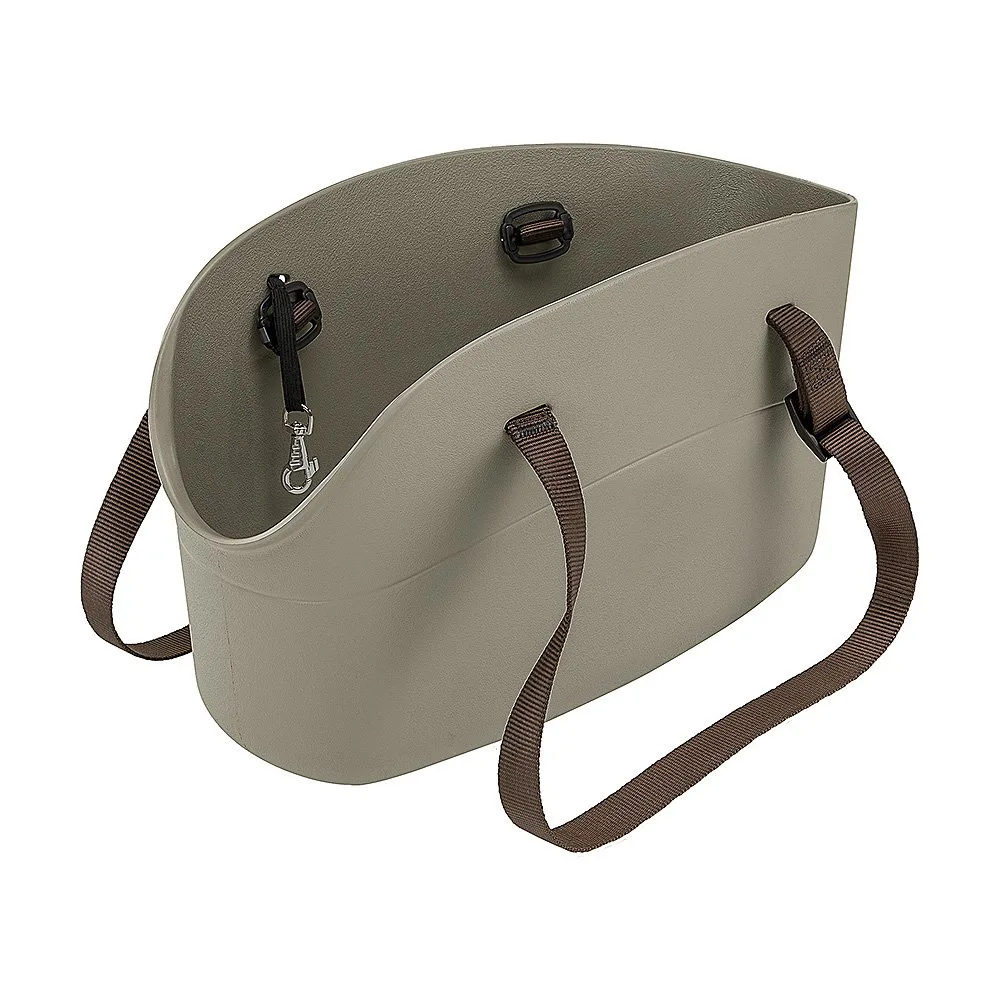
Custom cat carrier shells come in soft, vacuum-formed and injection-moulded variants, and each one carries its own tooling and MOQ pool.
What Cork Fabric Actually Is, and Why It Behaves Like Leather
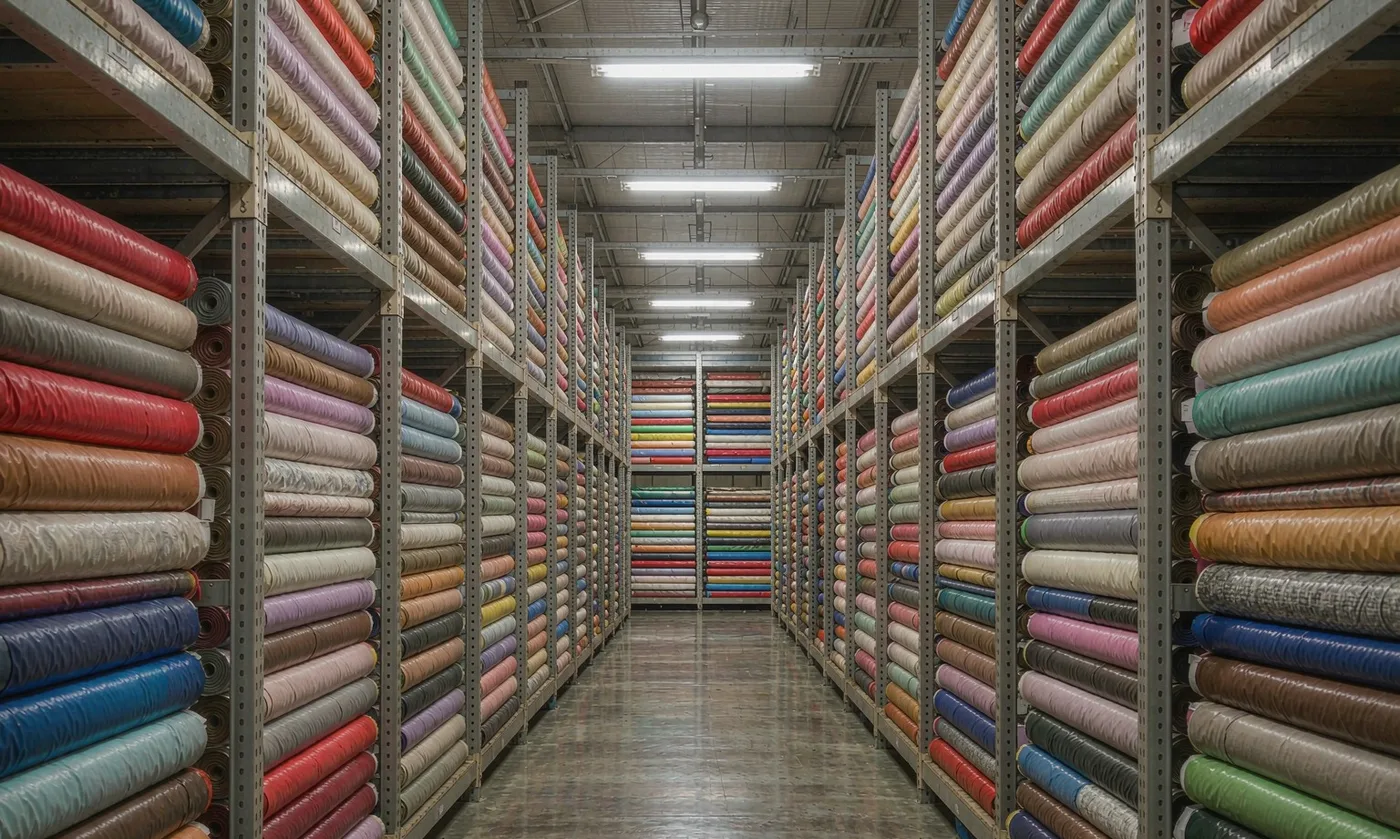
Cork fabric is the only leather substitute in the custom bag world whose surface is grown rather than engineered. It comes from the bark of Quercus suber, the cork oak, stripped by hand on a nine-year cycle across Portugal and southern Spain without felling a single tree. The bark is boiled, flattened, and sliced into thin sheets that are laminated onto a textile backing to make them flexible enough for a bag pattern. That lamination step is what turns a rigid stopper material into something a carrier designer can actually cut and sew.
What reaches the cutting table is a 0.6 to 1.2 mm sheet bonded to a knit polyester or cotton twill backing, landing at roughly 380 to 520 g/m². The face is the natural bark cross-section, full of the closed cells that make cork light, warm to the touch, and slightly compressible. The grain is random by definition: no two panels repeat. For a brand selling natural variation as a feature, that is the whole pitch. For a buyer who expects 5,000 units to look identical, it is a specification problem you have to solve in writing, not in sampling.
Designers reach for cork for three reasons beyond its plant origin. It is genuinely light, around 30 percent lighter than PU leather at equal gauge, which matters when you are building an airline-compliant carrier and every 100 g is argued over. It has a dry, matte, faintly velvety hand that reads as premium without the plastic sheen that low-cost PU carries. And it needs no plasticiser to stay supple, so there is no hydrolysis clock ticking in a warm warehouse the way cheap PVC does.
From bark to rolled goods
Understanding the conversion chain helps you write a spec that suppliers can actually quote. Bark planks are sorted by grade, and the top grades go to stoppers; fabric-grade material is the thinner, more porous remainder. Sheets are rotary-cut or skived, then bonded with a water-based adhesive to the backing. The backing choice drives almost every downstream property: a knit polyester backing adds recovery and tear strength, while a cotton twill backing gives a softer drape and a more organic story but less dimensional stability.
Roll width is typically 137 cm, and usable yield after nesting a carrier front panel is often 70-78 percent because the grain cannot be matched across panels. That yield number belongs in your costing sheet, not in a hopeful email. A design that needs a continuous 60 cm panel across three units will force a cut-and-sew break or a graded panel layout, and both change the visual result.
The Specification Sheet to Lock Before Sampling
Most cork programs go wrong because the first sample request is a photograph and a colour name. Cork is a laminate, so every functional property is a negotiation between the bark veneer and the backing cloth. Write the spec as a parameter table before you ask for a quote, and you will get comparable pricing from the first round instead of three rounds of clarification.
| Parameter | Typical range | Why it matters on a carrier |
|---|---|---|
| Veneer thickness | 0.6 - 1.2 mm | Below 0.8 mm the grain reads faint; above 1.0 mm the panel resists tight corners |
| Backing cloth | Polyester knit or cotton twill, 0.3 - 0.5 mm | Drives tear strength, drape and whether the panel recovers after compression |
| Total weight | 380 - 520 g/m² | Feeds directly into airline carry-on weight budgets |
| Abrasion (Martindale) | 20,000 - 50,000 cycles | Under 20,000 scuffs visibly at the base corners within one season |
| Rubbing fastness | Grade 4/5 dry, 3/4 wet | Wet rub is the one that fails on dark pigments |
| Hydrostatic resistance | Spray test only, not waterproof | Cork is water-resistant, never waterproof; specify a liner separately |
| Roll width | 137 cm nominal | Sets nesting yield and therefore unit cost |
Two parameters deserve special attention. Abrasion resistance varies enormously between suppliers because it is a function of the top-coat, not the bark. A bare cork veneer will scuff; a cork veneer with a thin water-based PU top-coat will survive a season of airport floors. Ask which one you are buying. Second, colour fastness to wet rubbing is where dark pigments fail, and a carrier interior is a wet-rubbing environment by default. AATCC test methods give you the shared vocabulary for this; the AATCC test method library is the reference most labs quote back to you.
Finally, decide how you will handle shade. Natural cork ranges from pale biscuit to deep caramel within one harvest lot. Either you accept a documented shade band with a physical swatch card signed by both sides, or you specify a pigmented finish that flattens the variation at the cost of some of the natural look. Both are legitimate; only one of them can be true at a time.
Logo Techniques That Land on Cork, and Two That Do Not
Cork takes branding well, but the shortlist is different from the one you would use on nylon. The surface is porous, slightly compressible, and heat-sensitive above roughly 170 °C. That combination rewards some processes and punishes others.
- Deboss and heat stamp. The natural winner. A heated die presses into the compressible cells and leaves a permanent, tactile mark with no added material. Works at small sizes and looks expensive. Tooling is a one-off cost, usually quoted per die.
- Screen print. Reliable for single-colour and two-colour marks. Specify a plastisol or water-based ink compatible with the top-coat, and always ask for a cross-hatch adhesion test on the actual cork grade, not on a generic swatch.
- Embroidery. Feasible through the backing side only, or as a separate appliqué panel. Direct embroidery through the veneer tends to fracture the cells around the stitch line and leaves a fuzzy halo.
- Woven label and rubber patch. The safest options when the cork panel is curved or the logo has fine serif detail. A stitched-on label also lets you keep one logo asset across cork, canvas and recycled PET bodies.
The two processes to avoid are dye sublimation and high-frequency welding. Sublimation requires temperatures that scorch the bark and shift its colour permanently, and welding needs a thermoplastic face that cork does not have. If a supplier proposes either, the conversation is not about technique, it is about whether they have run cork before.
Placement also needs thought. Because the grain is random, a debossed mark can land across a dense patch of cells and read unevenly. The practical fix is a slightly larger deboss area with a small border, which reads as a deliberate frame rather than a misprint. Prototype the logo at three placements on the real panel before you commit tooling.
Colour, Finish and Pantone Matching on a Natural Substrate
Matching a brand colour on cork is not the same exercise as matching it on a coated polyester. The face is a brown-to-caramel natural material with visible cellular structure, and any pigment you apply sits on top of that base rather than replacing it. A brand red specified against a white polyester swatch will come back darker and warmer on cork every time.
The workable approach is to treat cork as a finish family rather than a colourway. Define two or three approved cork tones from a physical swatch card, then express brand colour through hardware, webbing, zipper tape, lining and printed labels. That is how most premium programs keep brand recognition without fighting the substrate. When a client insists on a dyed cork, the realistic tolerance is a shade band rather than a single Pantone value, and it should be signed off on a physical card held by both sides.
For the parts you can control, a Pantone reference is still the right language. Webbing, lining, and printed marks should each carry a Pantone colour reference plus a stated tolerance in Delta E, and the same reference should appear on the sample approval form. Fabric dyed to a Pantone target is a separate cost line from stock colour, and it usually triggers the MOQ 500 per colour rule, so consolidating colours across a series is the cheapest design decision available to you.
Top-coat finish is the third lever. Matte keeps the natural, dry hand and hides fingerprints; a satin top-coat deepens the colour and improves cleanability but adds a faint sheen that some clients read as plastic. Ask for both on the first sample round. It costs an extra few days and settles an argument that otherwise resurfaces after the bulk is cut.
One finish decision that is easy to overlook is whether cork arrives pre-laminated to an interlining. Pre-lamination costs more per metre and reduces your flexibility, but it removes a production step that is a common source of bubbling and misalignment on curved panels. For a first cork program it is usually the safer choice even at a premium, because it converts a difficult operation into a straightforward cut-and-sew one, and the margin can be recovered later once volume justifies moving lamination in-house.
Structure and Pattern: Designing Around What Cork Refuses to Do
Cork veneer is stiff in bending and weak in tension at the fold. Practically, that means minimum bend radius, generous seam allowance, and no reliance on the cork panel for load transfer. A pattern that works in 420D nylon will crack at the corners if you simply swap the material.
Set a minimum internal bend radius of roughly 8-10 mm for a 1.0 mm veneer, and bind or pipe any edge tighter than that. Seam allowance should go to 12-15 mm rather than the 8 mm you might use on synthetic, because the laminate can delaminate under a narrow, high-stress seam. Stitch density matters too: too many stitches per centimetre perforates the veneer and creates a tear line, so specify a slightly longer stitch length and a ballpoint needle.
Structurally, the safest architecture is a hybrid. Let cork cover the visible face panels, lid, and pocket flaps, and let a 600D or recycled PET base carry the floor, the strap anchorage, and any internal frame. Bond the cork to an interlining before assembly so the finished panel behaves as one composite rather than two layers that can shift. Where the carrier needs stiffness, insert an EVA or PE board between the cork and the lining rather than expecting the cork to hold shape.
Edge treatment is where cork designs are won or lost. Raw cork edges shed crumbs over time. Options are: turn and topstitch with a binding tape, apply an edge paint matched to the top-coat, or cover the edge with a webbing trim that doubles as a design line. The third option is underused and gives you a second colour placement for free.
Ventilation is the other structural constraint worth designing around early. Cork is not a breathable material in the way an open mesh is, so airflow panels still have to be engineered as inserts rather than perforations. Drilling or punching cork tends to tear out at the cell boundaries and leaves a ragged edge that no binding will hide. The clean solution is a mesh gusset or a mesh insert panel framed by webbing, which reads as a deliberate design line and keeps the cork surface intact.
Cost Tiers: Where Cork Sits Against PU, Recycled PET and Full-Grain
Cork is a mid-to-premium material, and it should be priced as one. Its cost per square metre sits well above PU leather and roughly in the range of a good microfiber, while falling below full-grain bovine leather. The more useful comparison for a brand is cost per finished carrier and the retail price the material supports.
| Material | Relative material cost | Retail tier it supports | Program note |
|---|---|---|---|
| PU leather | 1.0x baseline | Entry to mid | Cheapest route to a leather look; hydrolysis risk on low grades |
| Recycled PET woven | 0.9x baseline | Eco entry to mid | Strong sustainability claim, weaker hand feel |
| Cork fabric | 2.4x baseline | Premium eco | Light weight and tactile grain justify the step up |
| Microfiber leather | 2.6x baseline | Premium | Closest to leather in abrasion, heavier than cork |
| Full-grain bovine | 4.0x baseline | Luxury | Natural marks, longest break-in, highest unit cost |
The honest conclusion is that cork earns its premium through weight saving and tactile distinctiveness rather than through durability. A cork panel will not outlast a good microfiber in an abrasion test. It will, however, let you build a carrier that feels lighter than it looks and looks unlike anything else on the shelf, which is usually the reason the material is chosen.
Cost engineering levers are straightforward. Keep cork to the panels a customer touches and sees; move the base, gusset, and interior to a cheaper technical fabric; consolidate to one cork tone across the series to hit MOQ 500 per colour cleanly; and avoid shaped panels that wreck nesting yield. Those four moves typically pull 15-25 percent out of the material line without changing the story.
A Sampling Sequence That Avoids the Usual Three Rework Rounds
Cork programs rarely fail on cost; they fail on iteration count. Each extra sample round costs calendar time and erodes the margin you built into the launch date, so the goal is to front-load every decision that can be made on paper into the first request.
Round one should be a material round, not a product round. Ask for the two or three candidate grades, each on both backing options, with the top-coat variants you are considering, plus peel-strength and Martindale data. No sewing. You are choosing a laminate, and a flat swatch card answers that question in days rather than weeks.
Round two is the logo round. Take the chosen laminate and apply every candidate branding method to it on a small panel: deboss, screen print, woven label, rubber patch. Photograph them under the same light. This is the round where most clients discover that the mark they approved on a screen does not survive contact with a porous, compressible surface, and it is far cheaper to discover it here than on a finished sample.
Round three is the first sewn prototype, built in the production colourway with production hardware. Evaluate it for fold cracking, edge finish, and shade drift across panels. Only after this round should you sign the golden sample that the AQL 2.5 inspection will be measured against. Round four, if you need it, is a pre-production piece pulled from the actual bulk material lot, which is the only way to confirm that the shade band you approved is the shade band you are going to ship.
Compliance, Testing and the Documentation Retail Buyers Ask For
A cork panel on a pet carrier is still a consumer product component, and large retail buyers will ask for documentation before they ask about the design. The good news is that cork's plant origin gives you a strong starting position; the bad news is that the adhesive, the backing, and the top-coat are chemical inputs that need their own paperwork.
For the EU market, REACH SVHC declarations on the finished laminate are the first ask, and California Prop 65 warnings matter if you sell into the US. Because the bark itself is agricultural, the residual risk usually sits in the adhesive system and any applied finish. Ask the material supplier for a document set per lot, not per year, and keep lot numbers tied to your production records. Independent verification is worth budgeting; SGS testing and verification services are the reference most buyers recognise on a first submission.
On the product side, the inspection standard is the thing that protects you. A finished carrier run should be inspected at AQL 2.5 against a signed golden sample, with a written defect classification that covers cork-specific failures: veneer cracking at folds, delamination at seams, shade drift outside the approved band, and top-coat scuffing. Those four do not appear on a generic bag checklist, so write them into your own.
Finally, keep the story defensible. "Plant-based" is accurate for the veneer; "plastic-free" usually is not, because the backing and adhesive are synthetic. Retail compliance teams read claims literally, and an overstated claim is a bigger commercial risk than a modest one. State the biobased percentage you can document and let the material's appearance do the rest.
Launch Planning: Placing Cork Inside a Seasonal or Signature Series
Cork is a poor fit for a permanent entry-level line and an excellent fit for a defined series with a beginning and an end. The material's variability, cost, and care requirements all argue for a capsule: a limited run where the natural grain variation is presented as proof of origin rather than as inconsistency.
A practical structure is a three-tier series. The entry tier uses cork as a front pocket panel on a recycled PET body, priced to sit just above your standard line. The middle tier uses cork on the lid and front face with matching webbing and a debossed logo. The top tier uses full cork outer panels, a dyed-to-match lining, and a rigid box. Each tier shares the same platform pattern and hardware set, so the incremental engineering cost is low while the perceived ladder is steep.
Timing matters. Because cork sampling depends on the availability of a specific harvest lot, lock your material reservation before you finalise the colour card, not after. Sampling runs 6-10 working days once the grade and backing are confirmed, and bulk lands in 35-50 days after approval, so a seasonal drop should start material conversations roughly four months before the floor date. Build in two weeks of slack for shade-band reapproval; it is the single most common cause of a slipped launch on natural materials.
Packaging should finish the argument. A cork carrier presented in a rigid box with a recycled paper insert explaining the nine-year bark cycle converts the material cost into a story the customer can repeat. That insert is cheap, and it is the difference between a customer seeing an expensive brown bag and understanding why it costs what it does.
Plan the reorder before you launch the first drop, because cork has a harvest-lot reality that synthetics do not. If the series sells through and you need a second run nine months later, the available bark lot will not be identical. Decide in advance whether you will accept a documented shade shift, hold back material from the first lot to cover replenishment, or design the series so that variation is visibly part of the concept. All three work, but only if the decision is made before the first purchase order rather than during the reorder conversation.
Production capability
- SGS-verified production space of 4,950 m², 149 machines, 7 assembly lines
- Pet carrier and pet bag output since 2014 from a 137-person team
- 200,000 units shipped monthly under BSCI and ISO 9001 systems
People Also Ask
What is cork fabric made from?
Cork fabric is the bark of the cork oak, sliced into 0.6-1.2 mm sheets and laminated onto a polyester or cotton backing cloth. The tree is not felled; bark regrows on a nine-year cycle, which is the basis of the material's sustainability claim.
Is cork leather waterproof?
Cork is water-resistant thanks to its closed-cell structure, but it is not waterproof. A carrier built with cork panels should still specify a separate TPU or PEVA liner if the interior needs to contain moisture.
Does cork fabric peel or flake over time?
A correctly specified laminate does not flake. Peeling is a symptom of an under-powered adhesive or a top-coat incompatible with the veneer, both of which are prevented by asking for peel-strength data before you approve the material.
Why does cork fabric vary in colour between panels?
The colour comes from natural bark, whose tone varies with harvest lot, tree age, and position in the plank. That variation is intrinsic and cannot be eliminated, only managed through a signed shade band or a pigmented finish.
Is cork fabric lighter than leather?
Yes. A cork laminate is roughly 30 percent lighter than PU leather at the same gauge and considerably lighter than full-grain bovine leather, which is why it suits weight-critical airline-compliant carrier designs.
Can cork fabric be recycled or composted?
The veneer fraction is biodegradable, but the finished laminate contains a synthetic backing and adhesive, so it should not be marketed as compostable. Mechanical separation is possible in principle but is not yet an industrial-scale option for most buyers.
Frequently Asked Questions
Is cork fabric durable enough for a pet carrier that gets used daily?
Yes for structured, supervised use. Specify a cork laminate with a top-coat rated at 30,000 Martindale cycles or better and keep the veneer off high-abrasion zones such as the base corners. Daily handling of the front panel and lid is well within the material's capability; dragging the carrier across pavement is not.
How much does cork fabric cost compared with PU leather?
Expect roughly 2.2 to 2.6 times the material cost of a standard PU leather per square metre, though the gap narrows when you compare against a premium microfiber. On a finished carrier the delta is smaller than the raw figure suggests, because cork's low weight often lets you reduce interlining and frame material.
Can cork be dyed to an exact brand Pantone?
Not to a single flat value. Pigment sits on top of a naturally variable brown base, so the realistic target is a documented shade band rather than one Pantone number. Colour-critical brand elements are better carried by webbing, lining, zipper tape and printed labels, which can be matched precisely.
What is the minimum order quantity for a cork carrier program?
MOQ is 500 pieces per colourway. That threshold is driven by the material roll purchase and the dye-lot minimum on the backing cloth rather than by the sewing line, so consolidating a series onto one cork tone is the easiest way to keep every SKU above the floor.
Does cork fabric need special care instructions?
It needs honest ones. Cork is water-resistant, not waterproof, so the care label should recommend wiping with a damp cloth and avoiding machine washing or soaking. A mild soap is fine; solvents will attack the top-coat and should be named explicitly on the label as something to avoid.
Will cork crack at the folds of a carrier?
Not if the pattern respects the material. Keep internal bend radius at 8-10 mm or greater for a 1.0 mm veneer, increase seam allowance to 12-15 mm, and bind any edge tighter than that. Cracking in samples is almost always a pattern issue rather than a material defect.
Is cork fabric genuinely vegan?
The veneer is entirely plant-based, harvested without felling the tree. The finished laminate, however, uses a synthetic backing cloth and an adhesive, so the accurate claim is a high biobased-content material rather than a fully synthetic-free one. Ask your supplier for the documented biobased percentage.
Can you embroider a logo directly onto cork?
Direct embroidery through the veneer is possible but rarely advisable, because stitches fracture the cellular structure and leave a fuzzy halo around the mark. Debossing, screen printing, a woven label, or a stitched rubber patch all give cleaner results on this substrate.
How does cork perform in hot or humid climates?
Well within normal ranges. Cork does not contain plasticisers, so it will not stiffen or develop the tacky surface that low-grade PVC does in heat. Extended humidity can affect the water-based adhesive at the lamination line, which is another reason to specify a proven adhesive system and test it before bulk.
What inspection standard applies to a cork carrier run?
Finished runs are inspected at AQL 2.5 against a signed golden sample. The defect list should be extended beyond a generic bag checklist to include veneer cracking at folds, seam delamination, shade drift outside the approved band, and top-coat scuffing.
Can cork be combined with other fabrics in one carrier?
That is in fact the recommended approach. Cork on the visible face panels with 600D polyester or recycled PET on the base, gusset and strap anchorage gives you the material story where customers see it and technical performance where the load actually sits.
How long does a cork sampling and production cycle take?
Sampling is 6-10 working days once the veneer grade, backing and finish are confirmed. Bulk production runs 35-50 days after sample approval. Natural-material programs should add roughly two weeks of contingency for shade-band reapproval before the floor date.
Talk to QUANZHOU JUNYUAN BAGS about a pet carrier program: MOQ 500 pieces per colourway, samples in 6-10 working days, bulk production in 35-50 days under AQL 2.5 inspection.
Get a free quote Request a sample