Handles: Top Carry - Custom Pet Carrier Handle Design
Top carry means the pet carrier is lifted by one or two handles set on the upper panel, and the engineering question is not the handle itself but what it is anchored into. A handle rated for a 9 kg loaded shell needs a reinforcement patch of at least 90 mm, bar-tack stitching at both roots and a pull test at four times the rated load before bulk approval.
The top handle is the first component a customer touches, the last one a designer thinks about and the most common single point of failure in the category. It is also the cheapest place in a specification to buy a quality signal, because a well-made handle is felt instantly in the hand and recognised instantly in a photograph. Our production team develops handles as a system - core, wrap, root reinforcement and hardware - rather than as a bought-in part, which is what allows a private label programme to claim durability without over-engineering the shell. Three rounds of sampling settle feel, strength and finish long before a cutting date is booked.
- Sampling: handle assemblies with alternative wraps and hardware in 6-10 working days.
- Minimums: MOQ 500 units per colourway for custom wrapped, moulded or hardware-branded handles.
- Schedule: custom hardware tooling runs in parallel with sampling; bulk completes in 35-50 days.
- Quality: root pull, cycle flex, abrasion and shade are inspected to AQL 2.5.
- Terms: T/T 30/70, FOB Xiamen, handles wrapped or sleeved so wrap material arrives unmarked.
Custom dog carrier programmes usually run three size platforms at MOQ 500 pieces per colourway, with sizes mixed inside one style to reach the threshold.
The handle is the handshake
Ask anyone in this category what makes a bag feel expensive and the answer usually arrives within two seconds of picking it up. The handle is the interface: it is where load meets hand, where material meets skin, and where a customer forms an impression they will later rationalise with whatever words the product page gave them. A shell can be beautifully patterned and still read as cheap through a thin, hard, poorly finished handle, and the reverse is also true - a modest bag with a solid, well-wrapped handle reads as considered.
That asymmetry is why handle specification deserves time in the concept phase rather than a line in the trim list. The decisions are few but consequential: how thick the grip is, how soft the wrap is, how far the reinforcement runs, what the hardware looks like and whether the two handles meet in a comfortable paired grip. Each of those can be resolved in a sample round costing very little, and each is expensive to change once the shell pattern has been graded across sizes.
There is a portfolio dimension too. Handles are one of the few components that repeat visibly across a collection, which makes them the natural carrier of a brand signature. A consistent handle treatment - same wrap material, same stitch rhythm, same hardware finish - ties an entry-price unit to a premium one without any shared tooling. Customers read that repetition as a design language even when they cannot name what they are seeing, and it is one of the fastest ways for a young private label to look like a house with a point of view.
The commercial risk runs the other way as well. Handle failure is the most visible way a carrier can fail: it happens in public, it involves the pet, and it produces a photograph. Returns, chargebacks and review damage from a single root failure cost far more than the reinforcement that would have prevented it. Programmes that specify handles on cost alone tend to learn this once, in the worst possible way.
Finally, handles interact with every other carry decision in the range. A top handle is what converts a back-carry unit into something you can lift onto a counter, it is what a shoulder-carry unit uses when the strap comes off, and it is the anchor point for retail hanging and for trolley attachment. Designing it in isolation is how ranges end up with three incompatible handle standards and no shared hardware. Our notes on multi-mode carry programmes and on trolley sleeve integration both start from the same handle specification.
Handle anatomy: core, wrap, grip radius and stitch rhythm
A handle is four decisions stacked. The core carries the load, the wrap provides the feel, the grip radius sets how the hand closes around it, and the stitch pattern determines whether the assembly holds together after a season of use. Specifying each one explicitly is what separates a designed handle from a strap with two ends sewn down.
The core is normally webbing or a folded fabric tape, and its job is tensile strength. Polyester webbing in the 25-38 mm range is the default; for heavier shells a second core layer or a higher-tenacity tape is specified. The core should be continuous through the handle rather than two separate pieces meeting under the wrap, because a joint inside the grip is a stress concentration and a potential failure point that no inspection will catch.
The wrap is what the hand feels and where brand character lives. It can be the same fabric as the shell, a contrast material, a leather or PU sleeve, or a moulded extrusion. Its thickness matters more than its identity: a wrap with too little substance lets the core edge press into the palm, and one that is too thick makes the grip awkward for smaller hands. The working range is usually 2-4 mm of compressible wrap over the core.
Grip radius is the dimension nobody specifies and everybody feels. A flat handle forces the fingers to bend around a hard edge; a handle with a rounded or oval cross-section lets the hand close naturally. The difference is produced by the wrap profile and by whether a soft filler cord is laid alongside the core. Testing is tactile rather than instrumental: our design team has a small panel handle loaded samples for thirty seconds each and record preferences, which is a low-tech method that reliably predicts customer reaction.
| Element | Common options | Specification to write down | Failure if ignored |
|---|---|---|---|
| Core | Polyester webbing, high-tenacity tape | Width, tensile rating, continuous length | Joint failure inside grip |
| Wrap | Shell fabric, PU, leather, moulded TPE | Thickness, compressibility, seam position | Core edge presses into palm |
| Filler | None, foam cord, bonded felt | Diameter and density | Hard edge, poor grip |
| Stitch | Lockstitch, bar-tack at roots | Stitches per inch, bar-tack width and length | Root tear-out under load |
| Hardware | None, D-ring, logo plate | Finish, tensile rating, plating thickness | Corrosion, deformation |
Stitch rhythm is the finishing decision and the cheapest signature available. A consistent stitch count along the wrap, a contrast thread at a defined gauge, or a decorative bar-tack pattern at the roots all read as craft in a close-up photograph and cost essentially nothing. The specification should state stitches per inch and thread type, because this is one of the few things an inspector can verify quickly and objectively at bulk.
Root reinforcement: where handles actually fail
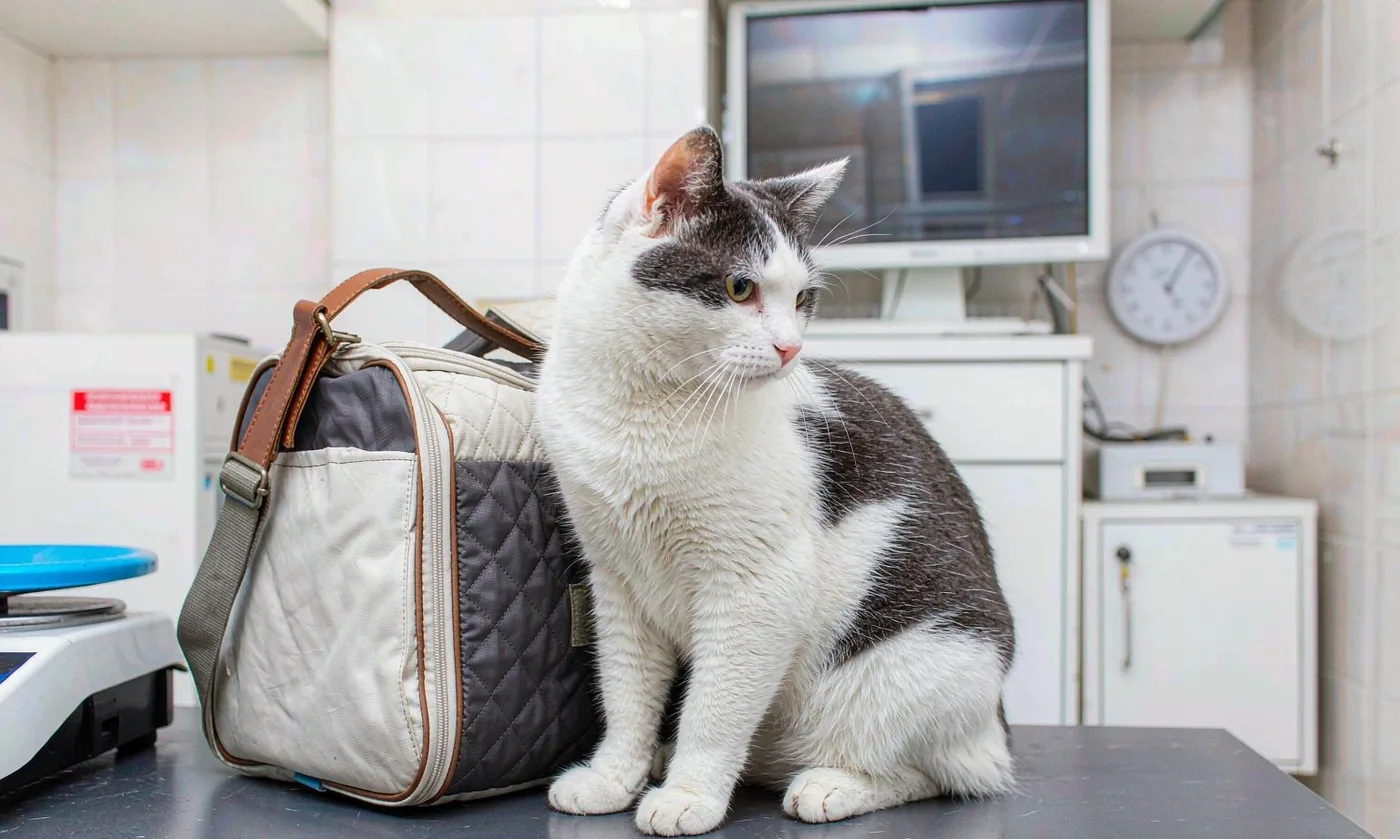
Handles do not fail in the middle. They fail at the root, where the concentrated pull of a loaded shell meets a small area of shell fabric, and they fail progressively - a few stitches give, the wrap shifts, the tear accelerates, and the failure happens all at once in public. Almost every handle warranty claim in this category is a root design problem wearing a materials disguise.
The fix has three parts. First, the load has to be spread: a reinforcement patch of woven tape or shell fabric, carried from the root well into the panel, spreads the pull across a wider area. The practical rule our production team works to is that the patch should extend at least three times the handle width below the stitch line, so a 30 mm handle gets roughly 90 mm of reinforcement. Doubling that costs a few cents and moves the failure mode from fabric tear to something the webbing itself will survive.
Second, the stitch pattern has to be engineered rather than decorative. A straight stitch across the root concentrates force on the first few stitches; a bar-tack - a dense zigzag block - distributes it. Specifying bar-tack width, length and density turns a vague instruction into something a line can execute consistently, and it gives inspection a measurable feature to check. On heavier shells the bar-tack is backed by a plate or a second layer on the inside of the panel, which is invisible and highly effective.
Third, the anchor should be tied into the structure rather than into the cover. On a carrier with an internal frame, a base board or a stiffened panel, the handle root should reach that structure. A handle anchored only to the outer fabric of a soft shell will eventually peel away regardless of how much webbing is behind it. This is a pattern-level decision and it must be made before the first sample, not after a pull test fails.
The test protocol follows directly. Root assemblies are pulled to four times the rated pet weight and held; handles are cycled through repeated lifts with a loaded shell; and the wrap is abraded at the point where it meets the hand. Mechanical test methods referenced in the programme come from ASTM, which lets the brand's own quality reviewer read a specification without translation. Finished goods are then inspected to AQL 2.5 with root defects classified as critical.
Hardware as a signature: plates, rings and pulls
Handle hardware is the smallest line in the bill of materials and the largest signal per dollar in the entire product. A die-cast plate with a brand mark at the handle root, a pair of D-rings finished in a custom tone, or a branded grip sleeve all tell a customer that someone designed this object deliberately. None of them is expensive at volume; all of them require planning, because custom hardware carries tooling lead time.
Plates are the most direct statement. A small zinc-alloy or aluminium plate, laser-etched or die-struck with the mark, riveted or sewn at the handle root, reads as premium and protects the fabric at exactly the point of highest wear. Sizing discipline matters: a plate that is too large overwhelms a narrow handle, and one that is too small looks like an afterthought. The working range for a 25-38 mm handle is roughly 20-30 mm of plate width.
Rings and connectors are functional hardware doing double duty as design. A pair of D-rings at the handle roots gives the option of clipping on a shoulder strap, a leash or a trolley attachment later, and it lets one shell support several carry modes without new tooling. Finish is where the brand shows: matte black reads technical, brushed nickel reads contemporary, antique brass reads heritage. Consistency of finish across the collection is more important than the specific choice.
Grip sleeves and moulded handles are the third route and the one that most clearly signals engineering. A moulded TPE or silicone grip with a shaped cross-section, overmoulded onto the core or slid over a webbing handle, gives a soft, non-slip, repeatable feel that fabric cannot match. It carries tooling cost and a minimum quantity, which is one reason MOQ 500 applies to custom handle executions - below that the tool amortisation dominates the unit price.
The discipline is restraint. One signature hardware element per handle, consistently finished across the range, reads as confidence. Three elements in three finishes reads as a trim list assembled from a catalogue. Our production team generally recommends choosing one hero piece - usually the root plate or the grip sleeve - and keeping everything else quiet.
Material choices: webbing, leather, PU and moulded grips
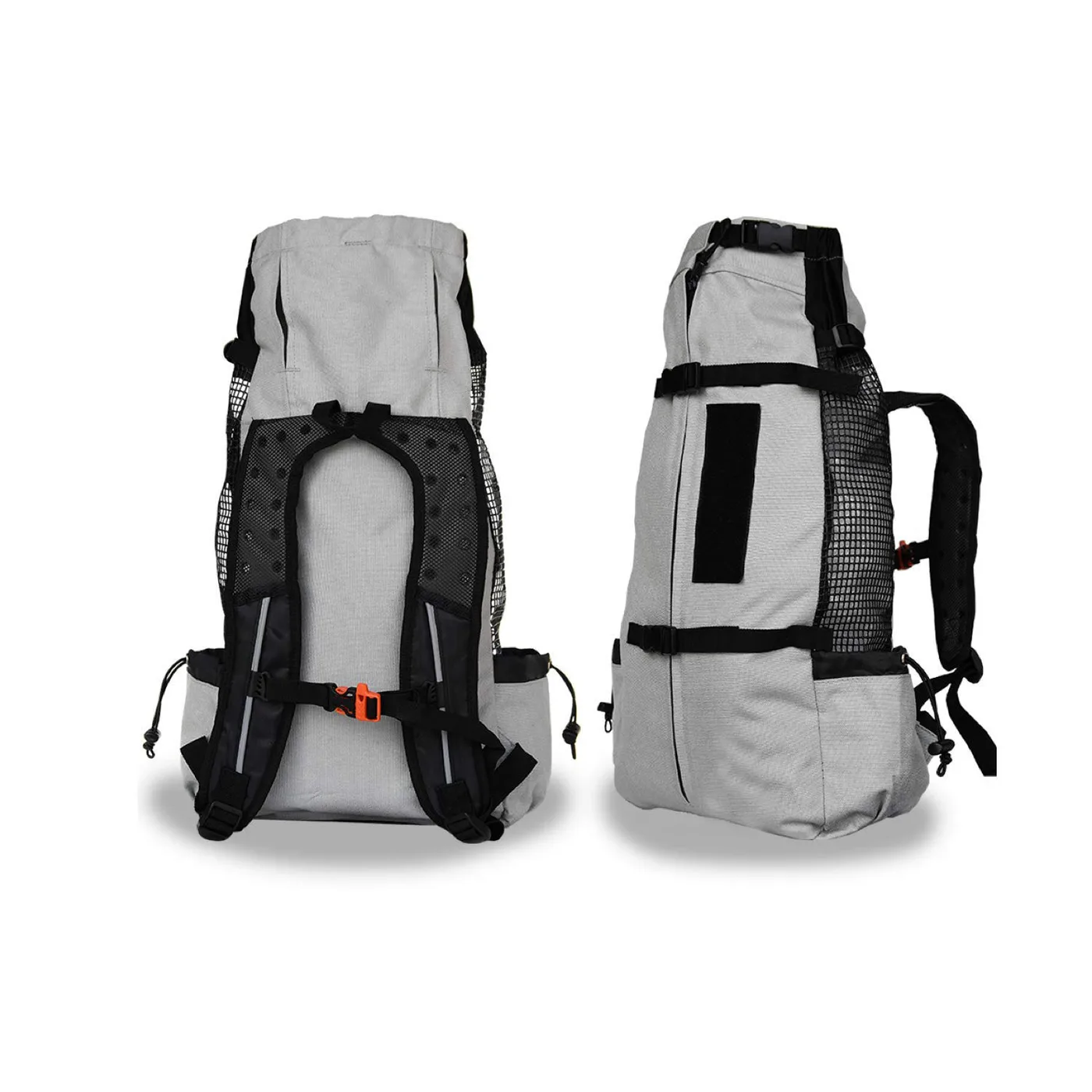
Wrap material is the fastest way to position a carrier, and each option carries a distinct cost, durability and branding profile. The choice should be made against the retail price and the intended care instructions, not against a mood board alone.
| Wrap material | Handfeel | Unit cost | Durability | Brand positioning |
|---|---|---|---|---|
| Shell fabric wrap | Medium, familiar | Low | Good | Cohesive, understated |
| Polyurethane | Soft, leather-like | Low-medium | 3-4 seasons | Fashion, accessible |
| Bonded or split leather | Rich, warm | Medium-high | 5+ seasons | Heritage, premium |
| Moulded TPE | Soft, grippy | Medium plus tooling | 5+ seasons | Technical, engineered |
| Contrast webbing | Firm, sporty | Lowest | Excellent | Outdoor, utility |
Polyurethane deserves a note on specification. PU quality varies enormously, and the difference is in the coating and the backing rather than in the name. A hydrolytically stable PU will survive several years; a cheap one will flake in eighteen months, sometimes sooner in humid climates. Specifying hydrolysis resistance by test method is a one-line addition to the tech pack that prevents a category of complaint that is very hard to defend.
Leather reads premium and ages visibly, which is either the point or a problem depending on the brand. It also introduces variability: natural marking, shade variation between hides and a need for care instructions. Where leather is specified, the programme should approve a shade range rather than a single swatch, and the packing spec should account for the material marking against itself in transit.
Material compliance is the final consideration, and it belongs in the specification rather than in a later email. Where a programme sells into retailers with restricted-substance lists, inputs should be documented - OEKO-TEX certified textiles and REACH-aware hardware finishes are the common reference points, and the ISO 9001 system the SGS-verified production base operates under keeps those declarations current rather than one-off.
Care instructions close the material decision. A handle that cannot be wiped clean will look tired within a season on a light colourway, and the product page should say what the customer can do about it. This is a copy decision flowing from a materials decision, and it is cheaper to align them early.
Handles as a retail, photography and packaging tool
Handles do commercial work beyond carrying. On a shelf, a bag with a standing handle reads as a bag; one without reads as a box. In photography, a handle gives a model something to hold and gives the stylist a way to show scale. In packaging, it determines whether the unit hangs, stands or lies, which affects carton dimensions and therefore freight cost.
Retail presentation is the most concrete. If the plan is peg hanging, the handle needs a defined hanging geometry - two handles meeting at the top with a consistent gap, or a dedicated hanging loop - and the reinforcement has to survive being hung loaded for a season. If the plan is shelf standing, the handles need enough body to stand up rather than flop, which is a stiffness specification rather than a strength one. Brand teams frequently discover the mismatch at the fixture stage, when the only remaining fix is a packaging change.
Photography has its own requirements. A handle photographed gripped shows the brand the way the customer will see it, which means the wrap, the stitch and any hardware all need to be finished to close-up standard rather than to three-metre standard. Assets shot for e-commerce should include one frame of the handle in hand, because it is consistently among the most clicked images in a gallery and it is where perceived quality is either confirmed or lost.
Packaging interacts mechanically. Handles that protrude need carton clearance or they arrive creased; wrapped handles need sleeving or they arrive marked by contact with carton board. Both are solved in the packing specification - a card sleeve, a tissue wrap, a shaped void - and both cost less than the replacement rate they prevent. Our team specifies packing at the same time as the handle, not after the carton is designed.
Finally, handles carry the hangtag and therefore carry the brand's first printed words. A tag threaded at the handle root is read before any other copy, which makes the handle the most valuable piece of packaging real estate in the product. Deciding early where the tag sits - and making sure the handle geometry allows it - avoids the familiar compromise of a tag pinned through fabric because nothing else was planned. The same logic applies to a care card or a fitting instruction slipped under the wrap, which is read at the moment the customer is most attentive to the product.
Cost behaviour, sampling rounds and line planning
Handle cost is small and highly leverageable. Core, wrap, filler, reinforcement and hardware together usually account for three to seven percent of a finished carrier's bill of materials, and the difference between a basic and a designed handle is typically under two dollars per unit. Against the effect on perceived quality and on failure rate, that is the best-value line in the specification, and it is the line programmes cut first when a target price is missed. It should be the last one cut.
Sampling runs in three rounds. Round one is a handle assembly sample - core, wrap and hardware sewn to a test panel - produced in 6-10 working days, which is enough to judge feel, grip and finish. Round two is the handle on a real shell, loaded, lifted and cycled. Round three is the confirmation sample in bulk materials and bulk colour, which is what gets approved before cutting. Compressing to two rounds is possible when the handle is a stock construction with a custom wrap; it is not advisable when any hardware is being tooled.
Tooling is the schedule variable. Custom plates, moulded grips and branded rings all need tools cut before bulk, and the lead time runs in parallel with sampling rather than after it. The discipline is to commission tooling during round one, on the strength of a rendered or machined prototype, rather than waiting for final sample approval. Waiting is the most common reason a handle programme lands a season late.
Line planning is where the handle earns its keep twice. Standardising one handle construction - same width, same wrap thickness, same hardware finish - across small, medium and large shells, and across a shoulder-carry and a back-carry unit, means one set of tooling, one reinforcement pattern and one inspection standard serving the whole range. Colour and wrap material can then vary by tier, which is how a collection looks differentiated while costing like a platform.
Bulk completes in 35-50 days once materials are booked, terms are T/T 30/70 FOB Xiamen, and finished goods are inspected to AQL 2.5 with handle root and hardware defects treated as critical. Where a retailer wants independent confirmation of pull-test results, third-party verification through SGS is arranged and the report is filed with the production record.
Production capability
- SGS-verified production space of 4,950 m², 149 machines, 7 assembly lines
- Pet carrier and pet bag output since 2014 from a 137-person team
- 200,000 units shipped monthly under BSCI and ISO 9001 systems
People Also Ask
Why do pet carrier handles break?
Almost always at the root rather than in the grip, because the pull of a loaded shell concentrates on a small area of panel fabric. Spreading the load with a reinforcement patch, bar-tacking the roots and tying the anchor into the shell structure prevents it.
How much weight should a pet carrier handle hold?
Specify a working load and test to four times it. For a shell rated to 9 kg of pet plus a 2 kg shell, the handle assembly should survive a sustained pull well above 40 kg without root tear-out or hardware deformation.
Should a pet carrier have one handle or two?
Two handles that meet in a comfortable paired grip are standard above about 5 kg, because they keep the shell level. A single centred handle suits small shells and reads cleaner on fashion-led silhouettes.
What makes a handle feel expensive?
A rounded cross-section, 2-4 mm of compressible wrap, a consistent stitch rhythm and one well-finished hardware element. Grip radius and wrap thickness matter more to perceived quality than the material name on the spec sheet.
Can handles carry our logo?
Yes. A die-cast or laser-etched plate at the handle root, a moulded grip sleeve with a raised mark, or branded D-rings are the three common routes. Custom hardware carries tooling cost and is commissioned during the first sample round.
Is leather a good handle material for pet carriers?
It reads premium and lasts well but introduces shade variation and care requirements. Approve a shade range rather than one swatch, and write care instructions into the product copy before launch.
How long does a custom handle sample take?
Handle assembly samples take 6-10 working days. Custom hardware tooling runs in parallel and should be commissioned during round one rather than after final sample approval, which is the usual cause of a late season.
Frequently Asked Questions
What is the MOQ for custom handles?
MOQ 500 units per colourway applies to custom wrapped, moulded or hardware-branded handles, because tooling and setup have to be amortised. Stock constructions with a stock wrap can sometimes be placed below that; each project is confirmed individually.
How do you prevent the handle root from tearing out?
Three measures together: a reinforcement patch extending at least three times the handle width below the stitch line, bar-tack stitching at both roots with width and density specified, and anchoring into the shell structure rather than into the cover fabric alone.
Can you match our brand colour on the wrap?
Yes. Wraps are approved against a physical lab dip or a material swatch under a defined light source, and the approved sample becomes the bulk reference. Matching the wrap to the shell fabric requires both to be approved on the same day.
What hardware finishes are available?
Matte black, brushed nickel, antique brass, gunmetal and custom anodised tones are the common finishes, with laser etching or die-struck marks available on most plate formats. Physical samples are approved before tooling is cut.
Do moulded grips require tooling?
Yes. A moulded TPE or silicone grip needs a tool, which carries cost and lead time. That is why custom grip executions sit at MOQ 500 and why tooling is commissioned during the first sample round rather than after approval.
How are handles tested before bulk?
Root assemblies are pulled and held at four times the rated load, handles are cycled through repeated loaded lifts, and wrap materials are abraded at the grip point. Methods are referenced to recognised standards so results are reproducible.
Can one handle design work across several carrier sizes?
Yes, and it is strongly recommended. Standardising width, wrap thickness, reinforcement pattern and hardware finish across the range means one tooling set and one inspection standard serving every size, with colour varying by tier.
Will the handle work for retail peg hanging?
It can, but hanging geometry has to be designed in - two handles meeting at a consistent gap or a dedicated loop, with reinforcement specified to survive hanging loaded for a season. Discovering this at fixture stage is expensive.
How should handles be packed for shipping?
Wrapped or sleeved so the wrap is not marked by carton board, with clearance or a shaped void so protruding handles are not creased. The packing specification is written at the same time as the handle, not after the carton.
What inspection level applies to handles at bulk?
AQL 2.5, with root reinforcement, bar-tack coverage and hardware attachment classified as critical defects. Cosmetic issues on the wrap are classified separately so that a functional failure is never averaged into a cosmetic allowance.
Can handles be replaced or repaired?
On most constructions the handle assembly can be replaced if the reinforcement is intact. Spare handle assemblies can be ordered with bulk as a service part, which is worth considering for premium programmes and for retail repair schemes.
Do you provide restricted-substance documentation?
Yes. Material declarations and third-party test reports can be supplied, OEKO-TEX certified textiles are available, and independent verification through SGS is arranged where a retailer requires it.
Talk to QUANZHOU JUNYUAN BAGS about a pet carrier program: MOQ 500 pieces per colourway, samples in 6-10 working days, bulk production in 35-50 days under AQL 2.5 inspection.
Get a free quote Request a sample