Top Entry: Top Access - Custom Pet Carrier Opening Design
Top entry means the pet is loaded through an aperture in the upper panel, and it remains the default configuration for structured shells because the opening removes fabric from the least loaded surface. The governing specification is aperture retention: a top opening should hold at least 70 percent of its drawn shape when unzipped, which requires a framed perimeter and a stay at the rear edge.
Top entry is the configuration most carriers use and the one least often examined. That is partly because it is familiar and partly because, done properly, it is structurally the cheapest aperture to build: the top of a shell carries less load than the sides or the base, so removing fabric there costs the least strength. The design work is not in the cut but in what surrounds it - a frame that holds the aperture open, a stay that stops it collapsing and a closure that can be operated with one hand while the other holds a lead. Three sampling rounds settle all three, and none of them is expensive relative to what is at stake.
- Sampling: aperture geometry and closure options on a test shell in 6-10 working days.
- Minimums: MOQ 500 units per colourway for custom frames, closures or Pantone-matched trim.
- Schedule: closure tooling runs alongside shell sampling; bulk completes in 35-50 days.
- Quality: aperture retention, closure cycle and seam strength, inspected to AQL 2.5.
- Terms: T/T 30/70, FOB Xiamen, closures packed open so trim and teeth are not creased.
A custom pet bag programme is usually a size ladder rather than a single style, and the ladder is what determines how many colourways you can afford.
Why the top is still the default aperture
There is a structural logic to putting the opening on top, and it is worth stating plainly because it explains most of the category. A loaded carrier carries its weight through the base, up the sides and into whatever is holding it. The top panel is the one surface that is largely along for the ride. Cutting an aperture there removes the least structural material of any position, which is why a top-opening shell can be lighter, cheaper and stiffer than an equivalent side-opening one.
That has a cost consequence that matters commercially. A top aperture typically needs a shorter zipper run, less reinforcement and no perimeter frame beyond a modest band, which puts its incremental cost at roughly USD 1.10-2.40 per unit against USD 1.80-3.60 for a comparable side opening. On an entry-price SKU that difference is the whole margin conversation, and it is the honest reason most opening-tier shells stay with top access.
The second reason is behavioural, and it runs both ways. Loading a relaxed animal through the top is easy: the handler lowers the animal in, the walls contain it and the aperture is above the escape line. Loading a reluctant animal through the top is harder than through the side, because the motion is a lift and a drop rather than a slide. Products aimed at confident, well-travelled animals and their owners are well served by top entry; products aimed at clinics, rescues or anxious animals are usually better served elsewhere, and that is a positioning decision rather than a quality judgement.
Third, top entry is what most customers expect to see. In a marketplace grid, a carrier with a top aperture reads as a carrier. Deviating from that is a legitimate design choice, but it costs a moment of explanation, and moments of explanation are expensive in a channel where the competing product is one scroll away. Brands should know they are spending that moment and decide it is worth spending.
Finally, top entry is the configuration that most easily supports a secondary function: a top aperture can be covered with a mesh panel for ventilation and supervision, with a roll-down flap for weather, or with a solid panel for privacy. That modularity - one aperture, three coverings - is a product-line asset that a side opening cannot match as cheaply.
It also creates a low-risk way to test a market. Because the covering is the only variable, a brand can produce a short run of one covering, read the sell-through and re-cut the next drop accordingly without touching the shell pattern, the frame or any tooling. That is genuine option value: the ability to learn cheaply. Programmes that treat the covering as a fixed decision lose it, and programmes that plan for it can run two or three experiments a year on the same engineering investment.
Aperture geometry: drawn shape versus held shape
The most useful distinction in top entry design is between the aperture as drawn and the aperture as held. The drawn shape is what the pattern says. The held shape is what remains when the zipper is open, the shell is loaded and gravity has an opinion. Products are judged on the held shape, and the gap between the two is where most disappointing openings come from.
Aperture retention is the metric worth writing into a specification: the share of the drawn aperture that survives when open. An unframed top opening on a soft shell typically holds 50-60 percent of its drawn shape, which reads as a slot rather than as a door. A framed opening holds 70-85 percent, which reads as a proper aperture and is the difference between a product that feels considered and one that feels like a bag with a hole.
Three elements produce retention. The perimeter frame - a webbing or stiffened band around the aperture - carries tension around the opening. The rear stay - a stiffened element along the hinge side of the aperture - stops the panel folding inward at the point where the handler's arm passes. And the panel stiffness itself, which is a function of the shell laminate rather than of the opening, but which determines how much work the frame has to do.
Corner behaviour is the detail that separates adequate from good. A top aperture with square corners holds its shape poorly because the fabric wants to fold diagonally across the opening; a radiused corner - typically 30-50 mm - distributes that fold and lets the aperture stay open. It also improves how the zipper runs, because the slider has a path rather than a right angle.
| Configuration | Retention when open | Added cost | Reads as |
|---|---|---|---|
| Unframed slot | 50-60 percent | Baseline | A bag with a hole |
| Bound perimeter | 60-70 percent | USD 0.40-0.80 | Considered entry tier |
| Framed with rear stay | 70-85 percent | USD 1.10-2.20 | Designed aperture |
| Framed plus moulded form | 85 percent plus | USD 2.60-4.40 | Premium, technical |
The last variable is reach. A top aperture that is generous in plan but deep in section - because the shell is tall - makes the handler reach down into the bag, which is the motion that produces the most awkward loading moments. Keeping the aperture close to the occupant's standing height, and where possible widening it rather than deepening it, is the ergonomic rule that matters more than aperture area.
Framing and stays: the parts nobody photographs
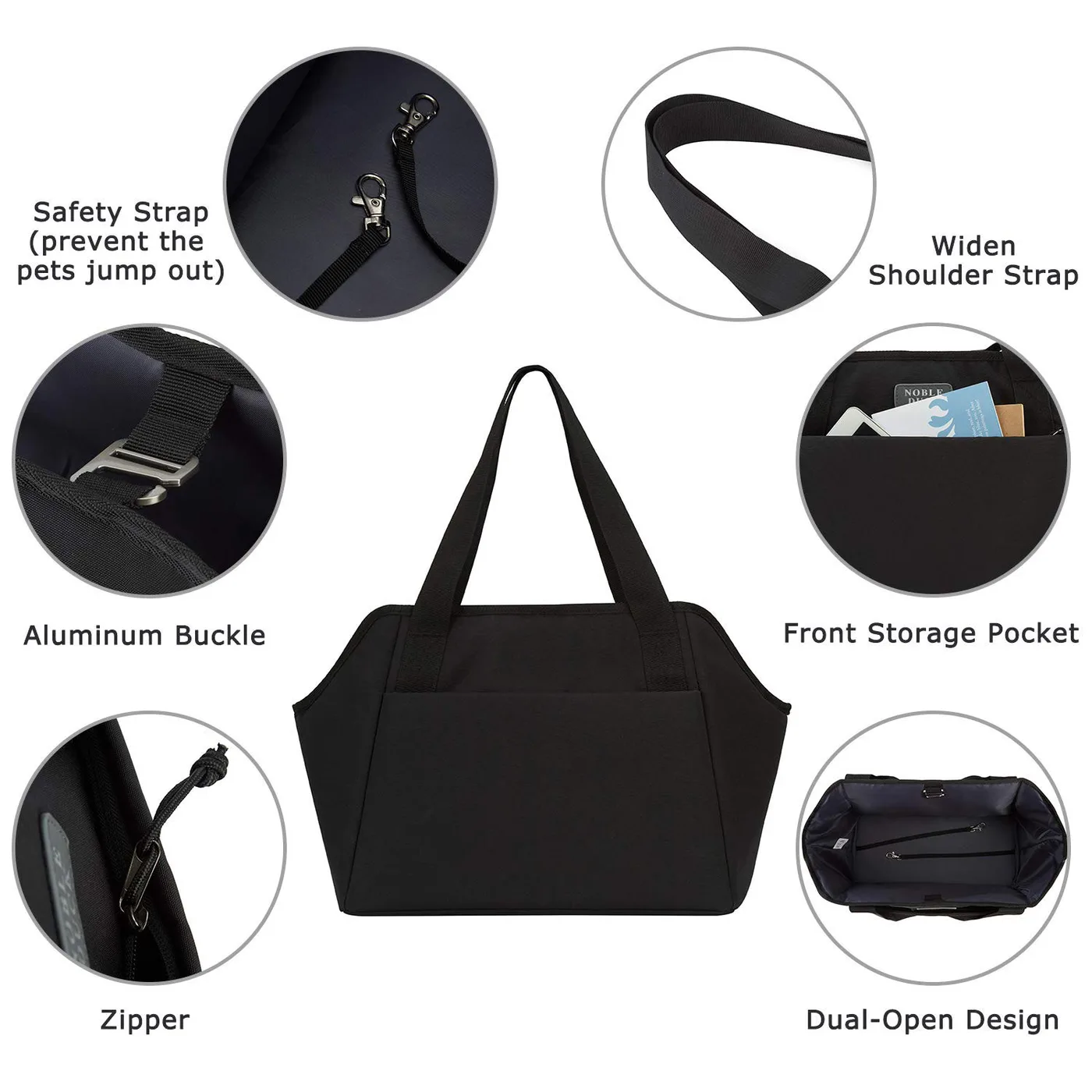
Frames and stays are invisible in finished product photography and entirely responsible for how the product behaves. That combination - invisible and load-bearing - makes them the easiest place in a specification to lose quality without anyone noticing, and the most valuable place to spend a small amount of money.
The perimeter frame is the primary element. On a top aperture it usually runs as a continuous band under a binding, and it should be continuous: a band interrupted at a seam creates a hinge, and hinges are where apertures progressively lose their shape over a season of use. Specifying the join position - away from corners, ideally under a handle root where there is already reinforcement - is a small instruction with a large effect.
The rear stay is the second and the most often omitted. Without it, the hinge side of the aperture folds inward as soon as the zipper opens, which narrows the usable opening at exactly the moment it is needed. A stay can be a stiffened fabric band, a bonded insert or a slim moulded element, and it typically runs 60-100 mm wide along the full hinge edge. It costs under a dollar and it transforms how the aperture behaves.
Front-edge stiffness is the third element, and it matters for a reason that is easy to miss: the front edge of a top aperture is what the handler's arm rests against while loading. A soft edge collapses under that contact; a stiffened one stays clear. Products that are easy to load are products that get used, and this is the component that makes loading easy.
Interaction with the shell laminate closes the framing conversation. A stiff laminate needs a lighter frame; a soft one needs a heavier frame and possibly a moulded form. Choosing the laminate and the frame in the same conversation - rather than specifying the frame after the fabric is booked - is what prevents either over-engineering or a floppy aperture.
Where a programme wants both, the usual resolution is a rear stay plus a modest flange - the stay doing the structural work and the flange doing the visual one - which is cheaper than a full moulded form and almost as rigid. The decision is normally settled by sampling rather than by calculation, because laminate stiffness varies more between fabric lots than any specification predicts.
Testing is simple and should be done with the shell loaded: open the aperture, measure the held opening at three points, leave it under load for a defined period and measure again. The second measurement is the one that predicts the product's behaviour in month six, and it takes an afternoon.
Covers: mesh, flap and solid - one aperture, three products
The most efficient thing about a top aperture is that it can be covered three different ways from one pattern. A brand can build a ventilated travel unit, a weather-protected outdoor unit and a privacy-oriented urban unit on the same shell, with the covering as the only structural variable. That is a product-line asset worth planning for.
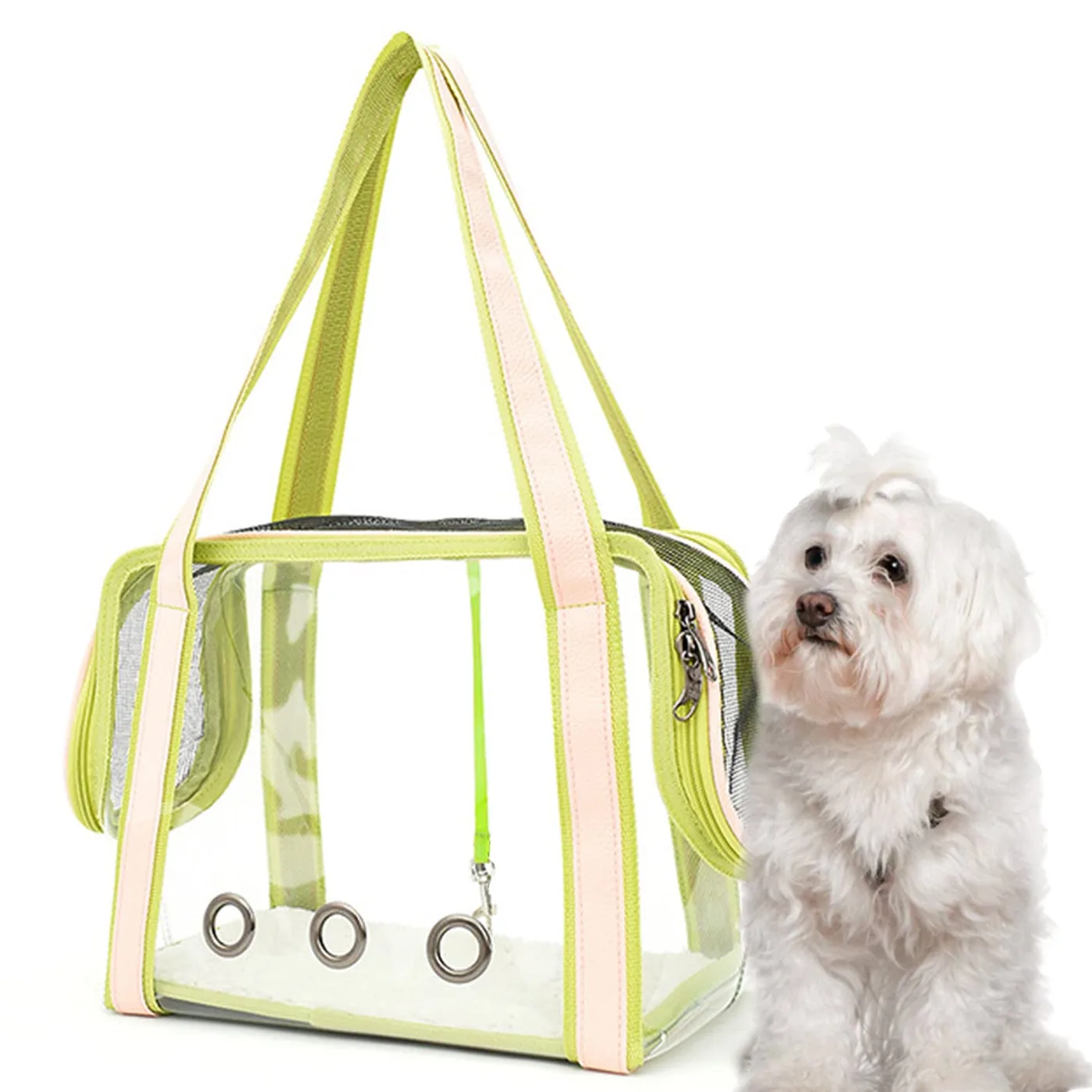
Mesh covers are the default for travel and warm climates. A mesh panel over the aperture gives airflow, lets the occupant see out and lets the handler check in without opening anything. The specification questions are mesh gauge, aperture size and whether the mesh is zip-detachable for cleaning. A detachable mesh panel is worth the extra zipper: it turns the most soiled part of the product into a washable part.
Solid or flap covers serve the opposite brief. A roll-down or over-flap closing over the aperture gives weather protection, visual privacy and a much cleaner exterior line, and it is the right choice for brands positioning around urban life, colder climates or anything where the carrier is carried in public for long stretches. The closure detail matters here - a flap that flaps is worse than no flap - so a magnetic or snap closure with a defined resting position is usually specified.
Hybrid covers are the third option and the most commercially flexible: a mesh panel under a solid flap, so the handler chooses ventilation or privacy depending on the moment. It is the most expensive covering and the one that supports the widest claim set, which makes it the natural choice for a flagship SKU where the product page needs to say several things at once.
Colour and trim do the rest. A covering in a contrast colour, bound in a seasonal accent, gives a drop an identity without touching the shell pattern. Because the cover is the largest single visible panel after the body fabric, it is the cheapest place to put seasonal colour in a range, and our notes on roll-down top weather seals and over-flap closures cover the two most common executions.
Aviation, inspection and the travel documentation set
Top entry carriers are disproportionately used for air travel, and air travel brings a documentation and behaviour requirement set that arrives from outside the product. Designing to it during development is cheap; designing to it after a complaint is not.
Airline carriage rules sit with the carrier rather than with the bag maker, and the relevant reference for live animal transport is the IATA Live Animals Regulations, which set out container requirements by species and journey. For passengers travelling within or into the United States, the FAA publishes practical guidance on flying with pets, and individual airlines layer their own rules on top. The practical design consequences are consistent across all of them: the container must hold its shape, must allow the animal to stand and turn, and must not permit escape or injury.
Two design details follow directly. First, a top aperture used as the inspection route has to be operable in a confined space - under a seat, in an aisle - which argues for a closure that can be worked one-handed from above. Second, an aperture that is the only ventilation path is a liability in a hold or a cargo environment, so dedicated vents should be specified independently of the entry aperture on any travel-positioned unit.
Material documentation is the third item and the one that most often delays a programme. Restricted-substance declarations, textile inputs supplied as OEKO-TEX certified and hardware finish declarations should be collected while the tech pack is being written rather than when a buyer asks. Independent verification through SGS is available where a retailer or a channel partner requires a third-party record, and the SGS-verified production base we work with maintains ISO 9001 as its standing quality system.
The commercial point is simple: a travel-positioned carrier that ships without its documentation set is a carrier that will be delisted at the first review. Documentation is a development deliverable, not a shipping afterthought.
It is also worth deciding early which claims the product page will make, because claims drive tests. A ventilation claim needs airflow evidence, a containment claim needs closure cycle data, and a shape-retention claim needs the aperture retention number already discussed. Writing the claims into the brief before tooling means the tests that support them are run once, in the normal course of development, rather than commissioned later under time pressure.
Closures: what the handler does with one hand
A top aperture is only as good as the closure that operates it, and the operating condition is awkward by definition: one hand on the animal or the lead, one hand on the bag, in a space that is usually too small. Closure selection should start from that condition rather than from a component catalogue.
Zippered closures are the default and for good reason: they are secure, they are familiar, and they can be worked from above with a puller large enough to find without looking. The specification questions are gauge, tape colour, slider count and puller design. A single slider is simpler and cheaper; a double slider allows partial opening, which is genuinely useful for inspection and for ventilation control, at the cost of one component and a slightly longer closing ritual.
Magnetic and snap closures over a flap are the fashion answer. They are fast, quiet - which matters with an animal inside - and they read premium in photography. Their weakness is security under a determined occupant, which is why they are almost always specified as a secondary closure over a zipper rather than as the primary containment. A flap with a magnetic catch over a zippered mesh panel is the combination that satisfies both the aesthetics and the safety brief.
| Closure | One-handed use | Security | Noise | Reads as |
|---|---|---|---|---|
| Single zipper | Good with a large puller | High | Low-medium | Standard, honest |
| Double zipper | Good | High | Low-medium | Travel, functional |
| Magnetic flap | Excellent | Secondary only | Very low | Fashion, premium |
| Buckle and strap | Poor | Very high | Medium | Technical, outdoor |
| Drawstring | Poor | Low | Low | Casual, soft goods |
Puller design is the cheapest upgrade in the entire closure specification and the one most often left to chance. A puller of 40-60 mm of usable grip, shaped so it can be found by touch, carrying a moulded or laser-marked brand identity, costs a few cents more than a stock pull and is touched every single time the product is used. It is the highest frequency brand contact on the product.
Cost, tiering and the range architecture
Top entry is the natural configuration for the entry and core tiers of a range, and the reason is cost rather than capability. A top aperture with a bound perimeter and a single zipper is the cheapest aperture to build, which lets a brand put its money into fabric, colour or hardware instead - which is usually where a customer's eye goes first anyway.
The architecture we recommend most often is three tiers on one shell platform: a top-entry entry SKU at the lowest price, a top-entry core SKU with a framed aperture, a rear stay and a branded puller in the middle, and a dual or side-entry flagship at the top. That gives three price points, three stories and one pattern family, which is the most efficient structure available to a brand of any size. Our notes on dual entry architecture and on side entry openings complete the picture for the upper tier.
Sampling runs in three rounds: aperture geometry on a test shell in 6-10 working days, a complete prototype with the production closure, and a confirmation sample in bulk materials. The second round is the one that catches problems, because aperture retention under load cannot be predicted from a flat sample - and it is also the round most often compressed when a season is running late, which is why late seasons produce floppy openings.
Cost behaviour at volume is favourable. Frames and stays are fabric and insert parts, so they scale well and their unit cost falls with quantity; closure tooling, where a custom puller is specified, amortises across the programme. The incremental cost of moving from an unframed slot to a framed aperture with a rear stay is typically USD 1.10-2.20, which is the best-value structural upgrade available on a top-entry shell.
Bulk completes in 35-50 days on T/T 30/70 FOB Xiamen terms, and finished goods are inspected to AQL 2.5 with aperture retention, closure function and frame continuity classified as critical. Closures are packed open so trim and teeth are not creased in transit, and frames are checked for continuity rather than appearance, because continuity is what fails first and what nobody sees until the product is in use.
Why brands source here
- Pet carrier programs run since 2014; founding team in sewn goods since 2004
- SGS-verified production floor of 4,950 m² with 137 workers across 7 lines
- Monthly capacity of 200,000 units, audited to BSCI and ISO 9001
People Also Ask
Is top entry or side entry better for a pet carrier?
Top entry is cheaper, stiffer and lighter because it removes fabric from the least loaded panel, and it suits confident animals loaded at home. Side entry wins for in-motion use, clinics and anxious animals. Most ranges need both at different tiers.
Will a top opening collapse when it is unzipped?
An unframed one will, typically holding only 50-60 percent of its drawn shape. A perimeter frame plus a rear stay along the hinge edge holds 70-85 percent, which is the difference between a slot and a door.
Can a top opening be covered with mesh?
Yes, and it is the most common configuration for travel and warm climates. A zip-detachable mesh panel is worth specifying so the most soiled part of the product becomes washable.
What closure works best on a top opening?
A zipper with a large, findable puller, because it is secure and can be worked one-handed from above. Magnetic flap closures are faster and quieter but should be secondary to a zipper, not the primary containment.
Do top entry carriers meet airline requirements?
They can, but the airline sets the rules, not the bag maker. The IATA Live Animals Regulations and FAA passenger guidance are the references, and the design consequences are a shape-holding shell, independent ventilation and secure containment.
How much does a framed top aperture add to cost?
Typically USD 1.10-2.20 per unit over an unframed slot, covering the perimeter frame and the rear stay. It is the best-value structural upgrade available on a top-entry shell.
Frequently Asked Questions
What is the MOQ for a custom top entry carrier?
MOQ 500 units per colourway applies where the programme specifies custom frames, closures, Pantone-matched trim or a bespoke aperture. Stock closures on an existing pattern can sometimes be placed below that; each project is confirmed individually.
How long does an aperture sample take?
Aperture geometry samples on a test shell are produced in 6-10 working days, followed by a complete prototype with the production closure and a confirmation sample in bulk materials. Bulk then completes in 35-50 days.
How do you measure whether an opening holds its shape?
By aperture retention: the share of the drawn aperture that survives when open and loaded. The measurement is taken at three points, then repeated after the shell has stood under load for a defined period, which is the number that predicts month-six behaviour.
Can the same shell take a mesh, a flap and a solid cover?
Yes, and it is one of the main advantages of a top aperture. One pattern supports a ventilated travel unit, a weather-protected outdoor unit and a privacy-oriented urban unit, with the covering as the only structural variable.
Are magnetic closures secure enough for a pet carrier?
Not as the primary containment. They are excellent as a secondary closure over a zipper, where they deliver speed, quiet operation and a premium read without being responsible for keeping the occupant inside.
Do we need separate ventilation if the top opens?
Yes on any travel-positioned unit. An aperture that is the only ventilation path is a liability in a hold or cargo environment, so dedicated vents should always be specified independently of the entry opening.
Can the zipper tape be matched to our brand colour?
Yes. Pantone-matched tape gives a second colour position at low cost, but tape and shell fabric are different substrates and should be approved as physical samples under a single light source.
What puller size works best on a top opening?
Roughly 40-60 mm of usable grip, shaped so it can be found by touch. The puller is the highest-frequency brand contact on the product and the cheapest custom hardware item in the specification.
What compliance documentation can you provide?
Material declarations and test reports, OEKO-TEX certified textile inputs, and independent verification through SGS where a retailer requires a third-party record. Documentation is collected during development rather than after a buyer asks.
Should the aperture be widened or deepened for easier loading?
Widened. A generous deep aperture makes the handler reach down into the bag, which is the motion that produces awkward loading moments. Keeping the opening close to the occupant's standing height matters more than total area.
How are top opening units packed for shipping?
With closures open so trim and teeth are not creased in transit, and with frames checked for continuity rather than appearance at inspection, since continuity is what fails first and is invisible until use.
Can one aperture design serve the whole size range?
Yes. The frame, stay and closure are specified per size band but share the same construction, which lets one tooling set and one inspection standard serve small through large, with colour and trim varying by tier.
Talk to QUANZHOU JUNYUAN BAGS about a pet carrier program: MOQ 500 pieces per colourway, samples in 6-10 working days, bulk production in 35-50 days under AQL 2.5 inspection.
Get a free quote Request a sample