YKK Zipper vs SBS Zipper: Quality Comparison
A genuine YKK #5 coil zipper typically survives 10,000 or more open-close cycles in controlled testing and commands roughly 2.5-4 times the price of an equivalent SBS zipper, which commonly passes 5,000-8,000 cycles. Specify YKK when the zipper is a perceived-quality signal — premium tiers, hero products, anything a buyer will handle — and SBS for entry tiers where volume economics dominate. Both take custom logo pullers at MOQ 500 per colourway and both clear AQL 2.5 inspection.
Executive Summary
A zipper is the only moving part most customers operate deliberately, repeatedly and with expectation. It is touched every time the product is used, it produces tactile feedback that registers as quality or the absence of it, and when it fails the product has failed — there is no graceful degradation. For that reason it carries disproportionate brand weight relative to its cost.
This comparison separates what genuinely differs between a premium Japanese brand and a competent Chinese alternative from what is ritual preference. We examine chain and slider tolerance, tape stability, plating durability, achievable cycle life, custom puller options, colour matching behaviour and total landed cost, then give tier-based recommendations and the specification details that prevent most ordering mistakes. Commercials are identical for both: MOQ 500 units per colourway, pre-production samples in 6-10 working days, bulk production in 35-50 days, final random inspection to AQL 2.5. Samples are built with our production team through SGS-verified partner facilities operating under ISO 9001 process frameworks.
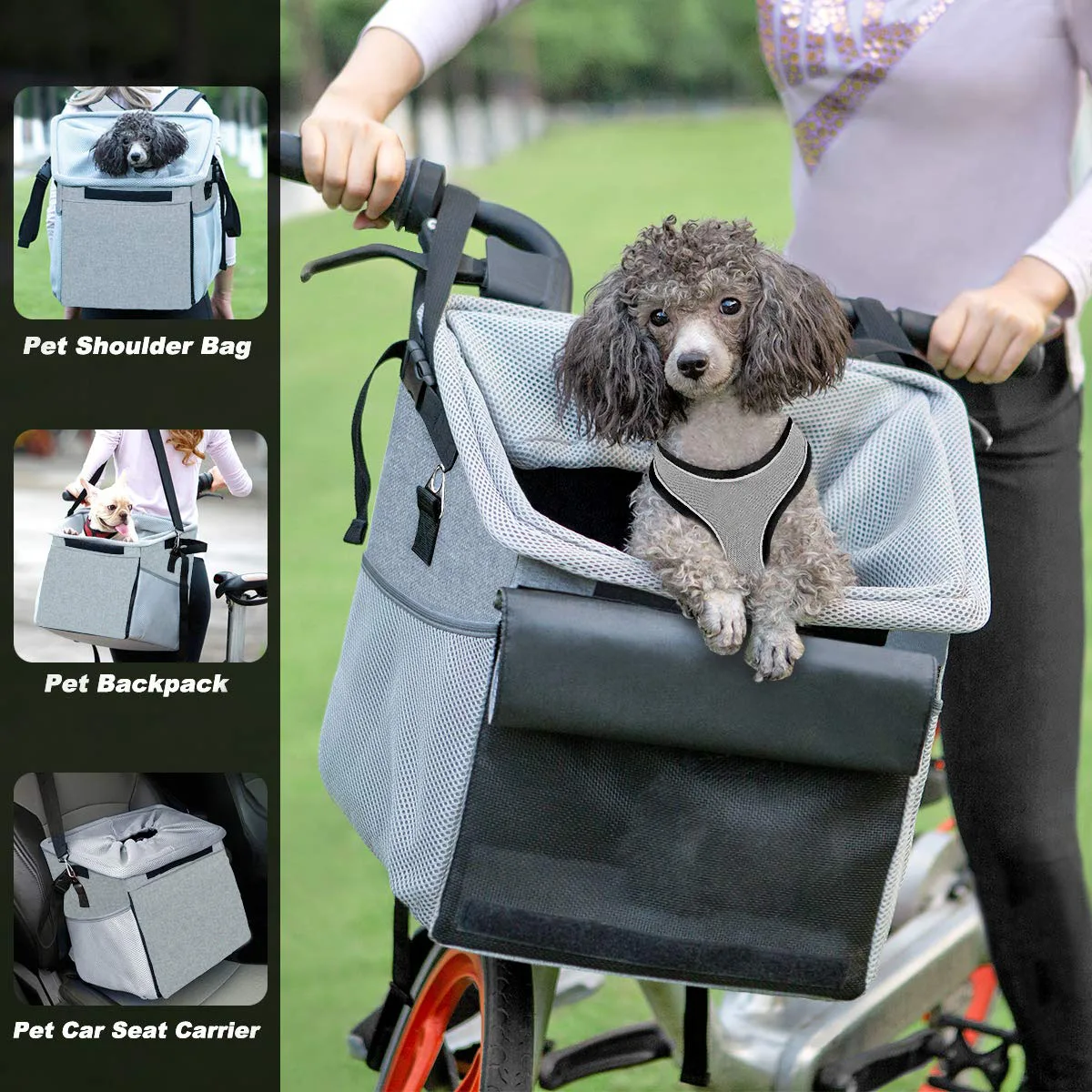
A custom pet travel bag has to reconcile two limits at once: the airline under-seat envelope and the ventilation the animal actually needs.
Why the Zipper Carries Disproportionate Brand Weight
Consider what the customer actually does with a pet carrier. They carry it, they set it down, and they open it. Of those interactions, opening is the one that involves deliberate mechanical engagement, repeated several times a day for years. Every one of those interactions produces sensory feedback that either confirms or erodes the purchase decision.
That feedback accumulates. A zipper that runs smoothly every single time becomes invisible, which is the highest compliment a mechanical component can earn. A zipper that catches once in twenty openings becomes memorable, and experiments across soft goods categories consistently show that customers generalise mechanical disappointment into overall product judgement far more readily than they generalise satisfaction.
The economics are unusual because the component is cheap relative to its influence. Moving from a competent domestic zipper to a premium branded one typically adds well under a dollar per unit, while supporting a retail price step many times larger and reducing the most common mechanical return cause. Few interventions in product development offer that ratio.
- Touch frequency: unlike fabric, which is felt passively, zippers are operated deliberately many times per use
- Binary failure: there is no partial success — it works or it does not, and failure is total for the owner
- Audible quality: the sound of a well-toleranced slider is distinctive and registers subconsciously
- Visible branding: the puller is one of the few components where a logo can sit at eye level
For private-label programmes specifically, there is an additional dimension. Retail buyers feel zippers. Staff likewise. A product that operates smoothly in a buyer's hand survives selection rounds that a marginally cheaper version would not, long before any consumer ever evaluates it.
Finally, remember that a zipper can also be an identity surface. A custom moulded puller bearing your mark is one of the most durable brand impressions available in the category, sitting directly under the customer's fingertips every time the product opens.
Anatomy of a Zipper: The Four Parts That Matter
Conversations about zipper quality often founder because participants are comparing different things. A zipper is an assembly of four elements, each with its own quality gradient, and any of them can be the weak link regardless of whose name is stamped on the puller.
The chain comprises the interlocking elements, either coiled monofilament or discrete teeth. Chain precision determines whether the slider travels smoothly and whether the halves separate under lateral load. Poorly formed chain produces the characteristic snag that customers describe as the zip being broken long before it has actually failed.
The tape is the woven strip that carries the chain and attaches to your product. Tape quality governs dimensional stability through washing and humidity, resistance to fraying at the sewn edge, and how accurately the colour can be matched to the shell. Inconsistent tape causes wave along the seam line, which is visible immediately in product photography.
The slider is the mechanism itself, containing the Y-shaped channel that meshes and unmeshes the chain. Machining tolerance here is what separates smooth from gritty operation, and it is where the largest engineering difference between premium and economy grades usually sits.
The puller is the handle. It carries no functional load beyond transmitting force, but it is what the customer touches and sees, and it is where customisation occurs — moulded with your logo, engraved, or shaped to your design.
Top stops, bottom stops and the box-and-pin assembly for separating zippers complete the picture, and these small components generate a surprising share of field failures. A bottom stop that releases under load renders the whole assembly useless regardless of chain quality.
For designers, the useful takeaway is that specification should address each element separately. A premium chain attached to an economy slider performs like an economy zipper, and it is entirely possible to buy a recognised brand name with an under-specified mechanism beneath it. Ask which of the four elements is being upgraded and which is merely along for the ride.
YKK Versus SBS: What Genuinely Differs
YKK is a Japanese industrial group with vertically integrated production and famously tight process control. SBS is a large Chinese zipper producer whose products have improved substantially over the last decade and now occupy the OEM middle ground in countless bags categories. Comparing them honestly requires separating measurable differences from reputation.
The measurable differences cluster in consistency. Dimensional tolerance across production lots is tighter at the premium end, which translates into fewer units at the edges of acceptable range and consequently fewer field complaints per thousand. When an operator pulls twenty zippers from a box, premium ones feel identical; economy ones occasionally do not.
Second, plating durability differs measurably. Salt spray exposure reveals how long a finish resists corrosion before tarnishing, and this gap widens noticeably in humid or coastal markets. Third, tape quality tends toward better colour consistency and less shrinkage at the premium end, although the difference narrowed considerably in recent years.
| Dimension | YKK, genuine | SBS, grade A | Practical implication |
|---|---|---|---|
| Typical cycle life, #5 coil | 10,000 cycles or more | 5,000-8,000 cycles | Both exceed normal lifetime use by a wide margin |
| Tolerance consistency | Very tight lot to lot | Good, with occasional outliers | Outliers drive complaints more than averages do |
| Salt spray resistance | Typically 48-96 hours | Typically 24-48 hours | Matters in humid and coastal distribution |
| Tape colour consistency | Excellent | Good, wider tolerance | Visible where tape abuts the shell fabric |
| Puller customisation | Moulded logo available, higher tooling cost | Moulded logo available, lower tooling cost | Amortised quickly at MOQ 500 or above |
| Lead time | Occasionally longer for speciality items | Shorter for most stock items | Plan around it rather than discovering it |
| Cost index | 2.5-4.0 | 1.0 | Small absolute sum, large perceived return |
The honest conclusion is that both are adequate to their applications, and the choice is better framed as a positioning decision than an engineering one. Choose the premium component where it will be perceived; choose the value component where it will not be.
Cycle Testing and What a Realistic Number Looks Like
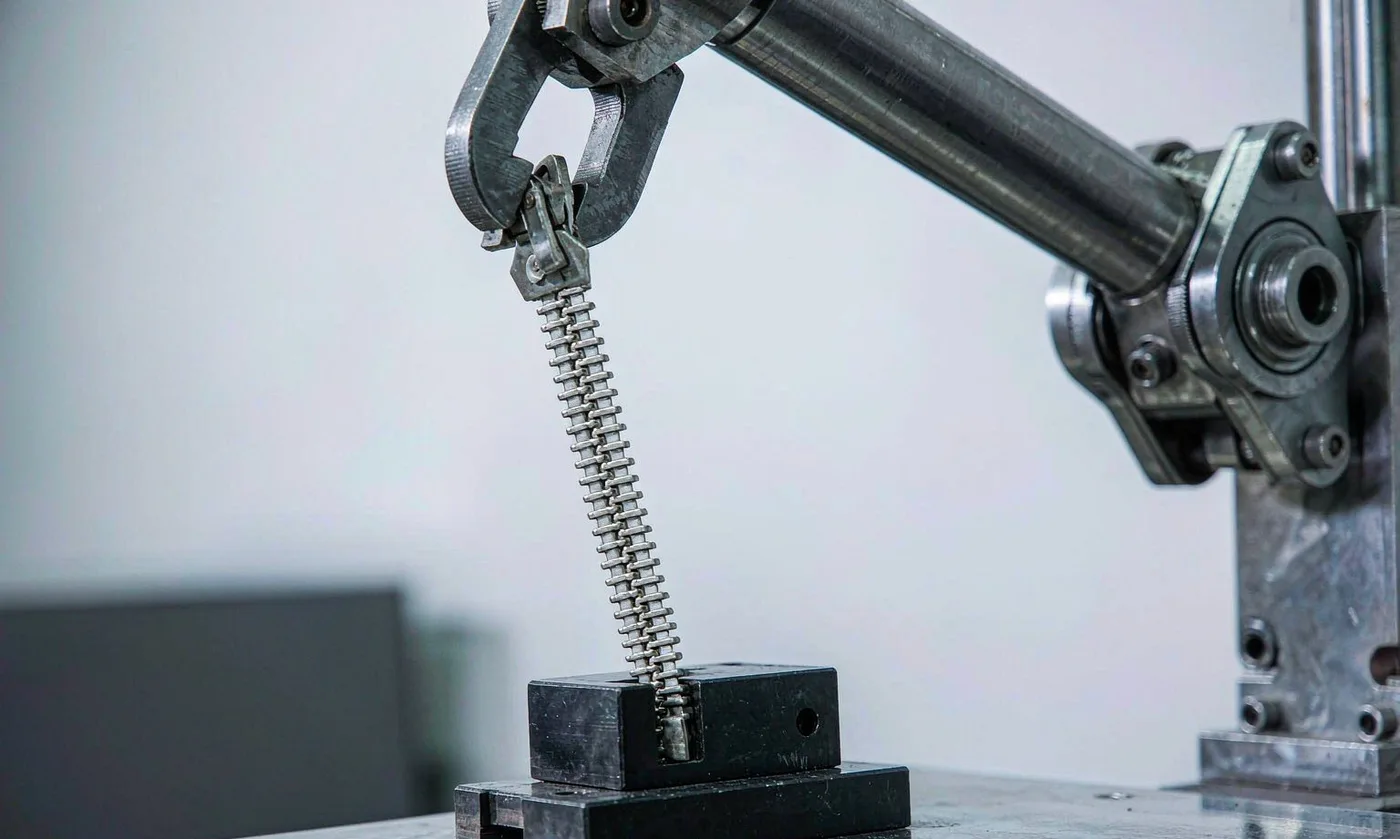
Cycle testing runs a zipper open and closed repeatedly under defined conditions until failure. It is a useful comparative measure and a poor absolute one, because real use involves lateral load, contamination and misalignment that no machine reproduces faithfully.
Calibrate expectations honestly. A carrier opened four times daily every day for five years accumulates roughly 7,000 cycles. Almost every zipper in this discussion exceeds that comfortably in clean laboratory conditions, which means raw cycle count should rarely be the deciding factor.
The more informative tests concern failure under abuse. Lateral pull testing measures resistance to the chain bursting apart when loaded sideways, which is what happens when an animal presses against a closed panel. Crosswise strength testing addresses the same reality differently. Both predict field behaviour better than a smooth open-close count.
- Cycle life: useful for comparison, rarely limiting in real use
- Lateral burst: predicts the most common genuine failure — animals pushing from inside
- Slider pull off: relevant when the product is habitually over-packed
- Salt spray: relevant for humid climates, coastal markets and anything sold near water
Request results by test method rather than by outcome. Published standard procedures exist precisely so that two laboratories produce comparable numbers, and organisations such as ASTM International maintain many of the methods referenced in this space. A figure without a method is not a specification.
In our experience the most valuable test is also the cheapest: twenty office staff open and close each candidate fifty times and report how it felt. Human hands detect grit and hesitation earlier than most instruments.
Test under condition rather than pristine. Run the same candidates again dusted lightly with pet hair and again after a week in humid storage, since neither is unusual in real ownership. Zippers that run beautifully in a clean sample room and poorly once hair enters the teeth are common enough that this should be routine for any pet programme.
Sliders, Pullers and Where Your Logo Should Sit
The puller is the highest-value branding surface on a zipper, and one of the highest on the product. It is touched constantly, it hangs at a natural focal point, and unlike printed identity it does not fade, crack or peel. Three routes exist, each with distinct economics.
Moulded or die-cast logo pullers carry your mark in relief, usually in zinc alloy, and require a tooling investment that amortises quickly at MOQ 500 and above. Additional verification through third-party inspection bodies such as SGS is available where a programme needs documented confirmation of plating thickness and composition.
Custom-shaped generic pullers use an existing tool with your chosen geometry, avoiding tooling cost entirely while giving a distinctive silhouette. This is often the right choice for first collections testing whether the market responds at all.
Embossed tape, where your wordmark appears along the woven strip, is subtle, inexpensive and rarely noticed. It works best as reinforcement alongside something more visible rather than as your primary identity.
- Moulded logo: tooling cost, per-unit premium, strongest brand impression
- Custom shape: no tooling expense, distinctive, weaker identity
- Embossed tape: cheapest, subtle, best used in combination
- Colour-matched slider: available on some ranges, excellent for tonal collections
One practical caution: heavier metal pullers generate noise against the shell during transport, particularly on structured carriers. Test this before committing, because a rattling product creates exactly the cheap impression you were trying to avoid.
Puller size is another underestimated variable. An undersized puller is awkward to grip, especially for owners holding a leash or opening the product one-handed, which is how these are usually opened. Slightly larger than instinct suggests is nearly always better, and it improves the perceived generosity of the product.
Finally, consider how the puller rests. A long puller hanging freely catches on things and looks untidy in photography; a keeper loop or a shaped channel that lets it lie flat costs little and noticeably improves both presentation and daily usability.
Specify the finish on those details explicitly too. A puller's plating is the touchpoint buyers notice first, and a coating that wears through to base metal within a season undoes the impression the rest of the product worked for.
Tape Colour Matching and the Seam Line Problem
Tape is woven polyester dyed to match your shell, and doing this well is harder than it appears. The tape has a different construction from the shell fabric and often a different finish, so the same dye recipe produces a visibly different result. This is where most first collections reveal themselves to be first collections.
Submit physical references rather than codes. A Pantone number is a starting point, not an instruction, because the dye process differs across substrates. Approve a tape against the actual shell fabric under consistent lighting, side by side, and retain the approved pair.
Remember that the tape sits alongside several other components — webbing, binding, thread — none of which will match perfectly either. Rather than chasing four exact matches that cannot all be achieved, set a tonal rule: everything within one step of the shell, with any deliberate exception stated. Collections look resolved when their differences are systematic rather than accidental.
Thread deserves a mention because it is forgotten and then visible. Specifying thread one shade darker than the tape hides minor stitch irregularity along the seam, and it prevents the pale seam lines that betray hastily specified construction.
Wave is the second problem. If tape shrinks at a different rate from the shell through humidity, washing or simply time, the seam line develops a wave. It is subtle to the eye and glaring in photography, particularly under raking light across a large panel.
The standard solutions are either a deliberate contrast — a dark tape against a light shell reads as intentional design rather than imprecise matching — or a fully concealed tape hidden inside a binding. The cheapest and most forgiving route is often simply choosing a tape one shade darker and letting it read as structure.

Coil, Reverse Coil and Metal: Choosing the Chain Type
Chain type determines both appearance and function, and the choice should follow design language rather than habit. Standard coil zippers show their elements raised on the face, giving a casual, sporty read. Reverse coil inverts the chain so the face is smooth and continuous, which is what premium minimalist products almost always specify.
Metal chain — brass or aluminium teeth fitted to tape — reads as heritage and luxury. It is heavier, more expensive, considerably noisier in operation, and it can catch fur at the teeth. For hair-heavy applications this last point deserves genuine consideration, because fur packed into metal teeth looks poor and affects operation.
Water-resistant and reverse-coil variants with a polyurethane coating along the chain exist for outdoor positioning. They genuinely shed light rain, they run slightly stiffer, and they look appropriately technical. Where your product claims outdoor capability, this detail supports the claim visibly.
- Standard coil: sporty, economical, widely available, familiar operation
- Reverse coil: clean minimal face, preferred for premium and restrained design language
- Metal chain: heritage and luxury read, heavier, noisier, can collect fur
- Coated / aqua-guard: water-shedding, technical appearance, stiffer operation
Gauge selection deserves equal attention. A #5 chain suits most carriers comfortably; a #3 reads delicate and suits small slings; a #8 or #10 gives substantial presence appropriate to large structured carriers, though the size relationship between zipper and product scale is precisely what makes a design look considered.
Placement matters as much as type. A zipper running the full width of a panel changes how that panel flexes and how the product opens, while a shorter, top-set zipper with a structured opening often presents better and keeps the animal more contained during loading. Discussing this with your designer before pattern work begins is far cheaper than discovering it after the first sample.
Failure Modes and How to Specify Against Them
Almost every zipper failure falls into one of five patterns, each preventable with one line in a specification. Knowing these transforms the component from a risk into a controlled variable.
The first and most common is slider wear causing chain separation behind the slider. Specifying a slider with adequate internal tolerance and requesting sample testing under lateral load prevents it. Second, bottom stop failure, where the stop releases and the slider runs off the end — prevented by specifying a metal rather than moulded stop at the loaded end.
Third is strap bite: the product adjacent to the chain feeds into the slider and jams it, usually because the seam allowance behind the zipper is insufficient or lacks stiffening. Fourth, corrosion — a plating specification appropriate to the destination market solves this cheaply. Fifth, tape pull-out, where the tape separates from the seam because it was sewn with insufficient reinforcement.
- Chain separation: specify by lateral pull strength and verify by test
- Bottom stop failure: specify metal stops at load-bearing ends
- Strap bite: specify seam allowance and interlining behind the tape
- Corrosion: specify plating type and hours of salt spray resistance
- Tape pull-out: specify stitch density and bar-tacking at stress points
Write those five lines into the tech pack and most of the category's failure modes disappear. It costs ten minutes and prevents the single most irritating kind of return.
Worth adding a sixth line: how the zipper ends are finished. Unfinished chain ends buried in a seam eventually work loose, and because they sit where hands do not often go, nobody notices until the panel separates. Bound ends, or ends tucked and bar-tacked, cost moments and remove the problem entirely.
Cost Structure, Lead Time and Tier-Based Recommendations
The absolute cost difference between the two brands is small — often well under a dollar per unit — yet it can be one of the most visible converted decisions in product development. Understanding where the money goes helps allocate it sensibly rather than uniformly.
Specify the premium component on hero products, flagship sizes, anything a retail buyer will handle in a selection meeting, and anywhere the zipper is visually prominent. Specify the value component on accessories, interior pockets, secondary openings and entry-tier SKUs where the same money buys more visible improvements elsewhere.
Lead time is worth planning around. Speciality premium items occasionally require longer procurement than local equivalents, and because both sit inside the same 35-50 day production window, the difference is usually absorbed rather than felt. Confirm availability at quotation rather than assuming it.
Custom pullers add tooling cost and usually two to three weeks to first production, after which repeat runs need no additional scheduling. Where launch timing is tight, launch with a standard puller and introduce the custom version on reorder —a common and sensible sequencing.
Finally, standardise the chain across your range wherever possible. One brand, one gauge, one type simplifies purchasing, reduces minimum-quantity friction and makes operators faster, which improves quality more reliably than most specification upgrades.
Review the allocation annually. Programs evolve, sales figures arrive, and the product that turned out to be your hero might still be running the entry component while the accessory carries the premium one. Realigning once a year costs nothing beyond attention, and keeps spending where the customers actually are.
Why brands source here
- Pet carrier programs run since 2014; founding team in sewn goods since 2004
- SGS-verified production floor of 4,950 m² with 137 workers across 7 lines
- Monthly capacity of 200,000 units, audited to BSCI and ISO 9001
People Also Ask
Is YKK really better than SBS?
Generally yes on measurable consistency: tighter tolerances, better plating durability and more predictable tape colour, though the gap narrowed significantly over the past decade. The larger real-world difference is fewer outliers per thousand units rather than a dramatic change in average performance.
How many cycles should a pet carrier zipper survive?
Roughly 7,000 cycles covers five years of daily use at four openings per day. Both premium and value grades exceed that in clean testing, so raw cycle count should rarely be the deciding factor; lateral load behaviour predicts field failure better.
Can I put my logo on the zipper puller?
Yes. Moulded or die-cast logo pullers require tooling that amortises quickly at MOQ 500 or above, custom-shaped pullers avoid tooling cost entirely, and embossed tape offers a subtle third option best used alongside another method.
Which zipper type looks most premium?
Reverse coil, which presents a smooth continuous face rather than raised elements, is the standard choice for minimalist premium products. Metal chain reads heritage and luxury but operates more noisily and can collect fur in its teeth.
What size zipper should I specify?
A #5 chain suits most carriers comfortably. A #3 reads delicate and suits small slings, while #8 or #10 gives substantial presence appropriate to large structured pieces. Scale relationship between zipper and product is what makes a design look considered.
Why does my zipper tape not match the fabric?
Because tape is a different construction with different finishing, so the same dye recipe reads differently. Submit physical references rather than codes, approve tape against actual shell under consistent lighting, and consider a deliberate contrast instead.
Frequently Asked Questions
What is the minimum order quantity per zipper colourway?
MOQ is 500 units per colourway whether you specify YKK or SBS. Tape colour matching follows the same threshold, and we confirm any surcharge for unusual shades at quotation rather than after allocation.
How long does zipper sampling take?
Pre-production samples take 6-10 working days with specified components. Where a custom moulded puller is requested, tooling typically adds two to three weeks to first production, after which repeat runs carry no additional scheduling.
What are bulk production terms?
Bulk production runs 35-50 days following sample approval and deposit. Most standard zipper specifications are absorbed within that window; unusual items with longer procurement are flagged at quotation so schedules can be planned around them.
How are zippers inspected before shipment?
Final random inspection follows AQL 2.5 for major defects. Zipper-specific checks cover smooth operation along the full travel, chain separation under lateral load, stop integrity, plating appearance and tape colour against the approved reference.
Can you supply genuine branded components?
Yes. We source genuine items from authorised channels and can provide confirmation where a programme requires it. Counterfeit components are common in this category, so provenance documentation is worth requesting rather than assuming.
What plating lasts longest?
Nickel and black-oxide finishes generally perform well, and thicker deposits extend that further. Salt spray resistance is specified in hours and should be matched to the destination climate, since humid markets are far less forgiving.
Do both support auto-lock sliders?
Yes. Auto-lock sliders stay where they are left unless the puller is deliberately moved, which is strongly recommended for pet carriers since it resists an animal nosing the zip open from inside.
Can I use two different chain sizes in one product?
Occasionally yes, most often a larger gauge on the main opening and a smaller one on an accessory pocket. Each size adds a line item and its own minimum consideration, so keep the range tight for purchasing simplicity.
Is a water-resistant zipper worth specifying?
It supports an outdoor claim visibly and sheds genuine light rain, at the cost of slightly stiffer operation. Where the product's story includes weather, it is an inexpensive way to make that story tangible rather than decorative.
How do I prevent the product fabric catching in the slider?
Specify sufficient seam allowance behind the tape and consider a light interlining in that zone. Most jam complaints originate from construction around the zipper rather than from the zipper itself.
Are recycled zipper options available?
Yes, recycled polyester tape is increasingly standard and performs comparably to virgin material. Availability varies by chain type and finish, so confirm early if recycled content is a programme requirement.
What should I write into my zipper specification?
Record brand, chain gauge and type, slider mechanism including auto-lock, plating type with hours of salt spray resistance, top and bottom stop material, tape colour reference with the approved physical standard, and the puller specification.
Can you match my existing product's zipper?
Usually yes if you can provide a physical sample. Matching from photographs or descriptions alone is unreliable, because several visual clues chain type and gauge depend on, so send the actual component.
What happens if a specification becomes unavailable?
We identify an equivalent and submit it for physical approval with retained reference samples before it enters production. Reviewing components annually, even on unchanged specifications, catches discontinuation before it becomes an emergency.
Talk to QUANZHOU JUNYUAN BAGS about a pet carrier program: MOQ 500 pieces per colourway, samples in 6-10 working days, bulk production in 35-50 days under AQL 2.5 inspection.
Get a free quote Request a sample