Personalized Pet Carrier Programmes: How It Runs
A personalized pet carrier programme runs as two parallel tracks: the structural track builds the bag, and the variable-data track puts a different name, number or code on every unit. Structurally it behaves like any custom pet carrier build - MOQ 500 per colourway, samples in 6-10 working days, bulk in 35-50 days. Personalization adds one proof round and 4-9 days.
QUANZHOU JUNYUAN BAGS has run pet bag programmes since 2014, and our founder has worked in this category since 2004, so the sequence below reflects booked slots rather than a brochure. Every bespoke pet carrier or personalized pet carrier programme starts at MOQ 500 pieces per colourway, because fabric dye lots, thread cones and tooling are booked per colourway and cannot be pro-rated downwards. Development starts with a fit prototype, then a decorated reference unit, and samples in 6-10 working days covers one round of each. Once the golden unit is physically signed, bulk production 35-50 days covers cutting, sewing, decoration, unit-level packing and closing; the variable-data stage is sequenced after assembly so names go onto approved units rather than onto panels that may later be rejected. Release depends on an AQL 2.5 inspection against the signed reference, plus a full unit-by-unit name read where the drop carries unique records, because a misspelt name is not a defect you can negotiate around - it is scrap in the customer's hands. Terms are T/T 30/70 with FOB Xiamen, and our production team works from the SGS-verified production base with 137 people, seven lines and 149 machines, audited to BSCI and ISO 9001.
Personalization and Structural Customisation Are Two Different Programmes
Personalization and structural customisation get used interchangeably in retail copy, but on a production schedule they are two different programmes running side by side, with different cost curves and different failure modes. Structural customisation decides what the bag is: silhouette, shell fabric, foam specification, zipper family, hardware finish, size ladder, ventilation field. Personalization decides what each individual unit says: a pet name, an owner monogram, a membership number, a store code, a destination code or a launch date. A custom pet carrier can exist perfectly well with no personalization at all, and a personalized pet carrier can be built on a stock silhouette, so the useful commercial question is how much of each track a given brand actually needs and what each one costs per unit.
The two tracks behave differently under the three pressures that kill margin: minimum quantities, calendar time and error cost. Structural change is expensive to develop and cheap to repeat, because once a silhouette is tooled and sampled unit 5,000 costs essentially what unit 500 costs to make. Personalization is cheap to develop and expensive to repeat, because adding one more unique name costs nothing in tooling but adds a real handling step every single time. That asymmetry is where programmes get into trouble: brands budget personalization like a structural change, discover late that the per-unit handling never amortises away, and end up discounting to protect volume.
It also changes who owns which decision. On a structural programme the buyer, the designer and the sourcing lead make all the calls, and nothing changes after the tech pack is signed. On a personalized programme the retail or e-commerce team keeps making decisions after sign-off, because every end-customer order generates a new record. That means the brand needs a named data owner, a hard file cut-off and a written change policy, none of which exist in a conventional non-personalized drop. We ask for those three things before sampling starts, because the most common cause of a delayed personalized pet carrier launch is not a production problem - it is an unresolved internal question about who is allowed to edit the name file. Everything else in the brief behaves exactly as it does for a standard custom pet carrier; only the record layer is new.
The commercial upside is nonetheless real and worth stating plainly. Personalized units hold retail price better through discount seasons, they are far less likely to be returned on price comparison, and they generate user-generated content that a standard bespoke pet carrier cannot. A bag that already carries the customer's dog name is no longer a considered purchase; it is a finished object with the customer's identity on it. A custom pet bag carrying a name also comes back for a refund far less often than the same bag without one, which is worth real money over a season.
The grid below is the first sorting tool our design team uses in a discovery call. Filled in honestly at brief stage, it removes most downstream arguments.
| Decision dimension | Structural track | Variable-data track | Who decides |
|---|---|---|---|
| What changes | Silhouette, fabric, colourway, size | Name, number, monogram, code, date | Design vs e-commerce |
| Minimum quantity | 500 pieces per colourway | Priced per unique record | Brand sourcing lead |
| Development cost | Pattern, tooling, sample rounds | Font digitisation, proof layout, mapping | Joint |
| Cost behaviour at volume | Falls steeply after the first drop | Stays roughly flat per unit | Finance |
| Added lead time | Bulk 35-50 days | 4-9 days over the structural schedule | Production team |
| Error consequence | Rework or credit note | Scrap unit, unsellable to anyone else | Brand operations |
Keep the two tracks as separate line items on the launch budget, each with its own contingency, because blending them is how a profitable personalization launch quietly becomes a marginal one.
Choosing the Decoration Engine for Variable Data
Once the two tracks are separated, the next decision is which physical method will carry the variable characters onto the unit. Fixed text such as a brand mark is a print problem; variable text turns the same custom pet carrier into a data problem as well. Five method families dominate pet bag programmes: embroidery, heat-transfer film, dye sublimation, laser engraving, and flat marks such as woven labels or rubber patches. They differ on four things that matter commercially - changeover cost, durability, surface compatibility and realistic character count - and choosing wrongly here is expensive to unwind, because each method needs a different set-up and sometimes a different panel construction.
The governing test is changeover cost: what does it cost to stop making one name and start making another? Embroidery, heat transfer, sublimation and laser all have near-zero changeover, because the file simply changes and the machine keeps running. Woven labels, rubber patches and debossed leather patches have high minimums per design, which makes them excellent for a fixed brand mark and completely wrong for a pet name that appears twice on your order schedule. The working rule our production team applies to every bespoke pet carrier programme: variable characters ride a zero-changeover method, and fixed brand marks ride whatever method best serves the brand book.
Surface compatibility is the second filter and it is unforgiving. A name embroidered at 7 mm cap height reads beautifully on a flat 600D polyester side panel and unreadably across a piped seam. Heat-transfer film needs a reasonably flat, low-pile substrate and a stable temperature window, and it will lift from a heavily coated ripstop within weeks. Sublimation bonds only to polyester, so a nylon shell decision is automatically out. Laser engraving reads best on PU leather patches, aluminium hardware and coated plates, and does essentially nothing visible on undyed nylon. A custom cat carrier built on a rigid shell usually has almost no printable area left on it at all, which pushes the name onto a plate.
Durability should be judged against real use rather than the spec sheet. A personalized pet carrier is washed more often than a handbag, dragged more often than a backpack and clawed more often than either. Embroidery is the most abuse-tolerant option by a wide margin, because the thread is mechanically locked into the shell rather than sitting on top of it. Modern heat-transfer films genuinely survive 30-40 domestic washes but fail at the edges first, which is a visible failure. Engraving into a solid plate or patch cannot peel at all, which is why it keeps winning on programmes where the customer handles the zip and the strap every day. Judged this way, a custom pet carrier carrying an embroidered name outlasts the same shell printed with the same name by a comfortable margin.
| Method | Best variable content | Max characters | Compatible surfaces | Changeover | Added days per 500 units |
|---|---|---|---|---|---|
| Embroidery, satin stitch | Pet names, monograms | 12-16 incl. spaces | Woven shells, canvas, twill | None after digitisation | 4-7 |
| Heat-transfer film | Names, numbers, short lines | 20-24 | Flat polyester, coated blends | None | 3-5 |
| Dye sublimation, panel | Full-colour plate, photo plus name | Whole panel | Polyester 65%+, light ground | None | 5-8 |
| Laser engraving | Names on plates, pulls, patches | 14-18 on a 40 mm plate | PU leather, aluminium, coated plate | None | 4-6 |
| Woven label | Size code, brand code, fixed line | Fixed text only | Any sewn-in position | High per design | Added at shell stage |
| Rubber or PVC patch | Fixed logo only | Fixed tooling | Sew-on or heat-set | Tooling per design | Added at shell stage |
| Debossed leather patch | Fixed logo or initials set | Fixed tooling | PU or split leather | Brass die per design | Added at shell stage |
Name exactly one variable-data method and no more than two fixed-mark methods before sampling starts, because a range built on four decoration engines carries four set-up costs and four inspection regimes.
Embroidery, Transfer Film, Sublimation and Laser in Practice
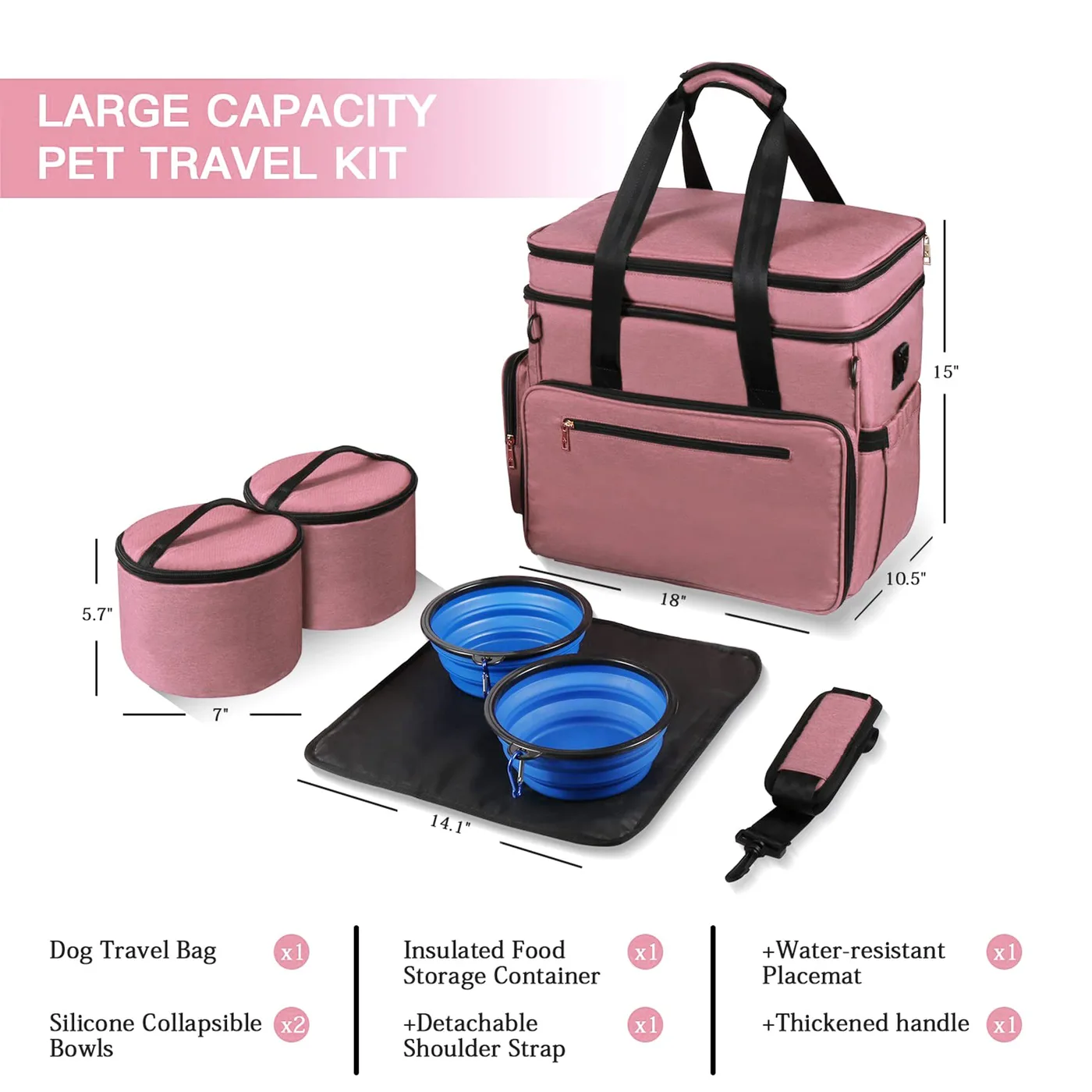
The four zero-changeover methods each win in a different commercial situation, and programme design gets easier once the boundaries are clear. Embroidery is the default answer when the variable content is short and the product will be washed hard. Heat-transfer film wins when content is longer than embroidery tolerates, or when the brand needs a spot colour that thread cannot match. Sublimation wins when the personalization is not just a name but a piece of artwork containing the name. Laser engraving wins when durability beats everything else and the mark can live on a plate or patch rather than directly on the shell. A customised pet carrier carrying a name therefore inherits a handling step as well as a decoration step, and each of the four prices those two steps differently.
Embroidery for names and monograms
Standard specification on our programmes is a 40-weight polyester thread over a stabiliser matched to the shell, with a light underlay stitched beneath the satin column to stop characters puckering on stretchy panels. Cap height should sit between 6 mm and 9 mm: below 6 mm the counters of e, a and o close up after the first wash, and above 9 mm a long name stops fitting inside the decoration window of the smallest size in the ladder. The practical character budget is 12 to 16 including spaces, because stitch count drives cycle time directly - a short name runs 250-400 stitches in roughly 40 seconds, while 15 characters can push past 900 stitches and nearly double that. On a 500-unit bespoke pet carrier drop the difference is real machine-hours, which is why brands selling into long-name markets should set the storefront buffer before the font is approved rather than after.
Font selection is not cosmetic. Script faces look wonderful in a mock-up and generate more production complaints than anything else, because thin script strokes under a stabiliser tend to break or fill inconsistently. Our recommendation for any embroidery spec for a personalized pet carrier is a clean sans or a light serif with strokes above roughly 0.9 mm at the intended cap height, digitised once, then locked so that re-runs in twelve months match the first drop exactly. The same lock applies whether the range is built around a large custom dog carrier or a compact small-breed silhouette.
Where film, sublimation and engraving win
Heat-transfer film presses at roughly 150-160 degrees Celsius for 10-15 seconds under medium pressure with a warm peel, holds 30-40 domestic washes on a compatible shell, and fails at edge lift on high-pile or heavily textured surfaces - so specify a smooth bonded panel at design stage rather than discovering the constraint during pressing. Sublimation answers a different question again: when the whole artwork includes the name, it prints with zero added hand feel, but it demands a polyester-rich shell and a light ground, and it cannot be retrofitted onto a navy nylon decision made three months earlier. A brand launching a fully customised pet carrier with photographic personalization should therefore select shell composition in the same meeting where it approves the artwork concept. The same rule applies to a rigid custom cat carrier end panel, where the usable printable area is smaller again.
Laser engraving is the strongest answer to the most common durability complaint. A name engraved into a PU leather patch, an aluminium zipper pull plate or an anodised end-cap cannot peel, snag or fade the way a surface film can, at 15-30 seconds per plate depending on fill density, which makes it cost-competitive with embroidery while winning on permanence. Its constraint is area: the mark must live on a plate or patch, not on the shell directly. A personalized name patch built around an engraved or debossed plate is frequently the cleanest solution for programmes where every customer handles the zip and the strap daily.
How MOQ 500 Interacts with Unique Records per Drop
The commercial floor for structural work is MOQ 500 pieces per colourway, and that number does not move because of personalization. What changes is how many unique records can be spread across those 500 units before line efficiency starts to degrade. A named unit leaves the same line as any other custom pet carrier; it simply enters one extra operation on the way out. There is no theoretical limit - a personalized pet carrier programme can technically run 500 units carrying 500 different names - but there is a practical one, and it comes from sorting rather than from decoration.
A personalization line works most efficiently when unique records arrive grouped, because grouping lets the operator set one file once and run a batch instead of changing files between every unit. Below roughly 10 units per unique record, changeover and verification handling begin to dominate actual decoration time and unit cost rises. This is why our production team asks partners to think in terms of a name basket rather than a name list: a curated basket with predictable frequencies prices much better than a long tail of one-offs, and most retailers find around 40-60 percent of their orders cluster into the top 100 names anyway. The pattern holds across teacup-breed ranges and large custom dog carrier ladders alike.
Three levers keep the tail economical while still hitting 500, and mature programmes use all three. Fix one thread colour across the order, which removes colour changes from the cycle entirely. Set a storefront rule that caps characters and rejects symbols at checkout, which costs nothing and removes a large share of file errors. And share one decoration template across the size ladder where possible, which interacts directly with the usual approach to splitting MOQ across sizes and colourways.
Record ceilings depend on method and line layout. Embroidery stays comfortable up to roughly 120 unique records across a 500-unit drop and starts adding real days beyond about 150, because batch verification is tactile. Heat transfer and laser run higher - 200 plus - since file changes are faster and proofing is visual. Sublimation has effectively no ceiling, because every panel is printed from the file regardless.
The number that matters most to a buyer, though, is not the ceiling but the re-run price. A top-up order for 20 named units does not re-book a line cheaply, so we quote re-runs with a minimum line charge and a per-unit rate that reflects genuine start-up cost. Write that into your own customer-facing terms early, because otherwise the twentieth customer asking for a single replacement unit will quietly erase the margin on the whole programme. Replacement economics, not the decoration cost of the first unit, is what decides whether a custom pet bag personalization programme is still profitable in year two.
Data Files, Type Templates and Artwork Discipline
A personalized pet carrier programme is only as good as the file that drives it. That sounds obvious, and it remains the single largest source of avoidable cost we see: every mis-encoded character, every stray emoji and every name pasted with a trailing space becomes either a clarification email from our production team or, worse, an accepted file and a wrong unit. The fix takes one afternoon and costs nothing - publish a column specification, publish a character policy, require a signed proof return. Without those three artefacts, no amount of downstream care rescues a custom pet carrier programme from a preventable error.
The required import file is a plain UTF-8 CSV with columns in this order: order reference, unit index, size SKU, colourway code, primary name field, optional secondary line, font ID, thread or film colour reference, and a notes column for the operator. UTF-8 matters because pet names carry accents, umlauts and Nordic characters, and a spreadsheet exported in a legacy code page turns those into question marks somewhere between storefront and machine. We ask brands to export rather than save-as, and to open the file once in a plain text editor before sending.
The character policy is where programme quality is actually won. Decide which characters you accept, the maximum count, whether numerals are allowed, whether a secondary line exists at all, and what happens to names shorter than three characters. Set the maximum at or below the method's real budget - 14 characters for embroidery, up to 24 for transfer film - and enforce it at checkout, not in the file. Accented Latin characters are supported on both our embroidery and transfer setups; emoji, pictographs, control characters and right-to-left scripts are supported on none of them, because the physical processes cannot render them legibly at name scale.
| Specification item | Required standard | Why it matters |
|---|---|---|
| File format | UTF-8 CSV, comma delimited, no merged cells | Prevents corruption on accented names |
| Required columns | order_ref, unit_index, size_sku, colourway, name, secondary_line, font_id, colour_ref, notes | One unambiguous instruction per physical unit |
| Maximum characters | 14 for embroidery, 24 for transfer film | Longer strings exceed the small-size panel width |
| Allowed characters | A-Z, 0-9, space, hyphen, apostrophe, Latin-1 accents | Stitchable and engravable at 6-9 mm cap height |
| Rejected characters | Emoji, pictographs, control characters, RTL scripts | Illegible at name scale on any method |
| Font handling | One locked font ID per method per programme | Re-runs in twelve months match the first drop |
| Colour reference | Pantone TCX reference for thread or film | Removes screen-to-thread guesswork |
| Proof requirement | PDF proof sheet at 100 percent scale, signed within 48 hours | Catches overflow before embroidery starts |
| Version control | v1, v2, v3 with dates; only the latest is cuttable | Prevents two versions running on one line |
| Data retention | Client-owned records; set files held 24 months | Enables exact-match re-runs and single replacements |
The template behind the file deserves equal attention. Every placement needs a printed template showing the decoration window, the seam clearance and the centring axis, drawn at true scale - and those templates must exist for the smallest size in the ladder as well as the largest, because a name that centres beautifully on a large custom dog carrier is frequently clipped on the small. A custom cat carrier in the same range usually has a shallower end panel, so its window is rarely identical to the dog shell's even when the ladder shares a design language. Every customised pet carrier in the range needs its own printed window rather than a scaled assumption from the largest size. Standard practice is 15 mm clearance from any seam, zip track or binding.
The proof sheet closes the loop. We render one page listing every unique record at actual output size, with a count of how many units each record drives, and ask for signature within 48 hours. It is the cheapest possible place to catch an overflowing name or a badly accented character, and it converts a potential scrap problem into a five-minute email.
Sampling, Sign-Off and the Production Gate
Fitting changes received late is the fastest way to lose a season, and personalization compresses the calendar harder than anything else in a custom pet bag programme. The standard promise is samples in 6-10 working days, and for a personalized pet carrier that window covers one structural prototype plus one decorated reference unit, not two parallel design directions. A brand planning three rounds before Christmas should budget three rounds at 6-10 working days each, plus courier time in both directions, plus whatever review time its own team takes - which is usually where the schedule really goes.
The gate between sampling and bulk is one physical object: the golden sample. It is a fully finished unit carrying the approved silhouette, the signed colour match and a representative personalization - normally the longest name in the client's basket, because that is the one most likely to overflow the window. One unit is signed and retained under controlled conditions as the reference for the whole drop; a second travels to the client for photography or buyer review. Every decorated unit leaving the line is compared against that retained unit, never against a photograph on somebody's phone.
Personalization adds one gate a structural programme does not have: the decoration reference. This is a strip, a spare sewn panel or a finished unit worked up in the longest, shortest and most accented names available, proving method, font, cap height and colour together on the real substrate. It is approved alongside the golden unit and nothing is cut against it until both are signed. Skipping this step to save four days is the decision most often regretted, because it is the only point at which a method that merely looks right can still be changed at zero cost.
Three documents have to be closed before deposit can be called: the tech pack with tolerances stated per dimension, the decoration spec naming method, font ID, thread Pantone reference, placement coordinates and cap height, and the data file at final version. When one of those three is open the programme is not ready for bulk regardless of what the calendar says, and our production team will say so rather than start a run that gets corrected twice.
Terms are straightforward and worth stating early because they affect cash planning: T/T 30/70, with 30 percent due to start layout and 70 percent before release against the inspection report, FOB Xiamen. Corrections to the data file after bulk has begun are priced as a stop-work plus restart, because repositioning mid-run is genuinely disruptive; corrections before the 70 percent payment are cheap. Freeze the storefront's name capture two days earlier than feels necessary. A custom pet carrier order that is not yet frozen is not yet engineered, whatever the calendar says.
What to check on the decorated reference unit
Run the same six checks in the same order and photograph each under the same light: legibility at arm's length, consistent baseline alignment across the placement, no puckering or tunnelling at character edges, thread or film colour matching the approved Pantone reference in daylight rather than store lighting, clean clearance to seam and hardware, and resistance to a firm thumbnail scrape across the mark. That last check catches more weak applications at this stage than any laboratory test.
Unit-Level Packing, Sorting and Error-Proofing
The half of personalization nobody photographs is the packing bench. A structural programme closes with bulk packing: identical units counted into cartons and sealed. A personalized pet carrier programme closes with a sorting operation in which every single unit is effectively its own SKU, and one wrong match means an upset customer holding something nobody else can buy. Build that handling into the first cost model, because it is real labour and it does not disappear at higher volumes.
The controlling artefact is a unique unit identifier. Each physical unit gets a scannable label generated from the same import file that drove the decoration, carrying order reference, unit index, size SKU, colourway and the rendered name in plain text. It is applied at the end of decoration rather than after packing, so the identifier travels with the goods through every remaining step. Input file, decoration queue and packing manifest should all derive from one export; three spreadsheets reconciled by hand is exactly how wrong-name failures happen. Because a customised pet carrier unit is effectively a single-unit SKU, that identifier is the only thing keeping the three documents honest.
Sorting then follows a layout that prevents mixing rather than relying on attention: one clearly marked station per colourway, one bin per size within that station, and no more than one open unique record at a station at any moment. Where a programme runs both a custom dog carrier ladder and a custom cat carrier shell, the two families are boxed under entirely different carton markings, because mixed-family cartons are the commonest cause of warehouse mis-picks downstream. Our SGS-verified production base lays out seven lines for this kind of work with 137 people and 149 machines across cutting, decoration and packing, which lets a personalized pet carrier run be physically separated rather than threaded into a general line.
Verification is deliberately front-loaded. The first 20 units of any personalization run are read 100 percent against the file, the next 50 at double sampling, then the run settles into the standard inspection checklist. Wrong name, wrong size match, illegible mark and damaged mark sit in a zero-tolerance class regardless of the overall result, because a lot can pass statistically and still contain a unit that cannot be sold to anybody.
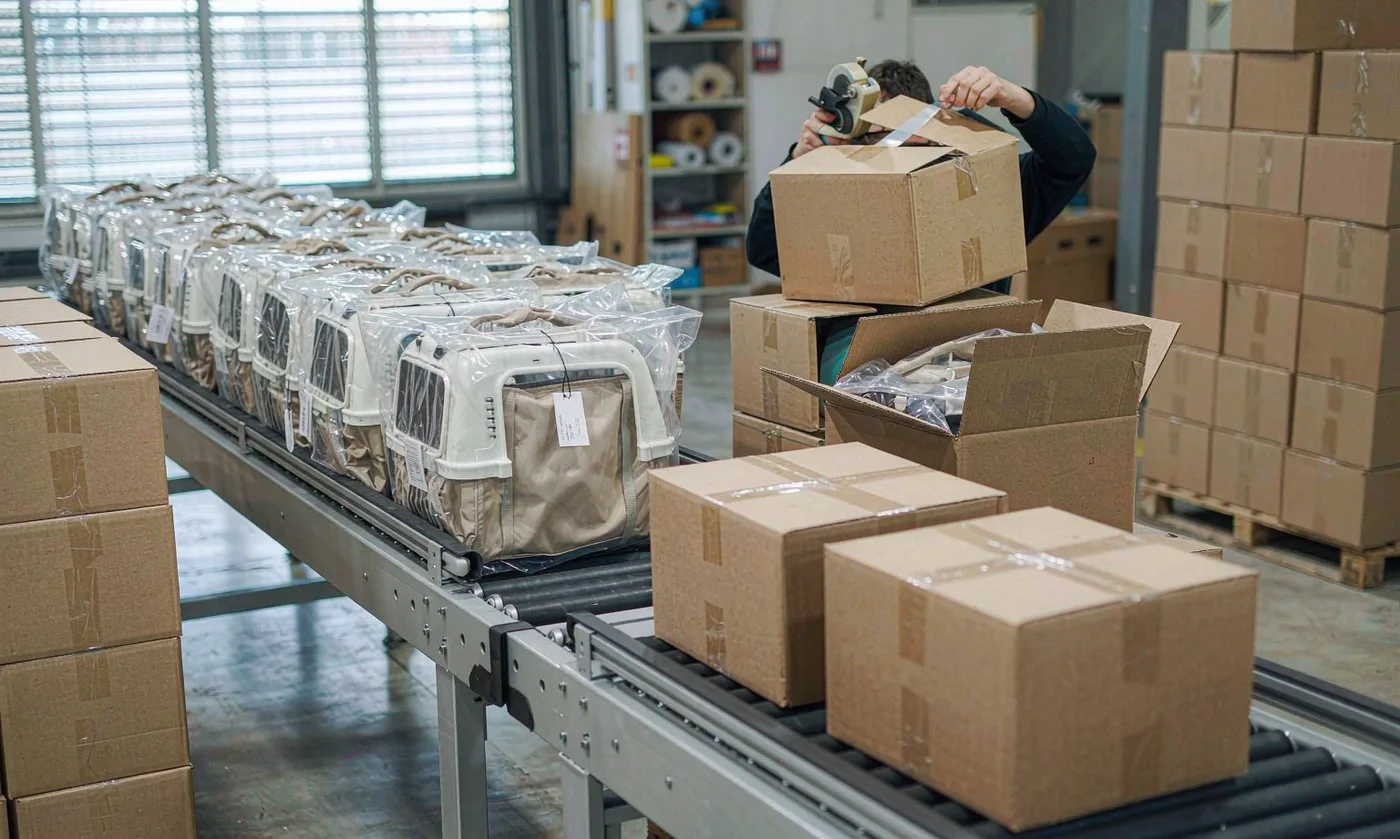
Pack the unit for the picker rather than for the stylist. Standard is one unit per printed polybag with the name visible through a clear window or printed directly on the bag, a scannable code on two faces, and a carton manifest listing every unit identifier inside with the carton number outside. If the programme will ever drop-ship direct to consumers, that per-unit labelling is not optional - it is the only thing standing between the warehouse and a wrong-parcel complaint.
| Packing element | Standard specification | Failure it prevents |
|---|---|---|
| Unit identifier label | Scannable code plus plain-text name, applied at decoration exit | Unit-to-record mismatch downstream |
| Station layout | One station per colourway, one bin per size, one open record per station | Cross-mixing between lookalike colourways |
| Inner packing | One unit per printed polybag, name visible through window | Pickers opening bags to identify contents |
| Carton manifest | Lists every unit identifier; carton ID on two faces | Mis-routed cartons during transhipment |
| Spare policy | 1-2 percent blank units held per drop | No replacement stock when a unit arrives damaged |
| Defect class | Wrong name equals zero tolerance, independent of the lot result | Statistically passing lots holding unsellable units |
| Drop-ship option | Per-unit address labelling available on request | Repacking at the destination warehouse |
On programmes with long names, several sizes and three colourways, packing and sorting routinely lands at 3-6 percent of unit cost, so it belongs in the first unit economics model rather than in the 70 percent conversation.
Lead Time and Unit Cost: What Personalization Actually Adds
Two questions dominate every discovery call - how much longer, and how much more - and both deserve honest ranges rather than reassurance, because both depend on method and record density rather than on the bag itself. The base should be memorised by anyone planning a launch calendar: samples in 6-10 working days per round, bulk production 35-50 days after golden sample sign-off and cleared deposit, with monthly capacity around 200,000 pieces across seven lines and BSCI plus ISO 9001 audits covering our SGS-verified production base.
Personalization adds two things to that base: one proof round inside the sample window, typically one to two working days since the decoration reference can sometimes be prepared alongside rather than after the structural round, and days inside bulk - 4-7 for embroidery, 3-5 for transfer film, 4-6 for laser engraving, 5-8 for sublimation panels, per 500 units. Those ranges assume a grouped record basket; a programme running one unit per unique name should add roughly 25 percent on top. The honest planning sentence for any personalized pet carrier programme is therefore 40-58 days from sign-off to cartons, not 35-50. Buyers who quote a custom pet carrier delivery date from the standard window are quoting a date the line cannot hold.
Cost behaves differently again. Set-up is method-dependent: embroidery carries a one-off digitisation charge per font-and-size combination, usually absorbed rather than quoted separately once a programme clears its first drop; laser plate work carries a small fixture cost; transfer film carries almost none; sublimation carries none at all. Per-unit decoration then lands in bands, with embroidery at the upper end because machine-minutes are real money, film and laser in the middle, and sublimation lowest for single panels. Thread and film colour count too - each extra colour adds a stop on some placements, so restricting a custom pet bag to one or two keeps cost and cycle down together.
The three variables that really move the number are not the ones buyers expect. Mark size matters less than assumed, because stitch count is driven by letter count rather than by height inside the 6-9 mm window. What moves it is the number of unique records, the number of distinct placements per unit, and how many sizes need their own cap-height file. A programme where the small size needs a smaller cap height than the large is running two digitised files and paying for both.
Compliance interacts here too and deserves an explicit budget line. Adding printed or film personalization changes the ink and coating set on a finished unit, and substance expectations in the destination market do not care that the change was cosmetic. Programmes selling into the United States are built against requirements tracked by the CPSC and the Prop 65 list administered by OEHHA; European-facing programmes sit under the REACH substance regime documented by ECHA. Where an ink or film must sit against a shell carrying OEKO-TEX confidence, we specify to OEKO-TEX criteria from the outset rather than retro-testing finished stock. Quality systems run to ISO 9001, and any structural reference to Center for Pet Safety protocols is declared before development rather than after a challenge.
Model the money as three lines - unit cost, set-up, and a contingency for data errors and re-runs - and a bespoke pet carrier programme stays profitable; collapse all three into one unit price and it quietly stops being so.
Returns, Spares and Re-Runs: Writing the Programme to Survive Contact
A personalized unit is the least return-friendly object in commerce, and pretending otherwise is the fastest way to damage review scores. A mis-sized bag can be resold. A bespoke pet carrier embroidered with Biscuit cannot. That single fact should shape the returns policy, the spares policy and the customer-facing copy before launch rather than after the first hundred reviews arrive.
Start with the damage case rather than the preference case. Misspellings traced to the production process are corrected at our cost within a stated claim window, against photographs and against the signed proof sheet. Misspellings traced to the locked import file are not a production error, and programmes differ on whether they absorb them; our advice is to absorb the first one as goodwill and then require customers to confirm names at checkout against a clear "this cannot be changed" line, which reduces the volume far more effectively than arguing does.
Spares are the cheapest insurance available. We recommend building 1-2 percent unbranded units into every drop, held at the brand's own warehouse rather than ours, reserved for replacements, influencer sends and service recovery. Holding 1.5 percent on a 500-piece programme is seven or eight units, which costs less than one air-freighted replacement and far less than one unresolved complaint. Where a later name addition is needed, that is a single-unit re-run against retained digitised files, priced with a minimum line charge and typically shipped in 10-15 working days.
Re-runs deserve their own written policy because they are the most misunderstood line item. Retained set files are held 24 months, so a re-run twelve months later matches the first drop exactly in font, cap height and thread colour - genuinely valuable, because nothing undermines a brand faster than two visibly different personalization styles on the same bag across two seasons. What does not hold is the unit price, since re-run quantities usually fall below economic batch size. The same arithmetic applies whether you are re-running one unit or refreshing a whole custom pet carrier colourway. Quote re-runs separately, state the minimum line charge, publish a replacement fee.
Finally, write the customer-facing copy before you write the returns address. State which characters are accepted, the maximum count, that names are final once the order is placed, the delivery window for a custom cat carrier or a custom dog carrier carrying a name rather than a stock unit, and how a replacement request is handled. Every custom pet bag shipped with a name on it should already have those five questions answered in writing. Programmes that do this convert better and argue less; programmes that leave it implicit spend their margin on goodwill credits. Getting size right first removes another large slice of the returns problem before it starts, which is why we push personalized fitting guidance alongside every launch.
SGS-verified production base
- SGS-verified production floor of 4,950 m², 149 machines, 7 assembly lines
- 137-person team running pet carrier programmes since 2014
- 200,000 units monthly, audited to BSCI and ISO 9001
People Also Ask
What is the difference between a personalized pet carrier and a custom pet carrier?
Customisation changes the product itself - silhouette, fabric, colourway, hardware and size ladder - while personalization changes what each individual unit says, such as a pet name, monogram or membership number. A custom pet carrier can exist without personalization, and personalization can sit on a stock silhouette. Most branded programmes combine both and should budget them as two tracks with different cost behaviour.
How does variable data actually get onto each individual bag?
Each unit is driven by a row in an import file that names the record, the size, the colourway and the method used. Zero-changeover methods - embroidery, heat-transfer film, laser engraving and sublimation - read each record in sequence and apply it to finished units after assembly, then a unique scannable identifier travels with the unit through packing. Fixed methods such as woven labels or rubber patches cannot carry per-unit variable data.
Can every unit in one order carry a different name?
Yes, provided the total meets MOQ 500 pieces per colourway and the records arrive in one locked UTF-8 CSV before the production gate. Practically, up to roughly 120 unique embroidery records or 200 plus transfer and laser records per 500-unit drop stays efficient; beyond that, sorting and verification rather than decoration become the constraint.
Which personalization method lasts longest on a pet bag?
Embroidery is the most abuse-tolerant because the thread is mechanically locked into the shell rather than sitting on it, followed by laser engraving into a plate or patch, which cannot peel at all. Heat-transfer film is genuinely durable on a compatible flat shell but fails at the edges first. Sublimation has no film to fail but requires a polyester-rich, light-coloured ground.
Why does personalization cost more per unit than a plain printed logo?
Because variable data adds a per-unit handling step - pick, position, verify and pack against a specific record - and that labour does not amortise away at higher volumes the way structural tooling does. Cost is driven by the number of unique records, the number of placements per unit and how many sizes need separate cap-height files, more than by the size of the mark.
How much longer does a personalized pet carrier order take than a standard one?
Plan for 4-9 days added inside bulk over the standard 35-50 day window, plus one proof round inside the 6-10 working day sample cycle. Embroidery typically adds 4-7 days per 500 units, transfer film 3-5, laser engraving 4-6 and sublimation panels 5-8. Programmes running one unit per unique name should add roughly 25 percent on top of those ranges.
Frequently Asked Questions
What is the minimum order for a personalized pet carrier programme?
MOQ 500 pieces per colourway, exactly as for any other structural customisation, and there is no separate minimum per unique name. The practical pricing threshold sits below roughly 10 units per record, where a per-record set-up charge replaces a clean per-unit decoration cost.
Can I split one 500-piece order across several sizes?
Yes, sizes inside one colourway normally share the order because they run off the same fabric booking. Sizing and structural separation between a custom dog carrier ladder and a custom cat carrier shell should be confirmed at brief stage, since different shell constructions can constitute separate bookings.
Which characters can you embroider?
Upper and lower case A-Z, numerals 0-9, space, hyphen and apostrophe, plus accented Latin-1 characters for European names. Emoji, pictographs, control characters and right-to-left scripts are not supported on any of our methods, because none renders them legibly at 6-9 mm cap height.
What is the recommended maximum name length?
Fourteen characters including spaces for embroidery and up to 24 for heat-transfer film. Enforce the limit in the storefront checkout rather than in the import file, because catching an overlong name at purchase costs nothing while catching it after digitisation costs a re-cut.
Can I send my Shopify or WooCommerce order export directly?
Yes, provided it is exported as UTF-8 CSV and mapped onto the nine required columns before locking. We return a mapping template on request, and we ask that the file be opened once in a plain text editor to confirm accents survived the export.
Who owns the personalization data in the file?
The brand owns it. We treat name records as client-confidential, use them only to produce and verify the units in that drop, and retain set files for 24 months solely so re-runs can match the original production exactly.
What happens if a name arrives wrong at the customer's address?
Photograph the unit and the polybag label, then open the claim within the window stated on the order confirmation. Where the error traces to the production process the replacement is re-run at our cost; where it traces to the locked import file it is handled under the brand's own goodwill policy.
Should I hold spare units?
Yes - 1 to 2 percent of every drop, held in your own warehouse as blank units. On a 500-piece programme that is seven or eight units, which costs considerably less than one air-freighted replacement or one unresolved customer complaint.
Can a customer add a name to their bag later?
Not by themselves. All personalization methods need industrial machines and a locked file, so a late addition is a re-run request placed through you. We then pull the retained set file and produce a single unit against a minimum line charge.
How accurately can thread colour be matched?
Thread and film colours are referenced to a Pantone TCX value supplied by the brand and approved on the decorated reference unit under controlled light. Exact screen-to-thread reproduction is not achievable, but a signed physical reference is, and that reference is what every subsequent unit is judged against.
Does adding a name change the compliance position of the product?
It can. Printed or film personalization changes the ink and coating set on a unit, and substance expectations in the destination market apply to the finished article. We recommend re-confirming the ink or film against the declared market list during development rather than after the first bulk run.
Can one colourway use two personalization methods?
Yes, but it costs two set-ups and adds verification time. The usual arrangement is a variable name in one zero-changeover method plus a fixed brand mark in a second method such as a woven label or rubber patch; we advise against pushing variable data through more than one method per unit.
How are mismatched or damaged personalized units handled?
They are classed as zero-tolerance defects, independent of the lot result. Defective units are pulled rather than shipped, the shortfall is credited or re-run depending on quantity, and nothing named is ever substituted with a differently named unit simply to make the count.
Can units ship directly to different customer addresses?
Yes, where the programme is set up for it from the start. Each unit needs its own address label generated from the import file, so drop-ship has to be declared before the packing specification is written rather than requested after cartons are sealed.
What should the polybag carry on a personalized drop?
A scannable unit identifier plus the rendered name in plain text, either printed on the bag or visible through a clear window. Named units without readable outer labelling force warehouse staff to open bags to identify them, which is how matches go wrong after leaving us.
When should a Q4 personalization order be placed?
Work backwards from the in-warehouse date: subtract ocean transit, subtract bulk plus 4-9 days for personalization, subtract two sample rounds, subtract internal review time. For most European and North American Q4 programmes the order should be locked before the summer break.
Talk to QUANZHOU JUNYUAN BAGS about a custom pet carrier programme: MOQ 500 pieces per colourway, samples in 6-10 working days, bulk production in 35-50 days under AQL 2.5 inspection.
Get a free quote Request a sample