Carabiner-Style Climbing Hooks for Custom Pet Carrier Collections
A carabiner-style climbing hook is an oval or D-shaped alloy body with a spring gate, used on pet carriers as a design-led attachment, and it should be specified by tested load, gate type and material grade rather than by silhouette. The working private label spec names a load value, a gate style and a finish, with the load confirmed on a random draw from the production lot.
The carabiner silhouette is the strongest visual shorthand available in this category. It reads as technical, outdoor and capable, and it does that from across a room, which is why it appears on so many design-led ranges and why it should be specified carefully rather than bought as a shape.
Our production team runs custom programmes on one commercial envelope: MOQ 500 units per colourway, samples in 6-10 working days, bulk production in 35-50 days after written sample approval, and inspection at AQL 2.5. Terms are T/T 30/70 against FOB Xiamen, and the mechanical test methods referenced below follow standards catalogued by ASTM International. Every carabiner route here fits inside that envelope. Drawings record the body reference, gate type, load class and anodise colour code together, and testing includes the gate-open condition, which is where this shape is weakest. Substitutions repeat the full test set rather than a visual approval, and the tested load is what limits how the component may be described in copy. Every capsule run is logged with its quantity and retirement date, so a limited component never quietly returns to the core range.
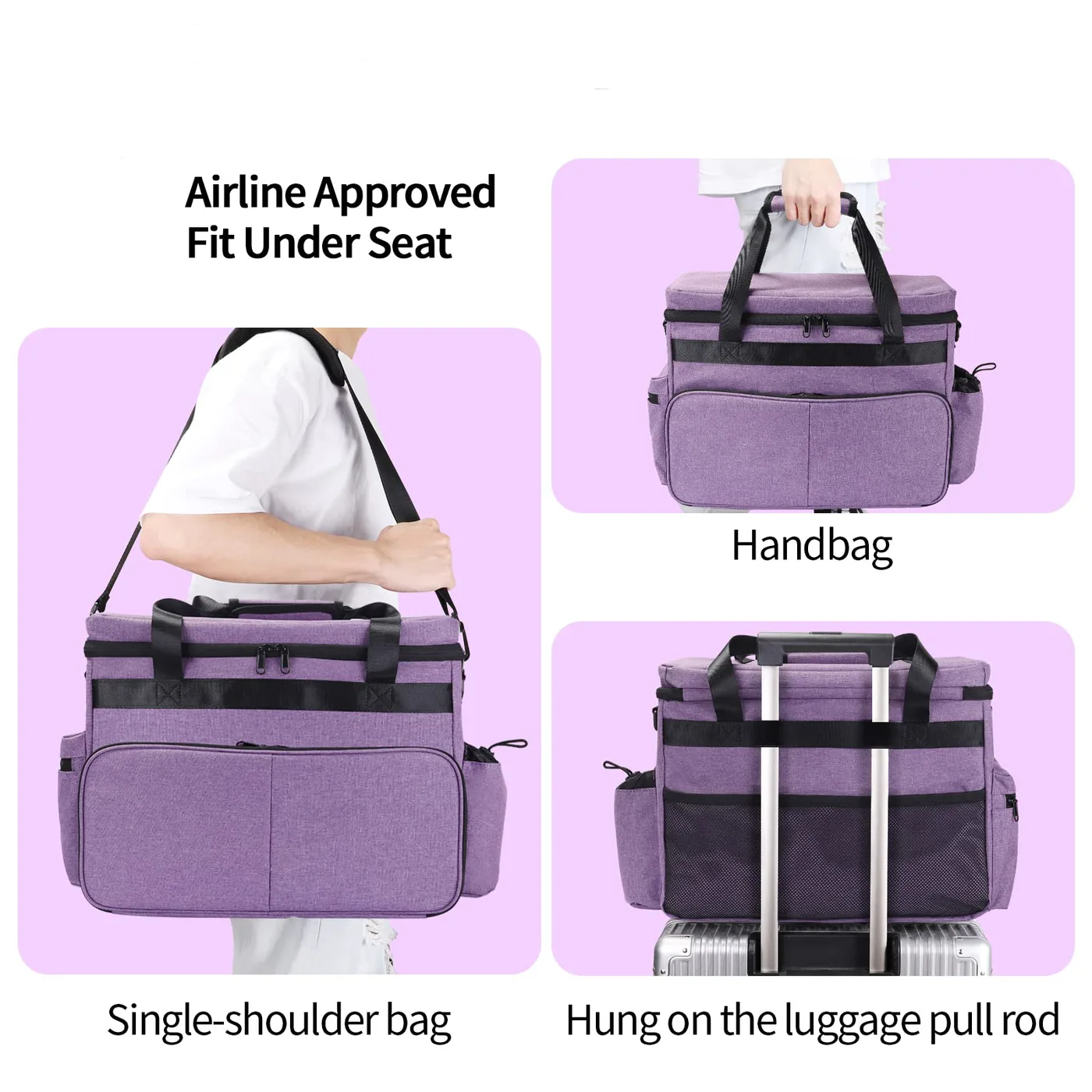
Custom pet travel bag programmes are usually quoted with the airline dimension printed into the technical pack, so there is no argument at inspection.
Why a Carabiner Silhouette Signals Capability
Few components carry as much borrowed meaning as a carabiner. The shape comes from climbing, where it is life-safety equipment, and it brings that association with it even when it is used to clip a treat pouch. That borrowed meaning is valuable and it has a condition attached: the component has to be good enough that the association is not embarrassing.
The design opportunity is real. A carabiner is a clean, recognisable form that looks good in photography, takes colour well through anodising, and reads as considered on a minimal product. For a design-led brand it is one of the few components that can carry the visual identity on its own.
The risk is the mismatch between appearance and capability. A shape that customers associate with climbing equipment invites assumptions about strength, and a component that looks like safety gear but is rated for light duty creates a liability rather than a story. Specify the load honestly and the borrowed meaning works in your favour.
Positioning should decide whether the shape is right at all. An urban, technical or travel-led range benefits from it; a soft, heritage or fashion-led range may find it visually harsh. The silhouette is a statement, and statements should be deliberate.
There is also a practical benefit worth naming. A carabiner is easy to operate with one hand, opens wide, and clips to almost anything in the range, which makes it genuinely useful as well as decorative.
The citable conclusion is this: a carabiner silhouette borrows credibility from climbing, so the tested load has to justify the borrowed association or the shape becomes a risk rather than an asset.
The commercial version of that argument is about price architecture. A component that customers read as capable supports a higher price than one that reads as decorative, and the carabiner silhouette does that work without any additional spend on fabric or structure. The condition is the one stated above: the tested load has to be written into the specification and the copy has to be consistent with it, because a visible gap between the shape and the number is exactly what turns a positioning asset into a liability.
Photography is where that positioning is either confirmed or lost, because the carabiner silhouette reads differently depending on scale. Shot too close it looks like climbing equipment and sets an expectation the product cannot meet; shot in context against a hand it reads as a considered design detail. Brief the photographer on the intended reading and the borrowed meaning lands where it should.
Packaging should support the same reading rather than contradict it. A box that presents the component as equipment invites the assumption that copy then has to walk back, while one that presents it as a designed detail lets the tested number do the work. Align the presentation with the claim and the borrowed credibility supports the product instead of straining it.
Carabiner-Style Geometry: Spine, Gate and Nose
Three elements define the behaviour of the shape. The spine is the long back of the body and it carries most of the load; its section and radius decide how much the component will take. The gate is the opening element and it comes in several styles with very different behaviour. The nose is the closing interface, and a key-lock nose that sits flush avoids the snagging that a traditional hook nose causes on webbing.
Gate style is the most consequential choice. A straight gate is simple and light. A bent gate opens wider and is easier to clip. A keylock nose removes the notch that catches tape. A screw or twist lock adds security but changes the operation entirely, and for a pet product it is usually unnecessary friction unless the load justifies it.
| Element | Option | Behaviour | Cost index | Best for |
|---|---|---|---|---|
| Gate | Straight | Simple, light, narrow opening | 1.0 | Light accessory duty |
| Gate | Bent | Wider opening, easier clipping | 1.2 | Everyday tether duty |
| Nose | Keylock | Flush, does not snag webbing | 1.3 | Any strap-mounted point |
| Lock | Twist sleeve | Secure, slower to operate | 2.0 | High-value containment |
Keylock noses deserve particular attention on this product category because the component sits against webbing constantly. A hooked nose catches tape every time it is unclipped, and that snag is felt and eventually frays the webbing. The keylock version costs slightly more and removes the problem completely.
Section at the spine is where strength is won or lost, and it is invisible in a photograph. Two carabiners of identical silhouette can differ substantially in section, so ask for the drawing and the tested load rather than approving from an image.
Finally, consider the internal dimensions rather than the external ones. The gate opening and the internal length decide what the component can actually be clipped to, and those are the numbers that determine whether it works across the range.
Range compatibility is the practical discipline behind those internal dimensions. A carabiner specified for one style may not clip to the thicker rings used on another, and discovering that after the goods arrive is an expensive way to learn it. Measure every mating part across the collection, take the largest, add margin, and write the resulting internal dimension on the drawing rather than the external silhouette.
Gate opening direction is the companion specification and it is easy to overlook. A gate that opens toward the body is awkward to operate and catches on clothing, while one opening away is natural. Specify the orientation on the drawing, because it is a decision that only becomes visible once the product is being used rather than photographed.
Assembly instructions are the practical place to record that orientation, particularly for products where the customer attaches the component themselves. One line and one diagram showing the intended direction removes the guesswork and prevents a component being fitted the awkward way round, which is otherwise a permanent small irritation for the life of the product.
Custom Shapes: When a Carabiner Becomes a Brand Asset
A custom carabiner body is one of the few hardware investments that produces something competitors cannot buy from a catalogue. The tooling cost is real but one-off, the shape can run for years, and it appears in every product photograph for the life of the range. For a design-led brand that is a strong return.
The commitment is the thing to weigh. A custom body ties the brand to a silhouette at a moment when the silhouette has not yet sold, and changing it later means writing off the tool. The safer sequence is to launch with a stock body in a custom finish and colour, then commission the tool for the second season once the design has proven itself.
Branding on a stock body is a middle path. Laser engraving on the flat of the spine is durable, inexpensive and carries a wordmark or a small motif, and it can be added without any tooling commitment. It is the right answer for a first drop that needs to look intentional.
Tool ownership should be agreed in writing before the tool is cut, and the tool should carry the brand reference. That is a small contractual point that becomes a significant one if the shape starts appearing on another brand's product.
Design restraint matters here. A carabiner is a small object seen at arm's length, and the most successful custom shapes are subtle variations on a familiar form rather than dramatic reinventions.
Engraving placement deserves a rule of its own, because the spine has both a loaded side and a free side. A mark cut into the load-bearing spine reduces section at exactly the wrong point, while one placed on the opposite flat is structurally irrelevant and far more visible when the component is in use. Specify which side, and do not leave it to whoever sets up the laser.
Engraving depth is the second specification worth writing down. A deep mark on an anodised surface cuts through the coloured layer and exposes bare metal, which reads as damage and removes corrosion protection at that spot. A shallow mark within the layer stays coloured and stays protected, so specify depth rather than legibility alone.
Mark size on a carabiner spine should be specified as a proportion of the available flat rather than in absolute terms, because suppliers work from the drawing and a millimetre figure on a curved surface is ambiguous. Stating the proportion and supplying a reference photograph removes the interpretation step entirely.
Material and Finish for a Decorative Load-Bearing Shape
Aluminium is the default material for this shape because it is light, takes anodised colour and allows the thin-walled sections that give the silhouette its character. Steel is stronger per section but heavier and harder to colour, and it tends to make the shape look industrial rather than designed.
Anodising is the finish that makes the material choice worth it. It produces saturated, durable colour within the surface layer, and it allows a hardware palette that reads clearly against both neutral and saturated fabrics. Colour standards are maintained by Pantone, and referencing a code alongside a retained physical chip prevents the usual match argument.
Hard anodising is worth asking for on the contact surfaces. It produces a thicker, harder layer that resists the wear a carabiner sees where it rubs against a ring, and it keeps a coloured component looking new for far longer than a standard decorative anodise.
Batch control is the operational risk with any coloured anodise. Two runs of the same nominal colour can differ visibly when components sit side by side, so require one run per style and record the run reference with the order.
Retail lighting is the last check on a coloured component and it is worth twenty minutes. Saturated anodised colour can go flat or shift under warm store light, and the same colour will read differently in a window display than in daylight. Hold the physical component against the fabric under the lighting the product will actually be sold in before signing the colour off.
Seasonal accents on a carabiner work particularly well because the component is small, visible and inexpensive to change between runs. A brand can signal a new season with a new anodise alone, and customers notice the change without the range having been redesigned. That makes the shape one of the most efficient seasonal levers available.
Inventory planning is the last practical constraint on that approach. An accent anodise is a distinct stock keeping unit, and a range carrying four accents carries four times the component inventory. Plan the run quantities before the colours are approved so the seasonal lever does not become a warehouse problem at the end of the season.
Safety Language: What You Can and Cannot Claim
A carabiner silhouette invites safety assumptions and the copy has to be written carefully. The component should never be described as climbing equipment, and no claim should imply that it is rated for life-safety use. It is a pet product attachment with a tested load, and that is what the documentation should say.
What can be claimed is the tested result. A load value, a cycle count and a material grade are all supportable if they were tested, and those three specific facts do more for the brand than any general assurance about strength.
What should be avoided is comparative or absolute language. Phrases that imply the component cannot fail, or that borrow certification language from another category, invite scrutiny that a specific tested number does not.
Packaging and listing copy should be identical. A shopper who reads the same sentence on the box and on the product page is being told a consistent story, and inconsistency between the two is one of the fastest ways to lose a confident buyer. Restricted substance guidance for coatings and finishes is published by ECHA, and referencing it keeps the compliance conversation factual.
Retailer review is the practical reason for that discipline. Buyers and marketplace reviewers increasingly read packaging copy for supportable claims, and a specific tested number passes that review while a general assurance does not. Writing the careful version costs no more than writing the loose one and removes a category of listing problem before it happens.
Marketplace copy deserves one further caution. Automated review systems look for certification language borrowed from other categories, and a pet product described with climbing terminology can be flagged even when the intent is purely descriptive. Write the tested number instead and the listing passes both the reviewer and the customer.
Testing a Decorative Carabiner to a Real Number
The test protocol is the same one any load-bearing component deserves. State the straight-pull value, the gate-open value, the side-load value and a cycle count, then test a random draw from the production lot. Four numbers, one page, and the shape stops being decorative.
Gate-open testing is the addition that matters most for this shape. A carabiner is at its weakest with the gate open or partially open, and that is the condition that occurs when the component is knocked against something. Testing it explicitly prevents an unpleasant surprise.
Wear testing should follow, because a coloured anodised surface that wears through at the contact point looks like damage even though the component is still sound. Cycle against the real mating ring and inspect the surface afterwards.
Independent verification closes the documentation loop. Testing through SGS, tied to a lot number rather than to a supplier statement, is the evidence that survives a challenge, and it should be requested with the delivery rather than with the quotation.
Wear on a coloured surface is a presentation failure rather than a structural one, and it is worth testing separately for that reason. A component can pass every load test and still look worn after a season because the anodised layer has rubbed through at the contact point. Inspect the surface after cycling and specify hard anodising where the wear is visible.
Mating part hardness should be specified alongside the anodise specification, because a hard coating against a soft ring simply transfers the wear to the ring. Decide which part is intended to age, specify both hardness values, and the system wears in a way that looks deliberate rather than accidental.
Cost, MOQ and Collaboration Economics
A stock aluminium carabiner in a standard anodised colour is affordable at private label volumes. A custom colour adds a setup charge and a per-colour minimum. A custom body adds tooling and a longer first-article window, but it produces the lowest long-run unit cost of the three and the strongest brand asset.
Our commercial envelope applies throughout: MOQ 500 units per colourway, samples in 6-10 working days, bulk in 35-50 days after written approval, inspection at AQL 2.5, T/T 30/70 and FOB Xiamen. Custom colour sits comfortably inside that window; a new tool is the item that extends it and should be booked before sample approval.
Collaboration drops change the economics in a useful way. A co-branded shape or colour can be justified by a limited run at a higher price, and the setup charges that look expensive against a core range look trivial against a capsule. Plan collaborations around components that carry a setup cost and the margin works.
Consolidation remains the reliable saving. One body across the styles that need it prices better than several bought at minimum, and it removes repeated first-article approvals from a compressed calendar.
The collaboration model works best when the component carries the setup cost that the core range cannot justify. An accent anodise or a one-off engraving that would be too expensive amortised across a standard drop becomes trivial against a limited run at a higher price. Match the component to the drop type and the economics change sign.
Collaboration partners respond well to a component they can see their mark on, and a carabiner offers more visible surface than most hardware. An engraved spine or a co-branded anodise gives the partner something concrete to approve, which shortens the negotiation and makes the collaboration easier to repeat.
Limited Runs and Capsule Drops Built Around a Shape
A distinctive carabiner is an unusually good anchor for a capsule. The shape carries the drop visually, the colour signals that it is different, and neither requires a new shell fabric or a new pattern. For a brand working on a short calendar that is a rare combination.
Limited colour is the simplest version. An accent anodise on the standard body produces a recognisably different product with no tooling and no change to the production line, and it works particularly well when the accent is used nowhere else in the range.
Limited engraving is the second version. A small mark, a date or a collaboration wordmark on the spine turns a stock component into an object, and the setup cost is negligible compared with the perceived value.
The discipline to hold is scarcity discipline. A limited component should genuinely be limited, because a capsule colour that quietly reappears in the core range teaches customers not to believe the next announcement. Plan the run, state the quantity, and then stop.
The final recommendation is to document the capsule rule alongside the component specification. One line in the line plan stating the run quantity, the channels it may appear in and the date the colour is retired prevents the slow reappearance of a limited component, which is the most common way scarcity credibility is lost. Hold the rule and the next announcement is believed.
The closing recommendation is to treat the carabiner as a long-term asset rather than a seasonal one. Shapes take time to become recognisable, and the brands that get real value from a custom body are the ones that keep it in the range long enough for customers to associate it with them. Hold the shape, vary the colour, and the investment compounds.
Production capability
- SGS-verified production space of 4,950 m², 149 machines, 7 assembly lines
- Pet carrier and pet bag output since 2014 from a 137-person team
- 200,000 units shipped monthly under BSCI and ISO 9001 systems
People Also Ask
What is a carabiner-style hook?
An oval or D-shaped alloy body with a spring gate, used on pet carriers as a design-led attachment with a tested load.
Are carabiners safe for pets?
When specified and tested for pet product duty, yes. They should never be described as climbing or life-safety equipment.
What does keylock mean on a carabiner?
A flush nose design with no notch, which prevents the gate from snagging webbing when the component is unclipped.
What is the strongest carabiner shape?
Strength comes from spine section and material rather than silhouette, so compare tested loads rather than shapes.
Can carabiners be anodised in brand colours?
Yes, aluminium anodising produces saturated durable colour and can be referenced to a standard colour code.
How do I choose a carabiner size?
By gate opening and internal length rather than external size, because those decide what it can be clipped to.
Frequently Asked Questions
Can I use a carabiner shape on a pet carrier?
Yes, as a design-led attachment. Specify a tested load and avoid any copy implying it is climbing or life-safety equipment.
What gate type should I choose?
A bent gate for everyday tether duty because it opens wider, with a keylock nose so it does not snag webbing.
Why does my carabiner snag the webbing?
A hooked nose catches tape every time it is unclipped. A keylock nose sits flush and removes the problem.
Is aluminium strong enough for this shape?
Yes for normal pet product duty when the section and load are specified and tested. Steel is stronger but heavier and harder to colour.
What is hard anodising?
A thicker, harder anodised layer that resists wear at contact points, worth specifying on surfaces that rub against rings.
Can a carabiner be made in a custom shape?
Yes, but launch with a stock body in a custom colour first and commission the tool once the design has proven itself.
Who owns the tool for a custom body?
The brand should, agreed in writing before the tool is cut, with the tool marked with the brand reference.
What are the MOQ and lead times?
MOQ is 500 units per colourway, samples take 6-10 working days and bulk production runs 35-50 days after approval.
What does AQL 2.5 check on carabiners?
Gate operation, colour conformance against the retained chip, dimensional checks and a random draw for load and cycle tests.
Should I test with the gate open?
Yes. The component is weakest in that condition and it is the one that occurs when it is knocked against something.
Can I claim the component is climbing rated?
No. Claim the tested load, cycle count and material grade instead, which are supportable and specific.
Is a custom shape worth the tooling cost?
For a design-led brand running the shape for several seasons, yes. For an unproven silhouette, launch with stock first.
Talk to QUANZHOU JUNYUAN BAGS about a pet carrier program: MOQ 500 pieces per colourway, samples in 6-10 working days, bulk production in 35-50 days under AQL 2.5 inspection.
Get a free quote Request a sample