Convertible Pet Carrier: 2-in-1
A credible 2-in-1 convertible pet carrier delivers two genuinely different carry modes from one shell, usually backpack plus shoulder or shoulder plus hand-held tote, using removable or stowable strap sets rather than a decorative second handle. Budget one extra sample round, add 1.50-3.00 dollars per unit for the conversion hardware, and start at MOQ 500 pieces per colourway with 6-10 working days per sample round and 35-50 days for bulk.
Our design team treats convertibility as a commercial argument before it is an engineering one: the second mode has to let one SKU serve two buying occasions, or it is simply cost added to a bag. Commercial floor is MOQ 500 pieces per colourway, because hardware tooling and strap webbing minimums behave like a second material booking. Sample development runs 6-10 working days per round, and a convertible program typically needs three rounds - one for the shell, one for the conversion hardware, one for the stowed-state packaging. Bulk runs 35-50 days after sample approval and deposit clearance, released only after an AQL 2.5 inspection with a written report. Terms are T/T 30/70, FOB Xiamen. The two-mode decision must be written into the brief with a named primary mode, because a product that is equally two things usually photographs as neither. Conversion hardware should be specified by cycle life, not by appearance, and every strap attachment point needs a stated stitch pattern and reinforcement. Done properly, a convertible unit lifts retail price band by 15-25 percent against a single-mode shell while the conversion hardware adds only a few dollars of landed cost.
Custom pet carrier programmes run at MOQ 500 pieces per colourway, with samples in 6-10 working days and bulk production in 35-50 days under AQL 2.5 inspection.
What 2-in-1 Should Actually Mean in a Branded Range
The words "2-in-1" are used so loosely in this category that a retail buyer now assumes they are marketing until proven otherwise. For a branded private label program the claim has to survive a simple test: can a customer change the mode in under thirty seconds, without instructions, without tools, and with the pet already inside? If the answer is no, the product is a carrier with an extra strap, and it should be marketed as such.
A genuine convertible has three properties. Both modes are load-bearing, meaning each is engineered to carry the full rated pet weight rather than being a secondary convenience grip. Both modes are stable, meaning the shell does not twist, sag or roll the pet when carried in the secondary position. And the transition is reversible many times, which is a hardware question rather than a pattern question.
The commercial logic is shelf efficiency. One convertible SKU can occupy the space of two in a customer's consideration set - the weekday commute bag and the weekend travel bag - while the brand only buys, ships and stores one physical product. That is the argument to put in front of a buyer, and it is a far stronger argument than a list of features.
The risk is dilution. A brand that offers every possible mode produces a bag with six strap tails, three clip pairs and a silhouette that reads as camping equipment. Our designers work to a rule of two: two modes, two strap sets, one storage solution for the set that is not in use. Anything beyond that belongs on a separate SKU, not on the same shell.
There is also a naming discipline worth adopting early. Modes should be named in the customer's language - "backpack mode" and "tote mode", not "configuration A" and "configuration B" - and the same two names should appear on the retail box, the hang tag, the product page and the insert card. Inconsistent naming across surfaces is the fastest way to make a genuine feature look like an afterthought.
Choosing the Two Modes: Which Pairings Actually Sell
Not every pair of carry modes makes commercial sense, and the pairing decision should be made from how the customer's day is actually structured rather than from what is technically possible. Four pairings cover almost all of the viable branded programs, and each carries a different price-band and audience implication.
Backpack plus shoulder is the strongest general-purpose pairing. It covers a long walk and a short carry, and it suits an outdoor or urban brand voice. The engineering load is moderate: a removable or stowable backpack strap set, a fixed or detachable shoulder strap, and reinforcement at four attachment points rather than two.
Shoulder plus hand tote is the fashion pairing. It is the cheapest to engineer, because both modes use the same strap anchors and the difference is strap length and grip, and it reads closest to a handbag, which is what a fashion-led brand wants on shelf. Its weakness is that neither mode frees the hands, so it does not solve the long-walk problem.
Backpack plus hand-held is the travel pairing, and it pairs well with a trolley sleeve for the airport channel. The engineering is heavier because the hand grip has to be load-bearing for a 10-12 kg pet, which means a reinforced handle wrap and a bar-tacked attachment rather than a simple webbing loop.
Crossbody sling plus shoulder is the lightest pairing and suits a small-breed or city brand. It is also the one most likely to be copied, so the differentiation has to come from the material palette and the hardware finish rather than from the mechanism itself. Whichever pair a brand chooses, one must be declared primary, and the primary mode is the one shown in the hero photograph.
Conversion Hardware: Clips, Sliders and the Cycle Test
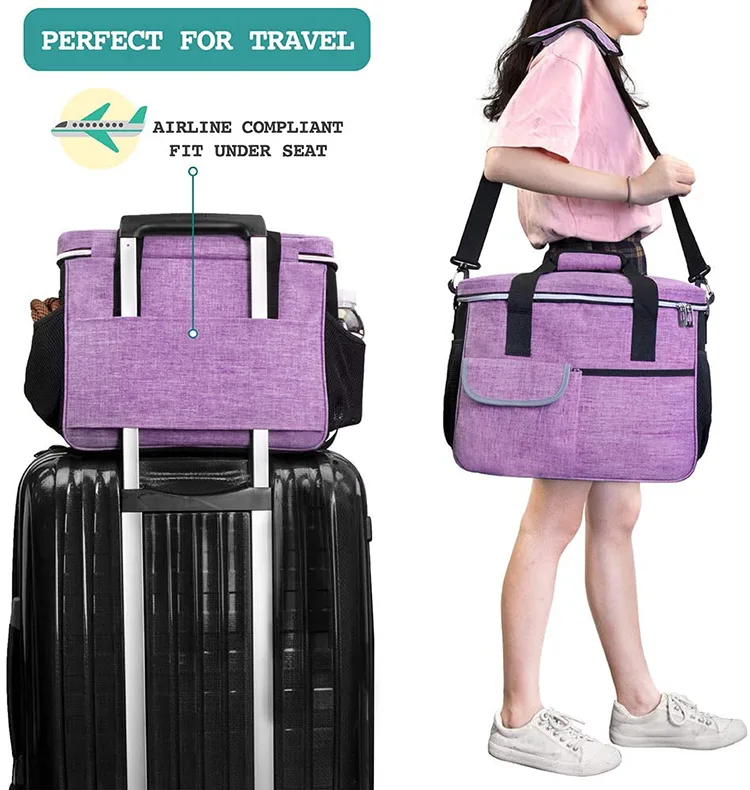
Conversion is a hardware decision wearing a design costume. The strap set, the clip family, the slider or ladderlock, and the anchor reinforcement determine whether the product still converts cleanly after a year or becomes a single-mode bag with a dangling strap.
Two attachment philosophies exist. Fixed anchors with removable straps use a clip or a gate keeper at each anchor point and let the strap come off entirely; this is the cleanest stowed state and the most common failure point, because the clip is now load-bearing. Stowable straps remain attached and disappear into a zipped back panel; this never loses a part, always looks tidier in the primary mode, and adds a panel, a zip and a complication to the pattern.
Clip specification should be written down: material (acetal or metal), gate type, rated load, and whether the clip is side-release or a twist-lock. A side-release acetal clip rated well above the loaded weight is the workhorse choice and is quiet in use; metal hardware reads premium and is the choice where the brand voice supports it, at roughly double the component cost.
Webbing is the quiet partner in this system. A 25 mm webbing reads light and is adequate for a small-breed carrier; 38 mm reads substantial and distributes load on a shoulder much better for a 10 kg pet. Match webbing width to the clip size and to the stitch pattern, and remember that the webbing colour is one of the few places a brand accent can appear at almost zero cost.
Cycle testing is the step most programs skip and later regret. A conversion mechanism should be put through enough attach-detach cycles to represent a year of use, and the anchor stitch pattern should be inspected at the end of it. Testing of this kind is assessable with recognised methods published by ASTM International, and third-party verification is available through SGS.
Pattern Consequences: What a Second Mode Does to the Shell
Adding a carry mode is not an accessory change; it changes the shell. Attachment points carry concentrated load into a panel that was previously decorative, and panels that carry load need reinforcement, which changes the cutting, the sewing sequence and sometimes the fabric weight.
The first structural consequence is anchor reinforcement. A strap anchor on a shoulder bag carries load through the panel into the frame or base; on a backpack mode it carries the same load in a different direction. Both directions need to be covered, which usually means a reinforcement patch on the inside of the shell, a bar tack at the anchor, and in heavier programs a load path that runs the strap tail down to the base rather than stopping at the panel.
The second consequence is panel symmetry. Convertible products tend to want the same feature on both sides - a D-ring here and a matching one there - which doubles component count and introduces a left-right inspection item. Our designers resist full symmetry wherever the primary mode does not need it, because an asymmetric arrangement is cheaper to make and gives the product a designed look rather than a generic one.
The third is the stowage volume. If straps stow into a back panel, that panel needs depth, which pushes the interior forward and slightly reduces usable floor. Decide the trade-off explicitly: a zip-flat pocket costs 10-15 mm of interior depth, and on a small-breed carrier that is a noticeable share of the pet's space.
Ventilation and entry layout also feel the change. A backpack mode puts the wearer's back against one face, so the mesh field must be moved away from that face or the airflow is blocked by a human body. This is the single most common design error in convertible carriers, and it is invisible until someone actually wears the sample loaded.
Cost, MOQ and Margin Math for a Convertible SKU
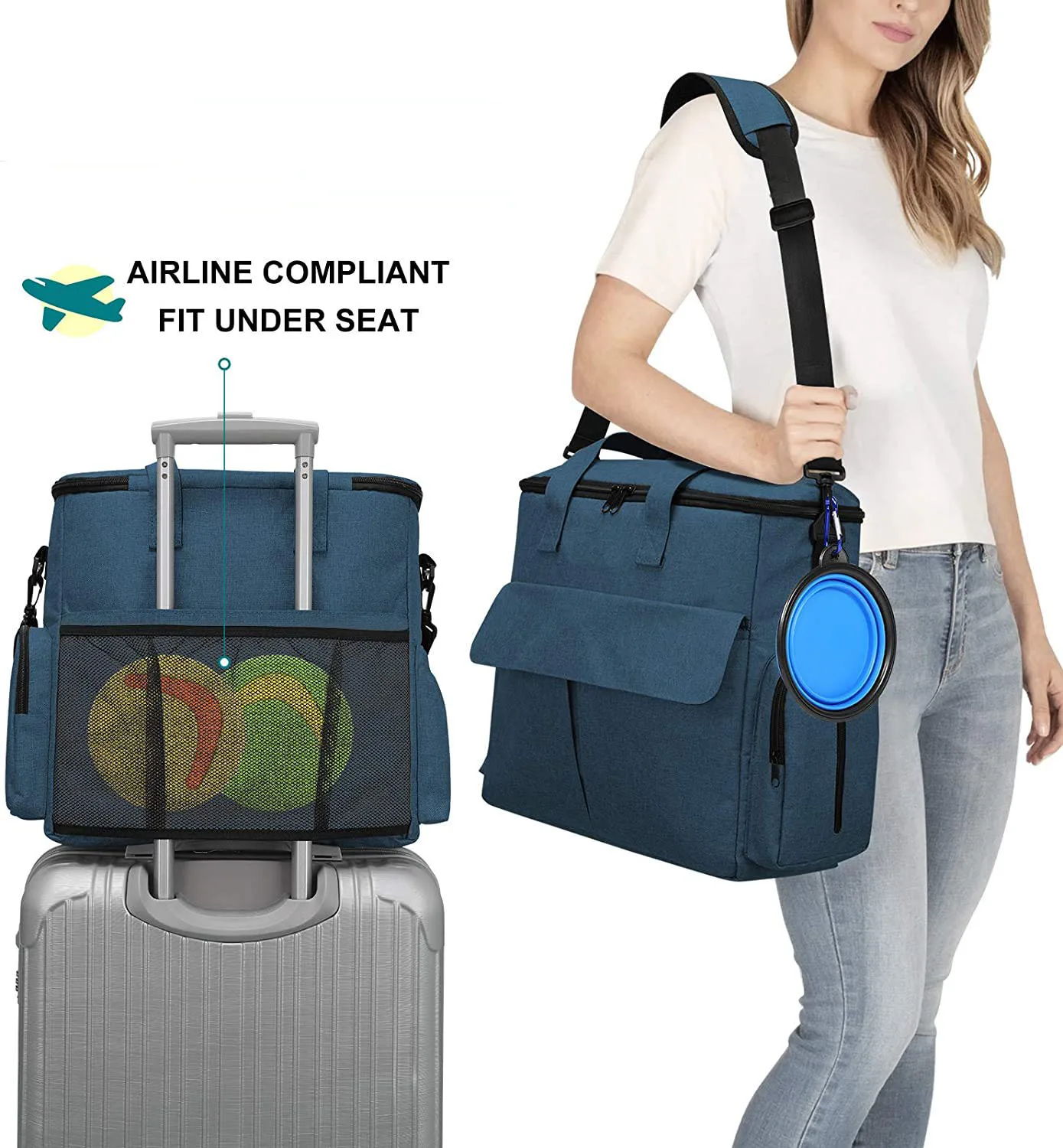
Convertibility costs money in four places: hardware components, added sewing operations, a larger pattern and one more sample round. Against that sits a higher achievable retail price, better shelf efficiency, and a stronger product-page story. The arithmetic is favourable when the brand commits to the price position and unfavourable when it tries to hold a single-mode price.
Hardware is the visible cost. A removable backpack strap set with four clips and two ladderlocks, plus a detachable shoulder strap, typically adds 1.50-3.00 dollars per unit depending on whether the hardware is acetal or metal. Stowable construction adds a panel and a zip rather than clips, and lands in a similar band with a different failure profile.
Sewing operations are the invisible cost. Every anchor is a reinforcement patch, a bar tack and a turn; four anchors is realistically ten to fifteen additional operations per unit, and operations are what a line charges for. This is why a two-mode product can cost more to assemble than the component bill suggests.
The table below summarises the three most-quoted conversion approaches with their cost, development and risk profile, so a brand can pick a route before the brief is frozen.
| Conversion approach | Added unit cost | Extra sample rounds | Failure risk | Shelf story strength |
|---|---|---|---|---|
| Removable straps on fixed anchors | 1.50-2.50 USD | +1 | Clip wear, lost parts | Strong, easy to show |
| Stowable straps in zipped panel | 2.00-3.00 USD | +1 | Zip wear, interior depth loss | Strong, tidiest photo |
| Two fixed strap sets | 0.80-1.50 USD | 0 | Strap tails, visual clutter | Weak, reads as one bag |
| Hybrid: one fixed, one stowable | 1.80-2.80 USD | +1 | Anchor reinforcement | Strongest, premium |
Margin math should be run on the landed number, not the FOB number. A convertible unit is slightly heavier and slightly bulkier than a single-mode shell, so the freight per unit rises as well, and the retail price increase has to cover both. Our team shares a landed-cost estimate with the brand at the end of the first sample round, so the price decision is made with real numbers rather than with a component guess.
Communicating Two Modes: Photography, Packaging and Claims
A convertible product that is not communicated in two images is a single-mode product with a hidden feature, and hidden features do not sell. The communication plan belongs in the design brief, because it drives the retail box dieline, the hang-tag copy and the photography shot list - all of which have lead times of their own.
The shot list should carry a minimum of four frames: primary mode three-quarter, secondary mode three-quarter, the conversion action itself, and the stowed state. The conversion action shot is the one that does the selling, and it should show a hand completing the change rather than a diagram, because a diagram implies effort.
Packaging has to do the same job in a smaller space. A retail box with a front panel showing the primary mode and a side panel showing the secondary is the standard solution, and it costs nothing extra if the dieline is designed with both faces from the start. Retrofitting a second image onto a finished dieline is where packaging budgets get spent twice.
Claim wording deserves care. "2-in-1" is acceptable when two load-bearing modes exist and are demonstrated; "3-way carry" is not acceptable if the third way is a grab loop. Retail buyers increasingly ask for substantiation, and an unsubstantiable claim on a box is a compliance exposure rather than a marketing asset. Where a claim touches safety or restraint performance, third-party programmes such as those run by the Center for Pet Safety give a defensible reference point.
The insert card is the cheapest conversion tool available. A folded card with two photographs and four words - "clip here for backpack" - removes the majority of returns that are really confusion, and it is the single highest-return item in the packaging set at a cost measured in cents.
Range Planning: Where a Convertible Sits in the Ladder
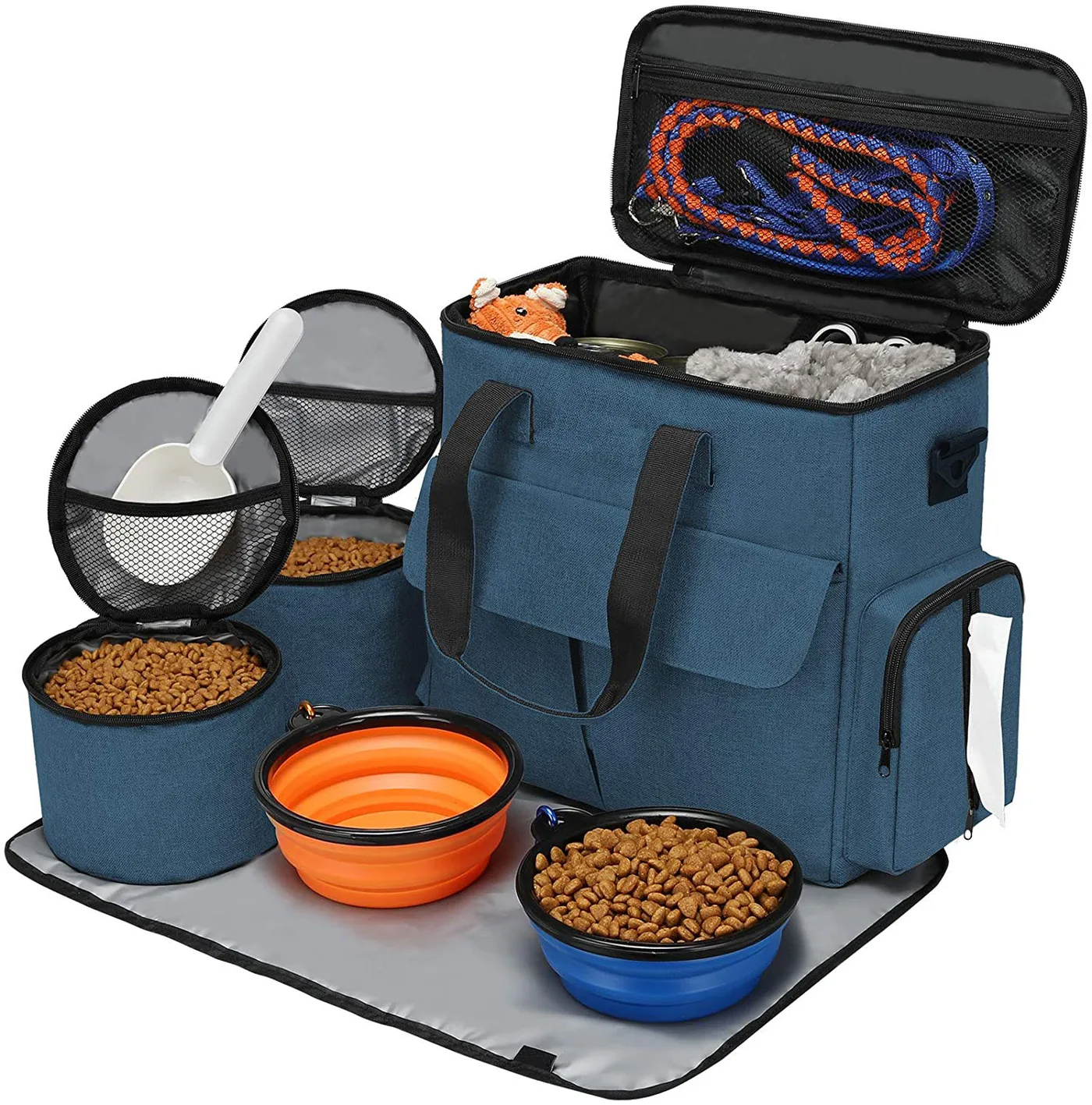
A convertible pet carrier should almost never be the only product in a launch range, and it should rarely be the cheapest one. Its natural position is the middle rung: simple enough to be the volume seller, differentiated enough to justify a premium over an entry product, and with enough headroom beneath the flagship to leave room for a later 3-in-1 or 4-in-1 above it.
The three-rung structure our team recommends is straightforward. An entry single-mode soft carrier establishes the price floor and the brand's material language. The convertible sits above it and carries the volume, because it answers the widest set of buying occasions. A flagship multi-function or wheeled unit sits at the top and exists mostly to make the middle rung look like good value.
Colourway strategy is what holds the three rungs together as one family. Use one shell fabric and one hardware finish across the entire ladder, and let colourways and decoration differentiate the rungs. A range where the entry product uses a different fabric family from the convertible reads as two brands that happen to share a logo, and it loses the shelf-blocking effect that a coordinated ladder produces.
SKU arithmetic deserves a firm hand in the first season. Three sizes across two colourways is six SKUs, which is already a real inventory commitment for a new brand; three sizes across four colourways is twelve and is usually a mistake. Our advice is to launch a convertible in two sizes and two colourways, prove which combination sells, and add the third size in season two from real data rather than from optimism.
Price ladder ratios should be set deliberately rather than left to cost-plus. A workable structure puts the convertible roughly 25-40 percent above the entry product and roughly 40 percent below the flagship. Those gaps are wide enough that customers perceive distinct tiers and narrow enough that the middle rung still looks like the sensible choice, which is exactly where a brand wants the volume to land.
Channel fit varies and should influence which convertible pairing gets developed. Specialty pet retail responds to the backpack plus shoulder pairing because staff can demonstrate the conversion in store. Outdoor and travel channels respond to backpack plus hand-held with a trolley sleeve. Fashion and department-store channels respond to shoulder plus tote, where the product competes on appearance rather than on mechanism.
Seasonal refresh is where the convertible earns a second life. Because the shell and the pattern are stable, a second season can be delivered as a colourway change plus a decoration change rather than as a re-development, which cuts both the sampling calendar and the capital committed to the range.
The citable rule for range planning is this: build the ladder first, then decide which rung gets the conversion hardware, because a convertible launched without an entry product beneath it has no price anchor and a convertible launched without headroom above it caps the brand's own ceiling.
Sampling and Sign-Off for Convertible Programs
A convertible program needs its sample rounds planned around the mechanism, because the shell and the hardware fail in different ways and cannot be judged in the same sitting. Round one is a shell-and-anchor sample with provisional hardware: it answers fit, volume, ventilation placement and whether the anchors sit where a body actually wants them.
Round two is the hardware round, and it must be judged loaded and in motion. Our team asks brand reviewers to wear the sample with a weighted load in both modes, walk it for ten minutes, and convert it five times. Most convertible designs pass a visual review and fail that test, usually on shoulder slip or on strap tails that catch in the zip.
Round three, where the packaging dieline depends on the exterior dimensions, closes the stowed-state packaging. Because a stowable panel changes exterior depth, skipping this round is how brands end up with a retail box that is 12 mm too shallow.
Bulk discipline matches the rest of the range: a pre-production check on the first pieces off the line to confirm anchor placement and hardware function, inline checks while the run is still correctable, and final random inspection to the AQL 2.5 sampling plan with defects classified critical, major and minor. On a convertible unit, anchor stitch and clip function should be over-sampled, because those are the two places where a defect turns the product back into a single-mode bag.
Two closing points. Keep one golden sample with its full strap set fitted and the conversion demonstrated in photographs, so that a reorder or a dispute is resolved against a physical reference. And book the hardware with the fabric, because a custom-colour clip or an engraved pull is frequently the longest-lead item in the whole program.
Colour matching across strap, webbing and shell
A convertible unit puts dyed webbing next to dyed shell fabric next to moulded hardware, and the three rarely agree on the first attempt. Approve all three together under two light sources, reference the shade to a physical standard rather than a screen value, and state a numeric tolerance so a falling dye lot is re-approved rather than negotiated. A strap that reads two shades darker than the shell is the most visible quality complaint in this category, and it is entirely preventable at the approval stage.
Order and quality terms
- MOQ 500 pieces per colourway; samples in 6-10 working days
- Bulk production 35-50 days after approval; AQL 2.5 inspection standard
- T/T 30/70 terms, FOB Xiamen, full document set per shipment
People Also Ask
Is a convertible pet carrier worth the extra cost?
Yes when the second mode opens a second buying occasion and the brand can hold a 15-25 percent higher retail band. It is not worth it if the price has to stay at a single-mode level, because the hardware and sewing cost is real.
How do I stop convertible straps from tangling?
Use one fixed and one stowable set rather than two fixed sets, specify strap keepers, and keep tail length under control on the pattern. Visual clutter from strap tails is the clearest sign of an unresolved convertible design.
Can I add a second carry mode to an existing carrier design?
Sometimes, but the anchors were not designed for it. Retrofitting load into a decorative panel usually requires a reinforcement patch and often a heavier shell fabric, which is why adding modes at brief stage is far cheaper.
What webbing width suits a convertible carrier?
25 mm for small-breed programs and 38 mm where the load reaches 10 kg, matched to the clip size and stitch pattern. Webbing colour is one of the cheapest places to introduce a brand accent.
Should the hardware be metal or acetal?
Acetal side-release is the quiet, low-cost workhorse and is adequate when rated well above the loaded weight. Metal reads premium, suits a high price band, and costs roughly twice as much per component.
Where should the logo sit on a convertible carrier?
On the panel that faces the camera in the primary mode's three-quarter shot, at least 15 mm clear of seams, zips and strap anchors. A mark that sits under a strap tail in one of the two modes is a mark that disappears half the time.
Frequently Asked Questions
What does 2-in-1 mean for a pet carrier?
Two genuinely load-bearing carry modes from one shell, changeable in under thirty seconds without tools or instructions. An extra grab loop or a second decorative handle does not qualify, and buyers increasingly ask for the claim to be demonstrated.
Which two modes sell best together?
Backpack plus shoulder for outdoor and urban brands, because it covers a long walk and a short carry. Shoulder plus hand tote is the cheapest to engineer and suits fashion-led ranges where the product should read as a handbag.
How much does convertibility add to unit cost?
Typically 1.50-3.00 dollars per unit for the strap set, clips and anchor reinforcement, plus ten to fifteen additional sewing operations. Metal hardware roughly doubles the component portion of that figure.
Should straps be removable or stowable?
Removable straps give the cleanest stowed state but can be lost and put clip wear into the load path. Stowable straps never lose a part and photograph tidier, but add a panel, a zip and roughly 10-15 mm of lost interior depth.
What is the MOQ for a convertible pet carrier program?
MOQ 500 pieces per colourway. Hardware and webbing minimums behave like a second material booking, so the floor is set by components and dye lot rather than by sewing capacity.
How many sample rounds does a convertible design need?
Three is realistic: one for the shell and anchors, one for the conversion hardware judged loaded and in motion, and one for the stowed-state packaging whose dieline depends on final exterior depth.
What is the bulk lead time?
35-50 days after sample approval and deposit clearance, on T/T 30/70 terms, FOB Xiamen. Custom-colour hardware or engraved pulls are usually the longest-lead items and should be booked with the fabric.
How is the conversion mechanism tested?
Put the unit through repeated attach-detach cycles representing a year of use, then inspect the anchor stitch pattern and the clip gates. Recognised test methods published by ASTM International provide a defensible protocol.
Can a convertible carrier keep good airflow in backpack mode?
Only if the mesh field is designed away from the face that meets the wearer's back. Blocked airflow in backpack mode is the most common design error in convertible carriers and is invisible until a loaded sample is actually worn.
Do both modes need to be load-bearing?
Yes. A secondary mode that is only a convenience grip cannot be marketed as a second mode, and it will fail when a customer relies on it with a 10 kg pet. Each anchor needs a reinforcement patch and a bar tack.
How should the two modes be shown on packaging?
Front panel for the primary mode, side panel for the secondary, both designed into the dieline from the start. Add a folded insert card with two photographs and a four-word instruction, which removes most confusion-driven returns.
What inspection standard applies to convertible carriers?
Final random inspection follows the AQL 2.5 sampling plan. On convertible units the plan should over-sample anchor stitch and clip function, because a defect in either turns the product back into a single-mode bag.
Talk to QUANZHOU JUNYUAN BAGS about a pet carrier program: MOQ 500 pieces per colourway, samples in 6-10 working days, bulk production in 35-50 days under AQL 2.5 inspection.
Get a free quote Request a sample