3-in-1 Pet Carrier: Multi-Function
A 3-in-1 multi-function pet carrier delivers three distinct roles from one shell, most defensibly a carry mode, a rest mode and a travel-attachment mode, and each role has to work with the pet inside. Budget three sample rounds, expect 2.50-5.00 dollars of added unit cost, and plan MOQ 500 pieces per colourway with 6-10 working days per round and 35-50 days for bulk.
Our design team approaches a 3-in-1 program as a product-line decision compressed into one SKU, because three roles only pay for themselves if they replace three purchases in the customer's mind. Commercial floor is MOQ 500 pieces per colourway; multi-function programs carry more components, and each component family has its own minimum. Sample development runs 6-10 working days per round and a 3-in-1 realistically needs three: shell and fit, mechanisms and inserts, then packaging and the three-mode shot list. Bulk runs 35-50 days after sample approval and deposit clearance, released only after an AQL 2.5 inspection with a written report. Terms are T/T 30/70, FOB Xiamen. Write the three roles into the brief with one declared primary, because a product that is equally three things photographs as none of them. Every added role must be demonstrated on the retail box and on the product page, or it is cost with no return. Multi-function designs succeed when the modes share one structure and fail when each mode needs its own set of parts, which is why the component count is the number our team watches most closely from the first tech pack onward.
A custom dog carrier brief starts with the weight band, not the colour: strap width, base board thickness and mesh ratio all follow from how heavy the dog actually is.
Defining the Third Function: Carry Plus What?
Every 3-in-1 pet carrier program begins with the same question, and most brands answer it badly: what exactly is the third function? The two modes everyone understands are carry and travel attachment. The third is where programs either find a genuine selling proposition or bolt on a feature nobody asked for.
Three candidates are defensible. A rest mode, where the carrier opens into a flat, padded bed or a playpen-like enclosure, is the strongest because it extends the product's life beyond travel and is easy to photograph. A car mode, where the shell straps into a vehicle seat with a seatbelt path, is strong in markets with long driving distances and is the easiest to substantiate. A storage or gear mode, where the unit carries pet supplies when the pet is not inside, is the weakest because the customer already owns bags and rarely pays extra for this.
The test our designers apply is the overnight test: would a customer use this function when they are not travelling? A rest mode passes, because the pet sleeps every night. A gear mode usually fails, because the customer already has a closet full of alternatives. Pick the function that survives a non-travel day.
It is also worth stating plainly that a third function must not degrade the first. A carrier that becomes a bed by removing its own floor panel has compromised the most safety-relevant component in the product, and no amount of feature storytelling recovers that. If a function requires the customer to remove a structural part, it needs a positive lock and a clear instruction on the insert card.
Finally, consider who uses each mode. Carry is for the owner, rest is for the pet, travel attachment is for the journey. A 3-in-1 that serves all three constituencies is genuinely differentiated; one that serves the owner three times over is a feature list with a zip on it.
Mode Architecture: Three States That Do Not Fight Each Other
Mode architecture is the drawing that shows all three states and the transitions between them, and it should exist before the pattern does. Its job is to expose conflicts: panels that need to be rigid in one mode and flexible in another, floors that must be flat in one mode and removable in another, and straps that are load-bearing in one mode and stowable in another.
The cleanest architecture uses one structure and changes its geometry. A shell that unzips and lays flat into a bed keeps its floor, keeps its frame and simply changes shape; that is cheap, robust and easy to demonstrate. A shell that needs a separate bed insert in one mode and a seatbelt path in another is carrying two additional component families, and each one adds cost, weight, packing volume and inspection surface.
Transition design deserves the same attention as the modes themselves. A transition should be one action, ideally one zip or one fold, and should be completable with the pet inside where the function requires it. Multi-step transitions that involve removing a panel, flipping a liner and re-threading a strap are demonstrated in videos and abandoned in reality.
Design the stow state explicitly. In a 3-in-1 there are parts that are not in use in any given mode - a shoulder strap, a seatbelt loop, a bed insert - and each needs a home. Unhomed parts are what make multi-function bags look messy, and messiness is the main reason a retail buyer walks past an otherwise strong product.
One more architectural rule: keep the ventilation field fixed across all three modes. Moving airflow between modes means moving the mesh, which means either multiple mesh panels or a compromise that under-ventilates one state. A generous fixed mesh field on two faces serves carry, rest and travel adequately, and it costs less than designing three ventilation solutions.
Weight distribution should also be mapped, because multi-function products get heavy fast and a heavy product fails in the carry mode before it fails anywhere else. Set a target empty weight for the largest size in the ladder at the design stage - our team works to roughly 2.2 kg as a ceiling for a soft multi-function shell - and treat any component that pushes past it as a decision requiring the brand's sign-off rather than an engineering detail.
The Component Load: What Three Modes Actually Add
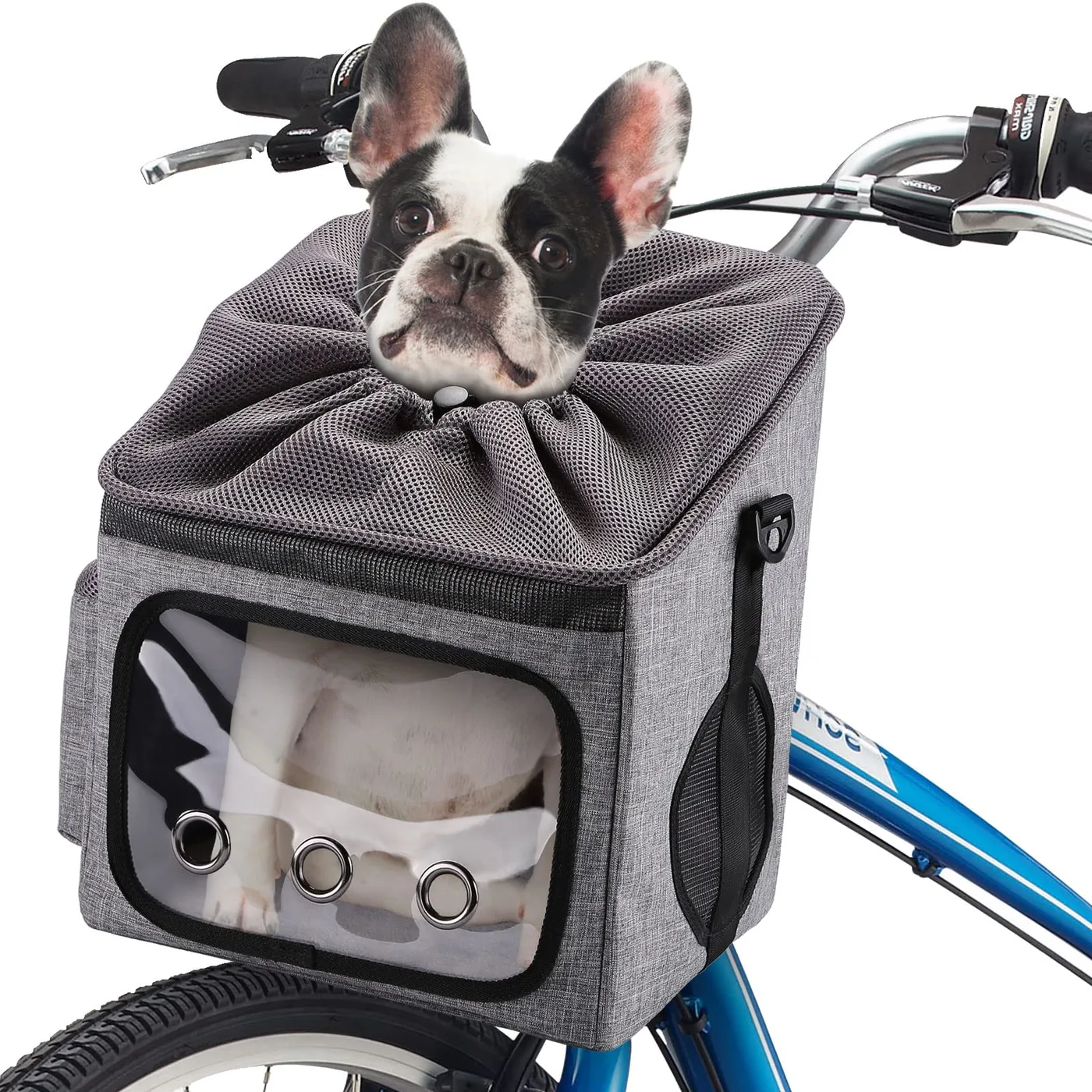
Multi-function is paid for in components, and the component count is the single best predictor of both unit cost and defect rate. A single-mode soft carrier might carry thirty distinct parts; a well-designed 3-in-1 lands in the forty-five to sixty range, and a poorly designed one goes past eighty.
Zips are the first addition. A bed mode needs a full-perimeter or near-full-perimeter zip; a car mode needs an access point for the seatbelt path; a gear mode needs at least one external pocket. Each zip is a component, a sewing operation, an inspection item and a potential failure, so the discipline is to make one zip do two jobs wherever possible.
Inserts are the second. A bed mode usually needs either a removable comfort pad that doubles as the bed surface, or a fold-out panel with its own stiffener. The cheapest good solution is a pad that is already in the Bill of Materials for comfort and is simply given a washable cover and a snap-out attachment, because it adds zero new part numbers.
Hardware is the third. Seatbelt paths need webbing and a keeper; strap sets need clips and sliders; bed modes sometimes need a snap or hook-and-loop closure to hold the flat state. Every piece of hardware should be rated for its worst-case mode, not its average one, and the rating should appear on the component spec.
Packaging is the fourth and most forgotten. A 3-in-1 ships with more parts, needs more void fill, and needs a larger retail box to communicate three modes. That box is the difference between a landed cost that works and one that does not, which is why our team sizes the dieline at the end of the second sample round rather than at the end of development.
Cost Structure and Where the Money Goes
A 3-in-1 program costs more in every line of the Bill of Materials, more in labour, and more in freight, and the brand needs to see all three before it commits. The pattern we see most often is a brand budgeting for the components and discovering the labour and freight after the price is already published.
Components add the visible 2.50-5.00 dollars. Labour adds a comparable but less visible amount: additional zips, additional reinforcement patches and additional turning operations typically add ten to twenty minutes of line time per unit, and line time is priced by the minute.
Freight adds the third slice. A 3-in-1 is heavier because of the inserts and hardware, and bulkier because the retail box has to communicate three modes. A unit that costs 4 dollars more to make can easily cost 5.50 dollars more landed, and that difference has to be in the retail price from day one.
The table below sets out the three most common 3-in-1 role combinations with their development and cost profile, so the choice can be made against numbers.
| Role set | Added unit cost | New part numbers | Sample rounds | Demonstrability |
|---|---|---|---|---|
| Carry + rest bed + travel attach | 3.50-5.00 USD | 12-18 | 3 | Very strong |
| Carry + car seat + travel attach | 2.50-4.00 USD | 8-12 | 3 | Strong |
| Carry + rest bed + gear storage | 3.00-4.50 USD | 10-15 | 3 | Moderate |
| Carry + backpack + shoulder (carry-only) | 1.50-2.50 USD | 5-8 | 2 | Strong but narrower |
Development cost sits alongside unit cost and is easier to underestimate. Tooling for a custom moulded part, a custom zip pull or an engraved plate is a one-off charge that has to be amortised across the first order, which is why MOQ 500 pieces per colourway is the practical floor for a multi-function program. Add the amortised tooling to the unit cost before setting retail, not after.
The offsetting side is the price band. A well-demonstrated 3-in-1 sits above a single-mode carrier in the retail ladder and can be presented as a system rather than a bag, which is a stronger negotiating position with a buyer than a feature list is. Where the program also reduces the brand's SKU count - one 3-in-1 replacing two separate products - the saving in development and inventory usually outweighs the added unit cost entirely.
Retail Story, Price Banding and Claim Substantiation
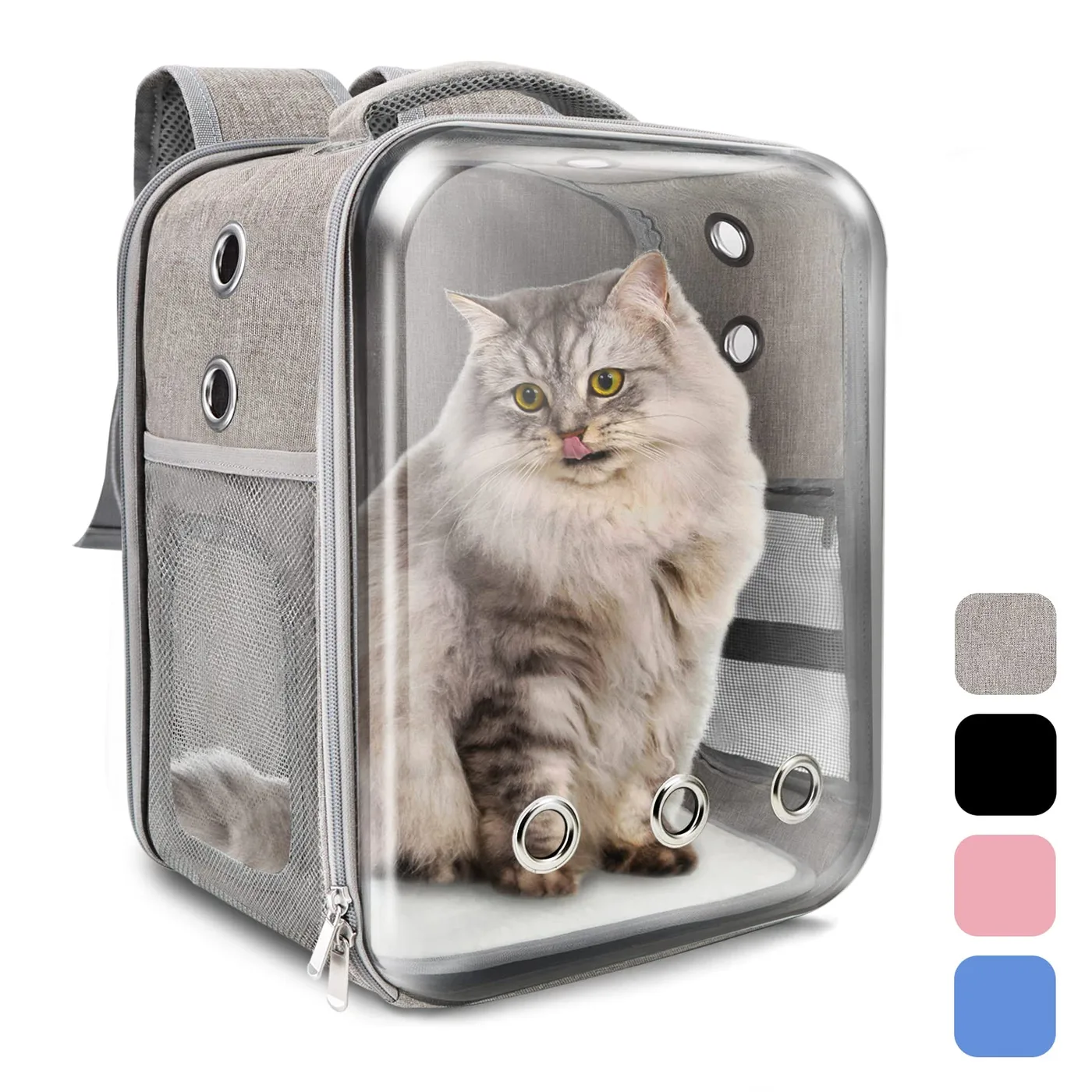
A multi-function product has to earn its price in the ten seconds a customer spends on a product page, which means the story has to be visual and the claim has to be defensible. Two disciplines get a program there: a strict shot list and honest wording.
The shot list needs five frames minimum: primary mode hero, second mode, third mode, one transition frame, and one frame showing the product in a real room or car rather than on white. That last frame is the one that converts, because it lets the customer picture the third function in their own home.
Price banding should be set against the nearest single-mode competitor plus a stated premium, not against cost plus a margin. If a comparable single-mode bag retails at a known number, a well-demonstrated 3-in-1 can typically sit 30-50 percent above it, and the gap should be justified on the box by the two extra modes rather than by adjectives.
Claim wording is where brands get into trouble. "Multi-function" is safe; a claim that the product protects a pet in a vehicle crash is not, unless it has been tested to a recognised protocol. Safety-adjacent claims should reference third-party programmes such as those run by the Center for Pet Safety, and restraint or crash performance should not be implied from a webbing loop alone.
For programs sold into regulated markets, the material set has to be declared before the claims are written. United States programs carry CPSIA and Prop 65 expectations overseen by the U.S. Consumer Product Safety Commission, and European programs carry REACH substance restrictions, both of which constrain what can go into the inserts, coatings and inks that a multi-function design tends to multiply.
Sizing Across Three Roles: One Ladder, Three Uses
Multi-function programs create a sizing trap that single-mode ranges do not face: a size that works beautifully for carrying may be wrong for resting, and a size that works for a bed may be too large for the travel mode. The resolution is to size the product from the most constrained role, not from the average of the three.
In practice the carry mode is usually the most constrained, because it is the one governed by an interior floor that must hold a standing pet and by an exterior that must remain manageable for a person. Size from the pet's standing length and chest width first, with a clearance allowance, and then check whether the resulting volume is adequate for the rest mode rather than the other way round.
The ladder itself should stay short. Three steps - small to roughly 4 kg, medium to 8 kg, large to 12 kg - cover the large majority of the addressable market, and a fourth size adds inventory and packaging cost for a small share of demand. Where a brand wants a broader offer, extend the ladder with a wheeled or flagship SKU rather than with a fifth soft size.
Interior floor dimensions should be published as actual measurements, not as breed names. Breed names are marketing shorthand and vary enormously within a breed; a stated floor length and width lets a customer make a real decision and reduces the return rate that comes from a size chart built on guesses.
Packing and shipping arithmetic follows the ladder. A three-size multi-function range means three dielines, three carton specifications and three packing instructions, and each one has to be transit-verified rather than assumed. Test methods published by ASTM International give a defensible protocol for drop and compression performance on a packed carton.
Finally, keep the modes consistent across the ladder. If the medium converts to a bed and the small does not, the range story breaks and customer service absorbs the confusion. Whatever the three roles are, they should be available on every size in the ladder, or the range should be presented as two distinct families.
Material Selection for a Product That Is Also a Bed
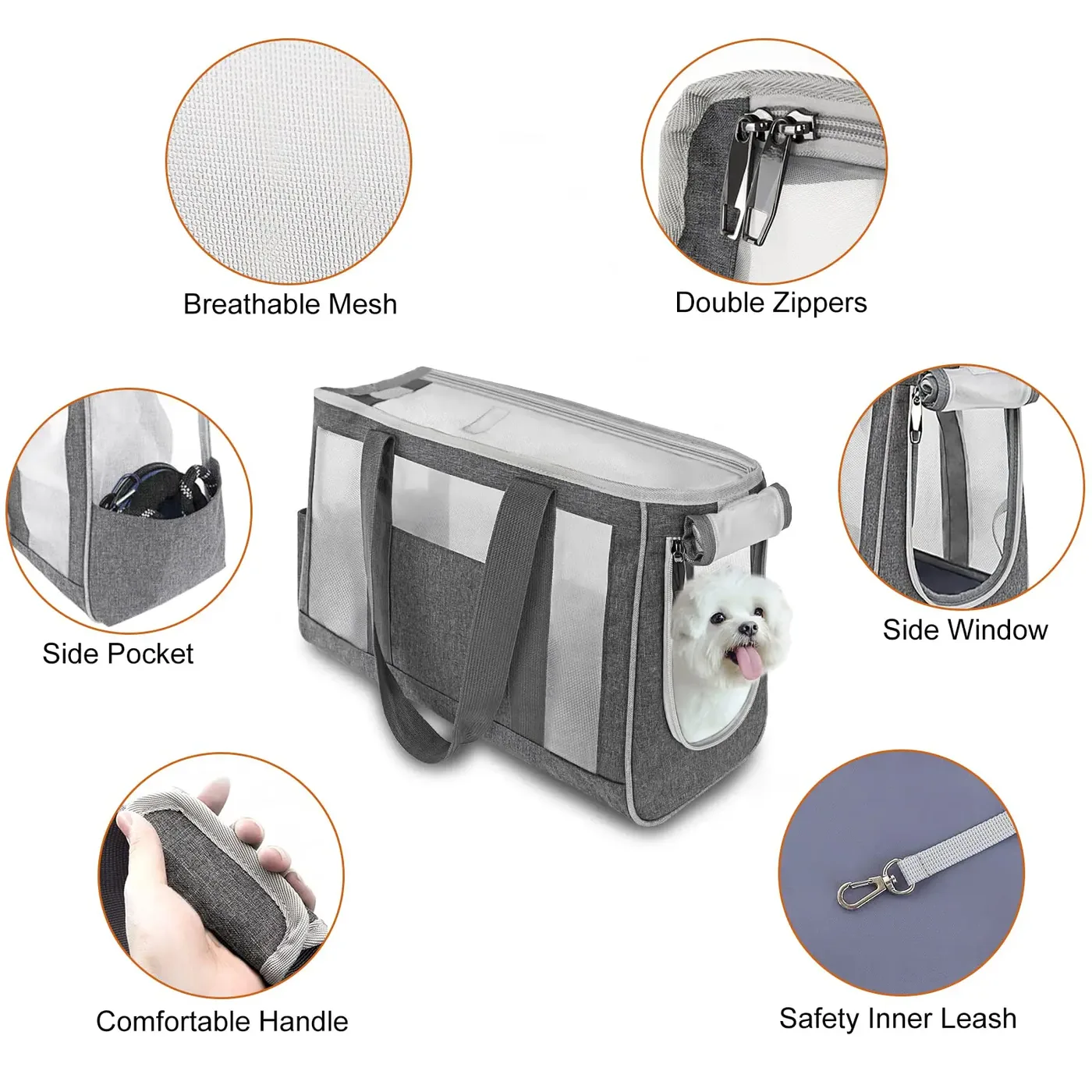
Adding a rest mode changes the material brief in ways that are easy to miss until a sample fails. A fabric chosen purely for how it looks on a carried bag may be wrong for a surface an animal lies on for an hour, and a lining chosen for cost may be wrong for something that gets washed twenty times a year.
One naming caution: avoid naming modes after unrelated products. Calling a rest mode a bed is fine; calling it a crate invites comparison with a product the carrier is not, and calling a car mode a car seat invites a safety expectation the design may not carry. Choose words that describe what the product does rather than words that borrow credibility from another category.
The shell still carries the brand, so its hand-feel, shade stability and print receptivity remain the primary criteria. But once the interior becomes a resting surface, abrasion resistance and cleanability move up the list, because the inside of the product is now in contact with claws, fur and the occasional accident on a weekly rather than annual basis.
Lining selection is where the decision is really made. A plain 210D lining is the cheapest option and adequate when the rest mode uses a separate removable pad. Where the lining itself is the resting surface, a brushed tricot or a tightly woven RPET gives a softer hand, better abrasion behaviour and a more premium feel that customers notice immediately when they open the product.
Washability should be designed rather than hoped for. Any surface that will be washed repeatedly needs a colour-fastness specification, a shrinkage allowance and a construction that survives agitation; colour-fastness to washing and rubbing is assessed by recognised textile methods issued by AATCC, and the darkest shade in the system is always the one to test first.
Odour and moisture behaviour is the last criterion, and it is the one that generates reviews. A closed-cell foam pad does not absorb moisture and dries quickly; an open-cell foam is more comfortable and holds odour. Specify the foam by cell structure and density on the tech pack rather than by thickness alone, because two pads of identical thickness can behave completely differently.
Sampling, Verification and Launch Sequencing
A 3-in-1 program earns its schedule through sampling discipline. Round one is a shell and fit sample on provisional hardware and a substitute fabric, judged only on whether the pet fits and whether the primary mode carries correctly. Adding mechanism conversation to round one is the fastest way to lose a round.
Round two is the mechanism round and it must be exercised, not viewed. Set up all three modes, load the unit, convert it between modes repeatedly, and leave it in the rest mode overnight with a weighted load. Most multi-function failures - zip tracking, panel sag, insert shift - appear only under load or over time, and both are cheap to find in a sample room.
Round three closes packaging and the retail dieline, which depends on exterior dimensions that are only stable after round two. If the program includes an insert, this is also the round where the insert's packing position is settled, because an insert that ships loose in the box arrives scuffed.
Bulk release follows the standard discipline across the range: pre-production check on the first pieces off the line, inline checks on zip alignment and reinforcement while the run is still correctable, and final random inspection to the AQL 2.5 sampling plan with critical, major and minor defect classes. On a 3-in-1 the inspection plan should over-sample zip function across all mode transitions, because a zip that works in one mode and binds in another is a defect no single-mode check will catch.
Launch sequencing is the last decision, and it is a brand one. Our team usually advises launching the 3-in-1 as the hero SKU with a simpler single-mode product beneath it, rather than launching both simultaneously; the contrast makes the multi-function story legible and gives the range a price ladder on day one.
Documentation for a three-mode product
Documentation scales with mode count, and a 3-in-1 should ship with a tech pack that states every mode, every transition, every part number and the load rating of each load-bearing component. Keep one physically signed golden sample set up in the primary mode with a photo record of the other two, because reorders, disputes and second-season revisions are all resolved against that reference. A program documented this way costs less to repeat than a simpler product documented loosely.
Why brands source here
- Pet carrier programs run since 2014; founding team in sewn goods since 2004
- SGS-verified production floor of 4,950 m² with 137 workers across 7 lines
- Monthly capacity of 200,000 units, audited to BSCI and ISO 9001
People Also Ask
Is a 3-in-1 pet carrier better value than buying separate products?
Usually yes, when the third function is used on non-travel days. A rest mode that turns the carrier into a bed delivers daily value; a function the customer already owns an alternative for does not.
How do I keep a multi-function carrier from looking messy?
Give every unused part a home. A stowable strap panel, a snap-out pad and a labelled pocket for the insert remove the visual clutter that makes most multi-function bags read as undecided.
Should the third mode require removing a structural panel?
Avoid it where possible. If a mode needs the floor panel out, the panel needs a positive lock and a clear instruction, because removing a structural part in the wrong order is a safety problem rather than a convenience.
Can a 3-in-1 still work as airline cabin baggage?
Only if the smallest mode meets under-seat dimensions, which most multi-function shells with inserts do not. Check the airline's own rules before writing any cabin claim on the packaging.
How do I photograph a three-mode product?
Five frames minimum: hero, second mode, third mode, one transition showing a hand, and one in a real room or car. The in-context frame is the one that lets a customer picture the function at home.
Does a multi-function design need more expensive packaging?
Yes. A larger retail box is needed to communicate three modes, and more parts mean more void fill. Budget the box at the end of the second sample round, when exterior dimensions are finally stable.
Frequently Asked Questions
What counts as a genuine 3-in-1 pet carrier?
Three distinct roles that each work with the pet inside and can be demonstrated in a photograph, typically a carry mode, a rest mode and a travel-attachment mode. Three variations of the same carry position do not qualify.
Which third function adds the most value?
A rest or bed mode, because it is used on non-travel days and extends the product's life. A car-seat mode is second and is the easiest to substantiate; a gear-storage mode is usually the weakest return.
How much does a 3-in-1 add to unit cost?
2.50-5.00 dollars in components plus ten to twenty minutes of added line time per unit, and roughly another 1-1.50 dollars in freight because the unit is heavier and the retail box is larger.
What is the MOQ for a multi-function program?
MOQ 500 pieces per colourway. Multi-function programs carry more component families, and each family has its own minimum, so the floor is set by components and dye lots rather than by sewing capacity.
How many sample rounds should I plan for?
Three: shell and fit on provisional hardware, mechanisms under load and over time, then packaging and dieline once exterior dimensions are stable. Compressing to two usually moves a problem into bulk.
What is the bulk lead time for a 3-in-1 carrier?
35-50 days after sample approval and deposit clearance, on T/T 30/70 terms, FOB Xiamen. Custom hardware and any moulded insert are the long-lead items and should be booked with the fabric.
Can one zip serve two modes?
Often yes, and it should. Making one zip do two jobs is the cheapest way to hold component count down, and component count is the strongest predictor of both unit cost and defect rate in multi-function designs.
Should the ventilation change between modes?
No. Design one generous fixed mesh field on two faces that serves all three modes. Moving airflow between modes means multiple mesh panels or a compromise that under-ventilates one state.
How do I substantiate a pet safety claim?
Reference recognised third-party programmes such as those run by the Center for Pet Safety, and do not imply crash protection from a webbing loop alone. Claims touching safety need a test protocol behind them, not a photograph.
What compliance applies to a 3-in-1 sold in the US and EU?
US programs carry CPSIA and Prop 65 expectations; EU programs carry REACH substance restrictions. Both constrain the inserts, coatings and inks that a multi-function design tends to multiply, so declare markets before the material set is built.
How many parts should a well-designed 3-in-1 have?
Roughly forty-five to sixty distinct parts, against about thirty for a single-mode soft carrier. Above eighty the product is usually over-engineered and both the cost and the defect rate reflect it.
What inspection standard applies to multi-function carriers?
Final random inspection follows the AQL 2.5 sampling plan with critical, major and minor classes. The plan should over-sample zip function across every mode transition, because a zip that binds in only one mode is invisible to a single-mode check.
Talk to QUANZHOU JUNYUAN BAGS about a pet carrier program: MOQ 500 pieces per colourway, samples in 6-10 working days, bulk production in 35-50 days under AQL 2.5 inspection.
Get a free quote Request a sample