Custom Pet Carrier Size Guide: Sizing Chart
A custom pet carrier sizing chart should be built on five measured steps - XS, S, M, L and XL - each mapping a pet weight band to stated interior floor dimensions. Set floor length at body length plus 10-15 percent, floor width at shoulder width times 1.25, and interior height at standing shoulder height plus 5 cm. Five steps cover roughly 92 percent of the pets a carrier brand can serve.
This guide is written for brand and product teams building a private label or OEM size ladder, not for a single one-off bag. The commercial floor for a dyed-to-match, branded size run is MOQ 500 pieces per colourway, because a dye lot, a hardware finish booking and a print set-up cannot be amortised below that number. Sample development runs 6-10 working days per round, and a size ladder normally needs two rounds: one construction sample to validate volume and floor, one confirmation sample to validate shade, decoration and packaging fit. Bulk production runs 35-50 days after sample sign-off and deposit clearance, and no carton releases until a final random inspection passes at AQL 2.5 with a written report. Terms are T/T 30/70, FOB Xiamen. Treat the chart as a commercial instrument as much as a technical one: five steps, one shared shell fabric, one shared hardware finish and one shared logo block, so that every additional size reuses the same material bookings and the same decoration tooling. Our production team works from a signed golden sample per size, held under controlled conditions, and every reorder is matched against that physical reference rather than against a photograph.
Customised pet carrier work differs from stock buying in one respect: the pattern is graded to your size ladder and held on file for reorders.
Why Interior Floor Dimensions Beat Breed Labels
Ask ten pet owners what a "medium" carrier means and you will get ten answers, because the word carries no unit. Retail size labels are marketing shorthand, and two brands using the same label routinely ship floors that differ by 8 cm in length. For a private label program this ambiguity is expensive: it drives returns, it drives negative reviews, and it makes a size ladder impossible to merchandise as a coherent set. The fix is to stop publishing adjectives and start publishing millimetres.
Three interior numbers define whether a pet fits and whether it is comfortable: interior floor length, interior floor width, and interior height. Floor length and width decide whether the animal can lie down in a natural position; interior height decides whether it can sit or stand without pressing its spine against the lid. Exterior numbers, by contrast, are what the customer compares against a doorway, a car footwell or an airline gauge. A well-built chart states both sets, because a buyer silently converts between them.
The working rule our design team uses starts from the animal, not the bag. Measure body length from the base of the neck to the base of the tail, shoulder width across the widest point of the front assembly, and standing height at the withers. Floor length is body length plus 10-15 percent of slack, floor width is shoulder width multiplied by 1.25, and interior height is standing height plus 5 cm. Those allowances are not padding; they account for the way an animal shifts position in transit and for the compression of any comfort pad under load.
Interior height deserves particular attention because it is where most low-cost charts cheat. A 30 cm interior height looks generous on paper but forces a 34 cm tall terrier into a permanent crouch, which reads as cruelty in a customer review even when the floor dimensions are correct. Publish interior height as a measured, padded-to-padded figure, and state whether the pad is removable, because a removable pad changes the usable number by 10-15 mm.
The citable version of this section is simple enough to print on a hang tag: interior floor dimensions are the only honest sizing language, and any chart that publishes only exterior dimensions is hiding the one number that determines fit.
The Five-Step Ladder: Where Each Size Begins and Ends
Five steps are enough. A ladder with eight rungs looks thorough on a line sheet and fails in a warehouse, because the middle sizes cannibalise each other, the slow movers tie up working capital, and the retail buyer will only ever floor three of them. Five steps - XS, S, M, L, XL - give a clean visual progression on a shelf, let a customer self-select without a measuring tape, and keep each step far enough apart that the choice is obvious.
The weight bands below are the ones our team uses as a default architecture. The critical discipline is that the bands must overlap slightly at the top and bottom: a 9 kg pet should be able to choose between M and L depending on body shape, not fall into a gap. Overlap creates a decision, and a decision is what makes a customer read the chart and trust the brand that wrote it.
| Step | Pet weight band | Interior floor L x W | Interior height | Exterior L x W x H | Empty weight | Ventilation area |
|---|---|---|---|---|---|---|
| XS | 1.5-3.5 kg | 38 x 24 cm | 26 cm | 42 x 27 x 28 cm | 0.55 kg | 420 cm2 |
| S | 3.5-6 kg | 45 x 28 cm | 30 cm | 49 x 31 x 32 cm | 0.78 kg | 560 cm2 |
| M | 6-10 kg | 55 x 33 cm | 34 cm | 60 x 36 x 36 cm | 1.05 kg | 720 cm2 |
| L | 10-15 kg | 65 x 38 cm | 38 cm | 70 x 41 x 40 cm | 1.35 kg | 900 cm2 |
| XL | 15-22 kg | 75 x 44 cm | 43 cm | 81 x 48 x 45 cm | 1.75 kg | 1,080 cm2 |
Empty weight is included in the grid for a commercial reason rather than a technical one. A carrier that weighs 1.75 kg empty and claims a 22 kg pet is asking a customer to carry nearly 24 kg by hand, which is not a product, it is a complaint waiting to happen. As a design ceiling, keep empty weight below roughly one twelfth of the rated pet weight for hand-carried silhouettes, and relax it only where wheels or a backpack harness carry the load.
Ventilation area scales with volume, not with length alone. The figures above assume a mesh field on two opposing sides plus a partial third panel; a single-panel design would need roughly 40 percent more open area on that one panel to reach an equivalent airflow result. The point of publishing the number is that it turns an aesthetic argument into a specification, and a specification can be audited on a sample.
Above roughly 22 kg the carrier category stops being the right answer. Giant breeds are better served by a vehicle crate or a harness system, and veterinary guidance on transporting large and brachycephalic animals is worth reading before a brand commits to an XXL pattern - the American Veterinary Medical Association publishes travel and welfare material that our team references when a client asks for sizes beyond the practical carrying limit.
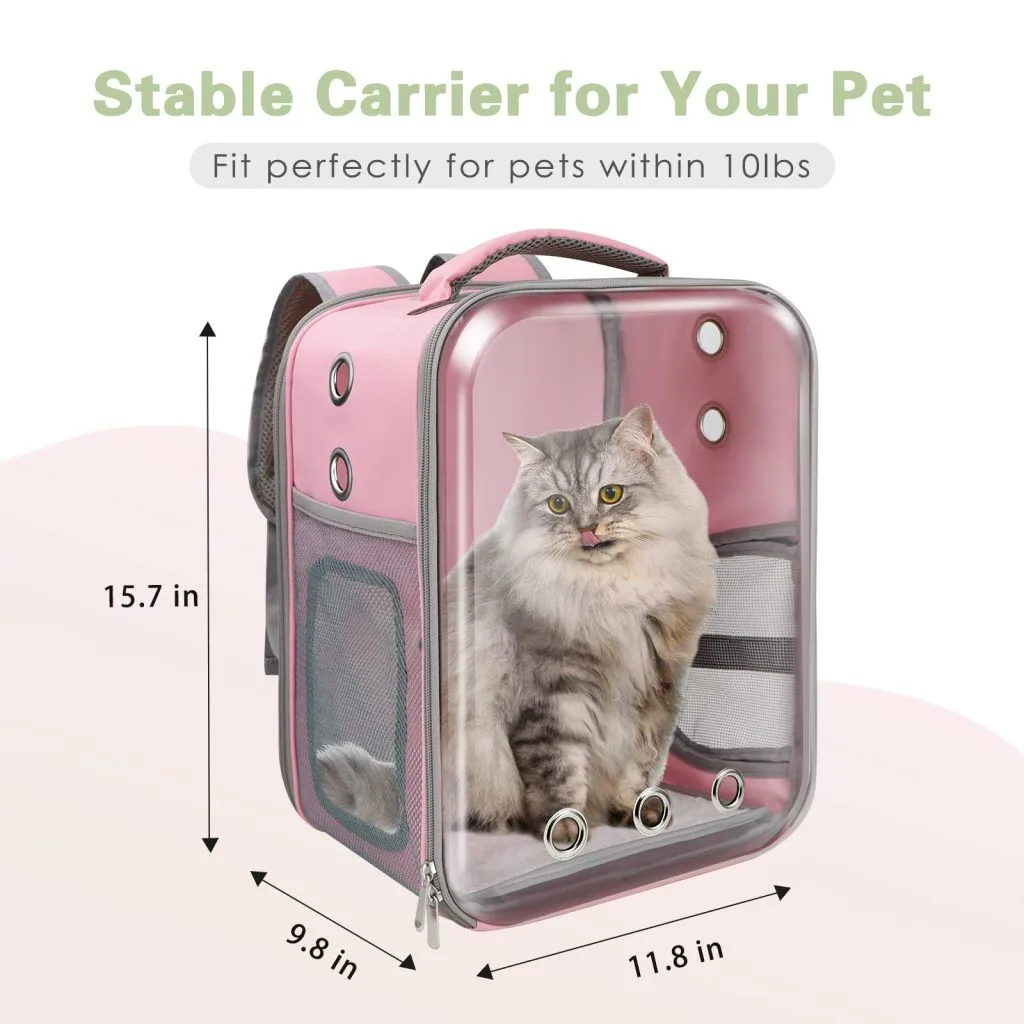
Building the Body Database Behind the Chart
A sizing chart is a summary; the body database behind it is the asset. Every brand that intends to run more than one season should hold a simple internal table of breed groups with measured averages, because that table is what lets the second and third seasons be a colourway and decoration exercise rather than a fresh research project. Ours is maintained as a living document and revised whenever a client supplies new field measurements.
Structure the database by body shape, not by kennel club group. Two breeds of identical weight can need entirely different floors: a 12 kg whippet is long and narrow and needs length, while a 12 kg French bulldog is short, wide and deep-chested and needs width and interior height. Grouping by silhouette - toy, terrier, spaniel, sighthound, brachycephalic, working - produces a chart that actually predicts fit.
| Body group | Adult weight | Body length | Shoulder width | Standing height | Default step |
|---|---|---|---|---|---|
| Toy / teacup | 1.5-3.5 kg | 30-36 cm | 12-14 cm | 18-22 cm | XS |
| Mini terrier | 4-6 kg | 38-44 cm | 15-17 cm | 26-30 cm | S |
| Domestic cat / miniature | 4-8 kg | 42-50 cm | 16-20 cm | 24-30 cm | S to M |
| Spaniel / beagle / corgi | 9-15 kg | 52-62 cm | 21-25 cm | 32-38 cm | L |
| Herding / working | 16-25 kg | 60-72 cm | 24-29 cm | 45-58 cm | XL |
| Brachycephalic / broad chest | 8-14 kg | 44-52 cm | 24-29 cm | 30-36 cm | L by width |
The brachycephalic row is the one that catches inexperienced programs. Flat-faced breeds are wide for their length and have compromised airways, so they need a wider floor and a more generous ventilation field than their weight suggests. Sizing them by weight alone puts them in a bag that is too long and too narrow, which is both a fit failure and a welfare concern that a safety-focused retailer will question.
Airline travel adds a second layer of constraint that has nothing to do with the animal's comfort. Cabin acceptance is governed by airline policy and, at industry level, by the live animal regulations published by IATA, and the practical effect is a maximum exterior envelope with a soft-sided bag able to compress a few centimetres. Any brand positioning a size as cabin-capable should publish the exterior dimensions and state clearly which step fits, rather than printing a blanket "airline approved" claim that no single bag can honestly make across every carrier worldwide.
From Body Data to Pattern: Allowance, Tolerance and Sag
A chart dimension is a promise; a pattern tolerance is how that promise is kept or broken on a sewing line. Every dimension in a tech pack needs a stated tolerance, and the tolerance should reflect what can realistically be held at speed. On soft-sided construction, plus or minus 5 mm is achievable and inexpensive; plus or minus 2 mm demands jigs, slows the line, and shows up in unit cost without any benefit the customer can perceive.
Tighten tolerances only where fit actually depends on them. The board insert, the comfort pad and the zip track are the three places where a few millimetres matter: a board cut 5 mm oversize will bow the floor, a pad cut short will leave a gap the animal will find, and a zip track that drifts will pull the lid out of square. Everywhere else - panel widths, binding positions, pocket placement - a generous tolerance is free money.
Floor sag is the failure mode that separates a designed ladder from a copied one. Under a 15 kg load, an unreinforced fabric floor deflects, and the deflection both reduces effective interior height and makes the bag feel cheap when a customer lifts it. The standard remedy is a framed board insert in a closed pocket, specified by thickness and density rather than by the word "stiff", with the pocket seam placed so the board can be removed for washing without destroying the lining.
Handle drop is the second dimension brands forget to specify. It is the distance from the top of the handle to the top of the shell, and it decides whether a customer can carry the bag at their side without it scraping the ground or, in the XL step, whether two hands are required. Set it as an absolute number per step, not as a proportion, and test it loaded rather than empty, because webbing stretches.
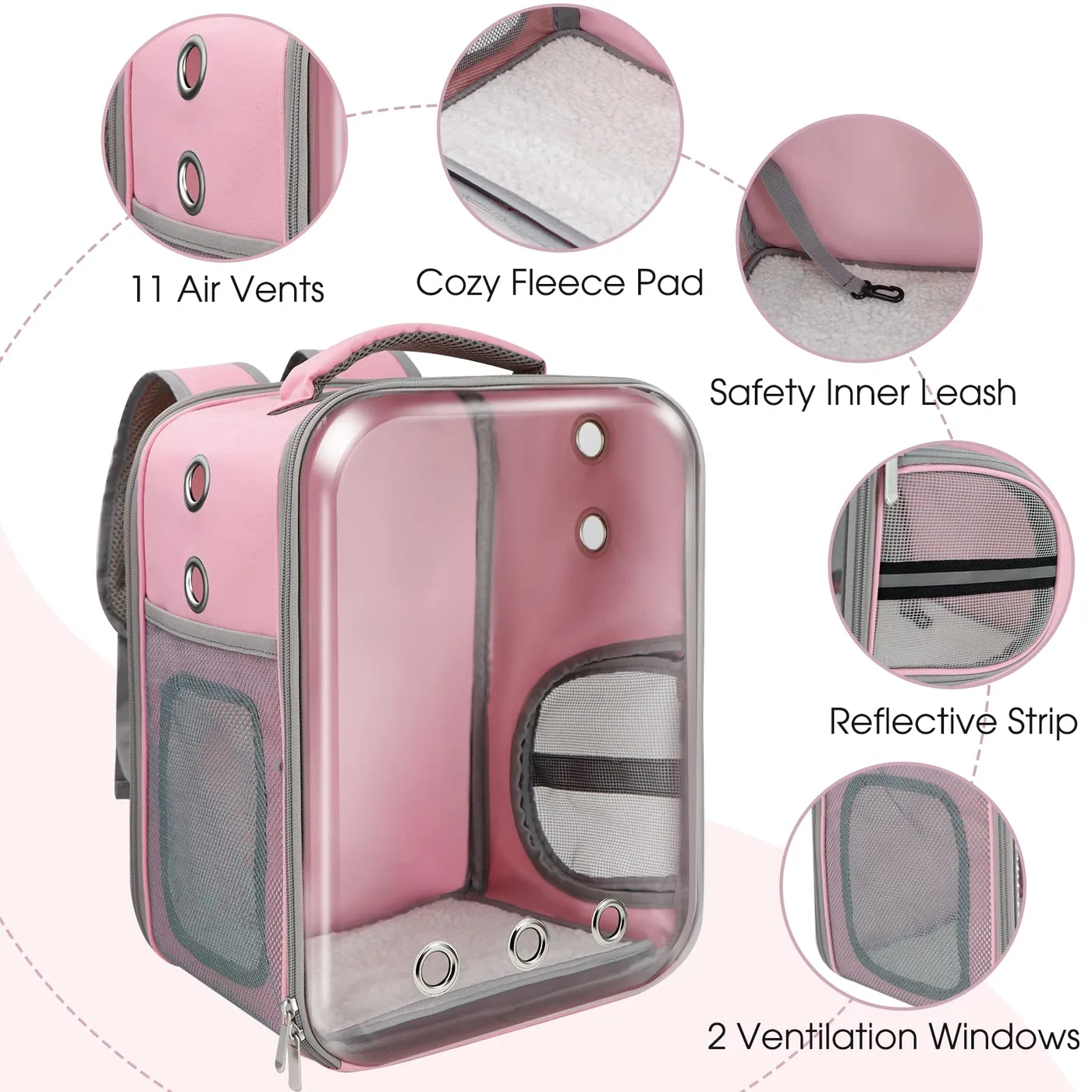
Grading a pattern across five steps
Grading is not scaling. Multiplying every panel by 1.15 to move from M to L produces a bag with proportionally oversized binding, oversized zip and a handle geometry that no longer sits over the centre of gravity. Grade the floor and the frame, hold the trim widths, and re-derive the handle and strap positions by hand for each step. Our pattern team issues five separate pattern sets rather than one graded set, precisely because the trim does not scale with the volume.
Ventilation Area and Load Rating as Design Variables
Ventilation is the one functional element that is also the strongest brand signature, and it is usually under-specified. A chart that publishes ventilation area in square centimetres converts a subjective argument - "does it look airy" - into a line item that can be measured on a sample, compared between steps, and defended to a retail buyer who asks why the L costs more than the M.
The design choice is where the open area sits. A full-width mesh band across the long side reads architectural and photographs well but removes the largest flat decoration surface on the product. A perforated motif on the shell keeps the decoration surface intact and reads as a brand pattern from a distance, at the cost of less absolute airflow per square centimetre. Most branded programs land on a hybrid: a mesh band on two opposing sides for cross-ventilation, plus a perforated motif on the lid.
Cross-ventilation matters more than total area. Air needs an inlet and an outlet on different faces, or a moving vehicle simply pressurises one side and the interior stagnates. Our rule is that the two largest ventilation fields should sit on opposing faces with at least one of them positioned above the mid-line of the bag, so that warm air rising off the animal has somewhere to go.
Load rating should be published as a tested figure with a stated method, not as a marketing maximum. A pet weight claim is a structural claim: it engages the floor board, the handle attachment, the strap attachment and the zip track. Where a client wants a documented basis, our production team references recognised test methods published by standards bodies such as ASTM International and records the result in the tech pack, which is a far stronger position than a number invented in a design meeting.
How Material and Frame Specification Shift With Size
The instinct when moving up a size step is to use the same fabric and add more of it. That instinct is wrong above the M step. Load paths change with volume: the same 600D polyester that is perfectly adequate as a floor skin at 6 kg will creep and dish at 18 kg, and the same #5 coil zip that runs smoothly across a 45 cm opening will bind across an 81 cm one because the tape is carrying more tension.
Practical escalation rules keep a ladder coherent. Shell weight can stay constant across XS through M, then move up one step for L and XL. Frame thickness should escalate continuously, from an 8 mm board at XS to a 15 mm board at XL, with the pocket pattern adjusted accordingly. Zipper gauge moves from #5 to #8 at the L step, and handle webbing moves from 25 mm to 38 mm at the same boundary, because handle load and webbing width are directly related.
Hardware finish should stay constant across the entire ladder. This is a brand decision, not a technical one: a customer comparing the S and the L side by side on a shelf should see one family, with identical pulls, identical buckles and identical rivets. Changing finish by size reads as a sourcing accident, and it destroys the visual set that makes a ladder merchandise as a premium range.
Colour consistency across five sizes is the hardest part of a ladder and the least discussed. Five sizes in one colourway are usually cut from more than one fabric roll, and rolls from different dye lots will not match exactly. The control is to book one dye lot per colourway per program, cut all sizes from that booking, and approve the lot under a controlled light box before a blade touches it. Where a booking cannot cover the whole run, our team re-approves a fresh lab dip rather than mixing lots inside one carton.
Decoration Area and Logo Scaling Across the Ladder
Logo scaling is where a size ladder most often loses its professionalism. A mark designed at 90 mm on the M panel shrunk to fit the XS end cap becomes illegible, and the same mark stretched across the XL lid looks lost. The correct approach is to define a decoration block per step in the tech pack - maximum width, maximum height and minimum legible height - rather than allowing a single percentage scale to be applied blindly across five patterns.
Three rules make the set read as designed. First, keep the decoration block proportional to the panel, not to the bag: on XS the mark should occupy a larger share of the visible panel than it does on XL, because the smaller bag is viewed at closer range. Second, keep one constant - usually the cap height of the wordmark relative to the binding - so the eye reads a family even when the absolute size differs. Third, never let artwork cross a seam, a zip track or a binding; it will distort in production regardless of how clean the sample looks.
Method selection interacts with size as well. Embroidery that looks crisp and expensive on an XL lid can pucker a 300D panel at XS, where the fabric has less area to absorb the stitch tension. Screen print is stable across all five steps but needs the artwork redrawn at each size if it is being scaled, and a woven label sized for the L looks clumsy on the XS. Choose the method for the smallest step in the ladder, then confirm it still reads on the largest.
Colour system discipline holds the ladder together commercially. One hero shade on the shell, one neutral on lining and binding, one accent on pulls and stitch, and seasonal shades only where a colourway can meet the dye lot minimum. Because minimums are set per colourway rather than per size, a five-size, one-colourway drop is a far cheaper entry than a three-size, three-colourway drop - which is why our team usually advises new brands to launch five sizes in one or two colours rather than three sizes in five.
Sampling, MOQ and the Launch Calendar for a Size Ladder
A size ladder costs more development time than a single product, and the reason is not sewing - it is decision load. Each step needs its own pattern set, its own board dieline, its own packing carton and its own hang tag artwork, and each of those is a place where a revision can be requested. Plan the calendar accordingly rather than assuming the second size is free.
Sample development runs 6-10 working days per round. For a ladder, the efficient structure is a construction round covering the smallest and the largest step - the two extremes expose every grading error - followed by a confirmation round in the actual dyed fabric covering the full set. Trying to sample all five sizes in every round doubles the courier cost and slows feedback without improving the result.
Commercial minimums are set per colourway at MOQ 500 pieces, and the ladder splits that quantity across the five steps. A sensible first allocation for a new brand is roughly 10 percent XS, 25 percent S, 35 percent M, 20 percent L and 10 percent XL, adjusted for the market: an urban, apartment-heavy customer base skews two steps smaller than a suburban one. Below the minimum the dye lot, hardware finish and print set-up cannot be amortised into a sane unit cost.
Bulk production runs 35-50 days after sign-off and deposit clearance, and closes with a final random inspection at AQL 2.5 with defects classified critical, major and minor. Independent verification is available through third parties such as SGS, and the quality system behind the line is maintained to ISO 9001 requirements. Work backwards from the on-shelf date: 35-50 days of production, two to three weeks of ocean transit, one week for the distribution centre, and 20-30 days of sampling before that.
The closing principle is that a ladder is a system, not a list. One shell family, one hardware finish, one colour system, one logo block per step and one golden sample per size, held physically and referenced for every reorder. Brands that treat the chart as a specification rather than as a marketing table end up with a range that merchandises as a set, reorders cleanly, and survives its second season. For the smallest end of the ladder in detail, see our extra small pet carrier brief, and for the top end, the large breed carrier specification.
Production capability
- SGS-verified production space of 4,950 m², 149 machines, 7 assembly lines
- Pet carrier and pet bag output since 2014 from a 137-person team
- 200,000 units shipped monthly under BSCI and ISO 9001 systems
People Also Ask
What size pet carrier do I need for my dog?
Measure body length from the base of the neck to the base of the tail and shoulder width at the widest point, then add 10-15 percent to the length and multiply the width by 1.25. Match the result to the interior floor dimensions, not to a breed label.
How do pet carrier sizes compare between brands?
They do not, which is why interior floor dimensions are the only reliable comparison. Two carriers both labelled medium can differ by 8 cm of floor length, so publish and compare measured interior numbers.
What is the difference between a medium and a large pet carrier?
In our default ladder, M covers 6-10 kg with a 55 x 33 cm floor, and L covers 10-15 kg with a 65 x 38 cm floor. The L also escalates board thickness, zipper gauge and webbing width.
Are pet carrier size charts based on weight or measurements?
Weight bands are the shopper-facing shorthand; measurements are the engineering truth. A good chart publishes both and uses body shape - long and narrow versus broad and deep - to resolve pets near a boundary.
Can one carrier size fit both a cat and a small dog?
Often yes, around the 4-8 kg band, but cats prefer interior height for sitting and dogs prefer floor length for lying down. Check both numbers rather than assuming the weight band is sufficient.
How much ventilation area should a pet carrier have?
Publish it as a number. Our ladder runs from 420 cm2 at XS to 1,080 cm2 at XL, with the two largest fields on opposing faces above the mid-line so warm air can escape.
Frequently Asked Questions
What measurements should a custom pet carrier size chart publish?
Interior floor length and width, interior height, exterior length, width and height, rated pet weight, empty product weight and total ventilation area. Interior numbers determine fit; exterior numbers determine whether the bag fits a car, a doorway or an airline gauge.
How many size steps should a first private label drop include?
Five - XS through XL - is the practical maximum for a first season. Five steps merchandise as a visible progression, cover roughly 92 percent of the addressable pet population, and keep each step far enough apart that a customer can self-select without measuring.
Can the same fabric be used across every size in the ladder?
Up to the M step, yes. Above roughly 10 kg of rated pet weight the floor board, zipper gauge and webbing width need to escalate, because load paths change with volume and a specification that is adequate at 6 kg will creep at 18 kg.
How is pet weight capacity determined and tested?
Capacity is a structural claim covering the floor board, handle attachment, strap attachment and zip track. It should be stated as a tested figure with a declared method rather than a marketing maximum, and recorded in the tech pack so bulk can be audited against it.
Should the size bands overlap?
Yes. A pet sitting near a band boundary should have a genuine choice between two steps based on body shape. Overlap forces the customer to read the chart, which builds trust, and it removes the gap where a pet fits nothing.
How much does interior height matter compared with floor area?
It is the most commonly understated number. Generous floor dimensions with a low lid force a crouch that customers read as a welfare problem. Publish interior height measured padded-to-padded and state whether the pad is removable.
What is the minimum order for a five-size ladder?
MOQ 500 pieces per colourway, split across the steps. A typical first allocation is 10 percent XS, 25 percent S, 35 percent M, 20 percent L and 10 percent XL, adjusted for the target market's pet population.
How long does sampling take for multiple sizes?
6-10 working days per round. Sample the smallest and largest steps first, because the extremes expose grading errors, then run a confirmation round across the full set in the actual dyed fabric.
Do all sizes ship in the same carton?
No. Carton dielines are derived from exterior dimensions, so each step needs its own carton size and packing count. Packaging approval comes after the confirmation sample, once exterior dimensions are stable.
How do you keep colour consistent across five sizes?
Book one dye lot per colourway, cut all sizes from that booking, and approve the lot in a controlled light box before cutting. Never mix dye lots inside a single carton, and re-approve a fresh lab dip if a booking cannot cover the run.
Can a carrier be sized for brachycephalic breeds?
Yes, but size by width and interior height rather than by weight. Flat-faced breeds are wide for their length and need a larger ventilation field than their weight implies, because of compromised airways.
Is an XXL carrier a realistic product?
Rarely. Above roughly 22 kg the empty weight plus the pet exceeds what a customer can carry by hand, and a vehicle crate or harness system is usually the better product. We advise clients against sizing beyond the practical carrying limit.
How should a logo scale across the size ladder?
Define a decoration block per step - maximum width, maximum height and minimum legible height - rather than applying one percentage scale. Keep one constant, such as wordmark cap height relative to binding, so the set reads as a family.
What happens if a bulk shipment fails inspection?
Final random inspection runs to an AQL 2.5 sampling plan with defects classified critical, major and minor. A failed lot is reworked or re-made against the signed golden sample, and no carton releases until the written report is accepted.
Talk to QUANZHOU JUNYUAN BAGS about a pet carrier program: MOQ 500 pieces per colourway, samples in 6-10 working days, bulk production in 35-50 days under AQL 2.5 inspection.
Get a free quote Request a sample