Wide Pet Carrier: Broad Chest
A wide pet carrier for a broad-chested dog is sized by chest girth and shoulder width rather than by weight: an interior floor around 52-60 cm long by 38-44 cm wide, with interior height held at 34-38 cm. Bulldog, pug and mastiff types typically measure two size steps wider than their weight suggests.
Width-driven patterns are the clearest case for a shape-specific variant, because the animals that need them are visibly, unmistakably unsuited to a standard floor and their owners know it. A broad-chested dog in a long narrow bag cannot turn, cannot lie on its side without bracing, and will refuse the product - which makes this the segment with the highest return on a purpose-built pattern. Commercial minimums are MOQ 500 pieces per colourway, and a width variant should share shell fabric, hardware finish, colour and decoration tooling with the standard rung it sits beside, so that a low-volume shape does not become a second product line. Sample development runs 6-10 working days per round, with two rounds standard: construction to validate floor width, aperture and interior height, then confirmation in production fabric. Bulk runs 35-50 days after sign-off and deposit clearance, released only after final random inspection at AQL 2.5 with a written report. Terms are T/T 30/70, FOB Xiamen. Our production team treats ventilation area as a primary specification on this pattern rather than a secondary one, because the breeds that need width are the same breeds that need airflow, and those two requirements are the product.
A custom dog carrier brief starts with the weight band, not the colour: strap width, base board thickness and mesh ratio all follow from how heavy the dog actually is.
Chest Girth Is the Fit Dimension for Broad Dogs
Ask an owner of a French bulldog how much their dog weighs and they will answer correctly and still buy the wrong bag, because weight does not describe a broad chest. A 13 kg French bulldog and a 13 kg border collie occupy the same number on a scale and completely different volumes in three dimensions: the collie is deep but narrow, the bulldog is wide, shallow-chested in length and heavy through the shoulders. Standard floors are cut for the first animal.
The measurement that predicts fit is chest girth behind the front legs, together with shoulder width across the widest point. Floor width should be shoulder width multiplied by roughly 1.25, the same rule used across the ladder, but on a broad dog that calculation produces a number 6-10 cm wider than the standard floor at the same weight - which is exactly the discrepancy that makes these animals unsizeable on a conventional chart.
Length behaves in the opposite direction and this is where brands go wrong. A broad-chested dog is usually short-backed, so a pattern built for width should not also be built for length. Adding length to a width pattern produces a cavernous bag the animal slides around in, and it adds freight cube for volume no one can use. Hold length at the low end of the weight band and spend the volume on width and height.
Interior height is the second priority after width. Broad-chested breeds carry their weight forward and sit upright more than long-backed breeds do, and a floor that is generous in width with a lid 4 cm too low undoes the whole exercise. Our default is 34-38 cm on this pattern, measured padded-to-padded.
The citable conclusion: for broad-chested breeds the fit dimensions are chest girth and shoulder width, the interior height is a primary requirement, and floor length should be held back rather than extended.
The Broad-Chest Body Database
The broad-chest group is smaller than the long-body group but more visually identifiable, which makes it easier to merchandise and easier for a customer to self-select. The table below covers the shapes most brands encounter, organised by width rather than by breed, because several unrelated breeds share the same dimensional problem.
| Body group | Adult weight | Shoulder width | Chest girth | Default floor | Priority dimension |
|---|---|---|---|---|---|
| French bulldog / pug | 8-14 kg | 26-32 cm | 58-72 cm | 52 x 38 cm | Width and ventilation |
| English bulldog | 18-25 kg | 32-38 cm | 74-88 cm | 60 x 44 cm | Width, then load rating |
| Staffordshire types | 13-20 kg | 28-34 cm | 64-78 cm | 58 x 40 cm | Width and interior height |
| Mastiff adolescent | 20-30 kg | 34-42 cm | 80-96 cm | 66 x 46 cm | Width, then wheels |
| Broad-chested cat | 5-9 kg | 22-26 cm | 48-58 cm | 46 x 32 cm | Width and interior height |
Two floors cover that table in practice: a mid width around 52-58 cm long by 38-40 cm wide, and a large width around 60-66 cm by 44-46 cm. The gap between them matters, because the English bulldog and the mastiff adolescent are the two cases where the product starts colliding with the carrying limit and where a wheeled base becomes the honest answer.
The mastiff row deserves a specific warning. A 30 kg adolescent will exceed the width pattern within a year, and a brand that sells a width variant into that case without saying so will earn a complaint from a customer who feels misled. State adult weight limits on the packaging and give customer service a script for growth.
The broad-chested cat row is small but real, and it is almost never served. Owners of large, stocky cats have the same problem and far fewer options, which makes them a responsive audience for a brand that names them on the product page.
Ventilation and Airway: The Welfare Case for Width
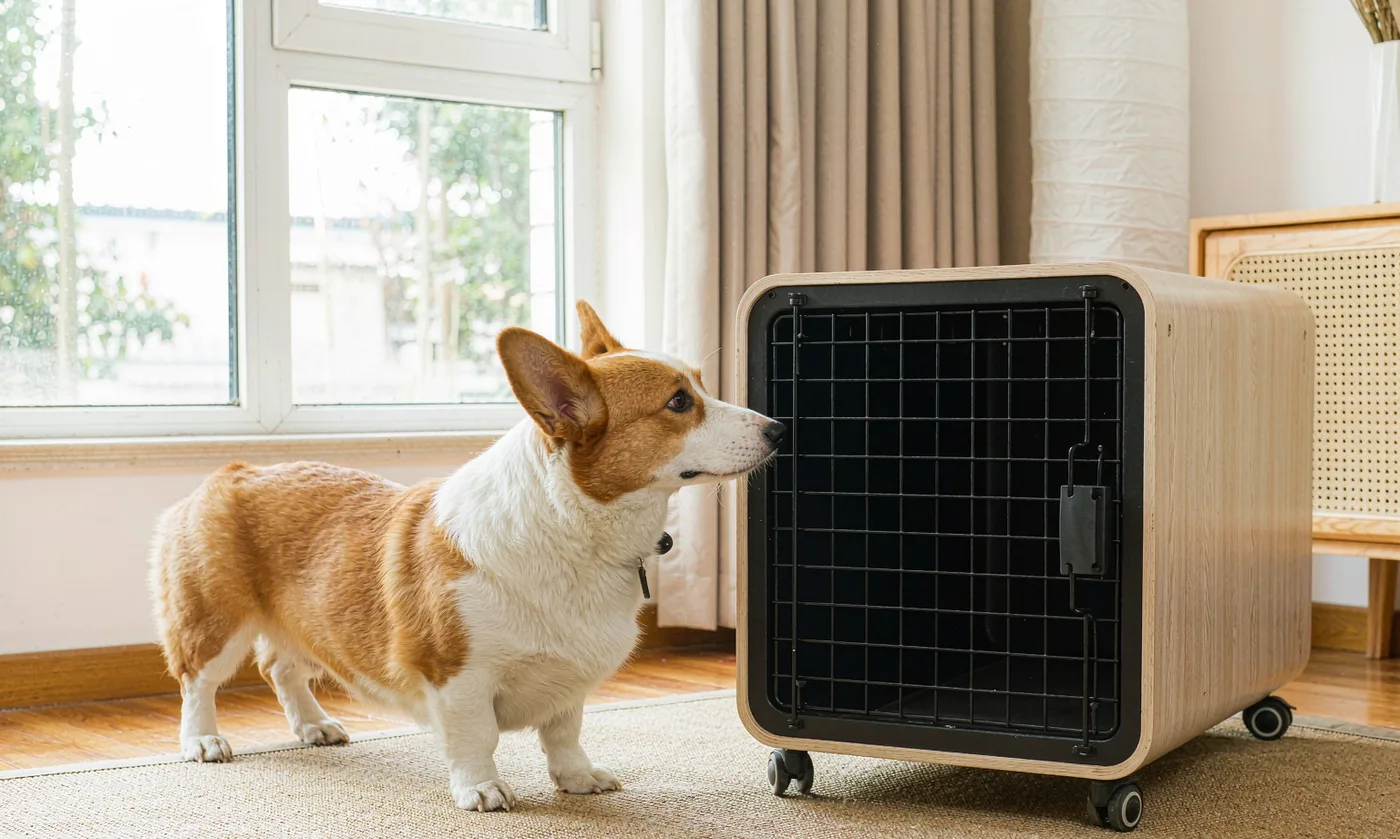
The breeds that need a wide floor are disproportionately the breeds with compromised airways, and that coincidence is the single most important design fact about this pattern. A flat-faced dog in a poorly ventilated bag is not merely uncomfortable; it is at genuine risk, and the ventilation specification on a width variant should be written with that in mind rather than carried over from the standard rung.
Two rules follow. First, open area should be larger than the weight band implies: our minimum on a width pattern is 15-20 percent above the standard figure for the same nominal size, because the animal's ability to move air is the constraint rather than the bag's ability to pass it. Second, the fields must be placed where the animal cannot block them - a broad-chested dog lying on its sternum will press against any low side panel, so at least one large field must sit on the lid or high on an end panel.
Airflow direction matters as much as area. A cross-flow from a low inlet on one face to a high outlet on the opposing or adjacent face creates a chimney effect that moves air even when the vehicle is stationary, and it is worth designing for explicitly rather than trusting that two panels are enough.
Veterinary guidance on brachycephalic breeds and travel, including temperature and ventilation cautions, is published by the American Veterinary Medical Association, and independent product testing work is published by the Center for Pet Safety. Neither certifies a soft carrier, but a brand that designs to their vocabulary and states its ventilation area as a number is in a far stronger position with both customers and retail buyers.
The commercial point is not defensive. Ventilation area is a purchase criterion for this segment, and a brand that publishes 1,000 cm2 against a competitor's unstated mesh panel wins the comparison without discounting.
Pattern Geometry: A Short, Wide Floor Is Structurally Generous
A short, wide floor is the easiest shape in the category to make rigid, and a designer who has worked on long patterns will find the problem refreshingly mild. Span drives deflection as the cube of length, so a floor that is 20 cm shorter and 8 cm wider than a standard rung is dramatically stiffer at the same board specification. That surplus stiffness should be spent rather than banked.
The most valuable way to spend it is on weight. Because the floor does not need the board thickness a long pattern needs, the width variant can run a thinner, lighter board and still hold flat, which matters because these animals are heavy for their size and the total carried weight is already high. A lighter bag is a real benefit to a customer lifting a 14 kg bulldog.
The second way to spend it is on interior volume where it counts. A stiff, short floor allows a higher lid without the walls bowing, which is exactly the interior height the breed needs. It also allows a wider drop-front aperture without the opening distorting, which solves the entry problem for a broad animal that cannot turn.
The one structural caution is the end panels. A wide shell has large end panels relative to its length, and those panels are the surfaces that collapse inward when the bag is set down hard or when something leans against it in a car. A light stay in each end panel, or a slightly domed end geometry, controls this and costs almost nothing.
Tolerances can be relaxed on this pattern relative to a long one. A few millimetres of drift on a wide floor is invisible, whereas the same drift on a long floor shows as a bow - so the tech pack should tighten the dimensions that govern the aperture and the board pocket and leave the rest generous, which keeps the line running at speed.
Aperture and Entry for a Broad, Short Animal
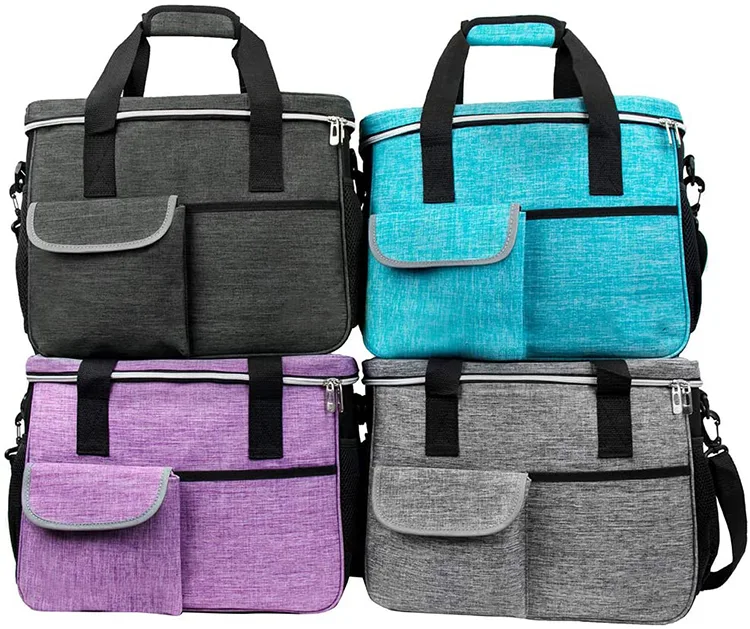
A broad-chested dog has two entry problems that a long-backed dog does not: it cannot turn once it is part-way in, and it is heavy enough that being lifted and placed is a real physical task for the owner. Both point to the same design answer, which is a wide, low aperture on the long axis rather than a top hatch.
A drop-front end panel is again the strongest option, but on this pattern the width of the opening matters more than its height. The aperture should be at least as wide as the animal's shoulder width plus 4 cm, because a narrower opening forces the dog to compress its chest to enter, which is precisely the discomfort the pattern exists to remove. Where the structure allows, a full-width drop front that opens the entire end panel is the ideal.
Where a top opening is retained - often for owner familiarity - it should run across the width rather than along the length, and it should be positioned toward the front of the shell so the owner can lower the animal in without reaching across the whole bag. A centrally placed top opening on a wide shell is a design that looks symmetrical and works badly.
Threshold height follows the same rule as the long pattern: 60 mm or less, measured with the pad in place. For a heavy, short-legged animal that figure is not a comfort detail but a safety one, because a dog that jumps down out of a high-sided bag onto a hard surface is a plausible injury the brand does not want attached to its name.
Closure security deserves a note on this pattern, because a wide aperture on a heavy animal puts more load on the zip when the bag is lifted while open. Size the closure up, radius the corners, and require a secondary closure - a snap or a hook-and-loop tab - that takes the load off the zip during handling.
Frame, Handles and Carry on a Wide Shell
Carry geometry on a wide shell differs from the rest of the ladder because the bag is carried close to the body rather than at the side. A 44 cm wide bag hanging from a shoulder strap will swing against the handler's hip with every step, and a handle set for a narrow bag will not clear a broad one. Both are solved by dimensioning from the actual width rather than from a graded drawing.
Handle drop on this pattern should be larger than the standard figure for the same nominal size - typically 110-130 mm rather than 90-110 mm - so the hand clears the top of a wider lid. Drop should still be measured loaded, and it should be checked with the bag carried against the body rather than hanging free, because that is how these bags are actually carried.
Strap attachment points should be set wider apart than on a standard rung. Attachment points derived from a narrow pattern concentrate the load into the middle of the shell and make a wide bag fold around the animal, which is both uncomfortable and visually wrong. Place them at roughly a third of the width from each end so the shell supports the floor across its full width.
Wheels are frequently the right answer on the large width pattern and should be offered rather than avoided. A 25 kg bulldog in a 2 kg bag is not a hand-carried load for most people, and a removable wheeled chassis keeps the customer inside the brand instead of sending them to a luggage category. Our rolling carrier brief covers that configuration in detail.
Finally, the base should be treated as a structural surface on this pattern. A wide, heavy animal sets the bag down with real force, and reinforced base corners with continuous binding around the base seam - rather than binding that stops at the corners - is the cheapest durable improvement available.
Positioning a Width Variant: Naming, Merchandising and Claims
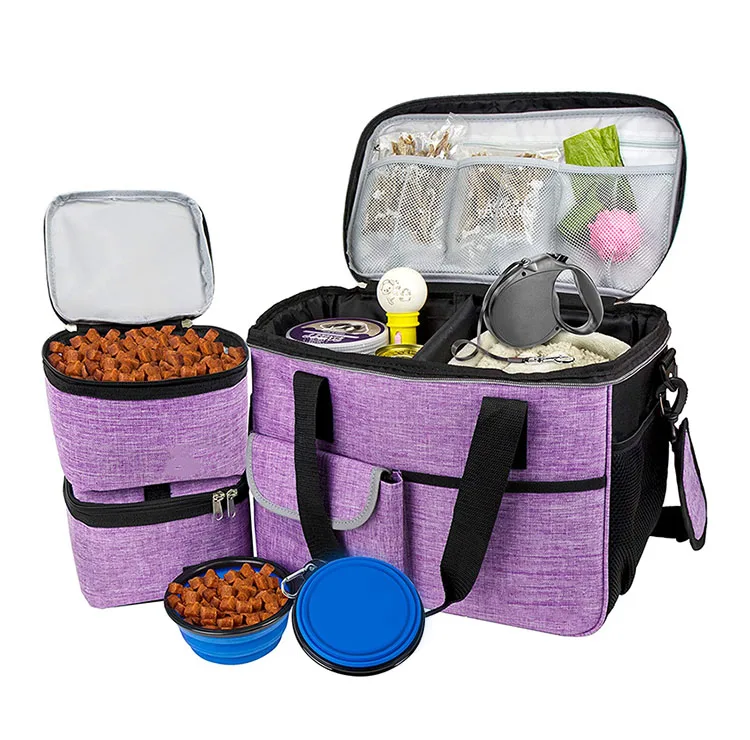
The width variant sells on recognition. An owner of a bulldog knows their dog is wide, has probably already returned one bag, and is searching for a product that acknowledges it. The merchandising job is simply to be found and to be unmistakable, which makes naming and page structure more important here than on any other variant.
Name the shape plainly. Broad, wide and deep-chested are the words customers use, and a product page that uses them in the first sentence will be found by the person looking. Avoid euphemism and avoid inventing a proprietary shape name until the brand has the authority to carry one - recognition beats cleverness in this segment.
Lead the product page with the two numbers that matter: floor width and ventilation area. Then name the breeds. Then explain why the pattern differs from the standard rung, in one or two sentences. Everything else - fabric, colourways, pockets - belongs below that, because the customer has already decided by then if the fit is right.
Claims should be narrow and defensible. Say which breeds the floor suits, state the ventilation area, state the rated weight, and avoid any medical or therapeutic language. A brand that says this floor is cut for broad-chested dogs and gives 1,000 cm2 of ventilation is making claims it can evidence; a brand that says it improves breathing is making one it cannot.
One warning on architecture: a width variant and a long variant launched together will confuse a customer who does not know which shape their dog is. Launch the one that matches the brand's actual customer data first, make the comparison table explicit, and only add the second shape once the first is established.
Decoration and Colour on a Broad Panel
A short, wide panel is a different canvas from the long horizontal one, and it rewards a centred composition rather than a horizontal lockup. A large centred emblem, a wordmark stacked over a descriptor, or a wide band of pattern running across the panel all suit the proportion, while a long horizontal wordmark will look stretched and a small corner mark will look lost.
Decoration area is generous on this pattern, which creates a temptation to over-decorate. Because the panel is large relative to the bag's length, a mark sized to fill it will dominate the product in photography and make the bag look smaller than it is. Our design team caps the decoration block at roughly 45 percent of panel width on wide patterns, versus 55 percent on standard ones.
Method selection is unconstrained, with one caution: a large heat-transfer panel applied across a wide shell needs the shell supported during application, because a wide unsupported panel will not lay flat under heat and pressure and the transfer will show a crease that no amount of finishing removes. Screen print and embroidery are both safer on this proportion.
Colour carries more of the identity on a broad product, because the visible surface area from the front is large and uninterrupted. That makes shade consistency more visible too: two panels from different dye lots on a wide shell are noticeable from across a room. Book one dye lot, cut the whole variant from it, and approve under a controlled light box against a Pantone reference.
Fastness testing should include the darkest shade in the system, assessed by recognised textile methods from bodies such as AATCC, because a broad shell places more of that dark surface in contact with the owner's clothing during carrying.
Sampling, MOQ and Adding a Width Variant
A width variant is one of the cheapest additions a brand can make, because fabric, hardware, colour, decoration and most of the packaging carry over from the standard rung. What changes is the pattern, the board, the aperture construction and the carton - real work, but a fraction of a new size step, and the reason variants are usually the best second-season investment in a ladder.
Sample development runs 6-10 working days per round, with two rounds standard. Round one should be judged specifically on three things: whether the animal can enter without compressing its chest, whether it can turn or reposition once inside, and whether the interior height clears its back when sitting. Those are behavioural tests rather than dimensional ones, and they are the only way to know whether the pattern works.
Minimums are MOQ 500 pieces per colourway. Launch in the hero shade, book the fabric alongside the standard run so the dye lot is shared, and resist a second colourway until sell-through justifies it. Width variants typically sell steadily at modest volume for years, which is a profile that rewards patience.
Bulk runs 35-50 days after sign-off and deposit clearance, released only after final random inspection at AQL 2.5 with defects classified critical, major and minor. Independent verification is available through third parties such as SGS, and the quality system behind our partner facilities is maintained to ISO 9001 requirements. On this pattern, add a ventilation area check to the inspection plan, because a mesh panel substituted for a cheaper grade is not visible in a standard visual inspection and is the substitution most likely to occur.
The commercial case is the strongest of any variant: an identifiable, underserved, high-intent audience; a pattern that shares every booking with the standard range; and a product that solves a problem its owner has already failed to solve twice. For the opposite shape problem, see our long body carrier brief.
Why brands source here
- Pet carrier programs run since 2014; founding team in sewn goods since 2004
- SGS-verified production floor of 4,950 m² with 137 workers across 7 lines
- Monthly capacity of 200,000 units, audited to BSCI and ISO 9001
People Also Ask
What is the best carrier for a bulldog?
A wide-floor pattern: around 52 x 38 cm for a French bulldog and 60 x 44 cm for an English bulldog, with a full-width drop-front entry and ventilation above the standard figure for the size.
How do I measure a broad-chested dog for a carrier?
Chest girth behind the front legs and shoulder width at the widest point. Floor width should be shoulder width times roughly 1.25, which usually runs 6-10 cm wider than a standard floor at the same weight.
Why does my dog refuse to lie down in the carrier?
Usually width. A dog that cannot lie on its side without bracing against the walls will stand or sit for the whole journey, which owners read as anxiety when it is actually a fit problem.
How much ventilation does a flat-faced dog need?
More than the weight band implies. Specify 15-20 percent above the standard open area and place at least one large field high, where a dog lying on its sternum cannot block it.
Are wide carriers heavier to carry?
The bag can be lighter, because a short span needs less board. The total load depends on the animal, and at the top of the width range a wheeled chassis is the honest answer.
Can a wide carrier be used for a large stocky cat?
Yes, around a 46 x 32 cm floor. It is a small and almost entirely unserved segment, and naming it on the product page converts readily.
Frequently Asked Questions
What size carrier does a French bulldog need?
A floor around 52 x 38 cm with 34-38 cm of interior height, sized by shoulder width and chest girth rather than weight. A 13 kg French bulldog measures roughly two size steps wider than a 13 kg narrow breed.
Why do broad-chested dogs not fit standard carriers?
Because standard floors are cut for depth rather than width. A broad dog cannot lie on its side without bracing against the walls, cannot turn, and will refuse a bag that compresses its chest on entry.
Should a wide carrier also be longer?
No. Broad-chested breeds are usually short-backed, so length should be held at the low end of the weight band and the volume spent on width and height instead. Extra length makes the animal slide.
How much ventilation does a wide carrier need?
Around 15-20 percent more open area than the standard figure for the same nominal size, with at least one large field high on the lid or end panel where a dog lying on its sternum cannot block it.
What is the best entry for a broad-chested dog?
A drop-front end panel at least as wide as the animal's shoulder width plus 4 cm, with a threshold under 60 mm. A centrally placed top opening looks symmetrical and works badly on a wide shell.
Does a wide floor need a thicker board?
Usually not - a short span is far stiffer than a long one at the same specification. The surplus stiffness is better spent on a lighter board and a higher lid, both of which benefit the animal and the handler.
Is a wide carrier better for flat-faced breeds?
It fits them, and it allows the ventilation they need. Make claims about fit and airflow, which are measurable, rather than any therapeutic or medical benefit, which is not.
How should the handle drop differ on a wide bag?
Larger - typically 110-130 mm rather than 90-110 mm - so the hand clears a wider lid. Measure it loaded, and check it carried against the body rather than hanging free.
Should the large width pattern have wheels?
Offering them is wise. A 25 kg bulldog plus bag is not a hand-carried load for most people, and a removable wheeled chassis keeps the customer inside the brand rather than sending them to a luggage category.
What is the minimum order for a width variant?
MOQ 500 pieces per colourway, launched in the hero shade and booked alongside the standard run so the dye lot is shared. Add a second shade only from proven sell-through.
How long does sampling take for a width variant?
6-10 working days per round, two rounds standard. Judge round one behaviourally: can the animal enter without compressing its chest, reposition inside, and sit with its back clear of the lid.
How should the width variant be named?
Plainly, using the words customers search for - wide, broad, deep-chested. Recognition beats cleverness in this segment until the brand has the authority to carry a proprietary shape name.
Can a width and a long variant be launched together?
Possible but risky. Customers who do not know which shape their dog is will not choose, so launch the variant matching actual customer data first and add the second once comparison tables are established.
What inspection check is unique to this pattern?
A ventilation area and mesh grade check. A substituted, cheaper mesh grade is not visible in a standard visual inspection and is the substitution most likely to occur on a ventilation-led product.
Talk to QUANZHOU JUNYUAN BAGS about a pet carrier program: MOQ 500 pieces per colourway, samples in 6-10 working days, bulk production in 35-50 days under AQL 2.5 inspection.
Get a free quote Request a sample