Tall Pet Carrier: Long Body Dog
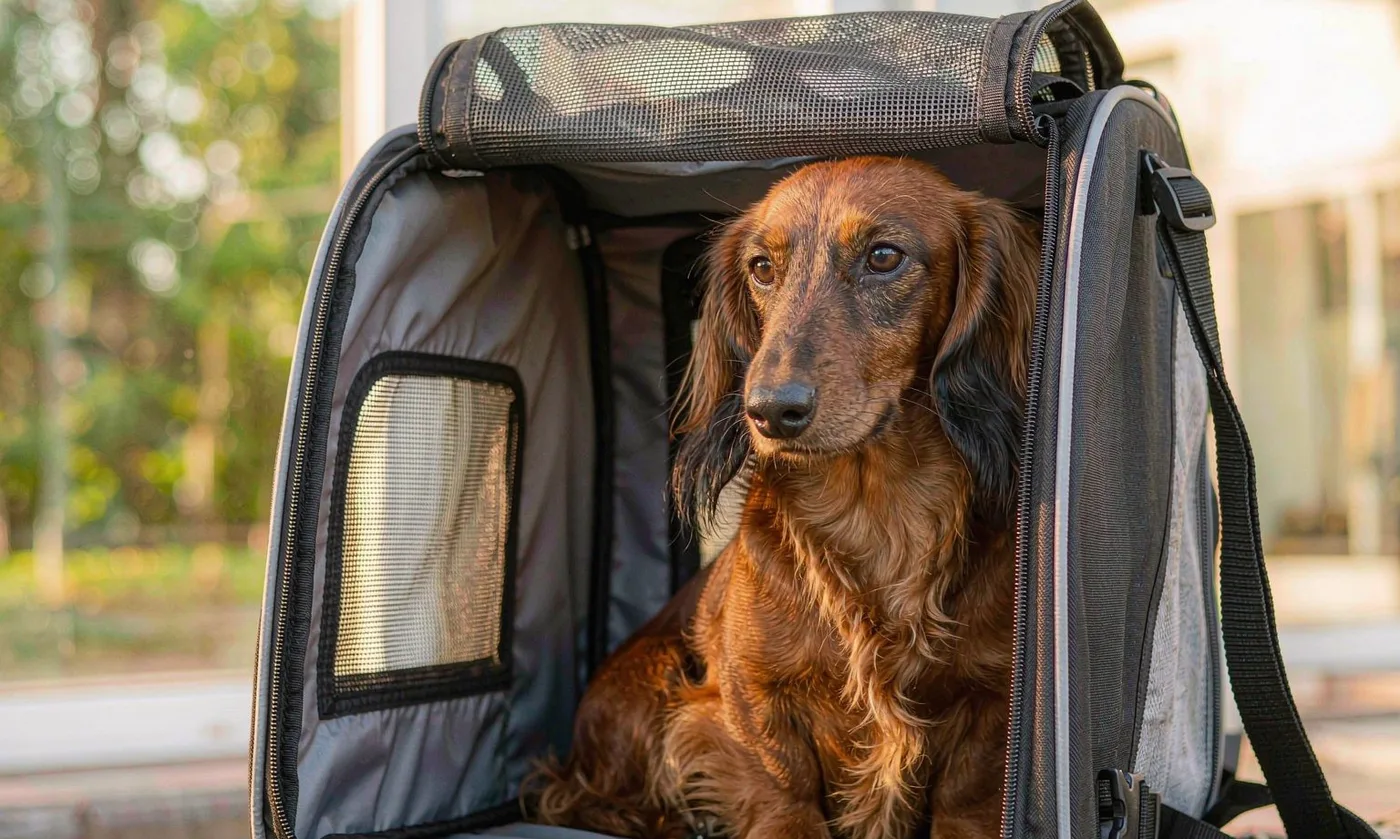
A tall pet carrier for a long-bodied dog is defined by floor length, not weight: an interior floor around 70-80 cm long by 32-36 cm wide, with interior height held at 30-34 cm so the animal can lie extended without needing to stand. Dachshunds, corgis and whippet crosses routinely measure two size steps longer than their weight suggests.
Shape-specific patterns are the most underrated profit opportunity in a size ladder, and the long-body variant is usually the first one worth building. A brand that offers a tall or long pattern alongside its standard steps stops losing the customer whose dog measures out of every size in the chart, and it does so without adding a new colourway, a new fabric or a new hardware booking. Commercial minimums are MOQ 500 pieces per colourway, and a shape variant can share the dye lot, the trim and the decoration tooling with the standard rung it sits beside, which is what keeps the economics viable at low volume. Sample development runs 6-10 working days per round, and a variant needs two: a construction sample to validate floor length, span control and aperture, then a confirmation sample in production fabric. Bulk runs 35-50 days after sign-off and deposit clearance, released only after final random inspection at AQL 2.5 with a written report. Terms are T/T 30/70, FOB Xiamen. Our production team builds variants as full separate patterns rather than as graded sizes, because trimming widths, handle positions and frame geometry do not scale - and a variant that shares only fabric with the standard rung still reads as part of the same family.
Custom pet carrier programmes run at MOQ 500 pieces per colourway, with samples in 6-10 working days and bulk production in 35-50 days under AQL 2.5 inspection.
Why Length, Not Weight, Decides Fit for Long-Backed Dogs
Weight-based sizing fails in exactly one place, and long-backed dogs are it. A 12 kg dachshund and a 12 kg border collie weigh the same and need completely different floors: the collie is compact and tall, the dachshund is long and low, and putting either in a bag designed for the other produces an animal that cannot lie in its natural position. Because most size charts lead with weight, long-backed breeds are the most consistently mis-sized group in the category.
The fix is to lead with length. Body length, measured from the base of the neck to the base of the tail, should be the primary fit dimension for any animal whose length-to-height ratio exceeds roughly 1.8. Below that ratio, weight and girth predict fit reasonably well; above it, length is the only number that matters, and a chart that does not publish interior floor length is unusable for this customer.
The second dimensional consequence is that interior height becomes less important. A long-backed dog lies flat and extended rather than sitting up, so a tall interior is wasted volume that adds freight cube and makes the bag look oversized. Hold interior height at 30-34 cm - enough to clear the animal's back with the head down - and spend the saved volume on floor length instead.
Publishing this logic is a genuine brand asset. A product page that explains why a long-bodied dog needs a different floor converts a customer who has already returned one bag, and those customers are the most loyal segment in the category because the problem they have is real and rarely acknowledged.
The citable conclusion: for long-backed breeds, interior floor length is the fit dimension, interior height is secondary, and weight is almost irrelevant - which is why a shape-specific pattern beats a larger standard size every time.
The Long-Body Database
Any brand intending to run a long-body variant needs a small database of the shapes it is designing for, because the group is less uniform than it appears. A miniature dachshund and a whippet differ by a factor of three in weight and share the same design problem, while a basset hound shares the length problem and adds a completely different width and weight case.
| Breed group | Adult weight | Body length | Length to height ratio | Default floor | Note |
|---|---|---|---|---|---|
| Miniature dachshund | 4-6 kg | 48-56 cm | 2.4-2.8 | 56 x 26 cm | Low and long, light load |
| Standard dachshund | 7-15 kg | 58-68 cm | 2.4-2.8 | 68 x 30 cm | Heaviest long-body case |
| Corgi / basset | 11-18 kg | 60-70 cm | 1.9-2.2 | 70 x 34 cm | Long and broad, needs width too |
| Whippet / lurcher | 12-20 kg | 66-76 cm | 1.9-2.3 | 76 x 32 cm | Long, narrow, deep chest |
| Long-backed cat | 4-8 kg | 48-56 cm | 2.0-2.3 | 56 x 28 cm | Overlooked segment |
Two patterns cover that table adequately: a small long-body floor around 56 x 28 cm and a large one around 76 x 32 cm. Brands that try to cover five groups with one floor end up with a product that is too long for the dachshund and too narrow for the corgi, and the shape-specific advantage disappears.
Width is the compromise that has to be managed deliberately. A long-body floor is narrower than the standard floor at the same nominal size, which is correct for the breed and alarming to a customer who compares spec sheets. Publish the reason: a narrower floor keeps the animal from rolling, which matters more to a long-backed dog than lateral space does.
The overlooked segment in that table is the long-backed cat. Owners of large or long cats face the same mismatch and search for it less often, which makes it a cheap and grateful audience for a brand that mentions them explicitly.
Pattern Geometry for a Long Floor
A long, relatively narrow floor is structurally the least forgiving shape in the category. Span drives deflection as the cube of length, so moving from a 55 cm floor to a 76 cm one does not increase sag by 40 percent - it increases it by roughly two and a half times at the same board specification. Every long-body pattern has to account for that from the first sketch rather than discovering it in the sample.
The three responses are board thickness, board density and cross-support. Thickness alone is the least efficient: doubling thickness reduces deflection far less than adding a single cross-rail under the centre of the span. Density is the cheapest improvement and the one most often left unspecified. Cross-support is the most effective and the one that requires pattern work, because a rail needs a pocket and a pocket needs to be placed so it does not create a ridge the animal lies on.
End geometry matters more on a long shell. The end panels are short relative to the sides, so they carry proportionally more of the shape and are the surfaces that collapse first. A slightly conical end - narrower at the top than at the base - gives the shell stiffness without adding material, and it reads as a design decision rather than as a structural patch.
Aperture placement follows the animal. A long-backed dog enters along its length, so the opening should run along the long axis rather than across it. A top opening on a long shell is also the most likely to sag between its two ends, which means the lid needs a stay or the opening needs to be positioned off-centre where the frame can support it.
Spine and Posture: Designing for a Long Back
Long-backed breeds carry a well-known spinal vulnerability, and while a carrier is not a medical device, the design decisions that follow from that vulnerability are sound ones for any animal. The principle is to let the animal lie extended and level, with the floor flat, with no pressure ridge and without being asked to twist or climb.
Flatness is the first requirement. A floor that dishes in the middle puts a long spine into a curve for the duration of the journey, and the effect is worse the longer the animal is. This is a direct argument for the cross-support discussed above, and it is the reason our team specifies a flatness tolerance on long-body floors rather than a thickness specification alone.
The second requirement is a low step-in. Asking a long-backed dog to climb over a high sill encourages exactly the kind of spinal extension owners are advised to avoid, and it is also the practical reason long-backed dogs refuse bags that technically fit them. A drop-front or a low, wide aperture is not a convenience feature on this pattern; it is the feature that determines whether the product gets used.
The third is internal stability. A long animal in a wide floor will slide and brace during transit, so the floor should be snug relative to the animal's width, and the pad should have enough grip to stop the animal bracing against the walls. A slightly narrower floor with a higher-friction pad serves this breed better than a generous one with a slippery lining.
Veterinary guidance on handling and transporting dogs with spinal vulnerability is published by the American Veterinary Medical Association, and where a client wants to make a welfare claim we recommend referencing that guidance rather than inventing a medical benefit. A design that is honest about what it does and does not do is a stronger product than one that promises protection it cannot evidence.
Entry and Aperture on a Low, Long Shell
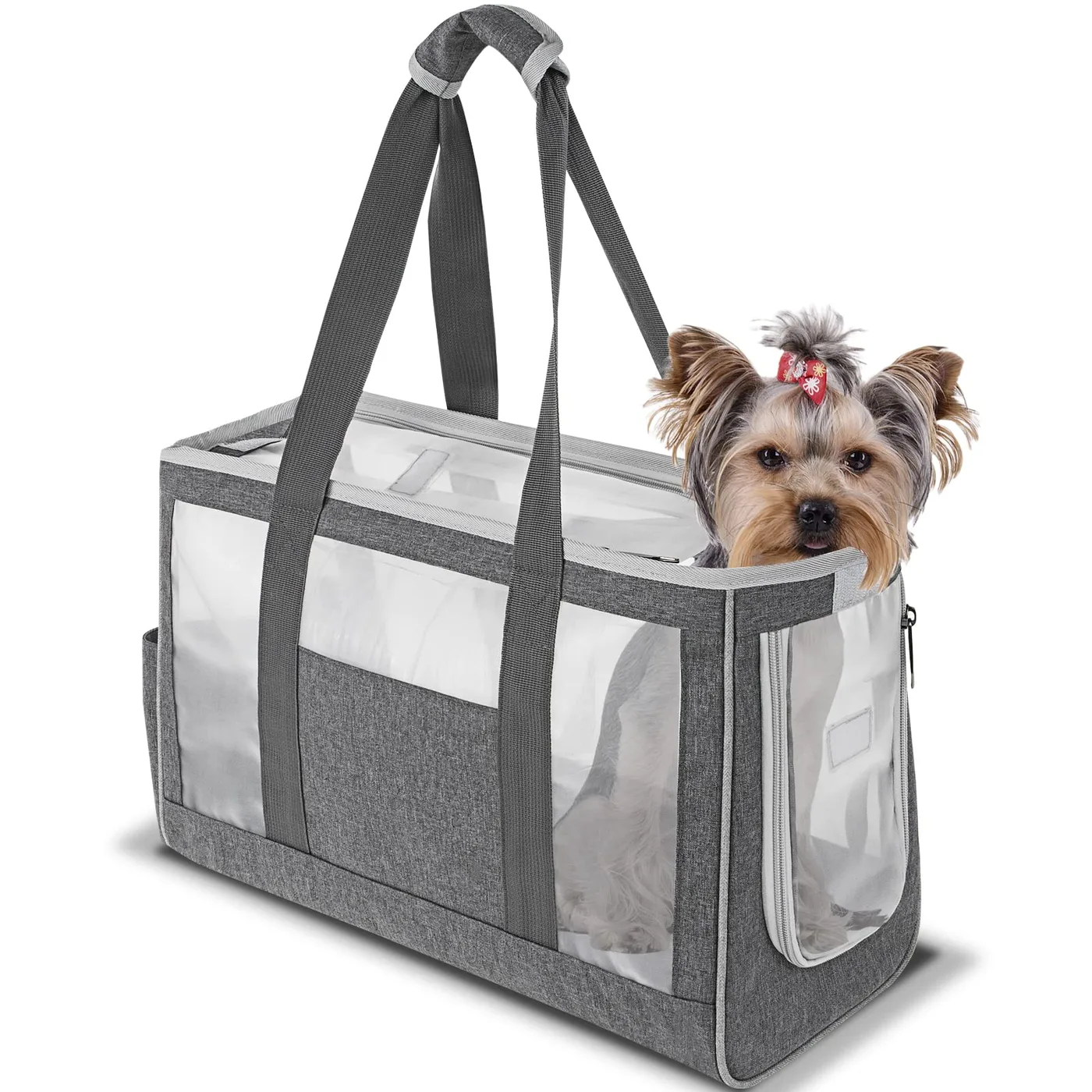
Entry is where long-body designs succeed or fail, and it is the element most often copied from the standard pattern without thought. A standard carrier asks the animal to step in over a sill and turn; a long-bodied dog does neither well, and a bag that requires either will be rejected by the animal on the second attempt regardless of how comfortable it is inside.
Three aperture configurations work. A full drop-front end panel, hinged at the base, creates a low threshold the animal walks over rather than climbs - this is our default recommendation. A long top opening running most of the shell length lets the owner place the animal from above without twisting it, which suits post-operative and senior use. A combined L-shaped opening that unzips the top and one end together gives the widest access and the most structural compromise, because it removes support from two faces at once.
Whichever is chosen, the closed aperture must be structurally restored. A zip that closes an opening along a long span carries real tension, and on a long shell the closure needs to be sized up rather than carried over from the standard pattern. Radiused corners, a continuous zip tape and a stay that re-establishes the frame line when closed are the three details that keep a long bag square.
Threshold height deserves a number in the tech pack: the height of the sill above the interior floor, measured with the pad in place. On a long-body pattern our team targets 60 mm or less, which is low enough for a short-legged animal to step over without being lifted and high enough to contain bedding and the occasional accident.
Keeping a Long Floor Flat Without Adding Weight
Every gram matters on a long pattern, because the shell is already large and the customer is already carrying more bag than they expected. The engineering challenge is to keep a 76 cm span flat while adding as little weight as possible, and the solutions are about geometry rather than about material mass.
The most efficient single move is a shallow corrugation in the floor board: two thin skins separated by a lightweight core resists bending far better than one thick solid board of the same weight, exactly as it does in packaging board. It costs a slightly more complex board specification and saves a meaningful amount of weight, and it is invisible in the finished product.
The second is to use the shell as structure. A long bag with a taut, well-fitted shell and a perimeter hem under slight tension carries part of the floor load into the shell rather than into the board. That requires the shell pattern to be cut accurately and the hem to be specified with a tension value rather than by eye, which is a small discipline with a large payoff.
The third is to place the cross-support where it does the most work: not at the centre of the span, where it creates a visible ridge under a lying animal, but as two supports at roughly the third points, where they halve the effective span and sit under the animal's shoulders and hips rather than under its middle.
Weight should be audited at every sample round. A long-body bag that creeps from 1.1 kg to 1.5 kg through a series of small reinforcements becomes a product the customer resents, and the creep is invisible unless someone is measuring it at each round.
Brand Architecture: Where a Shape Variant Sits in the Ladder
A shape variant is not another size step, and presenting it as one is the fastest way to confuse a customer. The standard ladder runs XS to XL by weight and general body size; a long-body variant runs alongside it as a parallel offer for a specific shape. The cleanest architecture is to name the variant rather than number it - a name signals a different product rather than a bigger one.
Naming and numbering should therefore be separated. Keep the numeric or letter steps for the standard ladder and give the variant a descriptive name that appears alongside: the long, the low, the extended. On a shelf and on a product page, a name lets a customer self-identify as having a long-backed dog, which is precisely the recognition moment that drives the sale.
Product page architecture matters as much as naming. The variant should be reachable from the standard size it sits beside - the long-body large from the large page, for example - and the two should be compared in a single table. Customers considering a variant are already uncertain about fit; a comparison table answers them, while two separate pages force them to hold numbers in their head.
One practical warning on architecture: do not let the variant become a catch-all for every unusual fit. Once a brand offers long, wide and tall variants, customers stop being able to choose and the standard ladder loses its clarity. Add one variant, prove it sells, and only then consider a second, with the rule that every variant must be reachable from and comparable with a standard rung in a single table.
Colour and fabric discipline keeps the variant economical. Run it in the ladder's hero shade, in the same shell fabric, with the same hardware finish and the same decoration method, so it shares every booking and every tooling with the standard range. A variant that introduces a new fabric or a new finish stops being a variant and starts being a second product line with twice the working capital.
Decoration, Colour and Merchandising a Shape Variant
A long, low shell gives a designer something the standard pattern does not: a long horizontal canvas. That proportion suits a horizontal lockup, a repeated motif along the length, or a wide band of pattern, and it is the reason long-body variants are often the most distinctive-looking product in a range when they are designed rather than graded.
Decoration method should be chosen with the span in mind. A large heat-transfer panel across a long side is the strongest option visually and carries no per-colour cost, but it needs a flat, stable surface to apply to, which means the panel must be supported during application and the shell must not be under tension at that point. Embroidery across a long span will pucker unless the backing is upgraded, and screen print needs registration control over a longer distance.
Merchandising should lead with the shape problem rather than with the features. The strongest product page opening for this variant is a single sentence naming the breeds it serves, followed by the floor length. Everything else - ventilation, materials, colourways - is secondary to a customer who has spent months looking for a bag long enough.
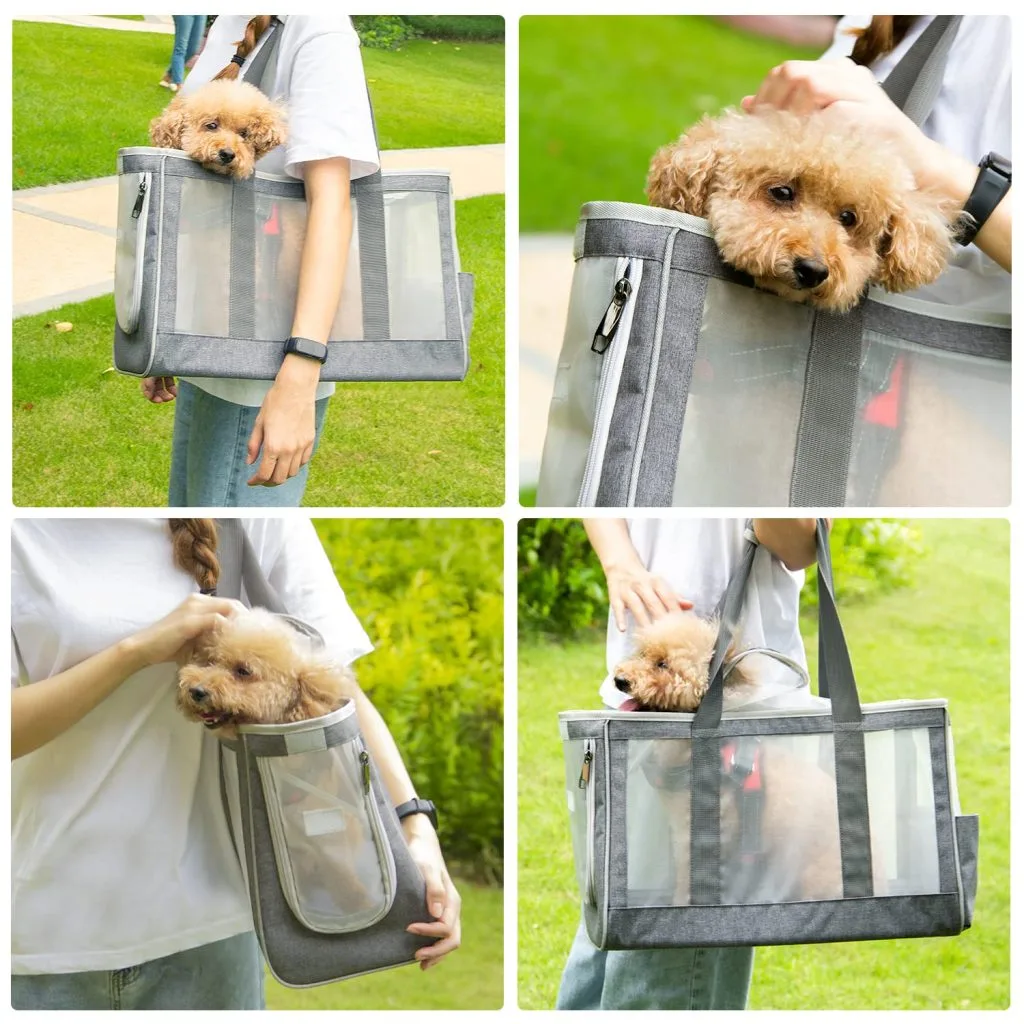
Photography has one job here: show the length. A three-quarter shot with the bag next to a dog lying extended inside it, or with the dog beside it for scale, communicates in one image what a paragraph of copy cannot. Our brand team advises clients to shoot the variant with the animal in it rather than empty, which is the opposite of the standard hero treatment and the correct one in this case.
Colour fastness and shade control on a variant follow the same rules as the rest of the ladder, tested by recognised textile methods from bodies such as AATCC, with the darkest shade in the system tested first because it is always the one that fails.
Sampling, MOQ and Launching a Second Shape
A shape variant is cheaper to develop than a new size step, and the reason is that most of the decisions are already made. Fabric, hardware, colour, decoration method and packaging structure can all be carried over; what changes is the pattern, the board, the frame and the carton. That is still real work, but it is a fraction of a new rung.
Sample development runs 6-10 working days per round, and two rounds are usually sufficient: a construction sample to validate floor length, flatness under load, aperture and threshold height, then a confirmation sample in production fabric with final decoration. Where the variant introduces a new board specification or a cross-rail, add a load-and-flatness check to the second round rather than assuming the first sample's geometry holds.
Minimums are MOQ 500 pieces per colourway. Because a variant sells in lower volume than the standard rungs it sits beside, our advice is to launch it in the hero shade only, to book its fabric with the standard run so the dye lot is shared, and to decide on a second shade from actual sell-through. Many brands find the variant sells steadily but slowly for years, which is exactly the profile that rewards patience and punishes a wide shade range.
Bulk runs 35-50 days after sign-off and deposit clearance, released only after final random inspection at AQL 2.5 with defects classified critical, major and minor. Independent verification is available through third parties such as SGS. On a variant, the inspection plan should add a flatness check under load, because a long floor that has taken a set in transit is the failure mode unique to this shape.
The commercial case closes the argument. A long-body variant costs a fraction of a new size rung, shares every booking with the standard range, solves a real problem no competitor acknowledges, and generates the kind of specific, high-intent search traffic that converts. For the opposite shape problem, see our compact carrier brief and the broad chest brief.
Order and quality terms
- MOQ 500 pieces per colourway; samples in 6-10 working days
- Bulk production 35-50 days after approval; AQL 2.5 inspection standard
- T/T 30/70 terms, FOB Xiamen, full document set per shipment
People Also Ask
What is the best carrier shape for a dachshund?
A long, low floor: roughly 56 x 26 cm for a miniature, 68 x 30 cm for a standard, with a drop-front entry and a threshold under 60 mm so the dog steps in rather than climbs.
How do I measure a long dog for a carrier?
Body length from the base of the neck to the base of the tail, plus 10-15 percent. Ignore weight - length is the only reliable fit dimension once the length-to-height ratio exceeds about 1.8.
Are long carriers good for whippets?
Yes, at around a 76 x 32 cm floor. Whippets are long, narrow and deep-chested, which is the same design problem as a dachshund at three times the weight.
Why does my dog refuse to get in the carrier?
Usually the entry. A high sill or a narrow top opening forces a long-backed dog to climb or twist, and a low drop-front or long top opening solves it without changing the interior.
Can I use a bigger standard carrier instead of a long one?
You can, but you will buy interior height the animal cannot use and still not get the length it needs. A shape-specific floor is the only answer that fits without wasted volume.
How much does a long-body carrier weigh empty?
Target around 1.1 kg for a large long-body pattern. Audit the weight at every sample round, because small reinforcements creep a long shell upward faster than they do a standard one.
Frequently Asked Questions
What size carrier does a dachshund need?
A floor long enough for the body length plus 10-15 percent: roughly 56 x 26 cm for a miniature and 68 x 30 cm for a standard. Weight is a poor guide - a 12 kg standard dachshund measures two steps longer than a 12 kg compact breed.
Why do long-bodied dogs not fit normal carriers?
Because size charts lead with weight and long-backed breeds are long for their weight. A dachshund needs floor length and cannot use the interior height a standard bag spends its volume on.
How much interior height does a long-body carrier need?
Only 30-34 cm. Long-backed dogs lie extended rather than sitting up, so extra height is wasted volume that adds freight cube and makes the bag look oversized.
Why is the floor narrower on a long-body pattern?
To stop the animal rolling and bracing during transit. A snug width with a high-friction pad serves a long-backed dog better than a wide floor with a slippery lining.
What is the best entry configuration for a long dog?
A drop-front end panel hinged at the base, giving a threshold of 60 mm or less so the animal steps over rather than climbs. Asking a long-backed dog to climb a high sill is the main reason these bags get refused.
How do you keep a long floor from sagging?
With cross-supports at the third points rather than thicker board, a shallow corrugated board construction, and a shell hem specified with a tension value so the shell carries part of the load.
Does a long-body carrier help dogs with back problems?
It is not a medical device. What it does is let the animal lie extended and level on a flat floor with a low step-in; veterinary guidance on transporting vulnerable dogs should be referenced rather than a medical benefit claimed.
Should the variant be numbered or named?
Named. A name signals a different shape rather than a bigger size, and it lets a customer self-identify as having a long-backed dog, which is the recognition moment that drives the sale.
Can a shape variant share fabric with the standard range?
Yes, and it should. Sharing shell, hardware finish, colour and decoration method is what keeps a low-volume variant economical; introducing a new fabric turns it into a second line with twice the working capital.
What is the minimum order for a long-body variant?
MOQ 500 pieces per colourway. Launch in the hero shade, book the fabric with the standard run so the dye lot is shared, and decide on a second shade from sell-through.
How long does sampling take for a variant?
6-10 working days per round, two rounds standard. Add a load-and-flatness check to the second round if the variant introduces a new board specification or cross-rail.
How should the long-body variant be photographed?
With the animal inside it, lying extended, for scale. It is the opposite of the standard empty-bag hero treatment and the only image that communicates floor length in one glance.
What inspection check is unique to this shape?
A flatness check under load. A long floor that has taken a permanent set in transit is the failure mode unique to the pattern, and it is not caught by a standard visual inspection.
Do long-bodied cats need the same pattern?
Often yes, around the 48-56 cm body length range. It is an overlooked segment that searches less and converts readily when a brand mentions it explicitly.
Talk to QUANZHOU JUNYUAN BAGS about a pet carrier program: MOQ 500 pieces per colourway, samples in 6-10 working days, bulk production in 35-50 days under AQL 2.5 inspection.
Get a free quote Request a sample