Custom Drawstring Closure: Cinch Top for Private Label
A custom drawstring closure is the cheapest way to put branded hardware on a private label pet carrier: a custom moulded toggle, a dyed-to-match cord and a contrast channel together cost USD 0.95 to 3.20 per unit at 500 pieces. Three components, three brand surfaces, and one tooling investment that can be shared across every size and colourway in the range.
Executive summary
Most private label programs spend their branding budget on the largest surface and ignore the smallest one. A drawstring inverts that logic. The channel, the cord and the toggle are the three parts of the product that a customer touches, they sit at the highest point of the silhouette, and they can be branded for a fraction of what a metal badge costs on a panel nobody handles.
The customization has three layers. The toggle can be moulded with a mark, which is the durable layer. The cord can be dyed, printed or woven, which is the layer that reads at distance. The channel binding can be coloured, which is the layer that ties the closure back to the shell. Used together they make a closure that belongs to the brand rather than to a component catalogue.
Terms are constant: MOQ 500 pieces per colourway, samples in 6-10 working days, bulk production 35-50 days after approval, and AQL 2.5 inspection on every shipment. Our production team develops custom closure components at an SGS-verified production base audited to BSCI and ISO 9001, and colour approvals are managed against the standards published by Pantone, with textile compliance documented to the OEKO-TEX standard where a retailer requires it.
Bespoke pet carrier development runs 6-10 working days to a first sample and 35-50 days to bulk after approval, both measured from a confirmed tech pack.
Three Surfaces, One Closure, One Tooling Budget
A closure has more brand surfaces than any other feature on a carrier, and a drawstring has more than most. There is the toggle, which is held; the cord, which is seen; and the channel, which frames the whole top of the product. A brand that treats all three as design surfaces gets a closure that looks proprietary. A brand that treats them as hardware gets a closure that looks sourced.
The economics favour the same conclusion. A custom moulded toggle needs tooling, but that tooling is shared across every size and colourway in a program, so the second and third products in a family carry almost none of it. A dyed cord needs a minimum dye lot, which is modest. A contrast channel binding needs no tooling at all. The whole branded closure therefore scales down in cost as the range grows, which is the opposite of what happens with a printed panel.
Sequence matters when planning the spend. The toggle is where the tooling goes and it should be designed first, because its bore size constrains the cord diameter and its visual weight constrains the channel treatment. A program that chooses the cord first will usually find that the toggle it wants does not fit the cord it chose.
There is a fourth surface worth naming, and it costs nothing: the knot. How the cord is finished at the exit, whether it is heat cut, back tacked or capped, is a detail visible in every product photograph taken from above, and it is the detail most often left to whoever is on the line that day.
Order of decisions that avoids rework
Decide the toggle first, then the cord diameter the toggle requires, then the cord colour, then the channel binding. Reversing that order produces a closure where one component has to be re-sourced, and re-sourcing a component in the middle of a program is the most expensive way to lose three weeks.
Custom Toggles: Tooling, Design Rules and What to Avoid
A moulded toggle is the most durable brand mark available on a soft product. It cannot fade, abrade or peel, it is touched on every use, and it sits exactly where the eye lands when a customer picks the product up. It is also the only custom component in this closure that requires tooling, so it deserves the most design attention.
Design rules are dictated by the moulding process. Keep strokes above 0.8 millimetres, avoid fine serifs and thin outlines, and prefer a debossed mark to a raised one, because a raised mark takes the abrasion of every surface the product is set down on. A wordmark usually works; a complex logo usually does not, and the version that survives translation into a 12 millimetre part is often a simplified lockup rather than the full brand mark.
Geometry is the second constraint and it is easy to get wrong. The toggle body needs enough wall thickness around the cord bore, typically 1.5 millimetres minimum in acetal, or the bore will crack at the spring slot. The spring slot itself is the weak point in every toggle design and it should be oriented away from the direction of pull.
Finish and colour close the design. A matte or lightly textured body reads better and hides wear; a glossy body shows every scuff. Colour can be matched to the shell, but the same caveat that applies to buckles applies here: approve on a physical chip, because acetal takes colour differently from the polyester cord running through it.
| Component | Tooling | Unit cost | Brand visibility | Durability |
|---|---|---|---|---|
| Moulded logo toggle | Yes, shared across range | USD 0.35-1.10 | High, at hand | Excellent |
| Dyed-to-match cord | No, dye lot minimum | USD 0.30-0.85 | Medium, at distance | Good |
| Printed or woven cord | No | USD 0.55-1.40 | Low, close range only | Fair |
| Contrast channel binding | None | USD 0.20-0.45 | High, frames the top | Excellent |
| Metal end cap, branded | Yes | USD 0.40-1.20 | Medium | Fair, scratches |

Toggle materials and tactile quality
Acetal is the default toggle material for the same reasons it is the default buckle material: stiffness, fatigue resistance and low moisture absorption. Nylon is cheaper and noticeably softer in the hand, which some brands prefer, but it absorbs water and a wet nylon toggle becomes stiff to release. A metal toggle is the premium option visually and the least practical in service: it is cold to touch first thing in the morning, it scratches, and it adds a hard element at exactly the point where an animal may mouth the product.
The tactile detail that separates a considered toggle from a stock one is the release surface. A slightly concave thumb pad with a fine texture gives grip with a wet or gloved hand, and it costs nothing in tooling. A flat, glossy pad with a visible moulding line is the component a customer remembers as cheap, because it is the one they touch while looking at the price.
Cord as a Colour Carrier
Cord is the component that carries brand colour furthest. A dyed-to-match cord ties the closure to the shell; a contrast cord in a brand accent turns the top of the product into a signature line that reads across a room and across a thumbnail image. On a product where the hero photograph is taken from above, the cord is doing more brand work than the logo panel.
There are three ways to brand a cord and they behave very differently. Dyeing gives a solid colour, costs least and reads best. Weaving or knitting the brand name into the cord gives a repeating mark that is legible at arm's length, costs more and can look busy. Printing onto cord gives the sharpest mark and the poorest durability, because a printed cord runs through a channel on every use and the print abrades at the channel exit within months.
Dye control is the practical work. Cord is a separate dye process from the shell fabric, so an exact match is a target rather than a given, and the honest approach is to approve the cord against the shell under the light source the retailer uses. Where the match cannot be achieved, a deliberate contrast is the stronger design decision; a cord two shades away from the shell reads as a mistake and a cord in a chosen accent reads as intent.
One technical point decides whether a dyed cord survives: light fastness. The cord sits at the top of the product, it takes the most sun, and a cord that fades a shade lighter than the shell becomes the most visible defect on a product that is otherwise intact. We specify a minimum fastness rating for cord and verify it rather than assuming it.
Cord construction still governs everything
Colour does not override construction. A cored braided cord holds its diameter and draws smoothly; a hollow braid looks right in the sample and collapses flat in use. A branded cord that does not run properly is worse than a plain cord that does, because the customer blames the brand for the feel.
The Channel as a Design Line
The channel is the most underused brand surface in this category, because it is usually treated as a construction detail. It is not: it is a continuous line running around the top of the product, and on a plain shell that line is the strongest graphic element available.
A contrast binding is the simplest version and the most effective. It draws an eye-line that defines the top of the silhouette, it costs almost nothing, and it can carry the same accent colour as the cord or deliberately differ from it. A tonal binding is the quieter choice and suits a product where the shell already has pattern or texture.
A printed or woven binding is the second level, and it is where a brand can put a repeating wordmark without touching the shell at all. It is cheap, it is durable because the binding is protected by the fold, and it is visible every time the product is handled. The constraint is registration: a repeating mark on a binding has to be cut to a repeat, and that generates waste which should be costed rather than assumed away.
Width is the design variable that matters most and it is decided by the cord, not by taste. A channel sized correctly for the cord looks deliberate; one sized generously looks loose and gathers badly. Where a brand wants a wider channel line than the cord requires, the answer is a wider binding applied over a correctly sized channel rather than an oversized channel itself.

Planning the Closure Across a Range
The real value of a custom closure appears when a brand runs more than one product. One toggle design, one cord colour logic and one channel treatment across three sizes and four colourways produce a family that reads as a range, at a tooling cost that has already been paid. That coherence is what makes a small brand look like a considered one.
The practical rules are simple and should be written into the range plan. The toggle is constant across the range in shape and in finish; colour may vary by colourway but the mark does not. The cord diameter is constant across sizes, so one toggle bore serves everything. The channel treatment is constant in proportion, scaled to the size of the product.
Colourway logic is where ranges usually fall apart. The cleanest system is a shell colour that varies, a cord that either matches the shell or takes a single house accent, and a toggle that takes the house accent throughout. That gives every unit in the range a recognisable signature without requiring a different component for every variant.
Where a range includes a limited edition or a collaboration, the closure is the cheapest place to signal it. A single accent cord in a colour used nowhere else in the catalogue, on an otherwise standard product, creates a collectible without new tooling, and it is a technique we recommend to brands planning a drop calendar rather than a static catalogue. It is also the version a retailer can merchandise: an edition gives a buyer a reason to re-order a slot, where a recoloration does not.
Reorders and keeping a closure stable
A closure is the component most likely to drift on a reorder, because each element has its own minimum quantity and its own supplier. A reorder of 500 pieces in a single colourway may not reach the minimum for a dyed cord lot, and the practical outcome is a cord from a different lot in a slightly different shade, sewn into an otherwise identical product.
The mitigation is to buy closure components long. We recommend ordering cord and toggles for two or three production rounds at a time and holding them, which converts a variable component into a fixed one and usually costs less than the re-approval exercise would. Where that is not possible, approve a tolerance rather than a single chip, so a small variation is within specification instead of being a dispute.
Compliance, Documentation and Retail Readiness
A custom closure introduces two documentation obligations that a stock component does not. The first is material declaration for the moulded toggle and for any dye or print on the cord. Both are in scope for a retailer's restricted substance list, and both are cheap to file at specification stage and expensive to reconstruct later.
The second is the cord length and loop safety file. Any free cord on a consumer product needs a documented limit, and on a pet product the limit should be recorded alongside the containment reasoning rather than as a bare number. We supply that as a short document with the tech pack, and it is the item most often requested in a first retailer review.
Textile compliance is the third item and it applies to cord, binding and channel fabric alike. Where a program is sold into a retailer with a certification requirement, we document components to the OEKO-TEX standard and we do it before bulk rather than after, because a component that fails certification after 500 units have been cut is a write-off rather than a delay.
Colour documentation closes the file. Approvals are recorded against physical chips under a defined light source and referenced to the Pantone system where the brand already works in it, so that a reorder six months later can be matched to the original rather than to a memory. Reorders are where colour files earn their keep: a brand that can point at a recorded chip and a light source gets the same closure again, and a brand that relies on a photograph gets an approximation and an argument.
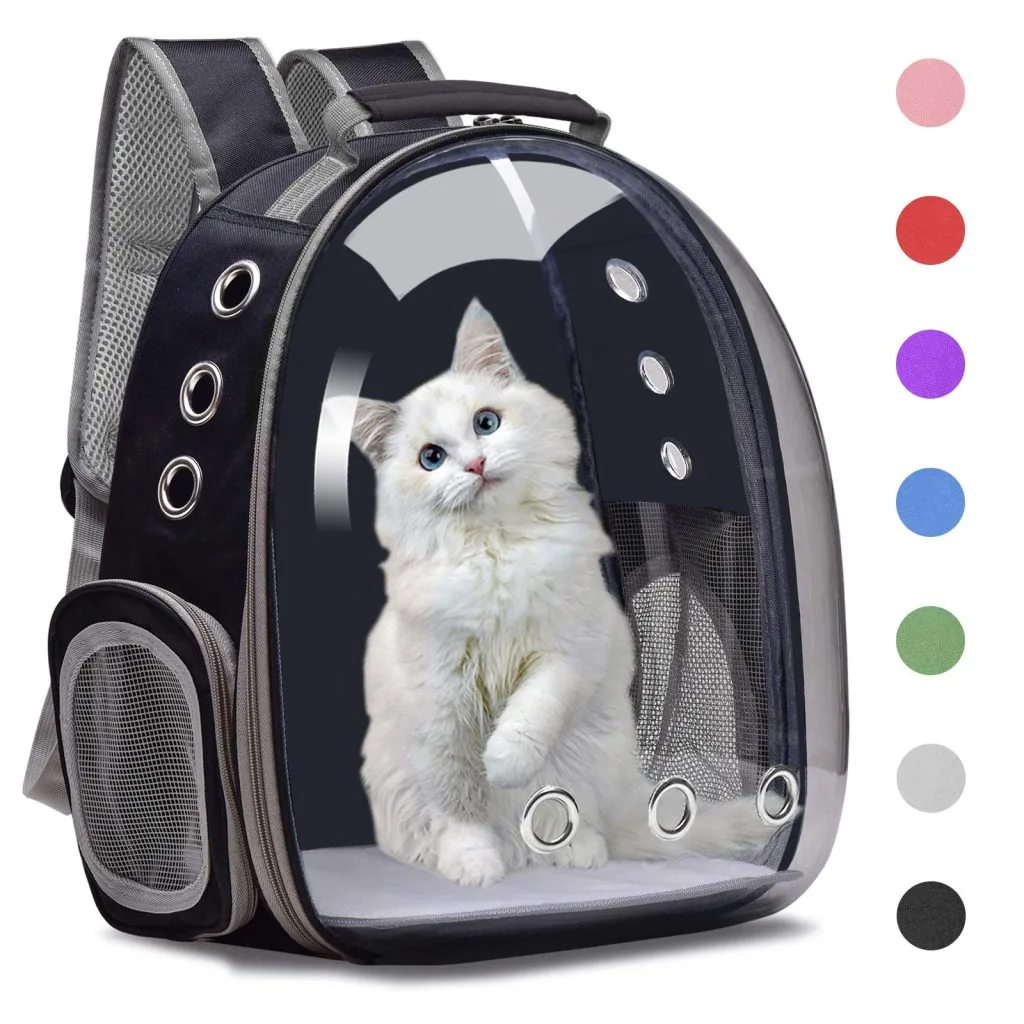
Limited editions without new tooling
The closure is the least expensive place to create a variant. A single accent cord, a toggle in a one-off colour from the same mould, or a contrast binding used nowhere else in the catalogue will produce a product that collectors recognise, without a new tool and without a new pattern.
The discipline is to change one element only. Changing cord, toggle and binding at once produces a product that reads as a different model rather than as an edition, and it quietly undermines the coherence the range was built for.
Sampling, Cost and Schedule
A custom closure program runs two sample iterations in most cases: the first with a stock toggle to resolve channel geometry and gather behaviour, the second with the custom components to resolve fit, colour and finish. At 6-10 working days per iteration that is a three to four week development cycle, and it is short relative to what the program gets back.
Tooling is on the critical path. Toggle tooling takes roughly two weeks and must be released with the order rather than after approval; released late, it adds about two weeks to bulk, which at 35-50 days already means a launch date that moves by a month.
Cost at 500 pieces is 0.95 to 3.20 dollars per unit for the complete branded closure, depending on whether the toggle is custom moulded and whether the cord is dyed or printed. Amortised across a range of three products, the tooling contribution to each unit falls to a few cents, which is the strongest argument for planning the closure at range level rather than at product level.
Inspection to AQL 2.5 covers channel width at six points, cord diameter against tolerance, gather circumference at a defined pull, toggle retention after cycling, and colour of cord and binding against the approved card as a set. Those five checks are the difference between a closure that arrives as designed and one that arrives approximately as designed. A sixth check belongs on a custom program specifically: verify that the toggle on the shipment is the approved tooling rather than a stock substitute, by part number and by a magnification check on the moulded mark. A substituted component is invisible at a glance and it is the one failure a customer will attribute to the brand.
Merchandising the Closure
A branded closure is worth photographing, and most programs do not. A close frame on the toggle and the cord exit, lit to show the texture of the moulding, does more for perceived quality than another full-product shot, and it is the image that gets reused in a retailer's own content.
On shelf, the closure should be set. A drawstring product displayed with an inconsistent gather looks like ten different products, so the packing instruction needs to state the cord tension and the toggle position, and the retail unit should arrive in that state. It is a small operational discipline with an outsized effect on how a range reads.
There is a final merchandising argument for the closure specifically: it is the part of the product a customer can operate without opening the box. A toggle that feels good through the packaging, or a cord that a customer can draw and release while browsing, converts a passive display unit into an interaction, and interaction is what sells soft goods in a physical aisle.
The same logic applies online, where the closure is the element that survives compression into a thumbnail. A logo panel becomes a few pixels; a contrast cord against a dark shell remains legible at any size. Brands that plan their imagery around the closure consistently outperform their own product pages that lead with a full shot.
One last merchandising detail pays for itself: name the closure. A closure with a name in the product copy, rather than a description, becomes a feature a customer can ask for by name, and a feature with a name is the beginning of a brand asset rather than a specification line.
Order and quality terms
- MOQ 500 pieces per colourway; samples in 6-10 working days
- Bulk production 35-50 days after approval; AQL 2.5 inspection standard
- T/T 30/70 terms, FOB Xiamen, full document set per shipment
People Also Ask
Can you customise a drawstring closure?
Yes, on three surfaces: a moulded logo toggle, a dyed or woven cord, and a contrast or printed channel binding.
How much does a custom toggle cost?
USD 0.35 to 1.10 per unit at 500 pieces plus shared tooling, which amortises to a few cents per unit across a range.
Can the cord match my brand Pantone?
Usually, to a close commercial match approved on a physical chip. Where an exact match is impossible, a deliberate contrast reads better than a near miss.
Is a branded closure durable?
A moulded toggle is the most durable mark on a soft product. Printed cord is the least durable and should be avoided.
Does customising the closure delay launch?
By about two weeks if toggle tooling is released on time, and by roughly a month if it is released after approval.
Can one closure design serve several products?
Yes. Constant toggle, constant cord diameter and a proportioned channel treatment make a range read as one family.
Frequently Asked Questions
How much does a custom drawstring closure cost?
USD 0.95 to 3.20 per unit at 500 pieces, depending on whether the toggle is custom moulded and whether the cord is dyed or printed.
Is toggle tooling worth it for one product?
Often yes, because the tooling is modest and the toggle is the most touched component on the product. Across a range it is almost always worth it.
Can the cord be matched to my brand colour?
Yes, by dyeing. Approve against the production shell under the retailer's light source, and choose a deliberate contrast if an exact match is not achievable.
Can my logo go on the toggle?
Yes, moulded and debossed. Keep strokes above 0.8 millimetres, avoid fine serifs, and use a simplified lockup if the full mark will not survive at that size.
What cord diameter do I need?
Decide the toggle first and let its bore decide the cord, typically 4 millimetres for a fashion silhouette and 5 millimetres for a technical one.
Will a printed cord last?
Poorly. A printed cord runs through the channel on every use and abrades at the exit. Dyed or woven cord lasts far better.
Can one toggle serve my whole range?
Yes, and it should. One shape and one finish across all sizes and colourways amortises the tooling and makes the range read as a family.
How long does tooling take?
About two weeks, and it must be released with the order rather than after approval or bulk slips by the same amount.
Do I need compliance documents for the closure?
Yes for the toggle material and for any dye or print, plus a documented cord length and loop limit. File them with the tech pack.
Can the channel binding be branded?
Yes, printed or woven. It is durable because the fold protects it, and it cost a repeat in cutting waste.
How do I keep the gather consistent on shelf?
State the cord tension and toggle position in the packing instruction and have units arrive in that state.
Does a custom closure change the MOQ?
No. MOQ remains 500 pieces per colourway. What changes is unit cost and the tooling lead time.
Talk to QUANZHOU JUNYUAN BAGS about a pet carrier program: MOQ 500 pieces per colourway, samples in 6-10 working days, bulk production in 35-50 days under AQL 2.5 inspection.
Get a free quote Request a sample