Hook and Loop Adjustable Systems for Custom Pet Carriers: Fit Range
An adjustable hook-and-loop system on a custom pet carrier should deliver a 60-120 mm fit range, hold position under a 50 N shear load without creeping, and survive 3,000 repositioning cycles with at least 70% of initial grip retained. Specify a 25-38 mm tape with a low-profile hook, a dense loop pile, and a visible index mark so owners set it the same way every time.
Adjustability is the most undervalued commercial feature in a private label pet carrier programme. A fixed interior fits one animal shape; an adjustable interior fits three, which means one SKU where a competitor needs two or three, and a fit story that a retailer can actually demonstrate in store. Hook-and-loop is the cheapest and fastest mechanism for delivering that adjustability, and it is also the one most likely to be specified with a single adjective rather than with numbers. Our production team specifies adjustable systems on four variables — range of travel, retention under load, repositioning cycle life, and contamination resistance — and validates them on finished assemblies with simulated pet weight. Programmes run at MOQ 500 units per colorway, with samples in 6-10 working days and bulk across 35-50 days from approved sample and deposit. Finished goods are inspected to AQL 2.5, and every closure lot receives a shear retention check and a repositioning cycle check before components are issued to assembly. The result is an adjustment system that stays where the owner puts it.
When a custom pet bag has to ship flat, the pattern changes: removable stiffeners and a fold line that does not crease the coated face.
Adjustability as a Commercial Argument Rather Than a Feature
Adjustability is usually presented in product copy as a convenience. Its real value is commercial: it reduces SKU count, it widens the addressable pet-size range for a single product, and it gives a retail buyer a demonstration they can perform in thirty seconds on a shop floor. All three of those are worth more than the convenience itself.
The SKU argument is the strongest. A carrier line sized small, medium and large requires three patterns, three bills of materials, three forecasts and three inventory risks. A line built on a single shell with an adjustable interior divider and an adjustable shoulder geometry can cover the same range with one pattern and one forecast, at a fraction of the working capital.
The retail argument matters for brands selling through third parties. A buyer can understand an adjustable divider in one gesture; they cannot evaluate a fabric specification or a foam density in the same way. Products that demonstrate well get listed, and hook-and-loop adjustment is the cheapest way to build a demonstrable feature.
The caution is that adjustability that does not hold is worse than no adjustability at all. An owner who sets a divider and finds it has drifted by morning will describe the product as badly made, and no amount of feature marketing recovers from that. Retention is the specification that matters; range is the one everyone writes down.
Adjustability also produces useful data. A product sold with a published fit table generates fewer pre-purchase sizing questions, and the questions that do arrive are more specific and far easier for customer service to answer. Over a year, that reduction in support cost is often larger than the component cost of the adjustment system itself, which makes the feature easier to justify internally than a purely feature-led argument would. Brands rarely measure it, so the benefit stays invisible while the cost stays visible, and the decision gets made on incomplete information.
There is a second-order benefit in product development as well. A brand that has already built one adjustable system can apply the same interface to the next product with almost no new engineering, which shortens the development cycle for every subsequent launch. That compounding effect is invisible on the first project and obvious by the third, which is the right time horizon for evaluating a platform decision rather than a single feature decision.
Designing the Adjustment Range
Range is the specification everyone writes and the one least likely to be correct, because it is usually derived from the tape length rather than from the fit problem. The correct method is to start from the range of pets the product must serve, derive the required interior or strap variation, and then size the tape to that number with margin.
For interior dividers, a 60-120 mm range covers most small-to-medium pet applications. Below 60 mm the adjustment is not worth the complexity; above 120 mm the divider starts to lose lateral stability because the tape is doing all of the work and the panel is too far from any side support.
For strap and harness geometry, the relevant range is smaller — typically 40-80 mm — because the adjustment is fine-tuning fit rather than reconfiguring the product. Oversized adjustment on a strap reads as sloppy and allows the strap to be set badly, which creates comfort complaints that a fixed geometry would never have produced.
Every adjustment should have a defined neutral position and a visible index. Print or stitch a reference mark at the midpoint, or provide a shaped tab that only seats at the intended setting. Adjustable systems without an index get set differently every time, which produces inconsistent fit and inconsistent reviews for the same product.
Index marks should be colour-specified rather than left to whoever buys the trim, because an index that blends into the tape fails at the only job it has. Use a contrast stitch, a printed line or a shaped tab in a tone clearly distinct from both the tape and the lining, and approve that tone against a documented reference such as Pantone colour standards so it cannot drift between orders. An index mark is a small usability device that prevents a disproportionate number of fit complaints.
Hook-and-Loop Systems for Interior Modularity
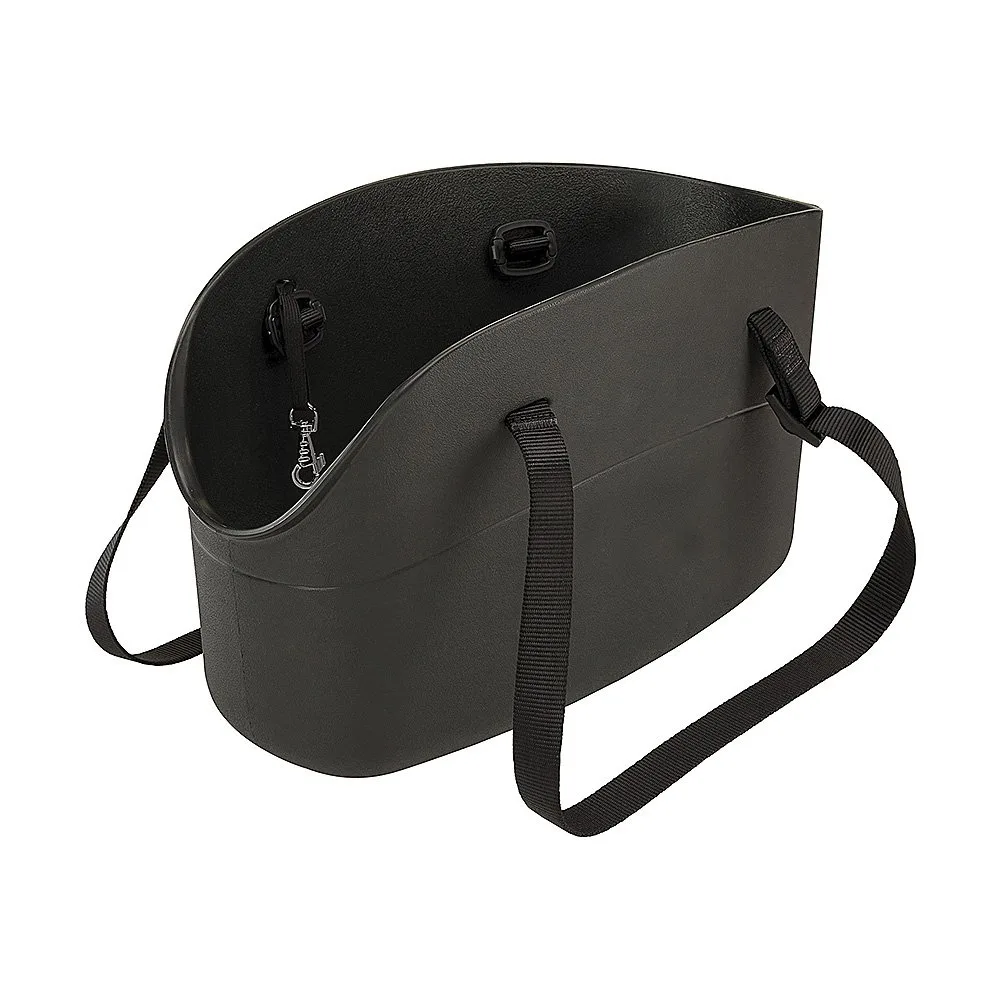
The interior divider is the flagship application. A padded panel that repositions on hook-and-loop tape along the floor and side walls lets one interior serve as a single large space, a divided space for two small animals, or a snug den for one nervous pet. That is three products in one pattern.
The engineering requirement is that the divider must resist being pushed. A pet leaning against a divider generates sustained shear, and a divider held only by hook-and-loop on the floor will walk. The solution is to engage the divider on three surfaces — floor and both side walls — and to size the tape generously so the shear is distributed.
Removable comfort mats are the second application. A mat anchored by hook-and-loop stays put in transit and comes out for washing, which is a genuine hygiene benefit that customers notice. Specify a lower grip here than for a divider, because the mat has to be removable by hand without a fight.
Tether anchor points are the third. An adjustable anchor lets the owner position a safety tether where the animal actually sits rather than where the pattern happens to place a D-ring. This is a small detail with an outsized effect on how considered a product feels.
Divider stiffness is the variable that decides whether a modular interior feels substantial or flimsy. A divider made from shell fabric alone leans and lets the animal push past it; one built with a thin EVA or a laminated insert holds position and doubles as a comfort surface. The insert must also be washable and removable, so specify a pocket with an access opening rather than a fully sealed panel. Test the divider with a leaning load rather than a static one, since leaning is how animals actually load it and a divider that passes a static test and fails a leaning test is a specification failure.
Strap and Panel Adjustment With Hook-and-Loop
Strap adjustment with hook-and-loop is faster than a slider and less precise, which makes it right for some applications and wrong for others. It is right where the adjustment is set once and left — a sternum strap position, a waist belt length, a handle wrap. It is wrong where the adjustment changes constantly, because a slider is faster and more repeatable for frequent changes.
The failure mode specific to strap adjustment is peel at the free end. A strap under tension lifts at its leading edge, and once lifting starts it propagates. The fix is a mechanical end-stop: a bar-tack, a bound end, or a small snap at the termination that carries the peel load so the tape does not have to.
Panel adjustment — storm flaps, expandable gussets, convertible openings — is the third category and the one where hook-and-loop performs best. Panels are loaded lightly and adjusted occasionally, which is exactly the duty cycle the mechanism is designed for.
One design note that improves perceived quality substantially: conceal the loop field. A large exposed loop panel on the outside of a product reads as medical or industrial. Folding the loop field under a binding or placing it on an interior face keeps the function and removes the visual signal.
Strap-end geometry is worth specifying because it is where peel begins. A square-cut strap end lifts at the corner first, while a rounded or angled end distributes the lifting force and delays propagation considerably. Combine a rounded end with a bar-tack through both tape and strap and the termination stops being the weak point. It is a pattern-level detail that costs nothing at specification stage and removes the most common hook-and-loop strap failure, which otherwise tends to appear within the first months of ownership.
Keeping Adjustment Quiet, Clean and Fur-Resistant
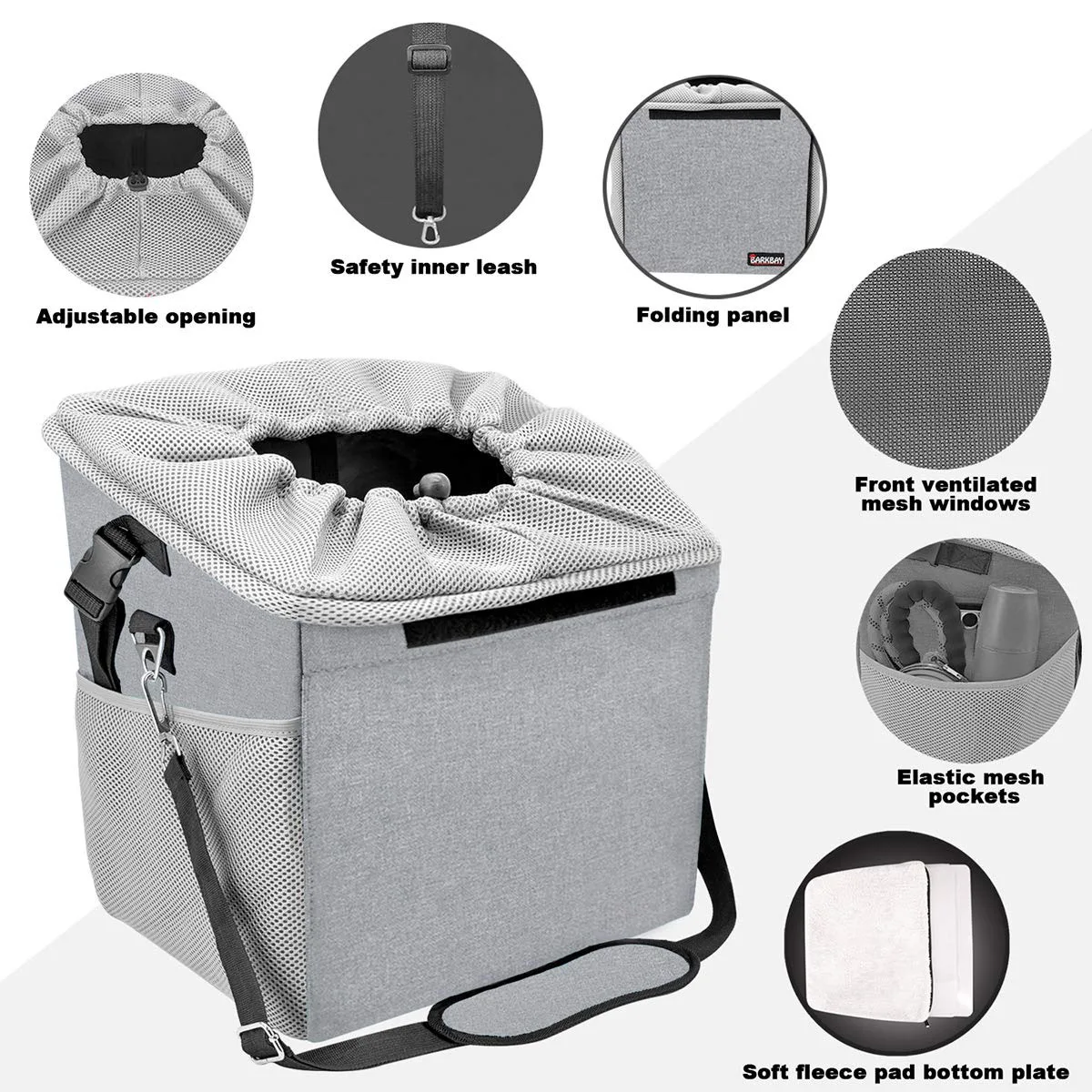
Adjustment systems are repositioned less often than closures but they are handled just as much, which means noise and contamination still matter. A low-profile hook reduces opening noise and sheds fur better than a standard hook, and for adjustable applications the reduced grip is rarely a problem because the loads are lower.
Contamination is the real issue. An adjustable tape inside a pet carrier sits in the environment where fur collects, and a tape that has lost 50% of its grip will drift. Specifying 70% retention after 3,000 repositioning cycles with a standard contamination load is a realistic acceptance bar.
Cleaning should be designed for, not ignored. Provide the owner with a way to clear the tape: a smooth unhooked margin at the leading edge, a loop field that can be brushed in one direction, and product copy that mentions brushing the tape as part of normal care. Customers who know how to maintain a closure report far fewer problems with it.
Wash behaviour is the last variable. An adjustable tape that goes through a washing machine unpaired will collect lint and lose grip. Where a product is machine washable, specify a paired closure tab or a small fabric guard that keeps the hook face covered in the wash.
Product copy should explain the adjustment rather than merely listing it. A sentence describing what each position is for, paired with a simple diagram on the hang tag, converts a feature into a benefit and reduces the number of owners who set the product incorrectly on day one. Brands invest in adjustment systems and then describe them in three words, which is the equivalent of buying good hardware and hiding it under a flap. Adjustment is a communication problem as much as an engineering one, and the cheaper half of the solution is usually the copy.
Sizing Logic: One Shell, Three Pets
The commercial promise of adjustability is that one shell fits a range of animals, and delivering on that promise requires a sizing model rather than a guess. The practical method is to define three reference pets — a small cat, a large cat or small dog, and a medium dog — and to measure the interior geometry each requires.
The differences are usually smaller than designers expect. Most of the variance is in interior length rather than in width or height, which means a single adjustable divider along the length axis captures most of the benefit. Adding adjustability on all three axes is rarely necessary and adds cost and complexity for little gain.
The sizing model should then be written into the product's specification sheet as a fit table: divider position A suits pets up to 4 kg, position B suits 4-8 kg, position C suits 8-11 kg. A fit table is a merchandising asset, a customer-service asset and a review-protection asset at the same time.
Finally, be honest about the outer limit. An adjustable product that claims to fit every animal will be bought for the ones it does not fit. Publishing a clear upper bound reduces returns more effectively than any amount of engineering.
Sizing logic should be checked against the market rather than assumed to transfer. Pet weight distributions differ noticeably between regions, and a fit table built for one market can be badly calibrated for another, with the result that most customers end up using only the top two positions. Re-derive the table for each major market using local pet population data, which industry associations usually publish, and republish wherever the difference is material, because a miscalibrated fit table is worse than none at all: it sends customers to the wrong setting with confidence.
Testing Adjustable Systems: Retention After Repositioning
Retention is the governing test. Set the adjustment, apply a 50 N shear load for sixty seconds, and measure drift. Acceptance should be under 5 mm for a divider and under 3 mm for a strap position. Drift beyond that will be noticed within a week of ownership.
Repositioning cycle life measures durability under reconfiguration. Run 3,000 cycles of release and re-set, then re-measure grip. Acceptance at 70% of initial grip is realistic; below that the loop pile is matting or the hook is wearing, and both are specification problems rather than usage problems.
Contaminated retention is the third test and the most predictive of real-world satisfaction. Load the tape with a standard amount of fur and lint, cycle it fifty times, and re-measure. A system that retains 60% of clean grip under contamination will perform acceptably in a home with a shedding pet.
| Application | Tape width | Fit range | Retention target | Cycle target |
|---|---|---|---|---|
| Interior divider | 38 mm, three-surface | 60-120 mm | Under 5 mm drift at 50 N | 3,000 |
| Comfort mat anchor | 25 mm | Fixed | Hand-removable | 1,000 |
| Sternum strap position | 25 mm | 40-80 mm | Under 3 mm drift at 50 N | 3,000 |
| Storm flap setting | 25 mm | Open or closed | Under 5 mm drift at 30 N | 5,000 |
| Tether anchor | 30 mm | 60-100 mm | Shear-led, 100 N plus | 3,000 |
Where a brand sells into a market with specific chemical or restricted-substance requirements, closure tape should be included in the materials compliance file rather than treated as a trim exemption. Independent verification through a laboratory such as SGS third-party testing is straightforward when scheduled alongside fabric testing.
Drift accumulates, and a single test at sampling does not prove the system will still hold at month twelve. Re-test at the reorder anniversary rather than only at launch, and keep those results in the closure file beside the original data, because a slow increase in drift is usually the first sign that a tape specification has quietly changed. This is the same discipline applied to any mechanical component and it is no less necessary for a textile fastening that customers reposition weekly.
Cost, MOQ and Sampling for Adjustable Programmes
Adjustability adds tape, labour and one more specification to validate, and it usually removes more cost than it adds by collapsing SKUs. The tape itself is a small line item; the real cost is the extra sampling round required to validate retention and fit range.
That sampling round is not optional. Fit range can be estimated on paper; retention under load and drift after cycling cannot. Brands that skip it discover the problem in reviews rather than in sampling, which is the most expensive possible place to find it.
Commercials follow the standard frame: MOQ 500 units per colorway, samples in 6-10 working days, bulk across 35-50 days from approved sample and deposit, finished goods inspected to AQL 2.5. Closure lots receive a shear retention check and a repositioning cycle check before issue, and finished goods are checked for divider alignment against the fit table.
The commercial return is a product that merchandises itself. An adjustable interior is a feature a customer understands immediately, a retailer can demonstrate physically, and a brand can build a whole fit story around without adding a single pattern to the range.
Packaging has a role to play here as well. A single folded card showing the three fit positions, placed inside the product where it is found on opening, does more for correct adjustment than any amount of online copy. It costs a few cents, it is seen at exactly the moment the owner is deciding where to put the divider, and it reduces the setting errors that generate sizing complaints across the whole line, including on products where the adjustment mechanism was never actually the problem.
Common Design Mistakes in Adjustable Closures
The most common mistake is specifying range and forgetting retention. A system with a generous travel range and weak retention is worse than a fixed interior, because it fails in a way the customer attributes to poor quality rather than to a design choice.
The second mistake is exposing the loop field on an exterior face. It reads as industrial, it collects debris from everything the bag touches, and it is the single detail most often cited in feedback as making a product look cheap.
The third mistake is omitting an index mark. Without one, every owner sets the product differently, and the reviews will disagree about fit for reasons that have nothing to do with the actual design.
The fourth is over-adjusting. Three axes of adjustment sound generous and read as unfocused; they also add cost and create more ways for the product to be set wrong. Adjust the axis that matters — usually interior length — and fix the rest. The best adjustable systems feel decisive, not infinitely configurable.
One further mistake is treating adjustment as unserviceable. A worn tape on a divider is a five-minute replacement for any repair service, and a product designed so the tape can be replaced without dismantling the interior turns a disposal into a repair. Specify the tape as a replaceable part with a documented item code, and the adjustment system becomes a durability asset rather than a complaint waiting for the second year of ownership, which is when most textile fastenings begin to show the limit of their cycle life.
Order and quality terms
- MOQ 500 pieces per colourway; samples in 6-10 working days
- Bulk production 35-50 days after approval; AQL 2.5 inspection standard
- T/T 30/70 terms, FOB Xiamen, full document set per shipment
People Also Ask
What makes a pet carrier adjustable?
Interior dividers, comfort mats and strap geometry that reposition on hook-and-loop tape, letting one shell serve a range of pet sizes instead of requiring separate SKUs.
Why does my adjustable divider keep sliding?
Because the tape is too narrow or engaged on too few surfaces. Move to 38 mm engaged on floor and both walls and validate drift under load.
Is hook-and-loop adjustment durable enough for daily use?
Yes when specified for retention rather than range. Target 70% grip retention after 3,000 repositioning cycles and 60% retention under contamination.
Can one carrier size fit both a cat and a small dog?
Usually yes with an adjustable interior divider. Most of the variance between those two use cases is interior length, which a repositioning divider handles well.
How do I clean pet hair out of hook-and-loop tape?
Brush the hook face in one direction with a firm brush or a comb. Design a smooth unhooked margin at the leading edge so the closure starts clean each time.
Should I make every dimension adjustable?
No. Adjust the axis that matters, usually interior length, and fix the rest. Over-adjustable products read as unfocused and create more ways to be set incorrectly.
Frequently Asked Questions
How much fit range should an adjustable pet carrier have?
A 60-120 mm range covers most interior divider applications, and 40-80 mm suits strap geometry. Below 60 mm on a divider the complexity is not worth the benefit.
How do I stop an adjustable divider from drifting?
Engage the divider on three surfaces rather than one, size the tape generously to distribute shear, and validate drift under a 50 N load rather than relying on grip ratings alone.
Will pet hair stop an adjustable closure from holding?
It reduces grip significantly, so specify at least 60% retention of clean grip under a standard contamination load and design a smooth unhooked margin at the leading edge for easy brushing.
Should the hook or the loop be on the moving part?
Put the hook on the moving part and the loop on the fixed part. The hook collects debris, and the moving part is the one the owner handles and cleans most often.
Can hook-and-loop replace a slider on a shoulder strap?
For set-once adjustments yes, for frequent changes no. A slider is faster and more repeatable when the setting changes often; hook-and-loop suits occasional reconfiguration.
How many repositioning cycles should an adjustable tape survive?
Test to 3,000 cycles with at least 70% of initial grip retained. Below that threshold the loop pile is matting or the hook is wearing, both of which are specification problems.
Should the loop field be visible on the outside of the bag?
No. An exposed loop panel reads as industrial and collects debris. Fold the loop field under a binding or place it on an interior face.
Can I machine wash a carrier with adjustable tape?
Yes if the closure is paired or covered during washing. An unpaired hook face run through a machine collects lint and loses grip quickly.
How do I write a fit table for an adjustable carrier?
Define three reference pets, measure the interior geometry each needs, and publish divider positions against weight bands with a clear upper limit to reduce returns.
Does adjustability reduce the number of SKUs I need?
Yes, usually by one or two. A single shell with an adjustable interior can cover a size range that would otherwise need separate patterns, forecasts and inventory positions.
What tape width suits an adjustable interior divider?
38 mm engaged on three surfaces. Below 25 mm the divider will walk under sustained shear from a leaning pet.
Does an adjustable system change the standard MOQ?
No. The standard MOQ 500 units per colorway applies, with samples in 6-10 working days and bulk across 35-50 days from approved sample and deposit.
Talk to QUANZHOU JUNYUAN BAGS about a pet carrier program: MOQ 500 pieces per colourway, samples in 6-10 working days, bulk production in 35-50 days under AQL 2.5 inspection.
Get a free quote Request a sample