LED Straps That Light Up: Light Integration in Pet Carriers
An LED strap for a pet carrier should use a low-voltage silicone-encapsulated LED strip behind a diffuser layer, running at 5 V from a power bank and drawing 1.5-4 W, which gives 6-14 hours of runtime on a 10,000 mAh bank depending on mode. Choose strip over EL wire: it is brighter, runs on DC and needs no inverter. Our production team samples LED straps in 6-10 working days and runs bulk in 35-50 days to AQL 2.5.
This executive summary covers light integration as a brand signature rather than a seasonal novelty. MOQ 500 pieces per colourway is the standard entry point, driven by the minimum run for the light module and by the tooling for any custom diffuser or housing. Sampling takes 6-10 working days from approved artwork and covers the constructed strap, the diffuser appearance in daylight and a runtime measurement in each mode. Bulk production runs 35-50 days after sample sign-off, with custom housings and branded controllers at the longer end. Finished goods are inspected to AQL 2.5 under documented ISO 9001 procedures at our SGS-verified production base and ship FOB Xiamen on T/T 30/70 terms. Four decisions belong before sampling: the light source, which fixes the power architecture and the day appearance; whether the light is white, coloured or both; whether the assembly is washable, which drives the connector and the sealing route; and the mode structure, because a product with six modes is a product whose customers use one.
Custom pet carrier programmes run at MOQ 500 pieces per colourway, with samples in 6-10 working days and bulk production in 35-50 days under AQL 2.5 inspection.
Light as a Brand Signature, Not a Novelty
Light is the most emotionally potent material available to a product designer and the easiest to use badly. Done well, it turns a bag into a signal, it makes a brand recognisable at fifty metres at night, and it generates the kind of spontaneous social content that paid media cannot buy. Done badly, it looks like a party accessory and it stops working in six weeks.
The difference is intent. A novelty light is added because it is cheap and attention-grabbing, it flashes in rainbow colours, and it has no relationship to the rest of the design. A brand signature light is specified as carefully as a colourway: one colour temperature, one rhythm, one placement that relates to the product's design lines. When a customer sees that light across a street, they should know which brand it is.
For a pet carrier there is a second, more serious argument. Evening walking is the primary use case for most owners, and being noticed matters. Reflective handles being seen once a light source is already on you; an active light source means a driver sees you before their headlights reach you. The two are complementary and a serious evening product carries both.
But the pet inside sets a hard constraint that does not exist in a backpack. An animal in an enclosed space is far more sensitive to light and to flicker than a human is, and a light source that is pleasant outside the bag can be distressing inside it. Every decision in this category has to be made with the interior in mind, and the products that fail in the market are almost always the ones that forgot that.
Treat light as a system with a power source, a diffuser, a controller and a care instruction, and specify all four. Treating it as a component that gets sewn in is how the category gets a bad reputation.
Light Source Options: LED Strip, EL Wire and Fibre Optic
Three technologies appear in soft goods, and they are not interchangeable. LED strip is a series of surface-mount diodes on a flexible circuit, usually encapsulated in silicone. It is bright, efficient, runs on low-voltage DC, and it is available in white, single colour, or addressable RGB where each diode can be set individually. It is the default choice and the one we recommend for almost every brief.
EL wire, or electroluminescent wire, is a phosphor-coated core that glows along its entire length when driven by an alternating current. It gives a perfectly uniform, soft, neon-like line with no visible diode points, which is genuinely beautiful and is why it appears in costume and festival product. Its drawbacks are decisive for a commercial bag: it needs an inverter, the inverter produces an audible whine at close range, the wire dims progressively over its life, and the brightness is low. Inside a pet carrier, that whine alone disqualifies it.
Fibre optic is the third option. A single light source at one end feeds a bundle of optical fibres that carry light along their length and leak it at treated points. It is elegant, it keeps all the electronics in one removable module, and the textile itself stays passive and washable. It is also the most expensive per metre and the dimmest per watt, and it is best suited to accent detailing rather than to a functional light.
Choose LED strip unless there is a specific reason not to. Within that, specify the diode density carefully: 60 diodes per metre reads as a continuous line through a diffuser, 30 per metre reads as a dotted line, and the difference is entirely about how premium the result looks. Pay for the higher density on any product positioned above entry tier.
Colour temperature and consistency
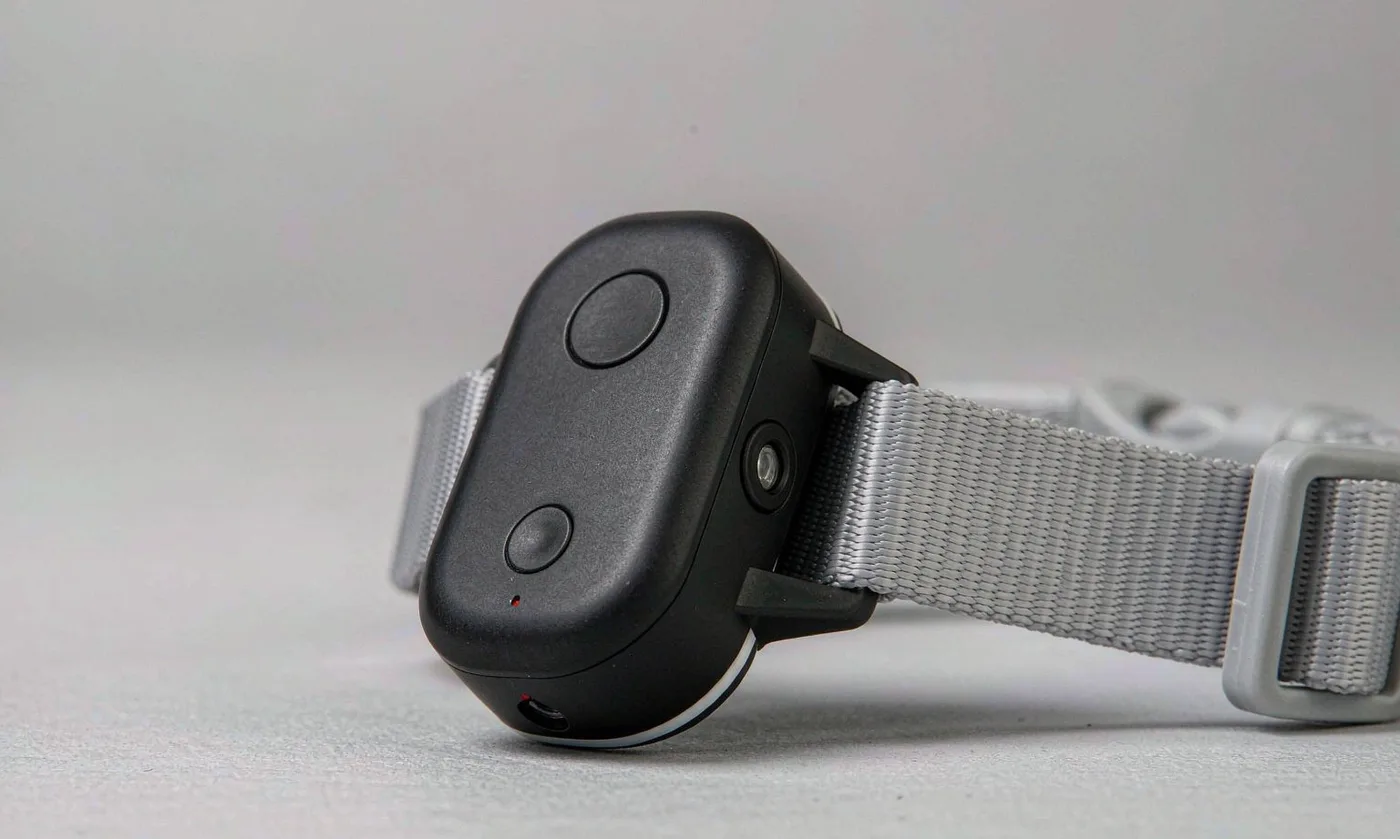
Specify colour temperature in kelvin with a tolerance and buy all the diodes for a programme from one bin. LED bins vary visibly at the cool end, and a strap built from two bins will show a colour difference along its length that no diffuser can hide. Warm white around 3000 K reads friendly and premium; cool white around 6000 K reads technical and is brighter for the same power.
Diffusion: Making Light Look Designed
A bare LED strip looks like electronics. A diffused LED strip looks like a design feature, and the diffuser is the entire difference. Getting this right is the highest-value engineering in the whole product and it costs almost nothing.
The principle is distance and density. Light from a point source becomes uniform when it travels through a scattering medium and when the source is far enough from the surface that individual diodes stop being resolvable. In practice that means 4-8 mm of separation between the diode and the outer diffuser surface, plus a translucent layer that scatters without absorbing too much. Too close and you see dots; too far and the whole panel glows vaguely instead of a defined line.
Material choice matters. A white translucent TPU film gives a crisp, even line with good efficiency and is our default. A frosted silicone sleeve gives a softer, more premium edge and better impact resistance, at slightly lower efficiency. A woven spacer fabric over the strip gives a textured, technical look where the weave itself is visible in the light, which is distinctive and works well on a product with a technical positioning.
The daylight appearance of the diffuser is the part most programmes get wrong. A diffuser that looks like a white plastic strip by day advertises that the product is cheap and that the light is an add-on. The better answer is a diffuser that matches the strap colour and looks like a design panel in daylight, even at the cost of some brightness. Losing 15% of the output to double the perceived quality is a trade every premium brand should take.
Test the diffuser in the three conditions that actually matter and not only on the bench. Look at it in direct daylight, where a white diffuser reads as plastic. Look at it in a dim room, where a low-density strip resolves into dots. And look at it at arm's length through a phone camera, because that is how most customers will photograph it and a camera sensor handles a bright point source very differently from an eye. A diffuser that passes all three has been designed; one that passes only the bench test has been guessed at.
Finally, decide whether the light should have a defined edge. A hard-edged light line looks engineered and intentional; a soft glow that bleeds across the panel looks like a leak. Control the bleed with an opaque backing layer behind the strip and a defined aperture in front of it.
Power, Runtime and Control Modes
Runtime is the specification customers judge, and light is unforgiving because a dim product looks broken rather than merely tired. Start from the mode structure, not from the battery. A steady mode, a slow pulse and a fast flash cover every realistic use case; anything beyond three modes is complexity that nobody asked for.
Current draw sets the arithmetic. A one-metre strip at 60 diodes per metre draws roughly 0.4-0.6 A at 5 V in steady white, which is 2-3 W. On a 10,000 mAh bank that is six to nine hours of steady light, and a pulsed mode extends it substantially because the duty cycle drops. Publish the steady-mode figure conservatively, because that is the mode people actually use.
Flash modes deserve a specific warning. A fast strobe is conspicuous to drivers and deeply unpleasant to an animal inside the bag, and some jurisdictions restrict flashing lights on pedestrian equipment. Avoid a fast strobe entirely on a pet carrier, and if a pulse mode is offered, keep it above roughly 1 Hz and gentle in its ramp rather than a hard on-off. This is a genuine welfare consideration and it is also the kind of detail that gets a brand criticised publicly.
The control interface should be one button and clearly indicated, as with any powered product. A long press for on and off, short presses to cycle modes, and a memory function that returns to the last mode used. Customers do not want to cycle through five modes every time they switch the bag on, and a product that starts in the wrong mode every time is a product that gets switched off.
Decide early whether the power bank is bundled. Bundling controls the runtime claim and raises the offer price; not bundling keeps the price and the freight classification simpler. Either way, the pocket has to be sized for the bank you expect the customer to use, not for the smallest one on the market.
Integrating Electronics Into a Soft Product
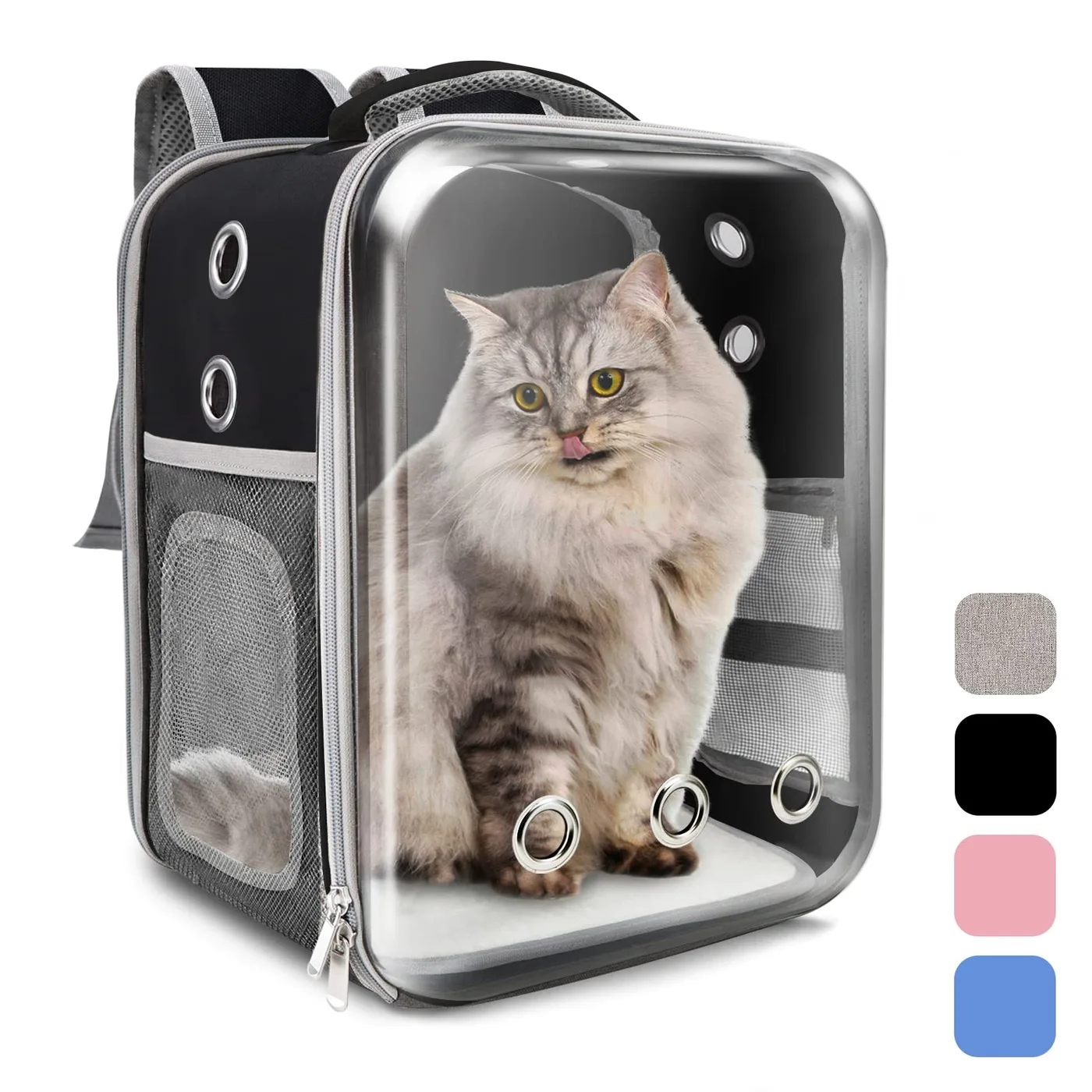
Soft goods and electronics have different tolerances, and the interface between them is where products fail. Fabric stretches, folds and gets washed. Circuit boards, solder joints and connectors do none of those things well. The design job is to give the electronics a protected route through a structure that moves.
Start with routing. The harness should run along the neutral axis of the strap, where a bend puts the least strain on the conductors, and it should be secured at intervals so it cannot migrate inside the sleeve. Sharp folds should be designed to fall in gaps between electronic sections, and every entry and exit point needs a strain relief. A harness that exits a seam without a grommet will eventually be cut by the seam itself.
The module should be removable. Whether the product is washable or not, a removable light module with a sealed connector means the bag can be cleaned, the electronics can be replaced, and a failure becomes a spare-part sale instead of a return. Specify the connector's mating cycles and its ingress rating, and put the module somewhere it can be reached in a few seconds.
Assembly sequence matters for yield. Electronics go in late, after the textile construction is complete, through an access point that is then closed. If the harness has to be threaded through finished seams, the assembly time rises and the damage rate rises with it. Design the access route during the pattern stage, not after the first sample comes back.
Function testing has to be total. Every unit is powered and checked before packing, because a dead light is a total failure rather than a minor defect, and a 1% failure rate on a light product generates more returns than a 1% cosmetic rate does by an order of magnitude. Build the test into the line, documented under a quality system aligned to ISO 9001, and record it by batch.
Washability and connector sealing
Either the module comes out or the assembly is sealed. There is no middle path that survives. If the module comes out, the connector needs a defined ingress rating and the pocket needs to close in a way that a customer will actually bother to do. If the assembly is sealed, the whole harness is over-moulded and the wash test cycle count becomes a specification with a pass criterion.
Whichever route is taken, state it on the hangtag in one line. Customers wash bags, and an unstated care instruction on a powered product is a return that was designed in rather than manufactured in.
Safety, Compliance and Pet-Side Considerations
A light source inside or adjacent to an animal enclosure carries obligations that a lighting product for humans does not. Two specific risks need to be designed out rather than managed: heat and flicker. A strip running at 2-3 W produces negligible heat, but a poorly designed enclosure that traps a driver board against a confined space can warm noticeably over an hour. Measure the interior temperature rise during qualification and keep it below a threshold that matters for an animal, even though the number is small.
Flicker is the bigger issue. Many animals perceive flicker at frequencies humans cannot, and a pulse-width-modulated dimming circuit running at a few hundred hertz can be a persistent irritant even though the light looks steady to a person. Specify a dimming frequency above 1 kHz or use a linear driver, and if a pulse mode is offered, keep the ramp smooth rather than a hard on-off at a low frequency.
Battery safety is the compliance-heavy part. Any bundled lithium cell needs to be a certified cell with a protection circuit, and it changes the shipping classification and documentation. Reference the consumer product safety guidance published by the U.S. Consumer Product Safety Commission when you write the requirement, and have the cell and the finished assembly verified independently through SGS so the documents exist before a buyer asks for them.
Photobiological safety is the last item and the one nobody expects. High-intensity LEDs, particularly in the blue-rich cool white range, are classified for eye-safety risk, and a light that is pointed toward an animal at close range should be checked against that classification. It is a short test and it removes an argument you do not want to have.
Cost, MOQ and Programme Planning
Light integration costs more than most first-time buyers expect, and the surprise is almost always in the electronics and the assembly rather than in the LEDs themselves. The strip is cheap; the controller, the connector, the harness, the sealing and the 100% function test are where the money goes. That is why a light product cannot be priced as a standard bag plus a few dollars.
The table below sets out the four build levels we most often quote, with indicative cost per carrier at a 500-piece programme and the lead-time impact of each.
| Build level | Light source | Power | Indicative cost per unit | Added lead time |
|---|---|---|---|---|
| Accent | Short strip, single colour | Coin cell module | $2.40-$4.10 | 2-3 weeks |
| Standard | 1 m strip, white, 3 modes | Customer bank, 5 V | $6.30-$9.80 | 3-4 weeks |
| Signature | Custom diffuser, brand colour | Bundled 5,000 mAh bank | $11.50-$17.20 | 5-6 weeks |
| Sealed premium | Laminated strip, over-moulded | Bundled 10,000 mAh bank | $17.80-$26.40 | 6-8 weeks |
A bundled power bank changes the freight picture. A lithium cell shipped with the product alters the documentation, the classification and the rate, especially by air, and that belongs in the landed-cost model at the first quote rather than as a surprise at booking.
Timing is longer than a textile-only programme. Sampling is 6-10 working days for the strap, with electronics qualification typically adding two to three weeks. Bulk is 35-50 days after sign-off, with custom housings and branded controllers at the longer end. Inspection is AQL 2.5 for appearance plus 100% electrical function testing, and shipments move FOB Xiamen on T/T 30/70 terms.
Plan the accessory ecosystem alongside the product. A light product generates natural second sales — a spare module, a replacement diffuser, a larger power bank — and those accessories have higher margin than the bag itself. Designing the module as a removable, replaceable part with its own part number is what makes that ecosystem possible, and it is a decision that has to be made at the pattern stage rather than after launch.
Plan the second season early. LED driver boards and controllers have short product cycles and their suppliers discontinue parts without much notice. Locking the module specification for year two during year one production is what keeps a successful product repeatable.
Merchandising a Product That Lights Up
Light sells itself in a dark room and sells nothing in a bright one, so the merchandising job is to create the dark room. In a store that means a shaded corner, a shelf-level demo unit and a product that is switched on. Online it means a short clip shot at dusk with the light visible, plus one daylight image showing that the diffuser looks like a design panel rather than a plastic strip.
The daylight image matters more than brands expect. Customers worry that a light product will look gadgety, and the photograph that answers that worry is the one that converts. Show the product off, in daylight, looking like a normal premium bag.
Give the light a name and a defined character. One colour, one rhythm, one placement, used consistently across the range, becomes recognisable. Six colours and four modes become noise, and noise is what the novelty end of the market already sells. A brand signature is a decision about what the product does not do as much as what it does.
Be honest about runtime and modes in the copy. State the steady-mode hours, state that the animal-facing side is not illuminated, and state the care instruction. Products in this category earn trust by being specific, because the category's reputation is for overclaiming.
Pair the light with the passive system underneath it. An evening range that combines an LED strap on the flagship with reflective webbing across the whole line and a shared USB power pocket architecture tells a coherent story: the brand thought about being seen, not about adding a feature.
Decide the warranty position before launch, because powered product attracts warranty claims in a way unpowered product does not. A stated twelve-month cover on the light module, backed by a spare-part SKU, is cheaper than the goodwill cost of arguing about a dead strip. It also gives the retail buyer a reason to list the product, since a defined warranty on an electronic component is the question every buyer asks and few brands have answered.
Order and quality terms
- MOQ 500 pieces per colourway; samples in 6-10 working days
- Bulk production 35-50 days after approval; AQL 2.5 inspection standard
- T/T 30/70 terms, FOB Xiamen, full document set per shipment
People Also Ask
How do LED straps work?
A flexible circuit carrying surface-mount diodes is encapsulated in silicone and powered from a low-voltage DC source, usually a 5 V power bank. A diffuser layer above the diodes scatters the light so the strip reads as a continuous line rather than as points.
Can you put lights on a pet carrier safely?
Yes, with three controls: no illumination on the animal-facing side, no fast strobe or low-frequency flicker, and a certified protected cell if a battery is bundled. Measure the interior temperature rise during qualification as well.
What is the difference between LED and EL wire?
LEDs are discrete diodes on a circuit running on DC; EL wire is a phosphor core that glows along its length when driven by AC. EL wire needs an inverter, is dimmer, dims over its life and can produce an audible whine.
Why does my LED strip show dots?
The diodes are too close to the diffuser surface or the density is too low. Increase separation to 4-8 mm and move to 60 diodes per metre, and add a scattering layer that diffuses without absorbing too much output.
How do you make a light look designed rather than gadgety?
Match the diffuser to the strap colour so it reads as a design panel in daylight, give the light a defined edge with an opaque backing and a set aperture, and commit to one colour and one rhythm across the range.
Do LED strips get hot?
At 2-3 W the strip itself produces negligible heat, but a trapped driver board in a confined space can warm over an hour. Route the electronics away from the animal interior and measure the temperature rise during qualification.
Frequently Asked Questions
LED strip or EL wire for a pet carrier?
LED strip. It runs on low-voltage DC with no inverter, it is brighter and more efficient, and it lasts. EL wire gives a beautiful uniform line but needs an inverter that produces an audible whine at close range, which is unacceptable next to an animal.
How bright should an LED strap be?
Bright enough to be seen at distance without being uncomfortable up close, which for a strap usually means 60 diodes per metre behind a diffuser at 2-3 W. Specify the diode density, not just the wattage, because density determines whether the light reads as a line or as dots.
How long does an LED strap run on a power bank?
A one-metre strip drawing 2-3 W runs six to nine hours steady on a 10,000 mAh bank, longer in pulse modes. Publish the steady-mode figure conservatively, because that is the mode customers actually use.
Are flashing lights safe around pets?
Fast strobes are not appropriate. Many animals perceive flicker at frequencies humans cannot, and a hard on-off flash is distressing in a confined space. Avoid strobes entirely and keep any pulse mode above roughly 1 Hz with a smooth ramp.
Does the LED module need to be removable?
Yes, unless the whole assembly is sealed and rated for washing. A removable module with a sealed connector means the bag can be cleaned, the electronics can be replaced, and a failure becomes a spare-part sale rather than a return.
Can an LED strap be washed?
Only if the harness is over-moulded and the assembly has passed a defined wash-cycle test. Otherwise the module must be removed. Either way, state the instruction on the hangtag in one line, because customers wash bags regardless.
Do we need to worry about LED flicker that humans cannot see?
Yes. Pulse-width dimming at a few hundred hertz looks steady to a person and can irritate an animal. Specify a dimming frequency above 1 kHz or a linear driver, and verify it rather than assuming the driver is safe.
What colour temperature should we choose?
Warm white around 3000 K reads friendly and premium; cool white around 6000 K reads technical and gives more brightness for the same power. Buy all diodes for a programme from one bin, because bin variation shows as a colour shift along the strap.
How many modes should the product have?
Three at most: steady, slow pulse and a gentle flash. Add a memory function so the product returns to the last mode used. Products that start in the wrong mode every time get switched off and never used again.
What is the MOQ and lead time for an LED programme?
MOQ 500 pieces per colourway, driven by the light module minimum and any custom housing tooling. Sampling is 6-10 working days with electronics qualification adding two to three weeks; bulk runs 35-50 days, longer for custom housings.
How is an LED product inspected?
Appearance to AQL 2.5 plus 100% electrical function testing. A dead light is a total failure rather than a minor defect, and even a low failure rate generates disproportionate returns on a powered product.
Does bundling a power bank change shipping?
Yes. A lithium cell shipped with the product changes the documentation, the classification and the freight rate, particularly by air. Model it into the landed cost at the first quote rather than discovering it at booking.
Talk to QUANZHOU JUNYUAN BAGS about a pet carrier program: MOQ 500 pieces per colourway, samples in 6-10 working days, bulk production in 35-50 days under AQL 2.5 inspection.
Get a free quote Request a sample