Microfiber Leather Pet Carriers: The Premium Synthetic
Microfiber leather is the strongest synthetic for premium positioning. At 0.6-0.9 mm with a sea-island bicomponent fibre base, it weighs 25-35% less than PU leather yet delivers two to three times the abrasion resistance, which is why it suits structured carrier panels priced above roughly USD 69 retail.
Executive summary
Microfiber leather is a non-woven web of ultra-fine filaments impregnated with polyurethane, then split to create uncountable micro-fibres. That structure mimics the collagen network of natural hide more closely than any other synthetic, which is why the hand feel, drape and thermal response all read as expensive rather than substituted.
For brand teams it solves a specific problem: how to deliver a genuinely premium tactile experience at a synthetic price and without animal inputs. It takes colour evenly, accepts laser engraving beautifully and survives years of use, provided the specification controls density and finish rather than simply asking for "microfiber".
Commercial terms follow the standard programme frame: MOQ 500 pieces per colourway, samples in 6-10 working days from a frozen specification, bulk production 35-50 days after approval, inspection to AQL 2.5, T/T 30/70 terms and FOB Xiamen shipment.
Quality systems matter at this price point more than anywhere else, since expectations follow. Our partner facilities operate to ISO 9001 quality management principles, and third-party verification runs through accredited laboratories such as SGS before any premium claim reaches packaging. Our experience across these programmes is that the extra verification work pays for itself through faster retail approvals.
Custom pet travel bag programmes are usually quoted with the airline dimension printed into the technical pack, so there is no argument at inspection.
How microfiber leather is constructed
Production begins with a bicomponent filament, usually polyester sheathed around a dissolvable second polymer, extruded finer than a human hair. Millions of these filaments are laid into a non-woven web and needled into three-dimensional density, creating something structurally similar to the felted collagen network inside animal hide.
The web is then impregnated with polyurethane, which acts as both binder and performance modifier. Finally the second polymer component is dissolved away, splitting each filament into dozens of micro-fibres and leaving a material with dramatically higher surface area than any conventional textile.
That enormous surface area explains most of its behaviour. It absorbs finish evenly, gives the soft dry touch people associate with suede, and creates millions of tiny contact points that resist abrasion the way a dense natural surface would.
Two finishing routes follow. Leaving the surface lightly raised produces microfiber suede with a velvet hand, while coating or buffing it creates a grain-side appearance closer to corrected leather. Both come from the same base sheet, which is convenient for programmes wanting two visual tiers from one qualified material.
Fibre fineness drives everything downstream. Finer filaments mean more filaments per unit volume, giving a denser, softer and stronger sheet, and this is exactly why price correlates with quality more directly here than in any other synthetic family.
Polyester and polyamide are the common fibre chemistries. Polyester dominates because it resists UV better and costs less, while polyamide grades offer slightly superior softness and colour depth for genuine luxury applications.
Solvent versus water-based impregnation changes performance too. Water-based production has largely caught up technically and carries a far stronger environmental story, so most reputable programmes now default in that direction.
Finally, remember this is a laminated structure like any other. The micro-fibre felt does the work, but the polyurethane binder determines how the sheet ages, flexes and responds to heat.
Understanding that division of labour helps during problem-solving. When a sheet wears prematurely, the cause is usually binder content or density rather than the fibre itself, which is why those two numbers lead every specification.
It also explains why the material behaves differently from genuine suede despite the resemblance. Hide repairs itself through oil content; this structure cannot, so protector finishes matter more than conditioning ever will.
Supply base differences reinforce the point. Two suppliers may both offer a mid-density sheet, yet needle-punching quality determines whether the felt holds together at stitch lines over several years.
Finally, remember production history matters. Suppliers with long experience producing this structure consistently outperform new entrants on uniformity, and that uniformity is exactly what premium tiers are paying for.
Why the hand feel reads as expensive
Shoppers judge material quality within roughly three seconds of touch, and microfiber scores unusually well on all three cues the hand actually measures: surface friction, thermal response and bending stiffness.
Thermal response is the most important of these. A dense micro-fibre surface draws heat from the fingertips at a rate closer to suede than to plastic, so it registers as warm and natural rather than cold and synthetic.
Surface friction is the second cue. Million of fine filaments create gentle resistance against skin, which the brain interprets as softness, whereas a smooth PU film slips and reads as coated.
Bending stiffness then determines how the panel moves. Microfiber drapes in soft curves rather than sharp creases, which reads as quality even when the observer cannot articulate why.
Weight supports the impression further. At 260-380 grams per square metre it is markedly lighter than most coated alternatives, so a premium panel does not punish the shoulder the way heavier synthetics do.
Visual texture completes the story. Because there is no printed grain to flatten over time, the surface looks the same after a year of contact as it did on day one, avoiding the worn-out appearance that betrays cheaper coated materials.
Sound even plays a role that designers rarely discuss. A microfiber panel makes a soft, quiet rustle rather than the audible crackle of vinyl, and that difference registers subconsciously during handling in store.
Together these cues explain why blind handling tests consistently place microfiber above PU and PVC, and why it justifies tier placement above them commercially.
Retail environments amplify these differences. Under warm directional lighting the soft nap reads richer than any printed grain, while under cool warehouse lighting it still avoids the flat sheen that betrays coated surfaces.
Finally, remember that hand feel sells replacement purchases too. Owners describe this material in reviews using sensory language, which is precisely the kind of organic marketing teams cannot buy.
Designers should also test panels assembled rather than swatches alone. The tactile impression of a finished handle wrap differs noticeably from a flat card, because curvature and padding change how the nap meets fingertips.
Conductors such as metal hardware sitting against the surface also alter the feel, cooling it locally, which is another reason to evaluate components as a finished assembly rather than in isolation.
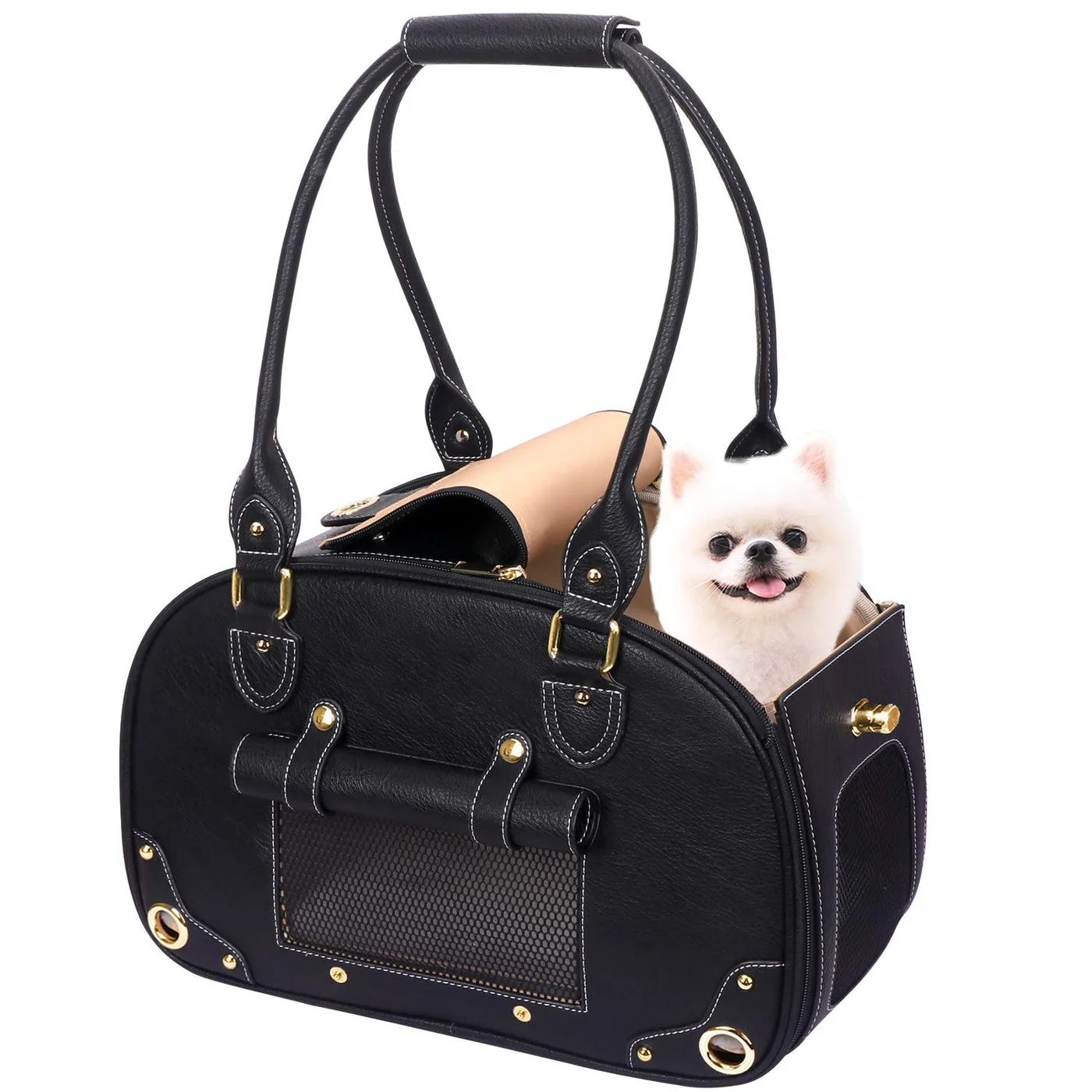
Specification: density, gauge and finish
Microfiber being sold purely by name is how disappointing purchases happen. Density determines nearly every performance property, and it should always be specified in grams per square metre together with a tolerance.
Practical working range for carrier panels is 260-380 grams per square metre. Below roughly 240 the sheet lacks body and disappoints at seams; above 400 it becomes heavy and loses the soft drape that justified the choice.
Gauge interacts with density but is not the same thing. Two sheets can both measure 0.8 mm while differing substantially in density, so specifying only thickness leaves the supplier free to quote the lighter, cheaper construction.
| Grade | Density (gsm) | Gauge | Abrasion result | Cost index | Typical placement |
|---|---|---|---|---|---|
| Light suede | 240-280 | 0.5-0.7 mm | 30,000 cycles | 100 | Linings, internal accents |
| Standard premium | 300-340 | 0.7-0.9 mm | 50,000 cycles | 130-160 | Structured shells, panels |
| High-density performance | 360-420 | 0.9-1.2 mm | 80,000+ cycles | 175-210 | Base zones, warranty lines |
| Polyamide luxury | 320-380 | 0.8-1.0 mm | 60,000 cycles | 200-250 | Hero capsules, gift programmes |
Finish choice follows placement rather than preference. Suede finishes create the strongest tactile impression but mark readily, so they suit upper panels; buffed or lightly coated finishes handle high-contact zones better.
Fibre chemistry should also be written down. Polyester grades hold colour well under UV exposure and cost less; polyamide offers superior softness and depth for programmes where price pressure is lower.
Finally, request a physical full-width swatch. Small cards flatten the tactile impression completely, and the whole justification for choosing this material rests on how it feels in the hand.
Naming the fibre length and filament count is occasionally worth doing for high-value programmes. These details sound technical, but they reliably distinguish genuine high-density constructions from lighter sheets sold under the same label.
Finally, hold tolerance expectations realistic. Density naturally varies a few percent within production; demanding a tighter window than the material can deliver simply increases cost without improving how the product performs.
A written cross-reference helps too. Listing the qualified density alongside the finish code and colour reference in one place prevents later orders being placed against an incomplete description that leaves room for substitution.
Finally, ask for end-of-roll samples during development. Properties are usually most consistent mid-roll, so checking the extremes gives a truer picture of what bulk production will deliver.
Colour behaviour and light-fastness
Microfiber absorbs dye exceptionally deeply because each filament takes colour individually. That produces rich saturated shades with visual depth that printed or coated surfaces cannot imitate, particularly in burgundy, forest and navy.
The same property creates a specific risk. Deep saturation requires more dye, and heavily dyed sheets can crock, transferring colour onto light materials in contact. Awet-versus-dry rubbing assessment prevents that surprise reaching production.
Pale shades behave differently again. Ivory, stone and pale grey look luxurious but show contact marks, so they work best on panels away from entrances, handles and base edges where paws and clothing touch most.
Light-fastness deserves particular attention because this is the one area where microfiber has historically lagged. Lower-cost dye formulations fade in strong sunlight, so any programme shipping to high-sun markets should specify a tested light-fastness level.
Colour consistency between lots is generally excellent, since the even structure absorbs uniformly. Even so, keep signed reference cards and compare each new lot against them rather than trusting memory.
Matching microfiber to adjacent materials requires the usual discipline: one reference standard per programme, verified under each channel's lighting, plus barrier precautions where dark and light panels meet.
Finally, plan the palette around the material's strengths. Deep saturated tones show off the fibre structure better than mid neutrals, so using them tells a story about why this material was worth specifying.
Seasonal accents deserve restraint here. Because every colourway requires its own dye lot and testing round, limiting seasonal shades to one per year keeps the palette cohesive and the testing calendar manageable.
Finally, watch crocking at the interface with light linings. A barrier tape or an internal binding between saturated panels and pale interiors prevents the transfer issues that otherwise appear after humid shipping conditions.
Sampling adjacency early avoids late changes. Building one small panel assembly with the exact lining and thread combination reveals transfer problems while they are still cheap to resolve.
Retail lighting should be part of that same evaluation, since some saturated shades shift noticeably under high-intensity spotlights used in pet specialty chains.
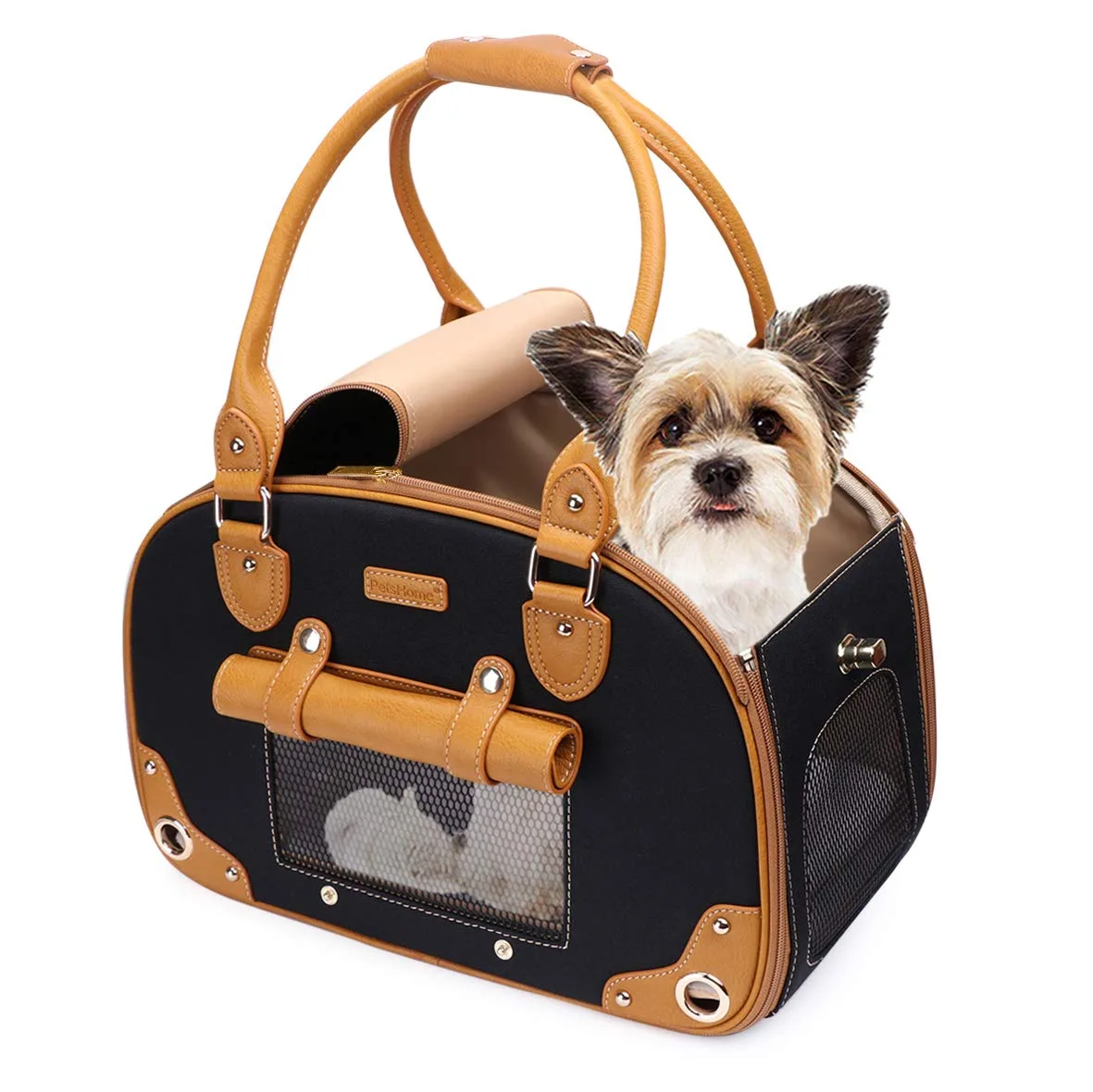
Cleaning, protection and realistic ownership
Microfiber cleans better than its suede-like appearance suggests, but expectations need setting carefully. Most surface marks lift with a barely damp cloth and gentle circular motion; deep staining needs specialist attention.
Protection finishes change ownership experience substantially. Applied protectors raise surface tension so liquids bead rather than soak, buying valuable wiping time, though they need periodic renewal on premium accessories.
Water behaviour is straightforward: it absorbs. A deluge will soak through eventually, so exteriors should be positioned as weather-resistant with properly specified linings rather than waterproof.
Brushing maintains appearance better than anything else. A soft nylon brush restores the nap after flattening, and mentioning this on the care card extends perceived quality well beyond the first season.
Machine washing is not advisable. Agitation damages the raised nap and can delaminate the binder structure, so insist on hand-cleaning guidance in every piece of collateral.
Stain treatment should be channel-specific. Oil-based marks from food require absorbent powder before brushing, while water-based marks respond to gentle blotting; giving owners both routines prevents most permanent damage.
Finally, plan service parts for pale applications. Handle wraps and entrance trims on light shades are the fastest-wearing parts, so stocking replacements converts a potential complaint into a positive service interaction.
Storage guidance belongs on the same card. Keeping the carrier upright and loosely filled prevents permanent nap flattening, particularly for seasonal pieces stored between trips for several months at a time.
Finally, train customer-service teams before launch. Owners often ask about cleaning within the first week, and accurate answers protect both the review score and the premium positioning the brand worked hard to establish.
Including a small sample protector sachet also works well, since it demonstrates correct care immediately and links cleaning success to the brand rather than to chance.
Branding methods unique to microfiber
Laser engraving is the signature technique for this material. The fibre structure absorbs focused energy cleanly, leaving a precise tonal mark with no ink and no surface deposit, and it can render fine detail that other methods cannot.
Heat-assisted debossing also works well, producing crisper edges than on most synthetics because the dense felt resists relaxation. Depth can be controlled finely, which allows subtle monogram work on hero products.
Screen printing is more hazardous here. Unlike smooth films, the raised nap interrupts ink deposition, so prints require specialist formulations and usually a heavier deposit, which in turn stiffens the surface locally.
Heat transfer suffers the same limitation. It performs acceptably on buffed or coated finishes but tends to sit poorly over an open nap, making it the weakest route for this family.
Stitched applique patches remain the most reliable option for multi-colour identity work, particularly for retailer exclusives built from the same base shell. Mixing them with laser work on adjacent panels creates attractive texture contrast.
Metal badges and debossed patches both complement the material rather than competing with it, since each adds a different tactile note to a surface already rich in texture.
Finally, plan placement around wear. Laser marks near a base edge polish away over time, whereas the same mark on an upper panel or internal plate stays legible for the product's whole life.
Contrast settings matter for laser work. Too little power leaves a faint mark, while too much melts the fibre tips and produces a shiny boundary that looks like damage rather than design.
Finally, consider signature placement. A small laser mark near the handle or zipper garage reads as a designer detail, whereas the same logo centred and oversized can look like a promotional item.
Interior branding deserves inclusion too. A discreet laser mark on an internal pocket facing rewards the owner daily without competing with any exterior panels the retailer might want kept clean.
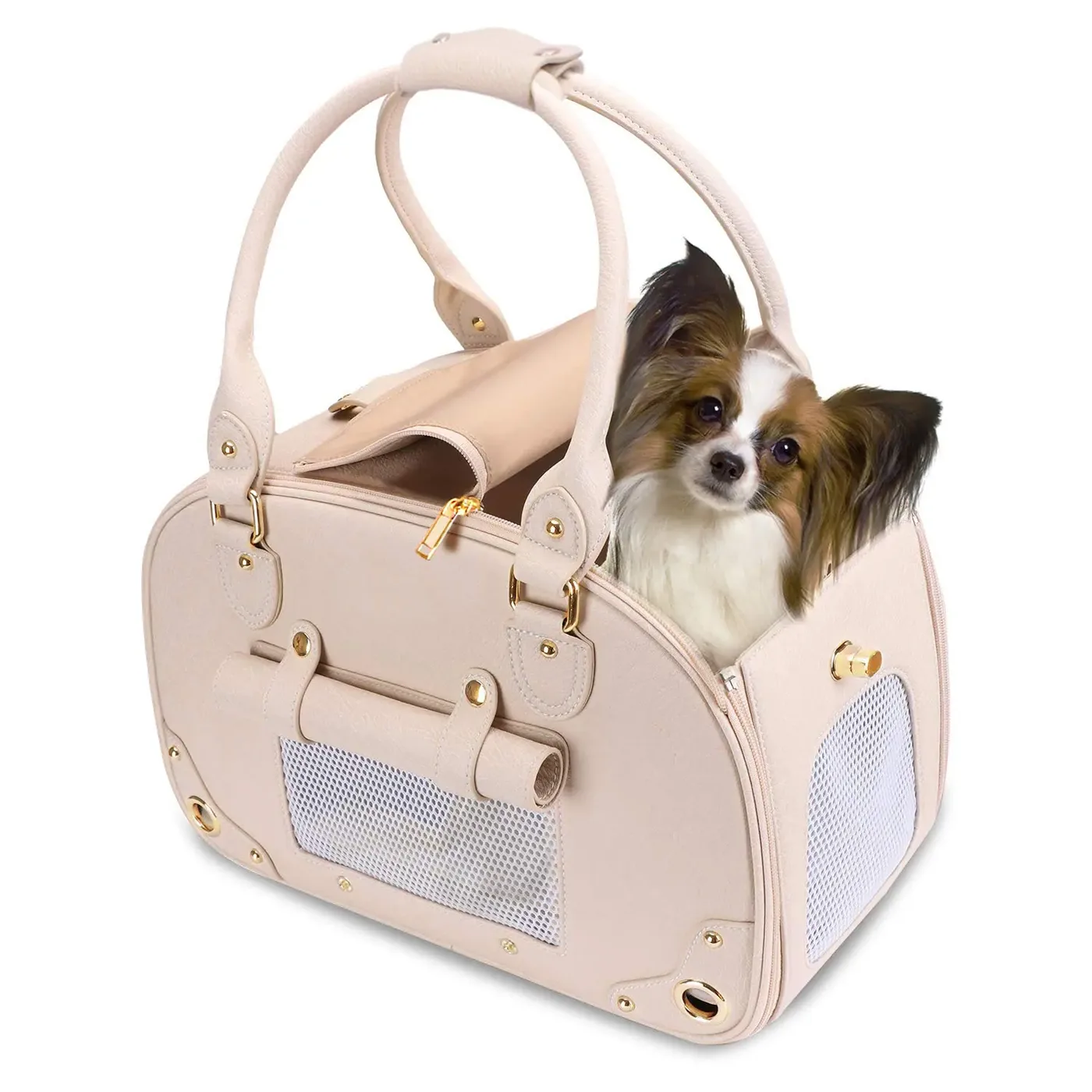
Costing, tier placement and order planning
Microfiber sits above most coated alternatives per square metre but often competes surprisingly well per finished unit. Lower weight reduces freight, high strength allows thinner gauge, and the tactile result supports a stronger retail price.
Tier logic should therefore start from retail positioning. Below roughly USD 59 the material rarely pays for itself; above USD 69 it frequently produces better margin than an economical leather.
Hybrid placement is usually smarter than full coverage. A microfiber front panel and handle wrap against a technical shell delivers the tactile experience where hands go while keeping total material spend controlled.
Minimum quantities follow standard programme terms: MOQ 500 pieces per colourway, samples in 6-10 working days, bulk in 35-50 days after approval. Higher-density grades occasionally carry mill minimums worth confirming at quotation.
Currency of quotes matters because this material tracks both polyester and chemical markets. Agreeing a validity window protects both sides and prevents awkward mid-programme renegotiation.
Sampling discipline saves the most money here. Three candidate densities cut into handle wraps and compared blind costs very little, yet it prevents specifying either too heavy or too light for the intended tier.
Finally, consider the second season when costing the first. Repeating one qualified density avoids retesting, and continuity usually earns better commercial terms than any one-off discount.
Sets extend the economics further. Using the same qualified sheet for matching pouches, mats and waste-bag holders spreads mill minimums across several SKUs and strengthens the premium story on shelf.
Finally, remember that premium buyers forgive price far more readily than inconsistency. Protecting the specification across seasons matters more to this tier than shaving a few cents from material cost.
Duty classifications also deserve early review, since the difference between coated textile and other categories affects landed cost noticeably on premium shipments.
Sampling, testing and launch sequence
Development should start with density selection, not appearance. Requesting identical finish across two or three densities immediately reveals the tipping point where softness becomes insufficient body, or vice versa.
- Density stated in grams per square metre with tolerance
- Abrasion result with cycles and endpoint noted
- Rub fastness dry and wet, particularly for saturated shades
- Light-fastness level for programmes shipping to sunny markets
- Laser trial at production speed and several power settings
- Signed full-width tactile reference retained per lot
Then evaluate product performance rather than sample performance. A strap cyclic load to 1.5 times rated pet weight, an abrasion cycle at the entrance opening and a carry-comfort walk reveal system behaviour no flat report predicts.
Inspection standards are agreed before production begins. An AQL 2.5 plan with written definitions for nap damage, shade variation and stitching faults resolves arguments at final audit rather than after loading.
Packing protection deserves unusual care because this material marks. Individual polybags, crease padding and separation from hardware all protect surfaces that are otherwise pristine.
Launch collateral should reflect the material honestly. Close-up texture photography performs better than leather imitation, and it positions the choice as deliberate rather than economical.
Finally, gather field feedback after the first month. Real owner reports on marking, cleaning and wear drive the second season's finish decisions far more reliably than any laboratory proxy.
Internal plate testing supports launch copy as well. Quantified abrasion and rub results let the brand make specific claims rather than vague promises, which premium buyers increasingly expect before purchase.
Finally, keep one qualified density per tier rather than many. Consistency simplifies training, quality control and customer communication, three things that quietly determine whether a premium line sustains its positioning.
Photography should be scheduled alongside launch rather than after it, because the nap reflects light differently under flash and daylight than any other material in the range.
Production capability
- SGS-verified production space of 4,950 m², 149 machines, 7 assembly lines
- Pet carrier and pet bag output since 2014 from a 137-person team
- 200,000 units shipped monthly under BSCI and ISO 9001 systems
People Also Ask
What does microfiber leather feel like?
Dense, warm and softly resistant like suede. Its high fibre surface area draws heat from fingertips slowly, so it registers as natural rather than plastic, and it drapes in soft curves instead of sharp creases.
Is microfiber leather durable?
Very. Standard premium grades reach around 50,000 abrasion cycles and high-density performance grades exceed 80,000, which is roughly two to three times typical mid-grade PU performance.
Is microfiber leather expensive?
Yes relative to PU and PVC, though not versus genuine suede. Per finished unit the difference narrows because the material is lighter and thinner gauges still perform well.
Can microfiber leather be cleaned?
Yes by hand with a damp cloth and gentle circular motion, followed by air drying and brushing. Machine washing, steam and solvents should all be avoided to protect the nap and binder.
Does microfiber leather contain animal products?
No. It is entirely synthetic, based on polyester or polyamide filaments with polyurethane binder, which makes it suitable for vegan programmes once every component is verified.
Why does microfiber leather resist wear so well?
Because each filament splits into dozens of micro-fibres, creating enormous surface density. That density distributes abrasion across millions of contact points rather than concentrating it at one surface film.
Which is better, microfiber or genuine suede?
Microfiber wins on consistency, cleaning and ethics; genuine suede retains a patina some luxury buyers still desire. For most private label programmes, microfiber delivers more predictable results and fewer defects.
Is microfiber leather suitable for airline bags?
Yes. Its low weight is a genuine advantage where cabin dimensions and carry limits apply, and its strength handles compression under a seat better than many heavier alternatives.
Frequently Asked Questions
What is microfiber leather made from?
A non-woven web of ultra-fine bicomponent filaments impregnated with polyurethane, then split so each filament divides into dozens of micro-fibres. The resulting structure closely mimics the felted collagen network of natural hide.
Is microfiber leather better than PU leather?
Generally yes on abrasion, weight and hand feel, and no on price. Microfiber tolerates two to three times the abrasion cycles of mid-grade PU while weighing 25-35% less, which is why it suits premium tiers.
Does microfiber leather absorb water?
Yes. Its high surface area takes in liquid rather than repelling it, particularly suede finishes. Protector finishes slow absorption noticeably, and care cards should recommend immediate blotting rather than rubbing.
Can you machine wash microfiber leather?
No. Agitation damages the raised nap and can disturb the binder structure. Recommend hand cleaning with a damp cloth, gentle circular motion and brushing once dry to restore the surface.
What density should I specify for a carrier shell?
Specify 300-340 grams per square metre for most structured panels, rising to 360-420 for base zones. Below roughly 240 the sheet lacks body and holds shape poorly at seams.
Can microfiber leather be laser engraved?
Yes, and this is one of its great advantages. Laser energy marks the fibre structure cleanly with no ink, allowing fine detail. Always trial several power settings since different densities respond differently.
Does microfiber leather fade in sunlight?
Lower-cost dye formulations can fade under strong sun. Request a stated light-fastness level for any programme shipping to high-insolation markets, and test pale as well as saturated shades.
Is microfiber leather vegan?
Yes. It contains no animal-derived input, although thread, adhesive and stiffener board must also be verified before printing a vegan claim on the product or packaging.
How does cost compare with genuine suede?
It is usually cheaper and considerably more consistent, with no defects, no colour variation between panels and significantly better water behaviour when protected. It also avoids the ethical objections some retailers now raise.
What are sample and production lead times?
Samples take 6-10 working days from a frozen specification and bulk production runs 35-50 days after approval, with inspection to AQL 2.5 and T/T 30/70 terms at FOB Xiamen.
What is the minimum order quantity?
MOQ 500 pieces per colourway. Higher-density and polyamide grades sometimes carry mill minimums, so confirm during quotation rather than after the design is frozen.
Does microfiber leather mark easily?
Suede finishes do show contact marks, particularly in pale shades. Buffed or lightly coated finishes resist marking better, so choose finish by placement: raised naps uppers, coated finishes at entrances and bases.
How do I restore matted areas?
Brush gently with a soft nylon brush in circular strokes to lift the nap, then wipe lightly with a barely damp cloth. Avoid steam and solvents, which flatten the structure permanently.
Are there environmental advantages?
Water-based impregnation routes avoid solvent emissions, long service life reduces replacement frequency, and no animal inputs are involved. Recycling remains difficult, so extending service life matters most.
Talk to QUANZHOU JUNYUAN BAGS about a pet carrier program: MOQ 500 pieces per colourway, samples in 6-10 working days, bulk production in 35-50 days under AQL 2.5 inspection.
Get a free quote Request a sample