Seasonal Pet Carrier Design: Holiday Theme Programs
Yes. A holiday themed custom pet carrier capsule works at MOQ 500 pieces per colourway, and the artwork, print set-up and packaging can be signed off inside a 6-10 working day sample window. Most brands run three colourways on one carry-over shell, then ship bulk in 35-50 days so stock lands six weeks before peak gifting week.
Executive summary
Seasonal capsules are a calendar problem before they are a design problem. The shell, pattern set and hardware should already be engineered and tested; what changes for the season is fabric colour, printed or embroidered artwork, lining, zipper pull and the packaging story. That is why a holiday reskin typically carries 15-25% of the development cost of a brand-new body while delivering most of the shelf novelty.
Commercial terms stay identical to the core line: MOQ 500 pieces per colourway, samples in 6-10 working days after artwork approval, bulk production in 35-50 days, and final inspection at AQL 2.5. Payment runs T/T 30/70 with FOB Xiamen shipment. Our production team holds dye-lot standards through the SGS-verified production base, so a January re-order can be matched to the October shade within tolerance.
- Three colourways per drop is the point where fabric waste, print set-up and retail choice balance out.
- Plan backwards from the floor date: 35-50 days bulk, 6-10 days sampling, plus 25-35 days ocean transit.
- Gift season packaging adds roughly 8-14% to unit cost but measurably lifts perceived value.
A custom pet travel bag has to reconcile two limits at once: the airline under-seat envelope and the ventilation the animal actually needs.
Why a holiday capsule earns its place in the line plan
Seasonal product is the cheapest way for a young pet brand to look like it runs a design calendar instead of a single hero bag. A holiday capsule does three jobs at once: it gives retail buyers a reason to reopen the conversation in Q4, it gives your own channels a reason to mail the same list twice in one quarter, and it lets you test a colour direction on 500 units before deciding whether that shade deserves a place in the permanent range. The economics work because the engineering is borrowed. Structure, load paths, mesh panels and hardware are already proven, so the season only has to pay for colour, artwork and packaging.
Buyer psychology is the second argument. Seasonal merchandise is the one category where a buyer will accept a shorter sell-through window, because the merchandising reason already exists in the store: the gift table, the endcap, the window fixture. A seasonal pet carrier sells a moment, not a specification, and that shifts the conversation away from per-feature price comparisons. In practice a well-built holiday carrier placed at the same price as the core item will outsell it during the six-week gifting window, simply because it is the object people photograph.
Third, seasonal drops de-risk innovation. A gradient panel, a metallic zipper tape, a new lining print or a two-tone webbing can all be introduced on a limited run. If the market responds, the treatment graduates into the core line on the next production cycle; if it does not, the exposure is one dye lot and one print set-up rather than a full tooling programme.
The failure mode is designing the season first and the product second. A novelty bag that fails a strap pull test or a mesh abrasion test costs far more than the upside of a festive print. Our production team keeps the structural specification frozen: seasonal changes are limited to surfaces, colours and packaging, which is what makes a six-week development window realistic.
Two drops per year is the cadence most private label programs settle on: one gift-season capsule and one lighter spring or travel-season capsule. Two is enough to signal an active brand without forcing the design team into permanent seasonal mode, and it matches the way retail resets its floor. Brands that attempt four seasonal stories usually discover that artwork development, not production, is the constraint.
Writing a colour brief that survives the dye house
A holiday colour brief has to be written in a language the dye house can act on. Designers start with a mood board; production needs standard references, tolerances and a substrate. The cleanest brief pairs a Pantone reference with a physical swatch, a base fabric specification and a stated light source for approval, because a deep green reads completely differently on 600D polyester than it does on a cotton canvas. Naming the substrate in the brief is the single step that prevents most first-round rejections.
Metallics and deep reds deserve special attention. A festive red is usually a high-chroma shade that sits near the edge of the achievable gamut on polyester, which means the lab dip will drift toward orange or toward maroon depending on dye selection. Asking for two lab dips inside a stated tolerance is faster than asking for one perfect dip. Metallic effects behave the same way: a gold foil print reads bright under retail lighting and grey under warm domestic light, so approval should happen under the lighting the product will actually be sold in.
Colourfastness is not optional just because the product is seasonal. Holiday carriers are carried in wet weather, wiped down, and sometimes spot cleaned, so the shade has to hold. Our team specifies rubbing, washing and light fastness targets based on AATCC test methods and verifies results through third-party laboratories such as SGS. Declaring the target in the tech pack is what stops a beautiful lab dip from becoming a complaint three months later.
Every holiday palette also needs a permanent anchor. One of the three colourways should be a shade that can survive into January and beyond, because it absorbs the unsold inventory without looking out of season. A deep green, a charcoal with a metallic accent or a warm neutral will carry into the new year; a bright novelty red will not. Deciding which colourway carries over is a commercial decision that belongs in the colour brief, not in the markdown meeting.
Finally, write the tolerance into the brief rather than the approval meeting. A Delta E figure, a light source and a limit for shade variation between panels give both sides an objective pass line. Without it, approval becomes a matter of opinion, and opinion is what pushes a 6-10 working day sample window into three weeks. Where colour is the primary brand asset, our longer guide to Pantone colour standards is worth reading alongside this brief.
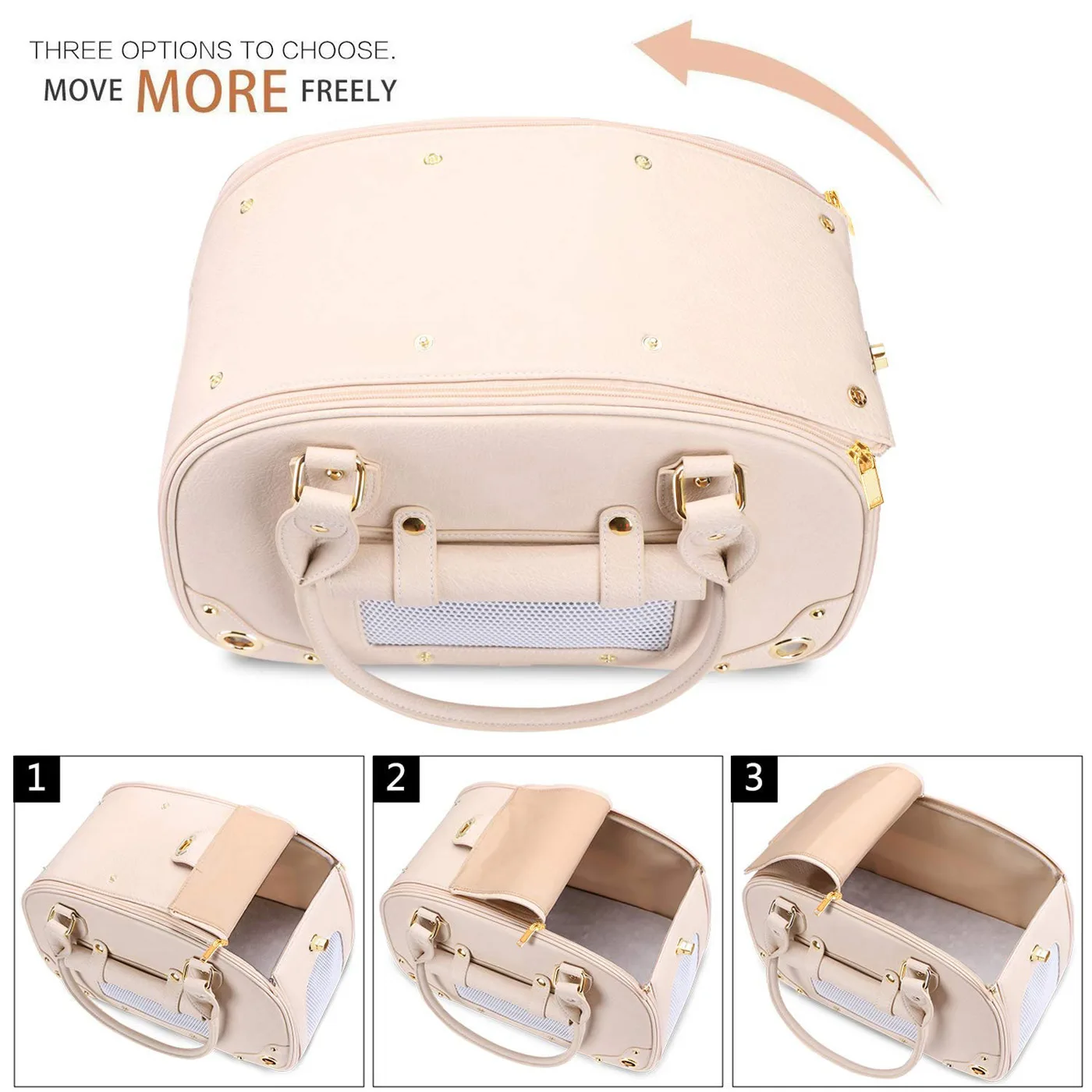
Motif development: from sketch to a production-ready repeat
Seasonal artwork fails for predictable reasons: line weights that are too fine for the print route, motifs scaled so large that the composition disappears on a small panel, and colour counts that quietly triple the set-up cost. The fix is to develop the motif against the panel size, not against a blank A4 page. A snowflake that reads beautifully at 200 mm will close up and become a grey dot at 40 mm, so the first question in motif development is always which panel it will live on.
Repeat construction matters just as much. A half-drop repeat hides the seam better than a straight repeat on a large panel, and a tossed layout tolerates cutting waste far better than a registered placement print. If the motif is going onto a cut panel, the pattern should be engineered so the cutting die does not slice through the most recognisable element of the design. This is a technical decision made in artwork, and it is the difference between a premium look and an obviously cheap one.
Colour count is the budget lever most brands forget. Each extra screen in a seasonal print adds set-up time and registration risk, and on a 500-piece run the per-unit cost of a fifth colour is significant. Reducing a motif from six colours to four usually costs nothing visually and cuts set-up meaningfully. The same logic applies to embroidery: every colour change adds machine time, and dense fills on a lightweight shell will pucker without the right backing.
Placement strategy decides how expensive the print becomes. A motif printed across the full front panel needs registration and usually a larger repeat, while the same motif used on the lining, on the webbing or on a small zipper garage reads as a deliberate detail at far lower cost. Designing a motif system with a hero placement plus two low-cost placements is the standard way to make a 500-piece run look like a considered collection rather than a single printed bag.
Artwork licensing is the last checkpoint. Festive motifs that read as generic seasonal decoration are safe; motifs that borrow from a film, a sports club or a character are not. Our production team requires written proof of licence before any character artwork enters the print line, and that document should be in hand before sampling starts rather than before bulk starts.
Choosing the decoration route for seasonal graphics
Six decoration routes cover almost every holiday carrier brief, and each has a different relationship with run size, colour count and hand feel. Screen printing is the workhorse for flat festive graphics on polyester and gives strong opacity at sensible cost once the screens are cut. Heat transfer suits small motifs with photographic or gradient content where screens would be uneconomic. Embroidery delivers the gift-like, tactile finish that justifies a premium price, but it rewards restraint in stitch count. Woven labels, rubber patches and metal plates handle the brand mark rather than the motif, and they are how a seasonal piece still reads as part of a family.
| Route | Best for | Set-up economics | Colour behaviour | Hand feel | Schedule impact |
|---|---|---|---|---|---|
| Screen print | Flat festive motifs, repeat prints | Low per screen; economic from 300+ units | Strong opacity, spot colour only | Soft after cure, slight film | +1-2 days sampling |
| Heat transfer | Gradients, small photographic motifs | No screens; cost is per transfer | Full colour, no spot limit | Smooth, slightly plastic | +1 day sampling |
| Embroidery | Signature mark, gift positioning | Digitising fee per design | Thread-limited, strong on dark grounds | Raised, premium | +2-3 days sampling |
| Woven label | Brand identity, care content | Loom set-up per design | Up to 8 thread colours | Flat, soft if folded | +3-5 days sampling |
| Rubber patch | Modern, sporty seasonal marks | Mould cost per shape | Solid colour, crisp edge | Flexible, dimensional | +5-7 days sampling |
| Metal plate | Luxury gift tier | Die cost per shape | Metallic finish only | Hard, weight adds value | +7-10 days sampling |
Durability expectations differ by route. A seasonal carrier will be carried in rain, dragged through an airport and wiped with a wet cloth, so any decoration that sits on a high-abrasion zone should be specified with that in mind. Rubber patches and embroidered marks survive edge abrasion better than large surface transfers, which is why brand marks generally sit on panels and pockets rather than on the underside of the bag.
Registration tolerance is the other practical constraint. On a printed repeat, a small misregistration is invisible on an abstract pattern and glaring on a motif with a hard outline. If the artwork depends on crisp edges, either thicken the outline or move the motif away from panel seams and zipper lines, because those are where registration error shows first.
The rule of thumb we give brand teams: let the motif take the cheapest route that still looks intentional, and spend the decoration budget on the brand mark instead. A seasonal print will date; a well-executed metal plate or woven label carries the equity into the next season. Exactly where to place that mark is a design decision in its own right, and it is covered in more depth in our piece on custom colour and brand identity.
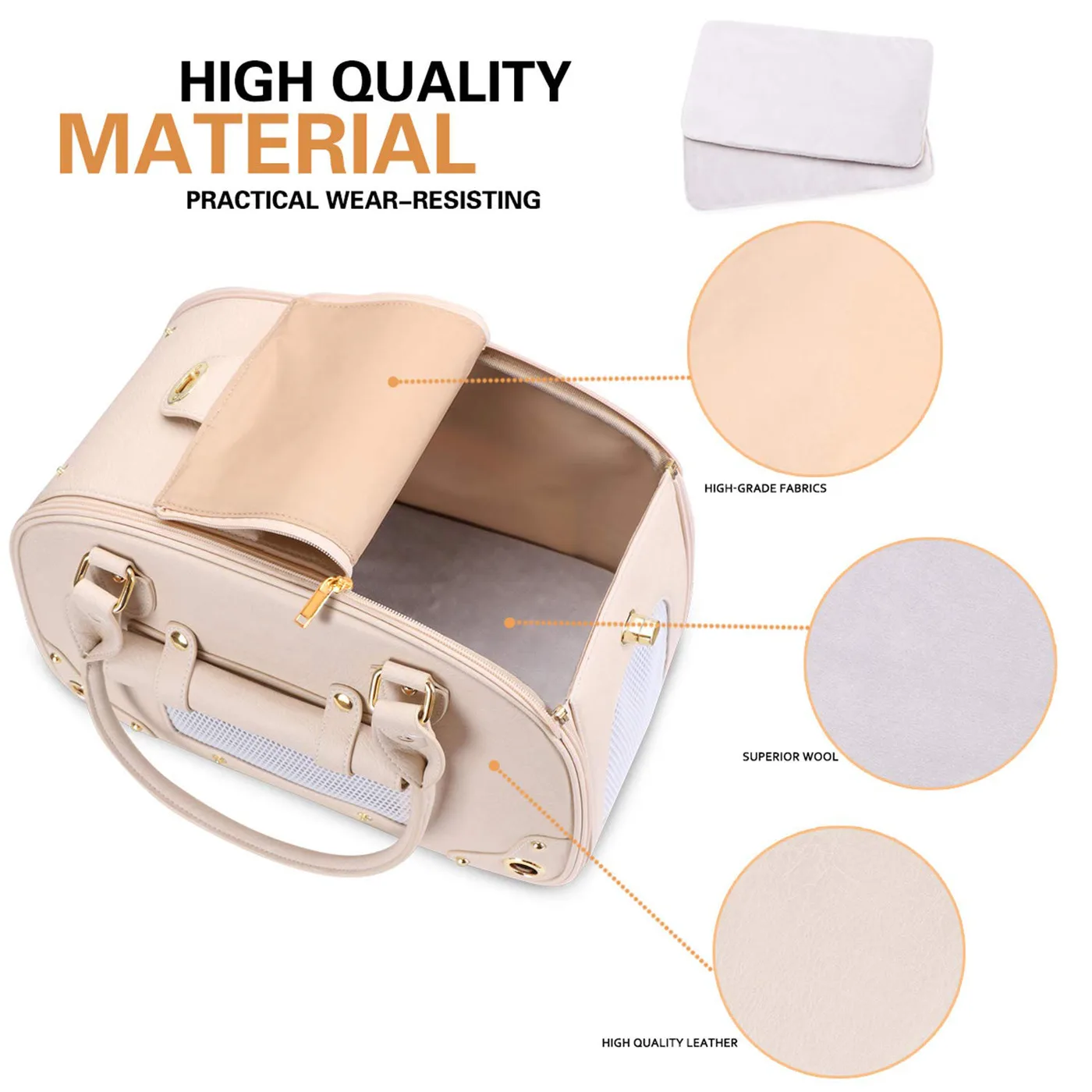
Carry-over shells versus a full seasonal reskin
Carry-over means the pattern set, the foam specification and the hardware are reused from an existing approved body. A reskin changes colour, print, lining and packaging. A full redevelopment changes the shape, and that is the option to avoid inside a Q4 window, because a new shape needs new pattern grading, new load testing and usually two rounds of sampling before it is safe to sell.
The practical question is how much visible change a reskin can deliver. More than most founders expect. Change the body colour, contrast the webbing, move to a printed lining, swap the zipper pull to a branded metal charm and rebuild the hangtag, and the customer perceives a new product. What stays constant is invisible: the strap geometry, the base board, the mesh specification and the stitch construction that passed testing the first time.
There is a cost side too. A carry-over shell reuses the pattern, so there is no grading fee and no new cutting die for the main panels, which typically removes several hundred dollars of development cost from the drop. On a 500-piece run that difference lands directly in margin. The trade-off is differentiation: if a competitor is buying the same open shell, colour and artwork become the only differentiators, which is another reason to invest in the print and the hardware finish rather than in the silhouette.
The decision also has a sampling consequence. A reskin can usually be approved in one round inside the 6-10 working day window, because every dimension and every structural component has been seen before. A new shape normally needs two rounds, which puts pressure on a calendar that has no slack. When a brand asks for a seasonal item late in the year, the honest advice is almost always to reskin rather than to redevelop.
Where a reskin is not enough is a genuine new size or a new function, such as adding a structured top opening for airline travel. Those changes touch structure and should be treated as a core-line project with its own calendar, not as a seasonal variant. Guidance on the material side of that decision sits in our overview of custom pet carrier fabric options.
The backward plan: hitting a December floor date
Seasonal programs fail on logistics, not creativity. The safe method is to plan backwards from the date stock must be on the retail floor, then subtract every hard interval. Bulk production is 35-50 days after sample approval; sampling is 6-10 working days after artwork sign-off; ocean transit to most Western ports is 25-35 days; domestic warehousing and distribution to stores adds another 7-14 days. Added together, a comfortable Q4 landing needs the artwork frozen roughly 120 days before the floor date.
| Milestone | Timing before floor date | What must be decided | Who signs |
|---|---|---|---|
| Concept and colour direction | 150-130 days | Colourways, motif direction, size mix | Brand / design |
| Artwork freeze | 120-110 days | Final repeat, colour count, placement | Brand / design |
| Lab dips and print strike-off | 110-100 days | Shade approval, print hand feel | Brand / production |
| Sample build | 100-90 days | 6-10 working days from approval | Brand |
| Bulk release | 90-85 days | PO, T/T 30 deposit, packaging order | Brand / sourcing |
| Bulk production | 85-40 days | 35-50 days, AQL 2.5 inspection | Production team |
| Ocean transit and clearance | 40-10 days | 25-35 days sail plus clearance | Logistics |
| Floor set and merchandising | 10-0 days | Display build, staff briefing | Retail |
Sampling rounds are the variable most brands underestimate. One clean round fits the 6-10 working day window; two rounds push the calendar by another week to ten days, and a third round usually kills the season. The way to protect a single round is to approve the lab dip and the print strike-off before the sample is built, so the sample review is about construction and placement rather than about discovering that the shade is wrong.
Freight mode is the other lever. Ocean transit is the default and the cheapest; air freight can rescue a late program but typically costs several times the sea rate and can erase the margin on a 500-unit drop. Deciding in advance which contingency the brand is willing to pay for avoids a panicked decision in week eleven.
Two buffers protect the plan. The first is a 10-day float between production completion and the vessel cut-off, which absorbs the inspection rework that every seasonal run encounters. The second is a decision rule: if artwork is not frozen by the stated date, the drop either ships with a simplified print or moves to the next season. Trying to compress sampling below the 6-10 working day window is what produces registration errors on bulk.
Packaging, hangtags and the three-second shelf read
Gift season packaging has one job: to communicate occasion before the customer reads a single word. That means the outer carton, the hangtag and the tissue or dust bag should all carry the same seasonal system, and the system should be recognisable at arm's length. In practice the strongest holiday packs use one metallic accent, one motif and one message, rather than four competing festive elements.
Structurally, the packaging must survive e-commerce as well as the shelf. A seasonal carrier sold online arrives as a gift, so the outer box is the first impression; a plain brown shipper undermines the premium positioning the print just paid for. Our production team typically specifies a printed mailer, a branded dust bag and a folded card that carries care instructions, because that combination is what photographs well in unboxing content without inflating freight volume much.
Compliance content stays on the packaging regardless of season. Fibre content, care symbols, country of origin and any required warnings belong on a permanent label, not only on a seasonal hangtag that the customer throws away. For programmes sold into the United States, importers also need to think about substance restrictions; the California Prop 65 list and CPSIA requirements for children's products are the two that most often surprise brands adding a novelty item.
Packaging quantity planning matters as much as packaging design. Printed mailers and dust bags carry their own minimum order quantities and their own lead times, and they are frequently the item that delays a shipment. Ordering packaging alongside bulk rather than after it, and holding a small surplus for the re-order, is the simplest way to avoid a situation where the bags are ready and the boxes are not.
The last packaging decision is the sustainability claim. If the seasonal carton is recycled or the polybag is replaced with a paper sleeve, that claim has to be substantiated in the same way as any other environmental marketing. Overstating it on a seasonal pack is a cheap way to earn an expensive problem, which is why our team keeps the claim language aligned to the certification documents held for the material.
Cost, margin and replenishment math for a short window
A holiday capsule has a different cost profile from the core line because the run is short and the window is fixed. Set-up costs for screens, plates, looms or moulds are amortised over 500 units instead of 5,000, so the per-unit decoration cost is materially higher. The counterweight is pricing power: seasonal items are bought as gifts, and gift buyers are less price-sensitive than replacement buyers. Most private label programs can carry a 10-20% retail premium on a holiday SKU without losing conversion.
The margin question is really a replenishment question. If the drop sells through in three weeks and the supplier cannot make more, the brand leaves money on the table; if it sells 40% and the rest has to be discounted in January, the season was a loss. Our production team solves this by reserving fabric and print capacity for a second run at the time of the first order, so a re-order can be released inside the standard 35-50 day window rather than starting from raw material again.
Discount planning should be decided before the drop, not after it. Setting the markdown calendar in advance, deciding which channel takes the remainder, and accepting that some seasonal inventory will carry into a clearance period makes the P&L predictable. The most common mistake we see is a brand ordering the seasonal quantity it hopes to sell rather than the quantity it can prove, then discovering in January that the carry-over cost eats the entire season's profit.
Cash flow deserves a note as well. Terms run T/T 30/70 with FOB Xiamen, which means 30% is committed at order release and 70% before shipment, while the retail revenue arrives weeks later. A seasonal program that doubles a brand's order value in Q4 also doubles its working capital requirement for roughly two months, and that should be funded deliberately rather than discovered.
Finally, treat seasonal data as product data. Which colourway sold out first, which size stalled, whether the premium decoration tier outsold the standard one: that is the cheapest market research a brand will ever run, and it should feed directly into the next core-line range plan. Seasonal capsules are not a side project; they are the testing ground for the permanent collection.
Where most holiday programs lose their margin
Margin leaks in four predictable places: unplanned air freight after a late artwork change, rework caused by approving a lab dip under the wrong light, over-specifying packaging for a price tier that cannot carry it, and re-ordering without reserved capacity. Each is avoidable with a decision made earlier in the calendar, which is why the planning table above is the most valuable page in this brief.
Why brands source here
- Pet carrier programs run since 2014; founding team in sewn goods since 2004
- SGS-verified production floor of 4,950 m² with 137 workers across 7 lines
- Monthly capacity of 200,000 units, audited to BSCI and ISO 9001
People Also Ask
How do I design a holiday pet carrier collection?
Start from a carry-over shell, define three colourways with Pantone references, develop one motif against the actual panel size, and freeze artwork 120 days before the floor date.
What sells best in pet holiday collections?
Recognisable seasonal colourways, a single clear motif and gift-ready packaging. Buyers respond to a coherent system rather than to a novelty shape.
Can I get Christmas themed pet carriers with my own logo?
Yes. Your brand mark is applied through embroidery, a woven label, a rubber patch or a metal plate alongside the seasonal motif, and the mark treatment should stay consistent with the core line.
How long does a seasonal pet carrier order take?
Sampling takes 6-10 working days after artwork approval and bulk takes 35-50 days, plus 25-35 days of ocean transit and 7-14 days of domestic distribution.
What is the minimum order for a custom holiday pet bag?
MOQ 500 pieces per colourway under T/T 30/70 terms, FOB Xiamen, with final inspection at AQL 2.5.
Do holiday pet carriers need special safety testing?
Structural and substance testing applies regardless of season. Add a check on Prop 65 and CPSIA obligations if the item is marketed toward children or sold in California.
Frequently Asked Questions
What is the MOQ for a holiday themed custom pet carrier?
MOQ is 500 pieces per colourway. A three-colourway holiday capsule therefore starts at 1,500 units in total, which can be split across sizes as long as each colourway reaches 500 pieces.
How early should we start a Q4 holiday capsule?
Plan for artwork freeze roughly 120 days before the floor date. That leaves room for 6-10 working days of sampling, 35-50 days of bulk production, 25-35 days of ocean transit and a 10-day buffer.
Can we reuse our existing bag pattern for a seasonal version?
Yes, and it is the recommended route. Reusing the pattern keeps the tested structure, removes grading and cutting-die cost, and lets the season budget go into colour, print and packaging.
How many colourways make sense for a first holiday drop?
Three is the practical default. It gives retail enough choice, keeps each colourway above the 500-piece minimum, and avoids spreading a short run across too many dye lots.
Which print method holds fine detail in a holiday motif?
Heat transfer holds the finest detail and allows gradients, while screen printing gives stronger opacity and lower per-unit cost above roughly 300 units. Very fine line work should be thickened for either route.
Do seasonal fabrics need the same colourfastness testing as the core line?
Yes. Holiday carriers are used in wet weather and wiped down, so rubbing, washing and light fastness targets should be stated in the tech pack and verified by a third-party laboratory.
Can we put a licensed character on a holiday carrier?
Only with written proof of licence. Our production team requires the licence document before artwork enters the print line, and it should be in hand before sampling rather than before bulk.
How do you control dye-lot variation across a re-order?
By keeping the original lab dip, stating a Delta E tolerance and a light source, and reserving fabric from the same dye lot for the second run at the time of the first order.
What packaging options work for a gift-season carrier?
A printed mailer, a branded dust bag, a seasonal hangtag and a folded care card is the combination that photographs best for unboxing content while keeping freight volume reasonable.
Can a holiday capsule be produced in more than one size?
Yes. Sizes can be mixed inside a colourway as long as the colourway totals 500 pieces, which is the usual way to cover both small-breed and cat programmes in one drop.
What happens to leftover seasonal fabric after the drop?
Surplus is held under our controlled inventory system for a defined period and can be used for a re-order, an accessory capsule or a next-year variant. We agree the hold period before bulk starts.
Is there a price premium for seasonal print runs?
Decoration set-up costs more per unit on a 500-piece run than on a core run, typically adding a few percent to unit cost. Most brands recover it through a 10-20% retail premium on gift-season SKUs.
Talk to QUANZHOU JUNYUAN BAGS about a pet carrier program: MOQ 500 pieces per colourway, samples in 6-10 working days, bulk production in 35-50 days under AQL 2.5 inspection.
Get a free quote Request a sample