Striped Pattern Pet Carriers: Classic Look Custom Programs
A striped pet carrier looks classic rather than cheap when the stripe width sits between 6 mm and 25 mm, the yarn-dyed option is used for any width under 12 mm, and stripe-to-seam alignment is held at ±2 mm. Below 4 mm the pattern shimmers and reads as low-cost lining fabric; above 40 mm it becomes blocking rather than striping.
Our production team builds stripe programs from a 500-piece minimum per colourway, with physical samples delivered in 6-10 working days once the stripe layout approved.
Executive Summary
Stripe looks deceptively simple, which is exactly why it fails in production more often than novelty prints do. The three specifications that decide whether the result reads heritage or budget fabric are stripe width, stripe construction and alignment tolerance. Get those right and the print route hardly matters.
The commercial framework is straightforward. Minimum order quantity is 500 pieces per colourway, samples are produced by our production team within 6-10 working days of approved layout, and bulk production completes in 35-50 days with inspection to AQL 2.5. Yarn-dyed stripe adds roughly USD 0.40-0.75 per unit over solid fabric and requires its own colour commitment, while printed stripe costs less to set up but demands tighter cutting control.
The other principle worth stating early is that a stripe program is a repeat business. Once a layout is approved, it can be reissued indefinitely with only neighbouring colour changes, and our production team keeps the layout file and the signed swatch on record so that a reorder landed two years later matches the original delivery rather than merely approximating it.
A personalized pet carrier programme needs the artwork file and the variable data list locked before sampling, otherwise the first shipment slips a full cycle.
Why the classic stripe keeps selling in pet travel
A stripe reads as category shorthand for outdoor leisure, and no other pattern communicates that idea with so little visual effort. In a retail environment where a customer spends perhaps four seconds scanning a fixture, a crisp horizontal stripe immediately signals resort, coastal or heritage product, whereas an abstract print asks the shopper to work out what they are looking at.
That instant legibility explains why stripe programs show remarkable sell-through stability. Our own development data across private-label carrier lines indicates that striped colourways typically hold their sell-through rate across three consecutive seasons without any markdown support, while illustrated or novelty prints usually need promotion by the second season. Stripe is a core-line strategy, not a trend play.
There is also a practical argument that buyers appreciate. Stripe hides the everyday reality of pet ownership far better than solid colour does. Mud splashes, fur transfer and the scuffs that accumulate around a carrier base are visually absorbed into the pattern rhythm, which keeps the product looking presentable long after a solid-shell competitor has started looking tired.
Brand-wise, a stripe can also become genuinely ownable. A distinctive stripe ladder, meaning the particular sequence of widths in one repeating unit, is one of the most defensible visual assets available to a brand that cannot afford a licensing deal. Customers may not articulate why a carrier looks like your brand, but they will recognise it, and recognition is the entire point of private-label design.
The risk side deserves one honest paragraph. Because stripes are simple, everyone uses them, and poorly executed versions saturate the market. The difference between a premium stripe and a commodity one is entirely technical: fibre-dyed rather than surface-printed colour, clean alignment across seams, and a considered rather than random width ladder. Those three details are what this guide covers.
One more measurable advantage is worth noting for range planning. Because a stripe reads correctly at thumbnail size, it performs unusually well in e-commerce grids, where a customer may compare eight listings side by side at once. Programs with dominant striped colourways consistently generate lower return rates in our route-to-market discussions, largely because what the shopper sees online is genuinely what arrives.
Stripe width, ladder and rhythm: the numbers that matter
Stripe programs are specified, not drawn. The repeating unit, called the ladder, contains a sequence of widths and colours, and that single line of numbers determines the visual character of the entire collection. Most effective pet carrier ladders contain three to five stripes per unit and repeat every 40 mm to 120 mm.
Width drives perception. Narrow stripes below 6 mm read as texture and can shimmer unpleasantly under retail lighting, particularly on shiny polyester. Mid-range stripes from 10 mm to 25 mm read as classic sportswear or resort wear and are the safest commercial territory for pet travel. Wide bands above 40 mm stop functioning as stripes altogether and become colour blocking, which is a different design conversation entirely.
| Stripe width | Visual read | Best product area | Recommended construction | Channel fit |
|---|---|---|---|---|
| 3-5 mm | Fine pinstripe, texture-like | Trim panels, lining | Yarn-dyed | Premium, design-led |
| 6-12 mm | Classic resort ticking | Full body | Yarn-dyed preferred | Coastal, boutique |
| 15-25 mm | Bold cabana stripe | Front panel only | Yarn-dyed or printed | Sports, mass |
| 30-40 mm | Band stripe | Gusset accent | Printed | Promotional |
| 50 mm+ | Blocking, not striping | Solid panel pairs | Solid dye | All |
Rhythm, meaning the irregularity within the ladder, is what separates designer work from commodity ticking. Perfectly even alternation of two widths is static and reads like awning fabric. Introducing one dominant stripe flanked by two progressively narrower bands introduces cadence, and it is this cadence that reads as intentional design. A reliable rule is that the widest stripe in a ladder should be at least twice the width of the narrowest.
Colour distribution should be balanced rather than merely listed. Count the total width of each colour across one ladder; any colour occupying less than roughly 12% of the repeat will read as an accident rather than as a design element. This warning applies especially to red accents, which brands request constantly and which vanish visually if under-proportioned.
Documentation closes the loop. Our production team records the ladder as a numeric string in the shared tech pack, for example 12-6-4-25-6 meaning widths in millimetres, and that string travels with every subsequent order. Programs documented this way can be reproduced years later without redrawing anything.
One final consideration here affects both cost and timeline. Because a ladder is just a list of numbers, changing orientation from horizontal to vertical after sampling costs nothing in artwork terms but changes every cutting marker, which effectively restarts the sampling sequence. Decide orientation before the first strike-off rather than treating it as a refinement to settle during review.
Yarn-dyed, woven-in, printed or sublimated: choosing a construction
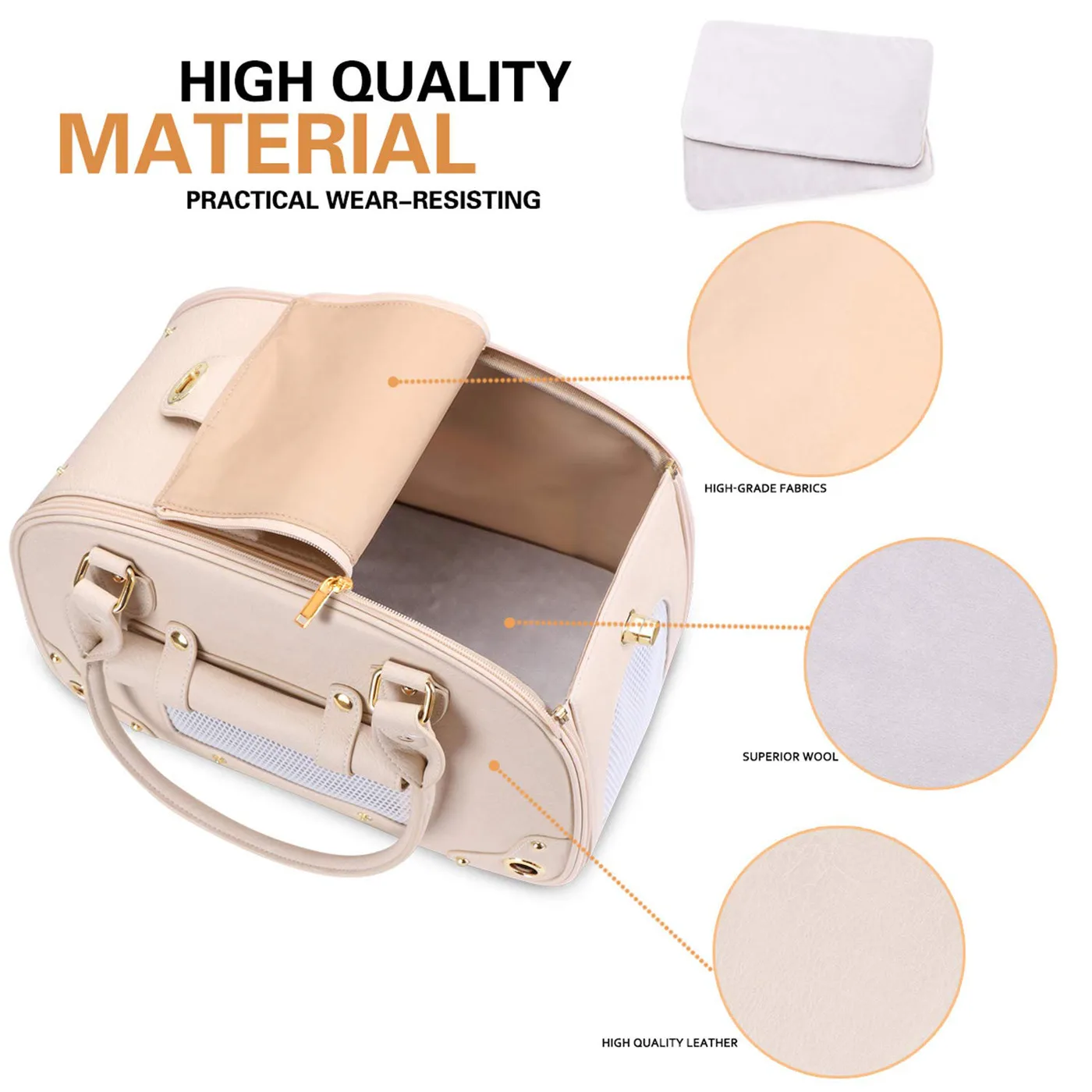
There are four ways to put a stripe on a shell fabric, and the choice affects cost, minimums, colour depth and lifespan in roughly equal measure. Most disappointed stripe programs failed because nobody made this decision consciously; the default often reflects whatever print route is fastest rather than which construction best serves the design.
| Route | Unit premium | Colour depth | Durability | Best for |
|---|---|---|---|---|
| Yarn-dyed woven | USD 0.40-0.75 | Very high | Excellent | Fine and mid-width classics |
| Printed reactive | USD 0.35-0.60 | High on canvas | Good | Cotton-rich heritage looks |
| Transfer sublimation | USD 0.55-0.95 | Highest on polyester | Excellent | Bold statement stripes |
| Engineered panel print | USD 0.90-1.60 | High | Good | Ladders that must not break |
Yarn-dyed construction is the quality answer for anything under about 12 mm. Colour lives inside the yarn before weaving, so the stripe cannot rub off, cannot crock, and looks identical from both faces of the fabric, which matters wherever an interior view is visible. The cost is that each colourway needs its own minimum yarn dye quantity, so colourways must be chosen decisively.
Printed reactive stripe on a cotton-rich canvas is the heritage alternative. It gives that slightly chalky, matte absorption associated with deck shoes and vintage sporting goods, and its lower colour yield is part of the charm. Expect roughly one grey-scale step less vibrancy than polyester delivers, plus a requirement for finishing if the brief calls for water resistance.
Sublimation makes sense where the stripe is bold and the colour is aggressive. It handles unlimited colours inside a stripe without any additional cost, supports gradient edges, and will not stiffen the hand. Because heat transfer introduces dimensional change, we pre-compensate stripe widths per substrate before running bulk, so the ladder lands exactly where the brief specified it.
The hidden variable in printed stripe is fabric bow and skew. Woven fabrics can curve off-grain during finishing, and a printed stripe applied to bowed cloth will banana visibly across a panel, a defect that is impossible to fix after cutting. Every roll entering our partner facilities is checked for bow and skew before it is released to print.
Direction: how stripe orientation changes the read on a body
Orientation is the decision most brands get wrong, and the reason is simple: a stripe that looks perfect on a flat front panel behaves badly once the design continues over a curved gusset, under a handle or across a zip line. Three axes are available, and each communicates something different.
Horizontal stripes communicate stability and are the default for structured bodies. They visually widen a product, which helps small carriers read as substantial rather than flimsy, and they align naturally with base panels and horizontal zip runs. Their weakness is that they draw attention to any height irregularity, so a slightly uneven seam line becomes obvious.
Vertical stripes slim and lengthen a body, which suits taller backpack-style carriers and helps small silhouettes read as more expensive. They also align cleanly with vertical webbing runs and handles. The risk is drift: any vertical stripe meeting a curved gusset will diverge from vertical, and where the divergence is gradual, the eye reads it as poor making rather than as three-dimensional reality.
Diagonal stripes are the most dynamic and the most expensive to execute, because every cut piece needs matching to its mirror partner on the other side of the body. They work best as an engineered feature on a single front panel rather than as an all-over solution, and they need a symmetry decision made early: chevron-mirrored at the centre line or continuous diagonal wrapping the whole body.
- Match the primary axis to the dominant dimension of the product, not to the mood board.
- Break the stripe deliberately with solid binding or piping at corners instead of letting geometry wander.
- Avoid orientation changes between adjacent panels unless there is a structural reason for the transition.
- Test seams under raking light, because misalignment that is invisible head-on becomes obvious sideways.
Our production team recommends a 30 mm buffer zone around structural seams for all-over stripe work, which gives cutters enough tolerance to keep alignment arguments out of the inspection process. Where a design cannot accommodate that buffer, engineered printing per panel is the cleaner answer despite the added unit cost.
Binding, piping and tape: making continuous lines look deliberate
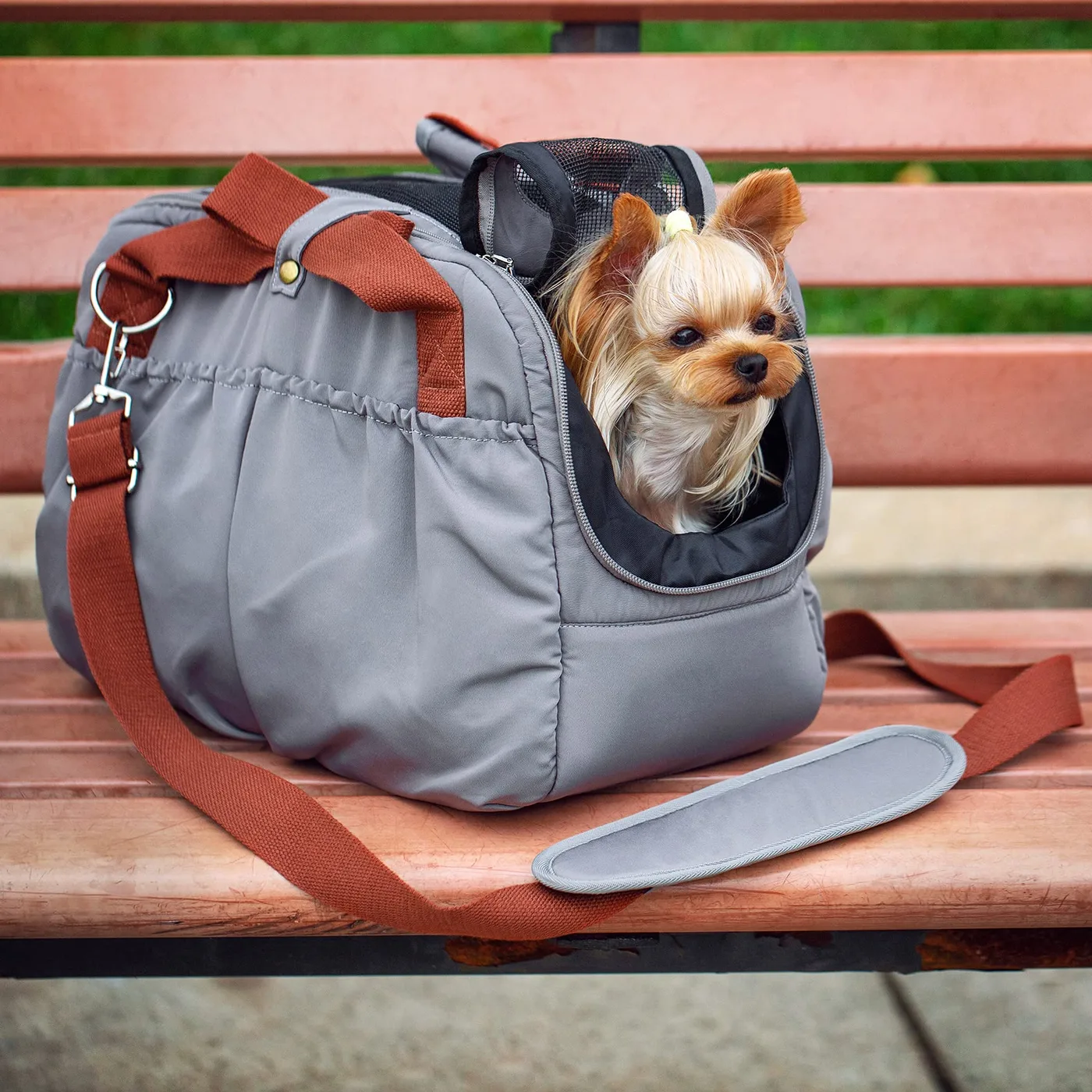
Stripe bags are judged on their edges. Because the pattern establishes lines, every additional line on the product, whether binding tape, piping, zip tape or webbing, either reinforces that rhythm or fights it. Deciding those relationships during pattern development is free; discovering problems during sample review costs another sampling round.
Binding tape is the highest-impact element. A solid binding lifted from one of the stripe colours frames the pattern and gives cut edges a finished look. A contrasting binding not present in the ladder will read as mismatched trim, even if objectively well-made. Where budget permits, self-fabric binding cut on the bias from the printed cloth is the most elegant option, though it adds cutting waste of about 8-12%.
Piping deserves particular mention because it solves the corner problem. A piping cord inserted at the transition between front panel and gusset creates a deliberate visual break, meaning the stripe can reset on either side without any continuity requirement. This single detail removes an entire category of alignment defects and usually pays for itself in reduced rejection.
Zip tape and webbing run continuously across panels, so their colour relationship to the stripe must be specified. The standard recommendation is to take webbing from the widest stripe colour and zip tape from the second stripe colour. The result reads as a considered palette rather than as available components assembled together, and the same logic applies to any reflective webbing used for night visibility.
Finally, do not overlook the interior. A lining carrying either the same stripe at reduced contrast or the narrow stripe from the ladder used alone creates a designer touch recognised at very low added cost. Because lining fabric is typically cheaper than shell fabric, this is usually the most economical way to add perceived value to a classic program.
Handle reinforcement is the last detail worth specifying early. Handles attach through the body and interrupt the stripe field, and where their reinforcement patches are cut from printed cloth the result looks ill-considered. Lifting patches from a solid colour already present in the ladder, or using the same solid chosen for the binding, is the cleaner solution and costs nothing additional.
Coastal and heritage palettes that survive translation to fabric
Most stripe briefs arrive as a coastal or heritage idea rather than as a colour list, and translating that idea into a reproducible palette is where our design team earns its fee. Four palette families cover almost every request, and each carries specific technical hazards.
Navy and off-white is the bedrock of the category. Its commercial strength is familiarity, but technically it is treacherous: navy is the most metamerism-prone colour in the palette and will shift noticeably between daylight and retail fluorescent lighting. Always approve this combination under two light sources, and specify the navy with a physical reference rather than a screen value.
Red, white and navy is the nautical version and the most requested combination across all pet travel stripe programs. The risk is red. Achieving stable, non-crocking red often costs more than brands expect, because many red dye classes sit close to the edge of acceptable fastness. Budget roughly USD 0.15-0.30 more per unit for a red that will survive wiping and laundering, or accept that marks a tier down.
Green-based heritage palettes, pairing forest or sage with cream, are the fastest-growing family in the sector and read as quieter and more premium than primary combinations. Green also metabolises well across both polyester and canvas, so it translates evenly between substrate options.
Pastel coastal combinations perform strongly in resort channel but present their own problem: low-contrast stripes of two pale colours essentially disappear under warm retail lighting. If the brief calls for pale stripes, increase the lightness separation to a minimum of 25 L* units or introduce one deeper anchor stripe to hold the composition together.
Colour management across the whole palette should be anchored in Pantone standards, with each element approved as a physical swatch and stored under controlled lighting. That reference then governs every later order, which is how a classic core line stays visually identical across years of reissues.
Two practical constraints close out palette selection. First, count how many colours the stripe actually needs, because each colour adds cost and risk; a two-colour ladder with one ground usually delivers everything a coastal brief requires. Second, confirm availability of the same shades across every element used on the bag, including webbing and mesh, since a palette that matches on shell but not on trim will read as mismatched to the customer.
Defect control: bow, skew, alignment and stripe-specific inspection
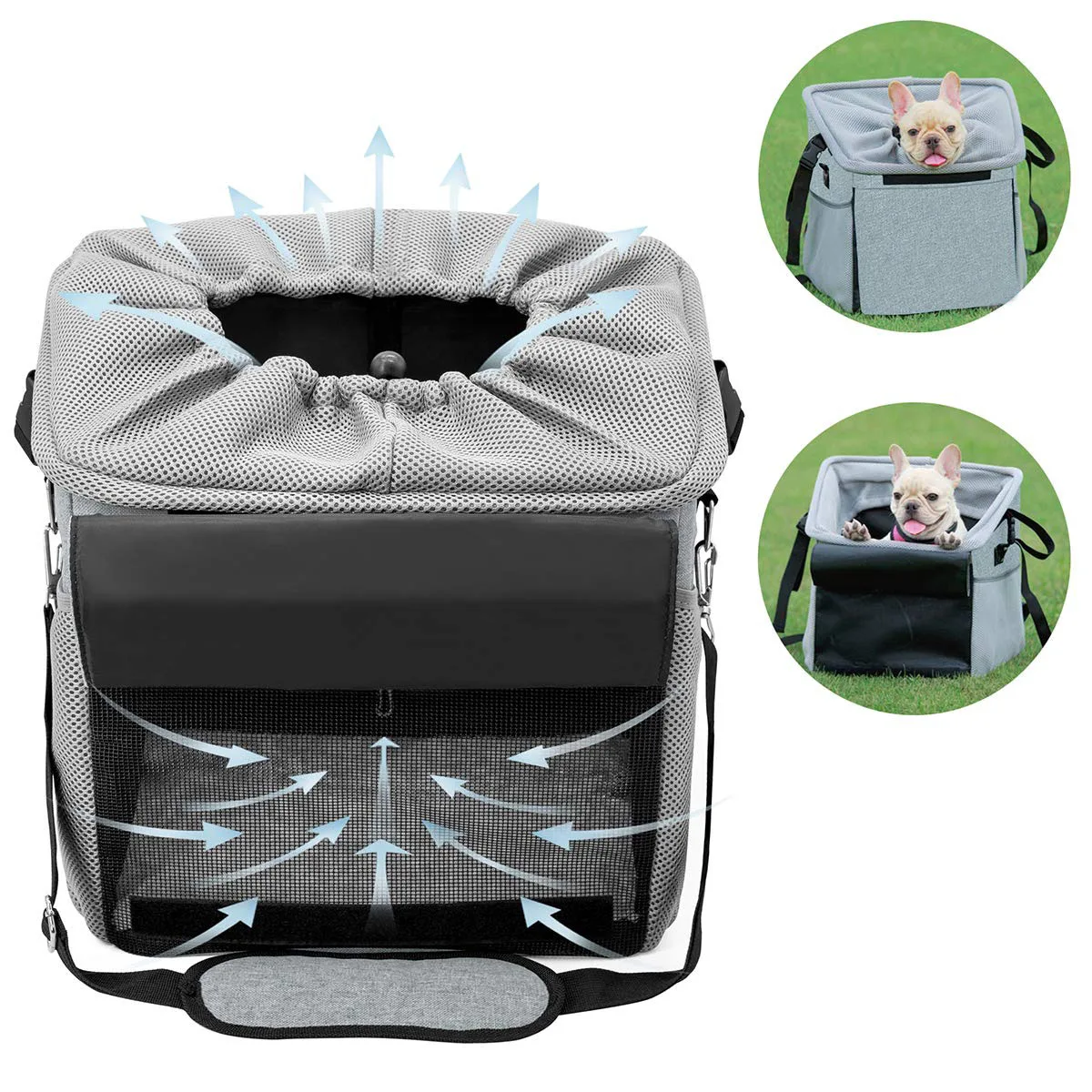
Stripe defects are unusually visible, and several of them originate long before printing. Recognising the four principal failure modes allows a specification that prevents them rather than merely detecting them after the fact, and it keeps the AQL 2.5 conversation objective rather than subjective.
Bow and skew are fabric-level distortions created during dyeing and finishing. A bowed roll curves sideways from the true grain; skewed cloth has the weft running at an angle to warp. Both convert a straight printed stripe into a curve, and there is no cutting technique that recovers from them. Prevention is a roll-level check: every roll entering our partner facilities is measured for bow and skew against a maximum tolerance, usually 2% of width, before it can proceed to print.
Alignment defects are registration issues between panels. Because the eye reads stripe lines as continuous, even a 3 mm discontinuity at a gusset will register as a fault to most shoppers. Tolerance should be explicitly specified at ±2 mm for vertical stripes and ±3 mm for horizontal, and inspection should use a simple overlay guide rather than judgement.
Crocking is the third category and is largely a red and navy problem. Where those colours are present, we test to recognised methods and report the grey-scale rating alongside the inspection so neither side has to argue about whether a mark is acceptable. The relevant AATCC colour fastness methods are referenced in every tech pack we write for such programs.
The final category is width drift caused by substrate shrinkage during transfer printing. Because the ladder is defined in millimetres, a 1.5% shrink changes every stripe proportionally and compounds across the panel width. Our production team measures a print test on every new substrate before bulk, then adjusts the file so the finished stripe lands exactly on specified width.
A practical tip on acceptance criteria: agree the defect checklist before bulk begins. Alignment, bow, skew, crocking and shading should each have a stated measurement limit written into the tech pack, together with their defect classification. When both sides sign that list, inspection becomes a mechanical exercise and disputes largely disappear, which is worth far more than any single technical improvement.
Building a classic capsule: core lines, accents and reorder discipline
Stripe rewards programs built for repetition. Because the design is a numeric ladder rather than an illustration, a classic capsule can stay in range for years, absorbing seasonal variation entirely through adjacent colour changes while keeping one hero combination permanently available.
A workable structure starts with one hero ladder that carries perhaps half of expected volume and never changes. Around it sits a seasonal accent ladder using the same width sequence but different colours, plus optionally a simplified two-colour ticking version aimed at entry-level price points. All three share the same construction, hardware and pattern pieces, which keeps both development cost and cutting complexity low.
Retail-facing discipline matters too. Buyers respond well to a core stripe that is reliably available, because it supports replenishment planning and reduces markdown risk for their own floor. Rotating the hero combination every season destroys that planning value and costs listings, which is a commercial argument our team raises with brands whenever the temptation to redesign appears.
Production planning should exploit the stability. Because the ladder is documented and the swatch retained, a reorder within 35-50 days can be booked with confidence that colour and width will match the original. Many of our clients now place a core purchase once and follow with monthly top-up orders rather than gambling everything on a single seasonal commitment.
Finally, extend the language beyond the carrier itself. The same ladder applied to mat covers, travel bowls and accessory pouches creates a coherent range using an existing specification, at essentially no development cost. In our experience, this is how most successful stripe programs in this category eventually scale: not through bolder artwork, but through a disciplined extension of one classic idea.
Packaging should follow the same restraint. A simple kraft hangtag with a single stripe die-cut window, reproducing one band of the ladder at true scale, costs pennies and communicates the design logic instantly. Avoid printing the whole range on the tag; the product behind it already tells that story, and restraint here is precisely what classic positioning requires.
Production capability
- SGS-verified production space of 4,950 m², 149 machines, 7 assembly lines
- Pet carrier and pet bag output since 2014 from a 137-person team
- 200,000 units shipped monthly under BSCI and ISO 9001 systems
People Also Ask
What stripe width looks most classic on a pet carrier?
Stripes between 10 mm and 25 mm read as classic resort or cabana styling, while 6-12 mm ticking reads as quieter coastal design. Below 5 mm usually shimmers unpleasantly, and above 40 mm stops functioning as a stripe at all.
Are yarn-dyed stripes worth the extra cost?
For narrow widths and any program sold at premium price points, yes. Yarn-dyed colour cannot crock, shows identically on both fabric faces and holds appearance for years, which justifies the USD 0.40-0.75 premium in most cases.
How many colours should a stripe ladder contain?
Three works best. Two plus ground is clean but often looks plain; four or more increases printing complexity and rarely adds shelf impact. Every colour should occupy at least 12% of the repeat to read deliberately.
Do stripes hide dirt better than solid fabric?
Yes. Multi-colour rhythm absorbs mud splash, fur transfer and base scuffing far better than solid surface does, which keeps the product looking presentable through years of daily use and supports premium tiering.
Should the stripe run horizontally or vertically?
Match the dominant dimension. Horizontal lines widen and stabilise a squat structured body; vertical lines slim and lengthen taller backpack-style carriers. Diagonal works best restricted to a single engineered front panel.
Can a classic stripe be refreshed without redesigning?
Easily. Keeping the documented width ladder while rotating adjacent colours gives a new seasonal product with no development cost, no new sampling round and no change to pattern pieces or cutting markers.
Frequently Asked Questions
What is the minimum order for a custom striped carrier?
Stripe programs start at 500 pieces per colourway, where a colourway means one combination of stripe colours on one construction. Several silhouettes can be combined into one purchase order provided the total for each combination clears the minimum.
How long does striped sampling take?
Physical samples are delivered within 6-10 working days of approved layout and colour references. Yarn-dyed versions may need one additional round if yarn lots must be dyed to order rather than drawn from existing shade cards.
Can you produce both narrow and wide stripes on one bag?
Yes, a single ladder can combine narrow and dominant bands. Widest should measure at least double the narrowest for clean cadence, and each colour should represent at least 12% of the total repeat width to avoid reading as accidental.
Which is better for fine pinstripe: yarn-dyed or printed?
Yarn-dyed is clearly better below about 12 mm. Colour is locked inside the yarn, so crocking is not a concern and the stripe shows on both fabric faces, which matters wherever an interior view is visible to the customer.
How is stripe alignment controlled during cutting?
Alignment tolerance is specified at ±2 mm vertical or ±3 mm horizontal, a 30 mm clear zone is maintained around structural seams, and inspectors check pieces against an overlay guide rather than judging by eye. Faults count as major defects at AQL 2.5.
Why do some printed stripes curve after washing?
Curvature usually comes from fabric bow or skew introduced during dyeing rather than from the print itself. Our partner facilities check every roll for bow and skew before it is released to printing, which removes the problem at source.
Can you match an existing striped fabric we already use?
Yes. Send a physical cutting and we will reverse-engineer both the colour sequence and the width ladder, recording the result as a numeric string in the shared tech pack so future reorders reproduce it exactly.
Do red stripes cost more than other colours?
Usually yes. Stable, non-crocking reds often need higher-grade dye classes, adding roughly USD 0.15-0.30 per unit. Where a brief includes red, we flag this during quoting rather than discovering it at inspection.
What fabric suits a heritage nautical stripe best?
A cotton-rich canvas in the 12-16 oz range gives the matte, slightly chalky absorption associated with heritage deck and resort goods. Where water resistance matters, a finished canvas or a polyester oxford alternative performs better.
How do you keep pale coastal stripes from disappearing?
Low-contrast pale combinations need at least 25 L* units of lightness separation or one deeper anchor stripe in the ladder. Without that separation, the pattern collapses into a flat wash under warm retail lighting.
Is diagonal stripe more expensive to produce?
Yes. Diagonal work requires mirror-matched cutting for left and right panels and appreciably higher cutting waste, which is why it is usually restricted to a single engineered front panel rather than used across an entire body.
Can the stripe continue onto lining and accessories?
Absolutely. Applying the same ladder, or its narrowest element alone, to lining and accessories is the cheapest way to add perceived design value, since lining cloth typically costs less than shell fabric.
What documents accompany a stripe shipment?
Each delivery ships with an inspection report against AQL 2.5, colour and fastness test results where applicable, and a retained reference swatch record. Those three items resolve nearly every subsequent colour question.
What are the trading terms for striped programs?
Standard terms are T/T 30/70 against FOB Xiamen with a full document set per shipment. Bulk production closes in 35-50 days after sample approval, which supports both seasonal commitments and rolling reorder schedules.
Talk to QUANZHOU JUNYUAN BAGS about a pet carrier program: MOQ 500 pieces per colourway, samples in 6-10 working days, bulk production in 35-50 days under AQL 2.5 inspection.
Get a free quote Request a sample