Custom Keychain: Matching Accessory Strategy for Pet Brands
A custom keychain matching accessory costs $0.35-$2.40 per piece at 500-5,000 units, and the formats that match a carrier best are PU leather strap, woven webbing loop and metal-enamel fob. Spend on the format that mirrors your carrier material, not on the one that photographs best, because the match is the reason customers buy it. Our production team samples keychains in 6-10 working days and runs bulk in 35-50 days, inspected to AQL 2.5.
This executive summary is written for brand teams adding a matching keychain to a private label pet range. MOQ 500 pieces per design or colourway is standard, set by hardware procurement, logo tooling and the assembly labour that even a simple strap requires. Sampling takes 6-10 working days from approved artwork and includes a physical sample in the intended material plus a fitting check on the intended hardware. Bulk production runs 35-50 days after sample sign-off, with custom hardware finishes and moulded formats at the longer end. Finished goods are inspected to AQL 2.5 under documented ISO 9001 procedures at our SGS-verified production base, and shipments move FOB Xiamen on T/T 30/70 terms. Treat the keychain as a separate SKU with its own margin rather than as a giveaway, because the accessory margin usually exceeds the margin on the main product. Plan the colourway alongside the carrier rather than after it, since the matching story only converts when both items are on shelf in the same shade at the same moment. Retailers reorder accessories more frequently than main lines, so the keychain also keeps the account active between product cycles.
Private label pet bags and carrier programmes share one packaging standard here, so a mixed order does not add a second carton size or handling charge.
Why a Matching Keychain Belongs in a Pet Range
A keychain is the only accessory in a pet range that the customer carries every day. The carrier goes in the cupboard; the keychain goes in a pocket, on a bag, on a set of keys. That daily presence makes it the highest-frequency brand impression available to a pet brand, and the cheapest one to develop.
The word matching is the commercial engine. A customer who has bought a carrier in a specific colourway will buy the matching keychain at a much higher rate than they will buy a generic accessory, because it completes a set. Set completion is a well-documented purchase driver across consumer categories, and in pet ranges it works particularly well because the colourways are distinctive and the products are photographed together in lifestyle imagery. Our brand teams routinely plan the keychain alongside the carrier colourway rather than after it, precisely so that the two are released together.
There is a second argument, which is margin. Because the keychain is small, the absolute cost is low and the perceived value relative to price is high. A well-made PU strap keychain that costs under a dollar to produce retails comfortably at a multiple of that, and the accessory margin frequently exceeds the margin on the carrier itself. Brands that treat accessories as afterthoughts leave that margin on the table.
A third argument is retail. Accessories fill counter space, create impulse purchase at the till, and give independent retailers a reason to reorder between major product cycles. A keychain pegged near the till in a small-format store does more for brand visibility per square centimetre than almost anything else in the range.
Set completion also changes how the range should be photographed. When the carrier and the keychain appear together in the same frame, in the same colourway, the customer understands the set instantly and the accessory converts at a far higher rate than when it is shown alone on a neutral card. Budget one additional lifestyle frame per colourway in the product photography, showing the accessory in hand rather than laid flat, because scale is the detail customers struggle to judge online.
Finally, the keychain is a low-risk testing ground. New colourways, new logo lock-ups and new mascot treatments can be tested at 500 pieces on a keychain before being committed to fabric or tooling on a carrier. The same test logic applies to custom zipper pull charms, which often share artwork with the keychain programme.
Format Options: PU Leather, Webbing, Metal, Silicone and Acrylic
Five formats cover the great majority of keychain briefs, and the right one is usually determined by the material language of the product it is matching rather than by cost alone.
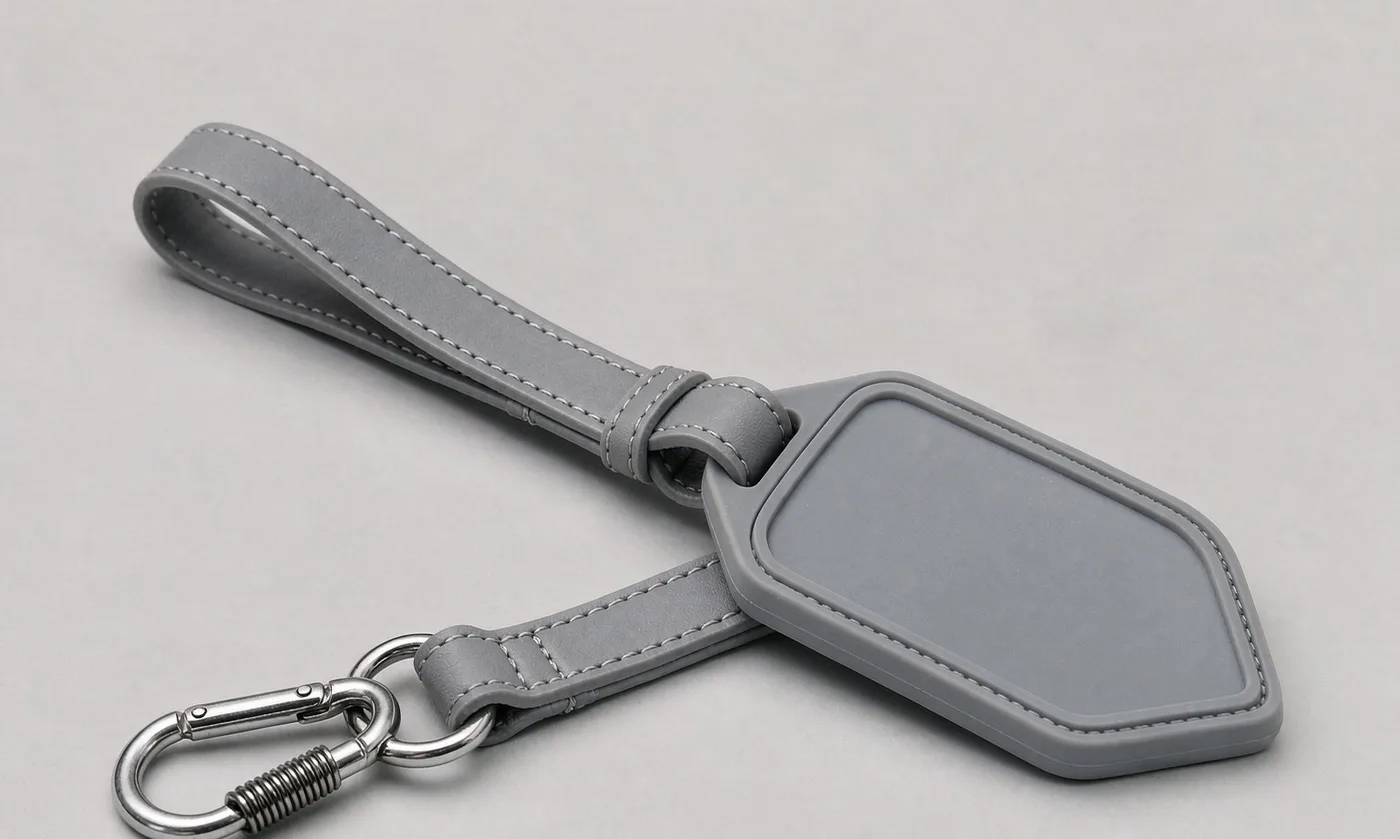
A PU leather strap is the most versatile and the most common. Cut from a sheet, folded, stitched and riveted or stitched around a split ring, it carries a debossed, foil or printed logo and matches any carrier with leather or PU trim. It is soft, quiet and reads as considered. Thickness between 1.6 and 2.4 mm is the working range: thinner feels flimsy, thicker resists folding around the ring.
A woven webbing loop is the match for technical and outdoor lines. Polyester webbing, folded and bar-tacked, takes a woven or printed logo and mirrors the webbing used on handles, collars and leashes. It is inexpensive, durable and washable, and it can carry a jacquard-woven wordmark that will not fade or peel. The visible stitch is part of the aesthetic, so specify stitch colour deliberately.
Metal fobs carry the premium tier. A stamped or die-cast metal body with enamel, paired with a leather or webbing strap, produces the highest perceived value in the category. The cost is higher and the weight is real, which is fine on a keyring and less fine on a bag charm. Silicone and soft PVC moulded fobs allow full colour, character shapes and a soft touch, and they are the right answer for playful brands and for programmes aimed at younger shoppers. Acrylic gives a clean, modern, printed face at low cost and works well for photographic or illustrative artwork, though it scratches more readily than the alternatives.
| Format | Material character | Logo capability | Cost index | Matches best with |
|---|---|---|---|---|
| PU leather strap | Soft, quiet, tailored | Deboss, foil, screen print | 1.0x | Leather-trimmed carriers |
| Woven webbing loop | Technical, durable, washable | Jacquard weave, sublimation | 0.8x | Outdoor and webbing-trim lines |
| Metal fob with strap | Weighted, premium | Enamel, etch, laser | 2.6x | Hero and gift SKUs |
| Silicone or PVC fob | Soft, colourful, playful | Full colour moulded relief | 1.3x | Character and junior lines |
| Acrylic printed | Clean, modern, flat | Full colour print, two-sided | 0.9x | Illustrative and photo artwork |
One decision that affects all formats is whether the keychain includes a functional element. A small carabiner, a bottle opener or a detachable split ring adds utility, and utility is what turns an accessory from a souvenir into something the customer keeps on their keys permanently. Utility costs little and should be considered in every brief.
The other universal decision is length. A total hang of 70-110 mm suits a keyring; anything longer catches in a pocket or a handbag, and anything shorter is hard to find among other keys.
Logo Methods on a Small Surface
Logo application is where small accessories succeed or fail, because the available area is tiny and every method has a minimum legible size.
Debossing presses a heated die into PU or leather, leaving a permanent recessed mark. It is the most durable and most premium option on those materials, costs a one-time die charge, and looks better the longer the product is used because the recess develops a patina. The constraint is detail: fine type below roughly 2 mm cap height will not read, and very small counters in lettering will fill in.
Foil stamping adds a metallic or pigment layer and reads as gift-grade. It wears faster than debossing on high-contact items, so it suits the flat face of a strap rather than the folded edge. Screen printing on PU or webbing allows multiple colours at low set-up cost, but the ink film sits on the surface and will abrade over years of pocket carry; specify an abrasion-resistant ink and a curing check.
Jacquard weaving puts the logo into the structure of the webbing itself, which makes it effectively permanent and impossible to peel. It requires a minimum run because the loom set-up is fixed cost, and it limits the palette to the yarn colours loaded on the loom. Sublimation printing on polyester webbing allows full-colour artwork with no handfeel change and excellent durability, but only on light-coloured synthetic grounds.
- Deboss - permanent and premium on PU and leather, best for simple marks.
- Foil - gift-grade metallic finish, best on flat protected faces.
- Screen print - multi-colour at low set-up, needs abrasion-resistant ink.
- Jacquard weave - permanent, structural, best for webbing lines.
- Sublimation - full colour, no handfeel change, light synthetic grounds only.
Whatever the method, design the mark for the size at which it will be read. Most keychain logos are viewed at arm's length, not at shelf distance, so a simplified lock-up - a monogram, a symbol, a short wordmark - outperforms the full corporate signature every time. Prepare a simplified variant as part of the brand system rather than shrinking the master logo.
Hardware, Rings and Finish Specification
Hardware is the part of a keychain that customers touch and the part that most often fails. Three components matter: the ring, the connector and the finish.
The split ring should be specified by wire diameter as well as outer diameter, and for a keychain that will be loaded with several keys, a heavier wire is worth the small cost. A flat-section split ring sits more comfortably against other keys than a round-section one. Where the design allows, a soldered or welded closed ring eliminates the most common failure entirely.
Connectors include rivets, eyelets, Chicago screws, cord loops and small carabiners. Rivets are cheap and clean but permanent; screws allow disassembly and repair and read as more considered. A cord or webbing loop through an eyelet is the quietest and lightest option and suits soft formats. Whichever is chosen, specify a pull test result on the assembly, because a keychain that opens in a pocket loses both the keys and the customer.
Finish determines how the hardware ages. Nickel, black nickel, gunmetal, antique brass, shiny gold and rose gold are all standard, and as with charms the specification should include plating thickness rather than just a colour name. A thin flash finish rubs through at contact points within months; a properly specified thickness lasts for years. Antique finishes hide wear better than mirror finishes, which is worth remembering on an item that lives in a pocket with metal keys.
Weight is the other specification customers feel immediately. A keychain that is too light reads as a freebie, while one that is too heavy drags on an ignition barrel or pulls a bag zip open. Between 8 and 25 grams is the practical window for keyring use, with lighter weights suited to webbing formats and heavier weights to metal fobs. Test the assembled unit on a real keyring with several keys attached before approving, because the way the item swings under load is impossible to judge from a specification sheet.
Colour matching between hardware and the rest of the range is a small detail with outsized effect. If the carrier uses gunmetal hardware, the keychain should too. Mixed hardware finishes across a matching set is the kind of inconsistency customers notice without being able to name.
Colour Matching Across a Matching Set
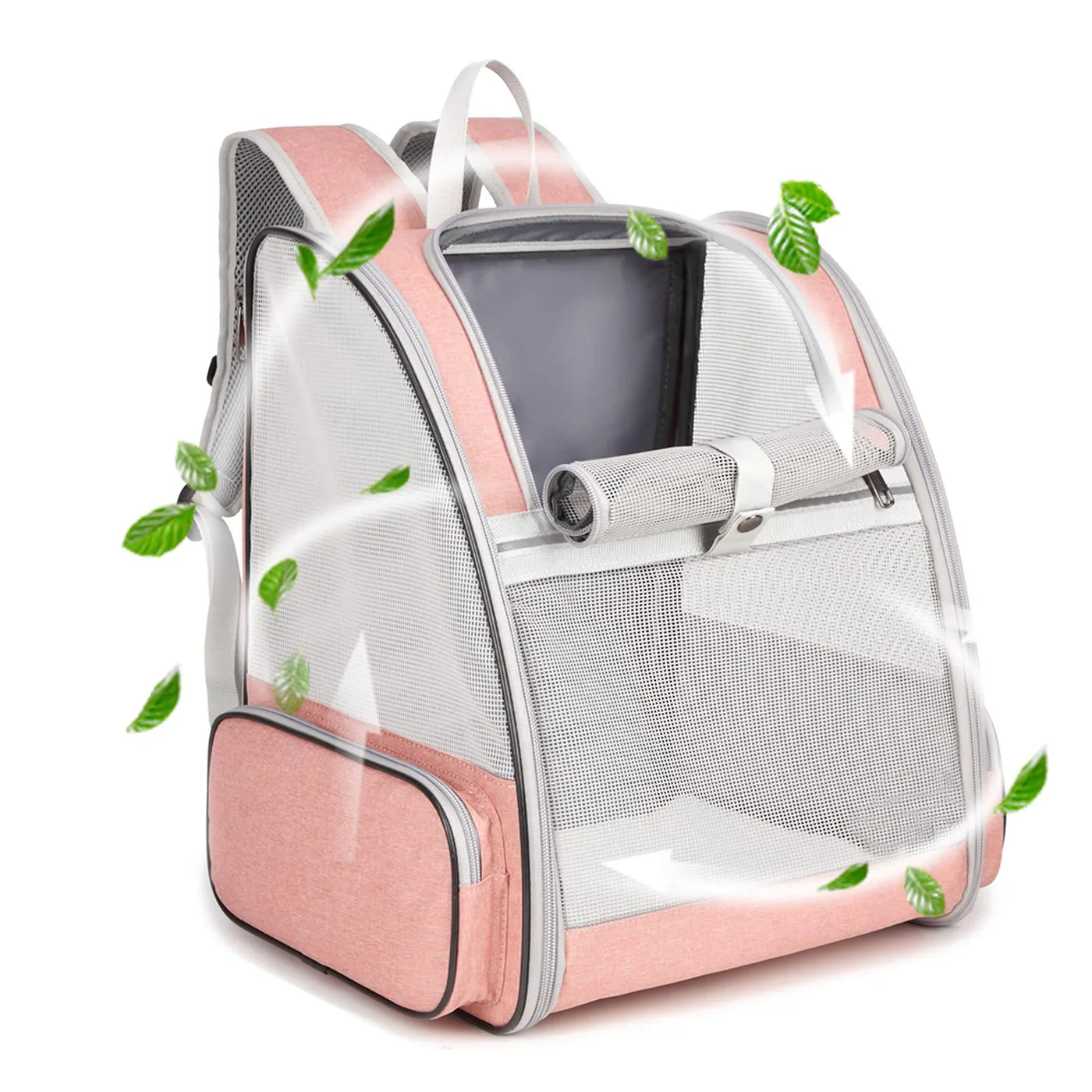
Matching is the promise of the product, and colour is where that promise is kept or broken. The practical difficulty is that the same colour behaves differently in PU coating, in polyester webbing, in enamel and in plating, so a single Pantone reference will not automatically produce a visually consistent set.
The method that works is to define the target colour, then approve a physical reference in each material separately, and to accept small, deliberate deviations that make the set look right together. Reference standards are maintained by Pantone, and using a solid coated reference as the master target while approving per-material physical standards is the combination that produces consistent reorders.
Lighting conditions matter more for accessories than for larger products, because a keychain is viewed in daylight, in store lighting and in the warm light of a home. Approve colour under at least two standard light sources and record which one governs. Metamerism - a pair that matches under one light and not another - is a common and avoidable failure in matching sets.
Batch consistency is the next challenge. Dye lots vary, coating batches vary, and plating baths vary. The mitigation is a retained reference sample per colourway and a defined tolerance, agreed in writing, so that a reorder can be objectively accepted or rejected rather than argued about. Our production team holds approved references against each repeat order for exactly this reason.
Finally, plan the colourway architecture deliberately. A three-colourway launch - one core, one seasonal, one limited - gives retailers a reason to reorder and collectors a reason to complete. Running ten colourways at 500 pieces each is more expensive and less effective than running three at depth.
Retail Display, Packaging and Gifting Formats
Keychains are impulse items, and impulse items live or die on display. The packaging decision is therefore a merchandising decision before it is a cost decision.
The two dominant retail formats are the peg hook card and the counter unit. A peg card - typically 50 x 100 mm or 55 x 85 mm - suits peg walls in pet specialty and hardware-style retail, and it should carry the brand mark, the colourway name and a single line of benefit copy. The card is also the cheapest place to print the matching story, which is the actual reason to buy. A counter unit or PDQ tray near the till suits independent retailers and captures the impulse purchase at the moment of payment.
Protective packaging matters less for webbing and more for metal and acrylic. A metal fob needs individual protection against scratching; an acrylic face needs a film or a sleeve. PU straps should be packed flat rather than folded tightly, because a crease at the fold line will not relax.
Gifting formats open a second channel. A keychain mounted on a small card inside a translucent sleeve, or paired with a matching collar in a rigid two-piece box, moves the product from accessory to gift, and gift positioning supports a materially higher price. Seasonal gifting - a limited colourway in December, a new city edition in spring - is where the accessory programme generates its best margin.
E-commerce packaging has its own requirement: the keychain must photograph well without studio work. A neutral card, a consistent angle and a matte finish that does not reflect a flash will save hours of retouching per drop. The same logic that governs the retail box and packaging system applies at this smaller scale, and keeping the visual language consistent across both is what makes a range look designed rather than assembled.
Compliance, Safety and Documentation
Small accessories attract the same regulatory attention as larger ones, and in some respects more, because they are small enough to be a choking hazard and are often marketed alongside children products.
Chemical compliance comes first. Metal components need heavy metals testing for the US market under the framework administered by the U.S. Consumer Product Safety Commission, and EU shipments need to satisfy REACH obligations, the reference point for which is ECHA. PU coatings, inks and adhesives each need their own declarations. Specifying already-certified inputs is far cheaper than testing finished goods after production.
Physical safety focuses on sharp edges, sharp points and small detachable parts. Every keychain design should go through a review that eliminates points, radiuses edges and validates the strength of every connector with a pull test. A detachable element should be recorded as detachable in the documentation, with an appropriate use statement in the copy.
Quality documentation is the third piece, and it is what separates a professional programme from an improvised one. Our production base operates under quality management procedures certified to ISO 9001, and each accessory SKU carries a tech pack recording material, hardware, logo method, colour reference, pull test result and approved sample photographs.
Finally, keep the retail documentation ready. Many buyers will ask for a test report, a country-of-origin statement and a material declaration before listing an accessory. Having those three documents prepared at launch shortens the onboarding conversation from weeks to days.
Pricing Ladder, Bundling and Launch Planning
The commercial case for a keychain programme rests on three decisions: where it sits in the price ladder, how it is bundled, and when it launches.
On price, the ladder should have a clear relationship to the main product. A common structure is an accessory priced at roughly one tenth to one fifteenth of the carrier, which reads as an obvious add-on rather than a considered purchase. Below that, the accessory feels cheap; above it, customers start comparing it to the main product and the margin advantage disappears.
One more commercial lever is the refill dynamic. Because a keychain is carried daily, it wears out and gets replaced, which means the same customer can buy the same colourway two or three times over a few years. That repeat behaviour is worth planning for: keep core colourways in the catalogue permanently rather than retiring them with the season, and make reordering at 500 pieces an easy, quick decision. Brands that rotate everything seasonally lose this revenue entirely, because the customer who wants to replace a worn favourite finds the colour gone.
On bundling, three models work. Sold separately at full margin is the cleanest and most common. Bundled with the carrier at a modest discount increases average order value and is effective online. Given away above a spend threshold drives basket size and is best used selectively, because a permanent giveaway trains customers to expect it for free. Our recommendation is to sell separately as the default, bundle seasonally, and reserve giveaway for a launch window.
On timing, the accessory should launch with the product it matches, not after it. A matching keychain released six months after the carrier misses the set-completion moment entirely. Because sampling takes 6-10 working days and bulk runs 35-50 days, the keychain artwork should be finalised alongside the carrier artwork, roughly 100 days before the shared launch date.
On cadence, plan a permanent core colourway plus one seasonal drop per quarter. The core is ordered at depth for cost; the seasonal drops run at 500-1,000 pieces and carry the novelty. Over a year that produces four merchandising moments, four reasons for retailers to reorder, and a collecting behaviour among customers - all from one accessory line that shares artwork, hardware and colour references with the rest of the range.
Order and quality terms
- MOQ 500 pieces per colourway; samples in 6-10 working days
- Bulk production 35-50 days after approval; AQL 2.5 inspection standard
- T/T 30/70 terms, FOB Xiamen, full document set per shipment
People Also Ask
How much does a custom keychain cost?
Between $0.35 and $2.40 per piece depending on format, hardware and quantity, with the sharpest improvement between 500 and 2,000 units.
Why sell a matching keychain at all?
It delivers daily brand impressions, completes a colourway set that customers want to finish, fills counter space and usually carries better margin than the main product.
What length should a keychain be?
A total hang of 70-110 mm suits a keyring. Longer catches in a pocket or bag and shorter is hard to find among other keys.
Can a keychain share artwork with other brand items?
Yes. Sharing artwork with charms, patches and hang tags is the most efficient approach, because tooling and digitising are then paid once across several SKUs.
What makes a keychain feel premium?
Weight in the hardware, debossed or woven rather than printed logos, edge finishing on the strap and a plating thickness that survives pocket carry.
When should the accessory launch?
With the product it matches. Finalise artwork roughly 100 days before the shared launch date so sampling and bulk production complete together.
Frequently Asked Questions
What is the minimum order for a custom keychain?
MOQ 500 pieces per design or colourway, which covers hardware procurement, logo tooling set-up and the assembly labour that even a simple strap requires.
How long does keychain sampling take?
Sampling takes 6-10 working days from approved artwork and includes a physical sample in the intended material plus a fitting check on the intended hardware.
What is the bulk lead time for matching accessories?
Bulk production runs 35-50 days after sample sign-off, with custom hardware finishes and moulded formats at the longer end of the range.
Which keychain format matches a carrier best?
PU leather strap matches leather-trimmed carriers, woven webbing matches technical and outdoor lines, and a metal fob suits hero and gift SKUs. Match the material language first.
Can we match an existing carrier colourway exactly?
Colours are matched per material rather than by a single reference, because PU, webbing, enamel and plating each render the same target differently. Approve a physical standard per material.
What logo method lasts longest on a keychain?
Debossing on PU or leather and jacquard weaving on webbing are effectively permanent. Foil and screen print sit on the surface and wear faster under pocket carry.
What hardware finish should we specify?
Match the hardware used elsewhere in the range, and specify plating thickness in microns rather than only a colour name. Antique finishes hide wear better than mirror finishes.
Are custom keychains compliant for US and EU markets?
Yes when specified correctly. Metal components need heavy metals testing for the US, EU shipments need REACH compliance, and coatings and inks need their own declarations.
What packaging works best for retail?
A peg hook card suits peg walls and should carry the brand mark, colourway name and the matching story. A counter unit near the till suits independent retailers and captures impulse purchase.
Should the keychain be sold or given away?
Sell it as the default, bundle it seasonally and reserve giveaway for a launch window or spend threshold. A permanent giveaway trains customers to expect it free.
How should a keychain be priced against the carrier?
Roughly one tenth to one fifteenth of the main product price reads as an obvious add-on while protecting accessory margin, which usually exceeds margin on the carrier itself.
What inspection standard applies before shipment?
Finished goods are inspected to AQL 2.5 under documented ISO 9001 procedures at our SGS-verified production base, with goods shipped FOB Xiamen on T/T 30/70 terms.
Talk to QUANZHOU JUNYUAN BAGS about a pet carrier program: MOQ 500 pieces per colourway, samples in 6-10 working days, bulk production in 35-50 days under AQL 2.5 inspection.
Get a free quote Request a sample