Custom Car Harness: Crash-Tested Design for Branded Programs
A crash-tested custom car harness in a private label program is defined by four measurable targets: a five-size fit block covering 5-45 kg, a 30 mph dynamic sled test on a four-point load path, a minimum 2,400 N pull strength at the webbing junction, and stitch efficiency above 85% on every structural seam. Those four numbers are what separate a branded restraint device from a branded walking accessory that merely looks similar on a hook.
Our production team runs custom car harness programs on one commercial calendar: MOQ 500 units per colourway, prototypes delivered in 6-10 working days after tech pack sign-off, and bulk production completed in 35-50 days from sample approval. Every bulk lot is released against AQL 2.5, supported by a sled-test summary, hardware salt-spray result and webbing tensile certificate, so the brand team receives a documentation pack rather than a bare shipping notice. Commercial terms are quoted FOB Xiamen on T/T 30/70.
The brand-critical decisions all happen before that. Sizing architecture, webbing geometry, logo placement that never crosses a load path, and a Pantone-matched colour system that survives automotive UV exposure are the four areas where a designer's choices are irreversible after tooling. Budget two full sampling rounds - one for fit, one for brand finish - before releasing bulk, because a car harness is a category where a decorative decision can quietly become a structural liability.
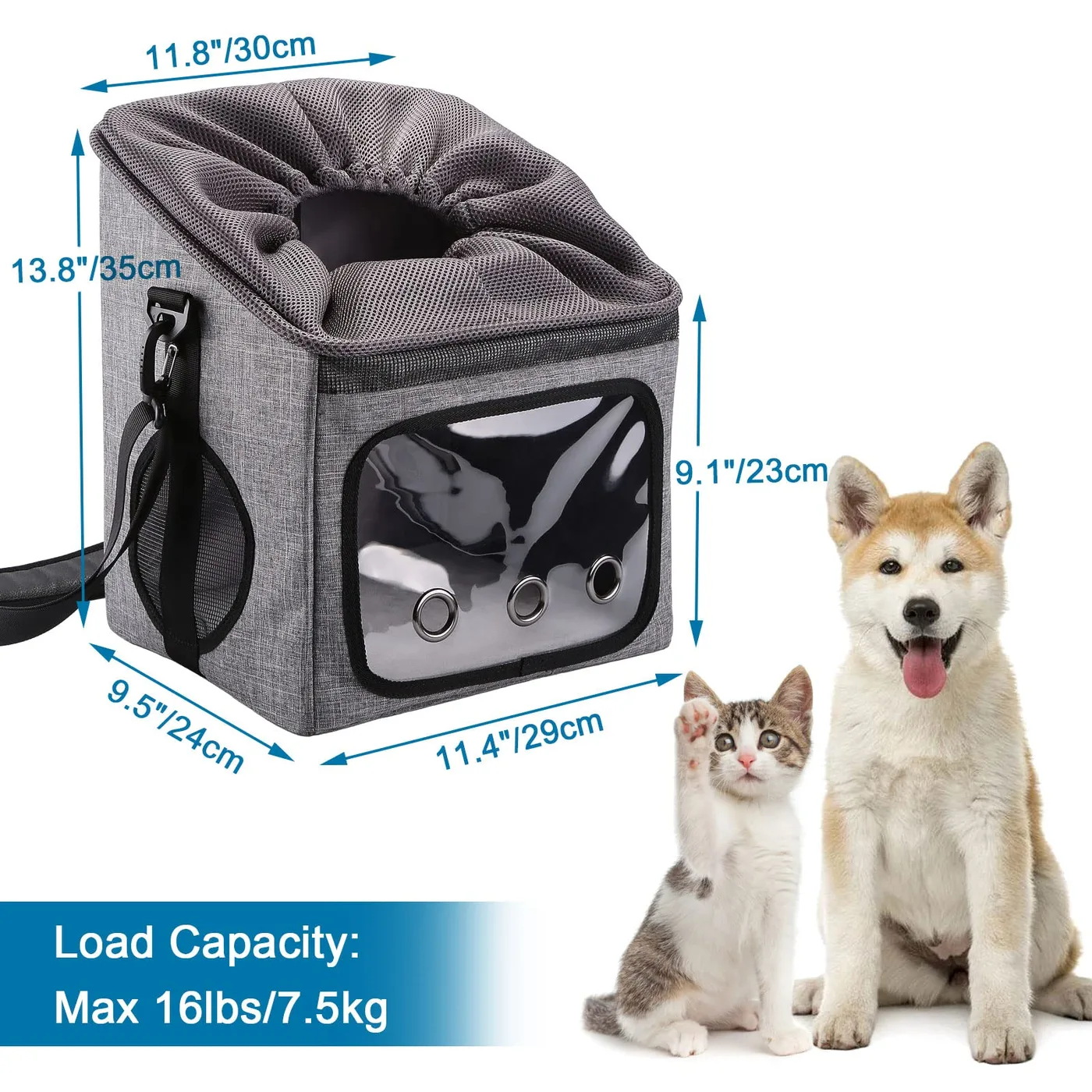
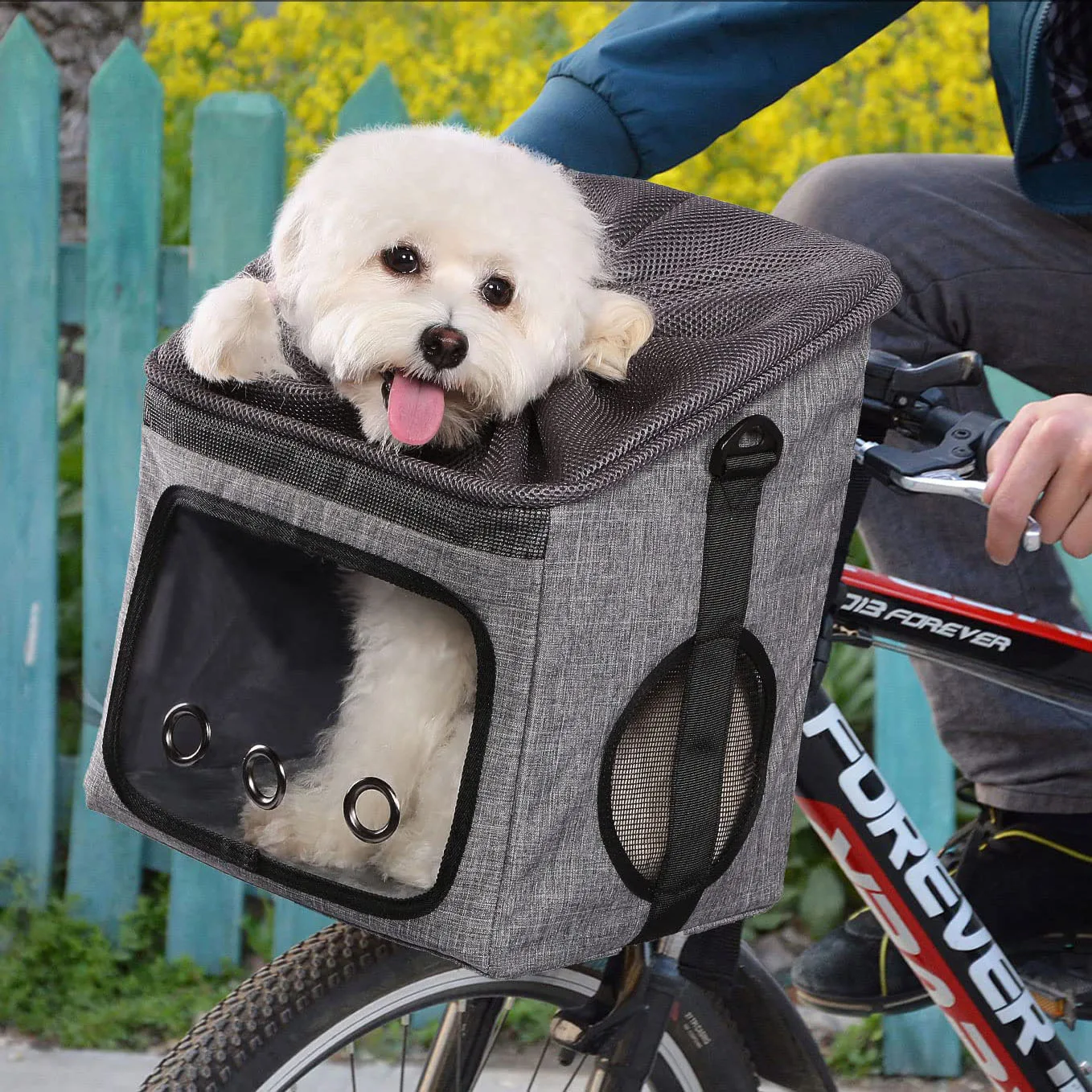
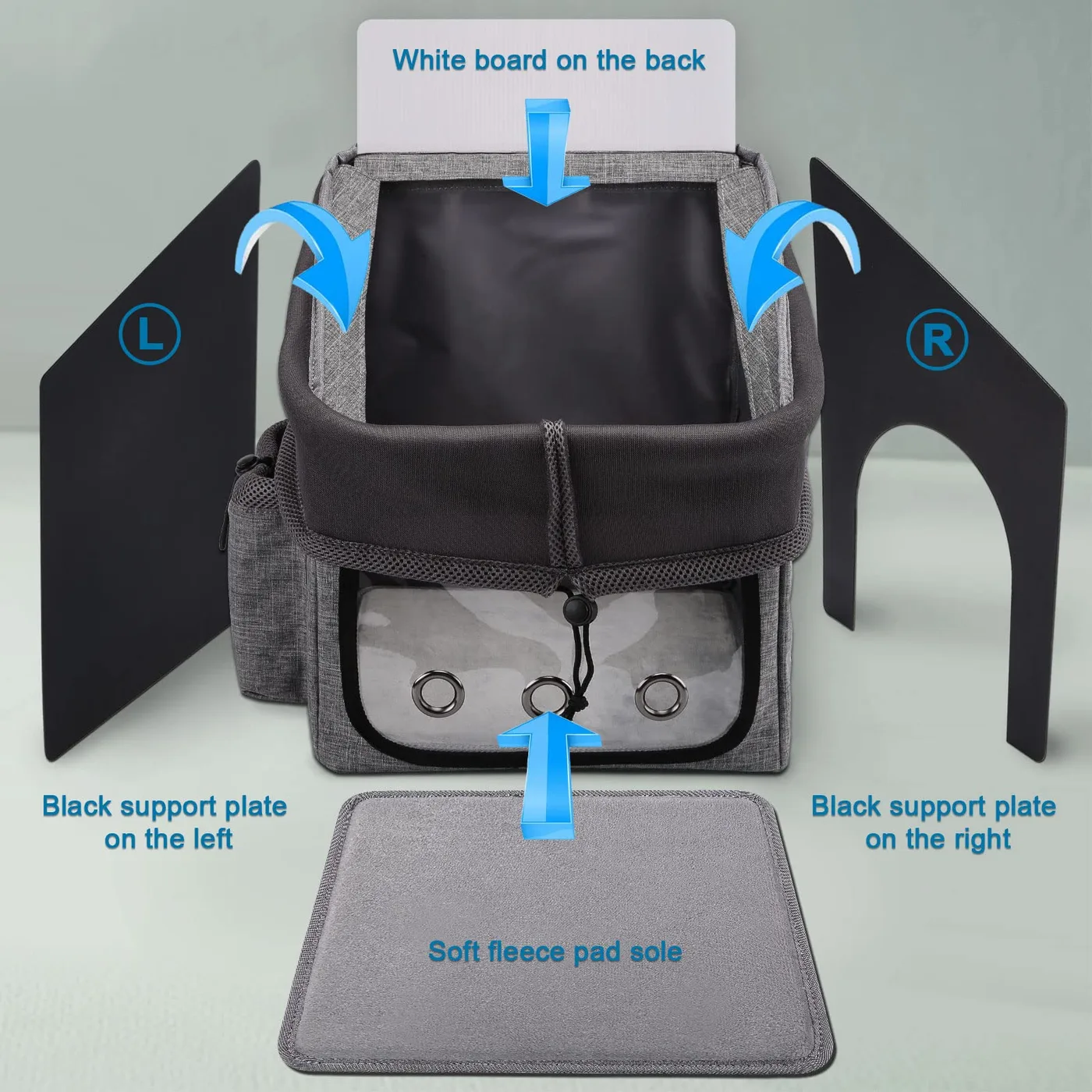
For a custom pet tote or backpack carrier, strap geometry is the first thing to fix - width, padding and load-lifter position decide how the bag carries.
What Crash-Tested Means Inside a Custom Car Harness Brief
Designers arriving at this category from apparel or accessories usually bring the wrong assumption: that crash testing is a certificate you buy at the end. In a restraint program it is the opposite. Testing is a design constraint that determines webbing width, stitch type, buckle position and even the maximum size of a logo, and every one of those choices is locked long before a sample exists. A brand that approves artwork first and asks about load performance afterwards will almost always end up re-cutting patterns in round two, which is the single most expensive mistake in the category.
The working definition we use with brand teams is narrow and testable. A crash-tested car harness distributes deceleration load across the sternum and ribcage through a padded chest plate, keeps the animal contained within the seat footprint, and returns to a serviceable condition after a single 30 mph dynamic event with no released stitches, no torn webbing and no hardware deformation beyond a stated tolerance. Anything that passes only a static pull test is a walking harness with a seatbelt loop, and the two should never share a hang tag.
Third-party context matters here because retailers ask for it. Programs aligned with the published protocol from the Center for Pet Safety use a calibrated sled, a representative test dummy and a documented pass-fail criterion. Where a brand sells into the US market, the restraint also has to sit sensibly beside general consumer product expectations published by the U.S. Consumer Product Safety Commission, particularly around small parts, labelling and traceability. Neither body certifies your brand, but both shape what a category buyer will accept on a spec sheet.
For a private label program the practical move is to write the test criterion into the tech pack, not into the marketing brief. Specify the sled speed, the dummy mass class, the number of size grades to be tested and the acceptance threshold for stitch displacement. When those four lines exist in the tech pack, sampling becomes an engineering conversation instead of a negotiation, and the bulk order stops being a leap of faith.
Load Path Architecture: Why Geometry Outranks Thickness
The most common instinct in a first car harness design is to add material: thicker padding, wider webbing, heavier hardware. Weight and thickness do help perception on a retail hook, but structural performance comes from geometry. Load travels along the shortest continuous line from the anchor point to the chest plate; every bend, every redundant strap and every decorative overlay either supports that line or interrupts it. A 25 mm webbing run that is straight and correctly bar-tacked will outperform a 38 mm run that has been folded around a branded patch.
We therefore treat the harness as four load quadrants. Two run from the seatbelt anchor across the shoulders, two run down across the chest, and all four converge on a single moulded chest plate. The convergence point is the only place in the product where stitch density is doubled and where a logo is absolutely forbidden, because any needle perforation there becomes a stress riser. Designers who want a visual focal point are better served by the shoulder yoke, which carries far lower peak load and can accept embroidery without penalty.
Bar-tack geometry deserves its own line in the spec. A rectangular bar tack of 40 mm x 12 mm with a minimum 42 stitches distributes tension across a wider field than a box stitch of the same area, and it survives cyclic loading better because the thread beds into the webbing rather than sawing across it. Thread choice follows the same logic: bonded polyester size 69 for structural seams, size 92 only where two webbing layers meet, and never a cotton-wrapped decorative thread anywhere inside the load path.
The final geometric rule concerns strap adjusters. Every adjuster is a point where webbing is folded back on itself at roughly 180 degrees, and that fold sheds between 8% and 14% of the webbing's rated strength depending on the slider finish. Specifying a rolled-edge slider with a polished contact surface recovers most of that loss. It is a two-cent component that changes the safety margin of the whole assembly, which is exactly the kind of trade a brand consultant should defend during costing.
The Material Stack: Webbing, Padding, Mesh and Hardware
A car harness is a four-layer material decision. The structural layer is webbing, the comfort layer is closed-cell padding, the contact layer is air mesh or brushed tricot, and the closure layer is hardware. Each layer has its own failure mode and its own branding opportunity, and the mistakes happen when one layer is asked to do another layer's job - for example when a brand specifies a soft fashion mesh as the structural layer because it photographs well.
Webbing should be specified by tensile rating and elongation, not by weave name. A high-tenacity polyester webbing at 25 mm with a break strength above 9 kN and elongation under 12% at working load is a safe baseline for sizes M to XL. Nylon feels softer and takes dye more readily, which makes it attractive for a colour-led brand story, but its wet-state elongation is roughly 20% higher and it recovers more slowly, so a nylon build needs a wider safety factor in the chest plate.
| Layer | Standard option | Upgraded option | Brand impact | Cost delta |
|---|---|---|---|---|
| Structural webbing | 25 mm polyester, 9 kN, 12% elongation | 25 mm high-tenacity nylon with UV inhibitor | Colour depth, softer hand feel | +8-12% |
| Chest plate | Moulded EVA, 6 mm, laminated | Dual-density EVA with moulded logo relief | Visible 3D brand mark | +15-22% |
| Contact layer | Brushed tricot, 180 gsm | Spacer air mesh, 320 gsm | Perceived premium, breathability claim | +10-14% |
| Hardware | Zinc alloy cam buckle, nickel finish | Stainless steel with PVD colour match | Metallic brand tone, corrosion story | +18-30% |
| Thread | Bonded polyester 69 | Bonded polyester 92 at junctions | None visible | +2-3% |
Hardware is where a brand's colour system either holds together or falls apart. A nickel cam buckle is neutral and cheap, but it reads cold next to a warm Pantone palette. Powder-coated or PVD-finished hardware can be matched to within roughly two Delta E units of the brand's secondary colour, which is the kind of detail a premium retail buyer notices on a shelf. The trade-off is lead time: custom hardware finishes add 10-14 days to the sampling calendar and should be ordered in the first round, not the second.
Padding deserves a warning about testing. Closed-cell EVA recovers well after compression and is stable across temperature, which is why it is the default for a chest plate. Open-cell PU foam feels softer in the hand but takes a permanent set after a single high-load event, meaning the harness that felt perfect on sample day will feel loose after the first hard brake. If a brand wants softness, get it from the contact layer, not from the structural pad.
Sizing Architecture for a Five-Size Fit Block
Sizing is the least glamorous and most commercially decisive part of a car harness program. A five-size block - XS through XL - covers roughly 5-45 kg with acceptable fit, and each size requires its own pattern, its own chest plate tooling and, in a tested program, its own sled run. Brands routinely ask whether three sizes will do. It will, if the target is a single breed cluster; it will not, if the range is sold through a general pet chain where the size curve is close to flat.
The efficient approach is two fit blocks. Sizes XS and S share one pattern geometry with different webbing lengths; sizes M, L and XL share a second geometry with scaled plate widths. This halves the pattern development work while keeping the visual language consistent, and it lets a brand open with three sizes at MOQ 500 each and add the extremes later without re-engineering the core. The visual consistency matters: a customer who buys an M for a young dog and returns two years later for an L expects the same product, not a cousin of it.
Fit tolerance needs a number. Chest girth should be measured at the widest point behind the front legs, and each size should carry a 6-8 cm adjustment range with at least 3 cm of residual webbing at the tightest setting. Residual webbing is the detail most first-round samples get wrong, because a harness adjusted to its final hole looks clean in a product photograph but leaves no room for winter coat or weight change. Write the residual length into the spec sheet and check it on every size.
Finally, sizing interacts with branding. A size label is a legal and practical necessity, but it is also a brand surface. A woven size tab set into the adjuster area, using the brand's secondary thread colour, costs a few cents and solves a real retail problem - the customer standing in an aisle trying to remember whether their dog is a medium or a large. It is the rare detail that improves both compliance and conversion.
One more commercial point on sizing: the size curve drives the order value far more than the unit price does. In general retail, M and L together typically account for close to 60% of units, which means a brand that splits its opening buy evenly across five sizes will run out of the middle and be left holding the extremes. Weight the first bulk order toward the middle of the block, and treat XS and XL as a replenishment decision rather than a launch decision.
Branding Surfaces That Never Touch a Load Path
Every custom harness brief eventually asks the same question: where does the logo go? The honest answer is that a restraint product offers four legitimate brand surfaces and one forbidden one. The shoulder yoke, the chest plate relief, the webbing jacquard and the hardware finish are all available. The webbing junction is not, because stitching through a structural junction puts needle holes exactly where the load concentrates.
Jacquard webbing is the most durable and most underused option. A woven-in logo or repeating wordmark runs along the entire strap length, cannot peel, cannot crack and survives abrasion better than any applied mark. The set-up cost is higher and the minimum run is longer, but for a brand planning a multi-season program the unit cost is effectively flat and the visual result reads as designed rather than decorated. Two-colour jacquard is realistic; three-colour becomes expensive and slightly stiff.
Applied marks still have a place. Heat transfer works well on the flat face of a chest plate where the surface is stable and the area is generous, and it allows photographic gradients that weaving cannot achieve. Embroidery is best reserved for the shoulder yoke, where the substrate is soft and the seam is not structural. Silicone patches give a modern technical look and a pleasant hand feel, but they add thickness at the point of application and should be placed away from any fold.
A useful rule for brand teams: decorate above the load line, never across it. If a logo design requires stitching through webbing to be applied, redesign the logo placement rather than the product. This single discipline eliminates most of the engineering conflicts that otherwise surface late in sampling, and it keeps the compliance story clean when a retailer's technical reviewer asks how the mark is attached.
There is also a photographic argument for restraint. A restraint product is usually shot on a dog in a vehicle or a studio set, and a single well-placed chest plate mark reads far more clearly at thumbnail size than a repeating wordmark that disappears into webbing texture. Brand teams working from a digital-first channel plan should test their artwork at 400 pixels wide before committing it to a jacquard loom, because the loom minimum is not refundable and the thumbnail is the thing that actually sells.
Colour System, Pantone Matching and Automotive UV
Automotive interiors are a hostile colour environment. Cabin temperatures exceed 70 degrees Celsius in summer, UV exposure through side glass is intense and sustained, and the products that share the space - seat covers, cargo liners, harnesses - are expected to age at the same rate. A colour system that is approved under showroom lighting and then fades unevenly across a product family creates a visible mismatch within one season.
Start with the reference. Matching against a physical Pantone standard under controlled D65 lighting gives a shared language between the brand's design studio and the dye house, and the acceptance tolerance should be stated as a Delta E figure rather than a subjective approval. For webbing and mesh, Delta E under 1.5 is achievable in lab dips; for moulded EVA and coated hardware, under 2.5 is realistic. Setting the same tolerance across all substrates is a common source of sampling friction.
Light fastness and rubbing fastness then need explicit targets. Automotive-grade expectations are roughly 4-5 on the ISO blue wool scale for light and 4 for dry and wet rubbing, and these are verified through methods published by AATCC. A brand selling a fashion palette of brights should assume the brights will fail first and consider building the range so that the highest-chroma colour is an accent rather than the main body panel.
One practical programme decision pays for itself: lock a single master colour standard per substrate and reference it on every subsequent order. Without a retained standard, reorders drift by a half shade per season, and by year three a brand's core colour has quietly become three different colours across its catalogue. The master standard costs nothing to keep and removes an entire category of retailer complaint.
Serialisation, Packaging and Retail Display
A crash-tested restraint is a documentation-heavy retail product. The carton has to carry a size chart, a fit instruction, a safety statement and a traceability code, and it has to do so without turning the packaging into a wall of small print that kills the brand story. The solution is hierarchy: the front face sells, the side panel instructs and the back panel documents.
On the front, a single claim plus a single visual. One tested statement, one silhouette image and the brand mark - nothing else. On the side, a three-step fit diagram with the girth measurement marked, which is the graphic that actually reduces returns. On the back, the legal block: size range, material composition, batch code, importer details and the care instruction. Keeping the documentation to one face preserves the design and still satisfies the buyer's checklist.
Display format matters for sell-through. A hanging carton with a Euro slot works for peg walls, but a tested harness sells better in a shelf tray where the customer can feel the chest plate and see the hardware. Where the retail partner offers both, a dual-format carton with a removable hanger card gives the brand one SKU and two placements. That flexibility is worth more than a marginally lower unit cost.
Serialisation is the quiet differentiator. A laser-etched or printed batch code on the hardware or the webbing end lets a brand trace any unit back to a production lot and a test report. It costs almost nothing, it is invisible to the customer, and it is the first thing a serious retail technical reviewer asks about. Verification of the underlying process data typically runs through a third party such as SGS, whose reports the brand can reference in buyer meetings without disclosing supply chain detail.
From Tech Pack to Shelf: Sampling and Launch Rhythm
The calendar for a tested harness is longer than for any soft accessory in the same catalogue, and brands that plan a harness launch on apparel timelines consistently miss their season. Two sampling rounds at 6-10 working days each, hardware development running in parallel at 10-14 days, a test slot that must be booked rather than assumed, and bulk at 35-50 days from approval add up to a realistic 90-110 day critical path from signed tech pack to ex-factory date.
| Phase | Window | Owner | Gate to pass |
|---|---|---|---|
| Tech pack and load-path review | Days 1-7 | Brand design + engineering | Written test criterion signed |
| Lab dips and hardware finish | Days 5-19 | Colour and trim team | Delta E within tolerance |
| Sampling round 1 - fit | Days 8-18 | Pattern team | Fit on three live dogs per size |
| Sampling round 2 - brand finish | Days 20-30 | Brand + production team | Logo placement off load path |
| Dynamic test slot | Days 31-45 | Third-party lab | Pass at 30 mph, all tested sizes |
| Bulk production | Days 46-90 | Partner facilities | AQL 2.5 release, FOB Xiamen |
| Retail-ready packaging | Days 60-90 | Packaging team | Carton drop test passed |
Launch rhythm should follow the same discipline. Open with three core sizes in one neutral and one brand colour, hold the extremes for the second drop, and use the second season to introduce the jacquard or hardware upgrade that lifts the line's margin. A tested restraint is not a fast-fashion item: its selling argument is durability, and a range that changes silhouette every twelve months undermines the very claim the testing supports.
Where brands want a limited edition, the safe route is colour rather than structure. A seasonal colourway on an unchanged tested chassis requires no re-test, no new tooling and no new compliance documentation, and it lets the brand participate in a retail moment without restarting the engineering clock. That is the single highest-return move available in this category, and it is available only to brands that planned the chassis as a platform from the first tech pack.
The closing advice is simple and worth repeating: treat the test criterion as a design brief. When the numbers are written first, the logo placement, the colour system, the packaging and the launch calendar all fall into a defensible order, and the product that reaches the shelf still matches the one that passed the sled.
Order and quality terms
- MOQ 500 pieces per colourway; samples in 6-10 working days
- Bulk production 35-50 days after approval; AQL 2.5 inspection standard
- T/T 30/70 terms, FOB Xiamen, full document set per shipment
People Also Ask
What makes a custom dog car harness crash-tested?
A tested harness is validated on a dynamic sled at a defined speed with a representative dummy, and it must hold the animal within the seat footprint with no released stitches, torn webbing or deformed hardware. A static pull test alone does not qualify a product as crash-tested.
Can a custom car harness carry a logo without weakening it?
Yes, if the mark is applied above the load line. Jacquard webbing, chest plate relief and shoulder yoke embroidery are safe surfaces; stitching through a webbing junction is not, because needle holes become stress risers at the point of peak load.
How many sizes should a private label car harness range include?
Five sizes covering roughly 5-45 kg is the standard answer for general retail. Brands can open with three sizes sharing two pattern geometries and add XS and XL later without re-engineering the core chassis.
What webbing specification suits a crash-tested harness?
High-tenacity polyester at 25 mm with a break strength above 9 kN and elongation under 12% at working load is a safe baseline. Nylon takes dye better but has higher wet-state elongation and needs a wider safety factor.
Does custom hardware colour affect lead time?
Yes. Powder-coated or PVD-matched hardware adds roughly 10-14 days and must be ordered in the first sampling round. Standard nickel finishes carry no additional lead time but read colder against warm brand palettes.
How long does a crash-tested harness program take from tech pack to bulk?
Plan 90-110 days: two sampling rounds at 6-10 working days each, a booked third-party test slot, and bulk production of 35-50 days from sample approval, released at AQL 2.5.
Frequently Asked Questions
What is the MOQ for a custom crash-tested car harness?
MOQ is 500 units per colourway per size block. Because each size needs its own chest plate tooling, most brands open with three sizes at 500 each and add extremes on the second drop.
How long do samples take?
Prototypes are delivered in 6-10 working days from tech pack sign-off. Two rounds are standard: the first validates fit, the second validates brand finish and logo placement.
What is the bulk production window?
Bulk runs 35-50 days from sample approval, depending on whether custom hardware finishes are involved. Shipments are quoted FOB Xiamen on T/T 30/70 terms.
Which inspection standard applies to bulk release?
Every lot is released against AQL 2.5 with a documented report covering stitch integrity, hardware function, colour conformance and packaging accuracy.
Can we reuse our existing walking harness pattern for a car harness?
Rarely. A walking harness distributes load along the back and shoulders, while a restraint device concentrates deceleration load on a chest plate. The patterns look similar and behave differently under test.
Which logo processes work on restraint webbing?
Jacquard weaving is the most durable, followed by chest plate heat transfer and shoulder yoke embroidery. Avoid any application that perforates the webbing junction.
Do we need to test every size?
Test the sizes that represent the extremes of your fit block and at least one mid size. Most programs test three of five sizes and document the rationale for the remaining two.
How is colour matched across webbing, mesh and hardware?
Each substrate is matched to a Pantone reference under D65 lighting with an agreed Delta E tolerance, typically 1.5 for textiles and 2.5 for moulded or coated parts.
What fastness targets should a car harness meet?
Automotive-grade targets are approximately 4-5 on the blue wool scale for light fastness and 4 for dry and wet rubbing, verified through recognised textile test methods.
Can we launch a seasonal colour without re-testing?
Yes, provided the chassis, webbing specification and hardware are unchanged. Colour-only variations do not invalidate an existing test report.
What packaging format converts best at retail?
A dual-format carton with a removable hanger card performs best, allowing peg wall or shelf tray placement from a single SKU. The front face should carry one claim only.
Is batch traceability included?
Yes. A batch code can be laser-etched or printed on hardware or webbing ends, linking any unit back to a production lot and its test documentation.
Talk to QUANZHOU JUNYUAN BAGS about a pet carrier program: MOQ 500 pieces per colourway, samples in 6-10 working days, bulk production in 35-50 days under AQL 2.5 inspection.
Get a free quote Request a sample