Oval Pet Carrier: Curved Design Guide
An oval pet carrier with a curved design is patterned as a true ellipse - typically 46 x 34 cm for a medium - with a continuously varying radius rather than a constant one. That single geometric difference is why it costs more than a square box and less than a cylinder: unit cost index 114-126.
The oval is the most refined silhouette in the category and the most technically subtle, because a true ellipse cannot be sewn from identical panels. Every seam has a continuously changing radius, which means the pattern, the notching, the feed and the operator skill all have to be specified rather than assumed. What the shape buys is warmth without whimsy: curves that read as organic and premium rather than as novelty, and a body that sits against the human form when carried.
- Sampling: structural samples with the elliptical base and variable-radius seams in 6-10 working days.
- Minimums: MOQ 500 units per colourway, or 800 where a moulded elliptical base ring is specified.
- Schedule: bulk production runs 35-50 days after sample approval, including jig tooling.
- Quality: radius continuity, base concentricity and seam smoothness are inspected to AQL 2.5.
- Terms: T/T 30/70, FOB Xiamen, with cartons planned for the non-nesting elliptical footprint.
- Engineering note: an oval cannot be drawn with a compass, and every attempt to approximate it shows at the seam, which is why the pattern and the base board must be generated together.
- Commercial note: ovals need size to be read, so develop the medium and large first and treat the small as a later addition.
When a custom pet bag has to ship flat, the pattern changes: removable stiffeners and a fold line that does not crease the coated face.
An oval is not a squashed circle
The distinction sounds academic and is entirely practical. A circle has one radius; an ellipse has a radius that changes continuously from the major axis to the minor axis. Nothing about the pattern is constant, and that is what separates an oval programme from a round one.
The consequence for patterning is that panels cannot be identical. On a six-panel cylinder every panel is the same shape, so one pattern piece covers the whole body. On an oval, panels near the major axis are broad and shallow; panels near the minor axis are narrow and deep. Four or six different pattern pieces are needed, and each must be matched to its position with balance marks.
The consequence for sewing is feed control. A seam whose radius changes along its length asks the machine to ease fabric at one end and hold it at the other. Operators compensate instinctively, which is exactly the problem - instinct varies between operators, and the result is unit-to-unit variation in the silhouette. The control is notching density: marks every 60-80 mm along a variable-radius seam rather than at the ends only.
The consequence for the base is an elliptical board and an elliptical ring. Both have to match the assembled body perimeter within 3 mm, and because the perimeter of an ellipse is not a simple function of its axes, it has to be measured off the pattern rather than calculated from a formula.
Approximations are the trap. A shape drawn with two radii and two straight sections - often called a stadium or obround - sews easily and reads as a rounded rectangle rather than as an oval. It is a legitimate choice, but it is a different product and should be specified as one rather than passed off as an oval.
The measurable test is simple: sight along the seam from above. On a true ellipse the curvature changes smoothly from end to side; on an approximation the transition is visible as a flat spot.
Where a brand wants the oval look without the elliptical engineering, the four-panel soft variant in the comparison table below delivers most of the impression at a materially lower cost.
The oval as brand language: organic and premium
Curves that vary - rather than curves that repeat - read as organic. That is the difference between an oval and a circle in brand terms: a circle reads as designed and friendly, an oval reads as grown, natural and considered. It is the silhouette of pebbles, eggs, leaves and hand-thrown ceramics, and it borrows credibility from all of them.
That association makes the oval the strongest shape for premium and heritage positioning. It carries quiet confidence rather than playfulness, and it supports materials that would look over-dressed on a novelty shape: full-grain leather trim, undyed canvas, brushed hardware, tonal embroidery.
The oval also avoids the two failure modes of curved design. It is not so round that it reads as a toy, and it is not so angular that it reads as equipment. For a brand whose customer is design-literate but not fashion-led, that middle position is exactly right.
Colour behaves well on an oval because the varying surface creates soft shading gradients that flatter saturated and complex tones. Muted naturals - oat, clay, sage, ink - are the natural palette, and a single contrast detail in a warm metal or a leather pull is usually enough.
Scale matters more on an oval than on any other shape. Because the silhouette is subtle, it needs size to be read; a small oval carrier can look like a rounded rectangle, while a large one reads unmistakably as an ellipse. Oval programmes should therefore plan the medium and large sizes first.
The risk is indecision. An oval that is nearly a rectangle looks like a mistake rather than a statement. Committing to a clear ratio - major to minor axis of about 1.35 to 1.55 - keeps the shape legible.
Where the oval sits in a range, it should be the design-led flagship above a standard rectangle, priced to reflect the extra labour. Presented next to a plain box at the same price, the oval looks like better value and the box looks cheap, which is a ladder problem rather than a product problem.
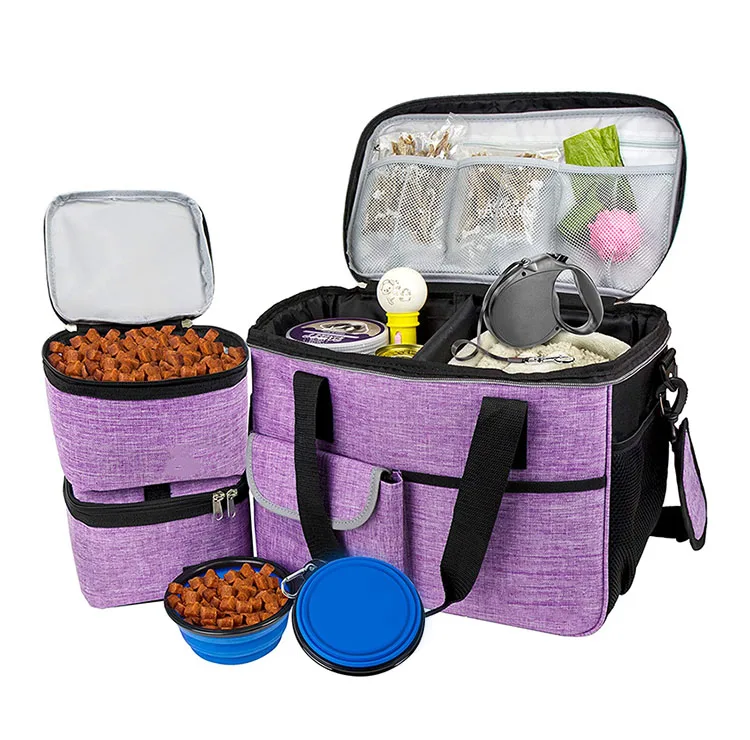
Variable radius: patterning a true ellipse
Patterning an oval starts with the axes and ends with notching. The process is not difficult, but it is unforgiving of shortcuts, and the four steps below are what make the difference between a shape that holds and one that drifts.
Step one is axis definition. Choose the major and minor axes from the interior requirement, not the exterior - an oval loses more to panel build at the ends than a rectangle does, because the curvature consumes material. A medium with a 42 x 28 cm interior typically finishes at about 46 x 34 cm exterior.
Step two is panel division. Split the body into an even number of panels arranged symmetrically about both axes, so that the pattern pieces mirror rather than repeat. Six panels gives a smooth silhouette; four gives a softer, more hand-made look with more pronounced curvature change at each seam.
Step three is arc generation. Each seam is a segment of the ellipse, and its curvature is derived from the local radius at that position. The pattern is drawn from the same ellipse the base is cut from, so the two cannot disagree - which is why the base board and the body panels must be generated together rather than independently.
Step four is notching. Marks every 60-80 mm along each seam, mirrored exactly on the mating panel, give the operator a reference for easing. Without them, easing is estimated and the silhouette varies across the run.
Seam allowance on a variable-radius seam should be narrower than on a straight seam - 8-10 mm - and the seam should be notched or bound. A 15 mm allowance on a tight radius will pucker regardless of operator skill, because there is simply too much material to absorb.
Reinforcement is advisable along the major axis, where tension is highest. A 12 mm tape laid into the seam at the two ends of the ellipse stops the shape elongating under load, which is the most common way an oval becomes a rounded rectangle in service.
Finally, verify on a sewn sample rather than on paper. Draw a true ellipse on the floor, stand the sample on it, and compare the footprint - a 4 mm deviation at any point is visible on a shelf.
Base, structure and standing an oval up
An oval has no flat face, no symmetry of revolution and no straight edges, so standing performance is entirely dependent on the base assembly. This is where oval programmes succeed or fail commercially, because an oval that leans looks broken.
Three base constructions are used. A slip-pocket board gives a foldable, packable unit that holds its outline reasonably well. A tape ring - a folded webbing ring shaped to the ellipse and capturing the body panels - holds the shape firmly and is the standard choice. A moulded elliptical ring gives the crispest result and the best wear resistance, at the highest tooling cost.
Concentricity is measured against both axes, not one. The board, the ring and the body must share the same centre within 3 mm on the major axis and 2 mm on the minor, because the eye is more sensitive to asymmetry along the shorter axis where curvature is tightest.
Board stiffness should be specified against the span. An oval base is effectively a beam across the major axis, and a 5-6 mm laminated board with a cross-grain layer is the minimum for a 46 cm major axis. Below that, the base dishes inward and the unit rocks.
Non-slip treatment matters more here than on a rectangle. An oval has a smaller effective contact patch and will rotate on a smooth shelf; silicone dots or a printed grip pattern prevent both the rotation and the base abrasion that follows it.
Stacking is limited to two high with a moulded ring, and the top of the unit should be specified with a shallow recess so the upper unit registers rather than slides. Oval ranges are better merchandised in a horizontal run than in a tower.
Wear follows the ends. The two extremes of the major axis are what contact the ground when the unit is set down, so a wear patch or a heavier-denier band at both ends is worth specifying - and it doubles as a design detail if executed in a contrast colour.
Structural verification aligned with ASTM mechanical test methods is worth commissioning where the programme makes a durability claim.
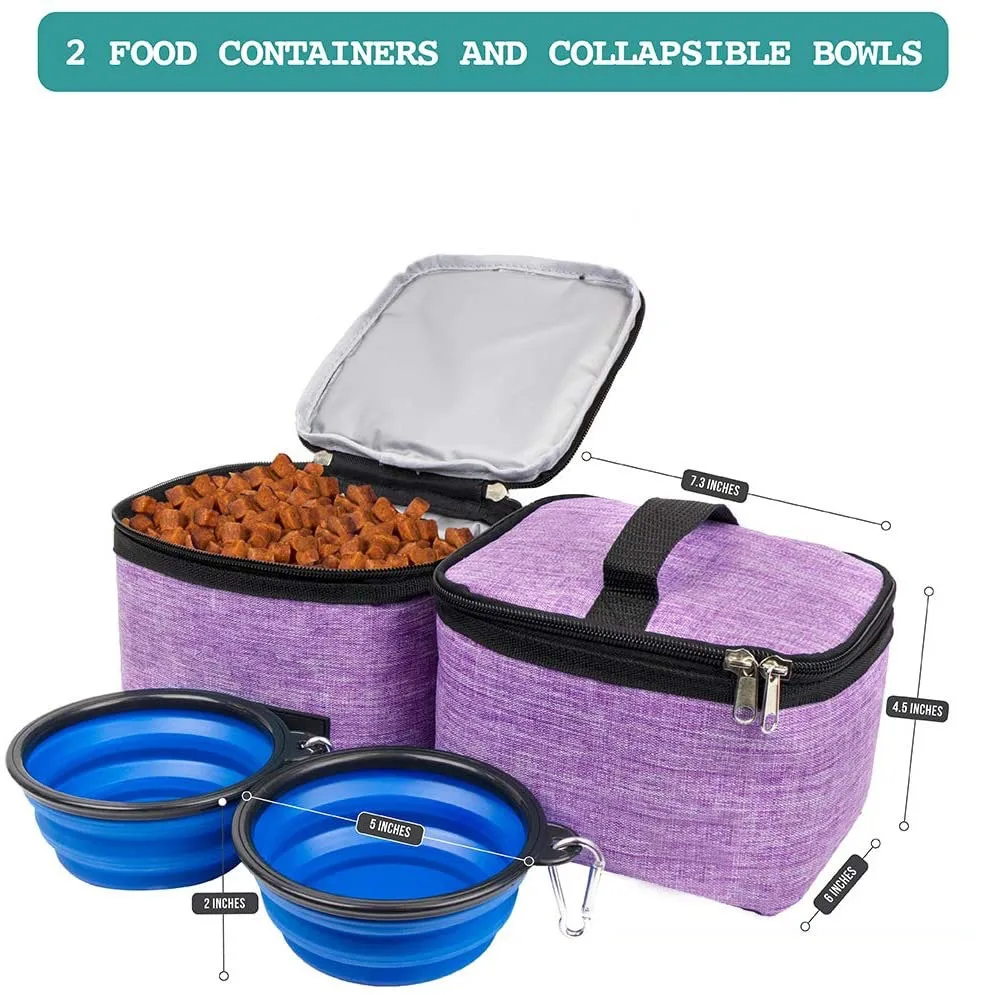
Ergonomics: why the curve matters when carried
The most underrated property of an oval is how it carries. A rectangular box presses a flat edge into the wearer's hip or torso; an oval presents a continuously curving surface that distributes contact, and the difference is noticeable within a minute of walking.
The mechanism is contact area. A flat panel of 30 cm contacts the body along a line, concentrating pressure; a curved panel of the same width contacts along an arc, spreading it. For a product carrying 5-8 kg, that change is the difference between a carrier that is tolerated and one that is comfortable.
Strap placement should exploit the geometry. Attachment points positioned at roughly one third and two thirds along the major axis, rather than at the extremes, let the unit sit closer to the body and reduce the pendulum effect that makes loaded carriers swing.
Handle design follows the same logic. A handle that spans the minor axis, across the narrower dimension, gives a more natural grip and keeps the load centred; a handle along the major axis makes the unit feel longer than it is.
Interior ergonomics matter too. An oval interior has no corners, which is where pets brace themselves in a rectangular carrier. The compensating detail is a slightly dished floor - 8-12 mm - which gives the animal a natural resting position and stops it sliding toward the ends.
Weight distribution should be checked with the product loaded, not empty. An oval with a heavy baseboard and a stiff ring can feel bottom-heavy in a way a rectangle of identical mass does not, because the mass is concentrated over a smaller footprint.
Where the programme is shoulder-carried, a curved back panel that matches the body's own contour is worth specifying; it is a small pattern addition and a substantial comfort improvement, and it is one of the few ergonomic claims a customer can feel immediately.
Oval variants: tooling, cost and yield
Oval programmes sit between boxes and cylinders on cost, and the reason is instructive: an oval uses fewer pattern pieces than a six-panel cylinder but has a lower marker yield, because elliptical panels do not nest as efficiently as rectangular ones and not as predictably as identical radial ones.
| Oval variant | Axes | Panel build | Tooling / jigs | Unit cost index | MOQ | Sampling |
|---|---|---|---|---|---|---|
| Soft oval, slip board | 44 x 32 cm | 4 panels, bound seams | USD 300-550 | 114 | 500 | 6-10 working days |
| Standard oval, tape ring | 46 x 34 cm | 6 panels, taped major axis | USD 500-900 | 120 | 500 | 6-10 working days |
| Premium oval, moulded ring | 48 x 36 cm | 6 panels, leather trim | USD 900-1,600 | 126 | 800 | 8-10 working days |
| Obround approximation | 46 x 32 cm | 2 radii plus straights | USD 200-400 | 108 | 500 | 6-10 working days |
| Standard rectangle (baseline) | 45 x 30 cm | Conventional gusset | Existing dies | 100 | 500 | 6-10 working days |
The obround row deserves comment. It is the cheapest curved option and it sews like a rectangle, which makes it attractive for a first curved SKU. It reads as a rounded rectangle rather than as a true oval, so it should be presented as a soft-rectangle variant rather than sold as an ellipse.
Marker yield on true ovals runs 74-82 percent, against 85-90 percent for rectangles. On a medium unit that is roughly 150-260 g of additional cover fabric, and unlike tooling it does not amortise - which is why oval programmes should be priced on material plus labour rather than on a simple index uplift.
Labour is the second component and it does improve. Variable-radius seams run 20-35 percent slower than straight seams at the start of a run; by the second season, with a jig and an experienced operator, the difference narrows to 10-15 percent.
The moulded ring is worth its cost only where the product is displayed assembled in-store or must survive repeated handling in distribution. For direct-to-consumer programmes, the tape ring delivers almost the same appearance and folds better.
One planning note: because oval panels differ from one another, a size ladder on an oval requires a full set of pattern pieces per size. Extending an oval range costs more than extending a rectangular one, and should be planned as a deliberate investment rather than as a scaling exercise.
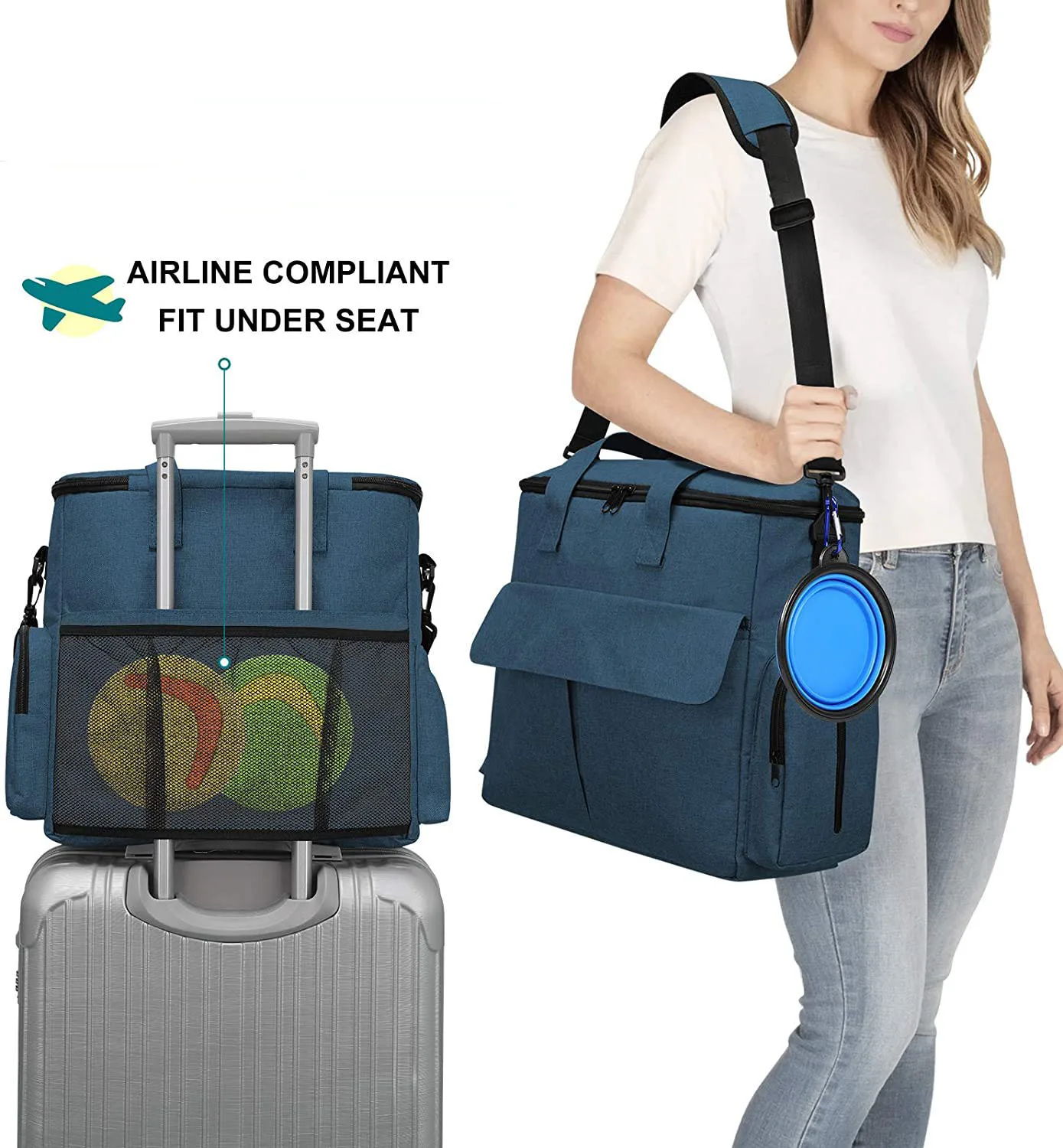
Branding a compound curve
An oval presents the hardest branding surface in the category after a sphere, because the curvature changes across every panel. A mark placed near the major axis sits on a shallow curve; the same mark placed toward the end sits on a tight one, and the two will not look like the same artwork.
The first discipline is placement. Keep primary marks within the central 40-50 percent of the panel width, where curvature is lowest and distortion is least. Marks near a seam will be foreshortened unevenly and will read as misaligned even when they are geometrically correct.
The second discipline is pre-distortion, and it is more demanding here than on a cylinder. Because the radius varies, artwork cannot be corrected with a single scale factor; it has to be mapped onto the actual panel shape. The practical method is to proof on a sewn panel and iterate once, which costs a sample round and saves a print run.
Method choice narrows on a compound curve. Screen print is viable on the shallow central area only. Heat transfers and thin silicone patches tolerate the curvature better and are the safe default. Embroidery behaves well in the panel centre and badly near the tight end radius, where the hoop cannot hold the fabric without distorting the arc.
Woven labels and tapes are again the exception that works anywhere, because they follow the surface. On an oval, a vertical woven tape set into a seam at the major axis is both a structural reinforcement and the most elegant brand device available - and it costs cents.
Colour control should be tighter on an oval than a rectangle, because the shading gradient across the surface amplifies any dye variation. Confirming the lab dip under the lighting the retail audit uses, against a reference from Pantone, prevents a rejection at goods-in.
Finally, consider a three-position strategy for premium oval ranges: a woven tape in the seam, a small debossed or embroidered mark in the panel centre, and a printed lining. Three quiet marks read as craft; one large mark on a curved surface reads as a compromise.
Fastness on the printed area should be confirmed against the methods published by AATCC before bulk.
Sampling and inspection for oval builds
Oval programmes need a geometry round, a structure round and a decoration round, in that order, because each depends on the previous one. Compressing the sequence is the most common cause of a failed oval launch.
Round one is geometry: panels, base ring, no decoration, produced in 6-10 working days. Judge it by standing it on a drawn ellipse, sighting along the seams for radius continuity, and checking that the two halves mirror. Fix the pattern here, not later.
Round two is structure: load it to rated capacity, leave it overnight, and check that the major axis has not elongated and the base has not dished. This is the round where the tape reinforcement along the major axis and the board specification get decided.
Round three is decoration, with artwork proofed on a sewn panel rather than on a flat swatch. This is non-negotiable on an oval: artwork approved flat will look wrong assembled, and by then the print plates or the embroidery file are already paid for.
Round four is the pre-production sample from bulk materials, sent for testing. Restricted-substance screening plus mechanical checks from a laboratory such as SGS, issued against the written specification, cover what a retail technical file will ask for.
On the line, five gates are specific to ovals: radius continuity along the seam, base concentricity within 3 mm on the major axis, left-right mirroring of the two halves, notching accuracy on the mating panels, and print placement within the central zone.
These are inspected to AQL 2.5 alongside the standard appearance criteria, and they are the defects that decide whether the product reads as an oval or as a lopsided bag.
Packing is the last check. Ovals do not nest, and an elliptical footprint wastes corner space in a rectangular carton, so cartons should be dimensioned to the actual footprint plus protective void fill rather than to a nominal size.
Order and quality terms
- MOQ 500 pieces per colourway; samples in 6-10 working days
- Bulk production 35-50 days after approval; AQL 2.5 inspection standard
- T/T 30/70 terms, FOB Xiamen, full document set per shipment
People Also Ask
Are oval carriers more comfortable to carry?
Yes, noticeably. A curved panel contacts the body along an arc instead of along a line, which spreads pressure and reduces the digging effect a rectangular edge produces at 5-8 kg.
Where should straps attach on an oval body?
At roughly one third and two thirds along the major axis rather than at the extremes. That pulls the unit closer to the body and reduces the pendulum swing.
What interior detail suits an oval?
A slightly dished floor of 8-12 mm. An oval has no corners for a pet to brace against, so the dish creates a natural resting position and stops sliding toward the ends.
Do oval shapes suit premium branding?
Strongly. Varying curvature reads as organic rather than playful, which supports leather trim, undyed canvas, brushed hardware and tonal embroidery.
Why does my oval sample look lopsided?
Usually left-right mirroring or base concentricity. Check that the two halves mirror across the minor axis and that the board, ring and body share one centre within 3 mm.
How much extra fabric does an oval use?
Roughly 150-260 g more cover fabric per medium unit, because marker yield falls to 74-82 percent against 85-90 percent for rectangular panels.
Frequently Asked Questions
How is an oval different from a round carrier?
A circle has one constant radius; an ellipse has a radius that changes continuously from major to minor axis. That means non-identical panels, variable-radius seams and a base that must be generated with the body rather than separately.
What axis ratio should an oval carrier use?
Major to minor axis of about 1.35 to 1.55. Outside that band the shape reads as a rounded rectangle or as a stretched circle rather than as a deliberate ellipse.
Why are oval panels not identical?
Panels near the major axis are broad and shallow; panels near the minor axis are narrow and deep. Four or six different pattern pieces are required, matched to position with balance marks.
What is the MOQ for an oval programme?
MOQ 500 units per colourway for soft and tape-ring builds. A moulded elliptical base ring moves the figure to 800 units because the tool needs a larger run to amortise.
How long does sampling take?
Each round takes 6-10 working days, with moulded-ring variants at 8-10 working days. Oval programmes need three to four rounds because geometry, structure and decoration depend on one another.
What seam allowance suits a variable-radius seam?
8-10 mm, notched or bound. A 15 mm allowance will pucker on a tight radius regardless of operator skill, because there is too much material to absorb.
How do you stop an oval elongating under load?
Lay a 12 mm tape into the seam along the two ends of the major axis, where tension is highest, and specify a 5-6 mm cross-grain laminated baseboard.
Is an obround shape acceptable as an oval?
It is a legitimate product - two radii joined by straight sections - but it reads as a rounded rectangle. It should be specified and sold as a soft rectangle rather than as a true oval.
Where should branding go on an oval panel?
Within the central 40-50 percent of panel width, where curvature is lowest. Marks near a seam are foreshortened unevenly and read as misaligned.
Which branding methods survive a compound curve?
Heat transfers, thin silicone patches and woven tapes. Screen print is viable in the shallow central area only, and embroidery should avoid the tight end radius.
How is an oval run inspected?
Five specific gates: radius continuity, base concentricity within 3 mm, left-right mirroring, notching accuracy and print placement within the central zone, all to AQL 2.5.
Do oval carriers nest or stack?
They do not nest, because the footprint is rigid. They stack two high with a moulded ring and a recessed top; horizontal runs suit the shape better in retail.
Does extending an oval range cost more than a rectangular one?
Yes. Because panels differ from each other, each size needs a full set of pattern pieces, so a size ladder on an oval is a deliberate investment rather than a scaling exercise.
Talk to QUANZHOU JUNYUAN BAGS about a pet carrier program: MOQ 500 pieces per colourway, samples in 6-10 working days, bulk production in 35-50 days under AQL 2.5 inspection.
Get a free quote Request a sample