Rectangle Pet Carrier: Standard Format Guide
A rectangle pet carrier in the standard format is a shell built at roughly 1.4-1.6 times length to width, typically 45 x 30 x 32 cm for a medium. It is the cheapest shape to develop because existing dies and patterns already exist, giving a unit cost index of 100 and the fastest route to bulk in 35-50 days.
The standard rectangle is not the boring option; it is the platform option. It exists because that proportion fits an animal's body, a car footwell, a shelf bay and a cutting marker better than any alternative, and because it lets a brand spend its development budget on fabric, colour, hardware and print rather than on geometry. The discipline is to treat it as the base of a range and to earn differentiation from everything except the shape.
- Sampling: structural samples in 6-10 working days using existing patterns, with changes limited to fabric, trim and branding.
- Minimums: MOQ 500 units per colourway, the lowest entry point in the category.
- Schedule: bulk production runs 35-50 days after sample approval, with no tooling lead time on standard patterns.
- Quality: seam alignment, baseboard fit and print registration are inspected to AQL 2.5.
- Terms: T/T 30/70, FOB Xiamen, with cartons already proven for the standard footprint.
- Planning note: standard patterns let a brand test a market before committing to shape tooling, and let the profit from that first season fund the shape-led SKUs that give the range its face.
- Positioning note: because the outline is familiar, fabric, colour, hardware and edge finish carry the entire impression, so specify those first.
Custom pet bag orders are quoted by unit and by filled container, because carton cubage decides the landed cost more often than the fabric does.
Why the rectangle is the default
The standard rectangle is an equilibrium, not a convention nobody questioned. Four constraints converge on it. An animal lying down occupies a longer-than-wide footprint. A car footwell, a shelf bay and a shipping carton are all longer than they are deep. A cutting marker wastes least fabric when panels are rectangular. And a sewn gusset on a rectangular shell is the simplest structural operation in soft goods.
Any one of those could be overridden; all four together is why the proportion persists. When a brief genuinely changes one constraint - an airline under-seat envelope, a shallow boutique shelf - then a non-standard shape is justified. When a brief changes none of them, the rectangle is the correct answer and deviating from it costs money for no return.
The second reason is economic. Standard patterns exist. Dies, markers, sewing jigs, carton dimensions and packing plans are all already proven, which removes tooling cost, removes a sampling round, and removes the risk that a new shape behaves unexpectedly in bulk. For a brand launching its first private label range, that risk removal is worth more than the differentiation a new shape would buy.
The third reason is comparability. Retailers and shoppers evaluate a carrier against a mental template, and the template is rectangular. A product that matches it is easier to assess, easier to compare on dimensions and easier to slot into a planogram - which means less friction in the buying meeting.
None of this makes the rectangle generic. Two carriers of identical proportion can look entirely different, because what the eye reads is fabric, colour, hardware, edge treatment and print - not the outline. That is the opportunity the standard format offers: all of the differentiation budget spent on surfaces instead of on geometry.
The failure mode is the opposite error: treating the standard shape as a commodity and competing on price. A standard rectangle made well, in a good fabric with considered trim, outsells a novelty shape made to a price, because the customer is buying a bag that will last rather than a silhouette.
The strategic reading is simple. Use the standard format to establish volume, then use the profit from it to fund one or two shape-led SKUs that give the range a face.
Proportion: the numbers behind a standard rectangle
Standard does not mean arbitrary. The conventional medium sits at roughly 45 x 30 x 32 cm - a length-to-width ratio of 1.5, and a height close to the width. Those two relationships are what make the shape read as balanced rather than as a random box.
The 1.4-1.6 length-to-width band is the useful operating range. Below 1.3 the shape reads as square and starts to look like a box rather than a carrier; above 1.7 it reads as a long bag and starts to look like luggage. Staying inside the band keeps the product in the category visually, which matters more than it sounds.
Height relative to width is the second relationship. A height between 0.9 and 1.2 times the width gives a shape that stands well and looks substantial. Taller than 1.3 times the width, the unit becomes top-heavy and tips; shorter than 0.8, it reads flat and the interior loses usable headroom.
Ratio should be held across a size ladder. If a small is 1.5 and a large is 1.35, the two look like different products from different ranges. Fixing the ratio at 1.5 across all sizes, and scaling only the absolute dimensions, produces a family that reads as designed - and it means one set of proportional rules governs every future addition.
Interior dimensions are the numbers that actually matter, and they should be derived rather than approximated. Subtract the panel build - typically 15-25 mm per side for laminated panels - from each exterior dimension, and publish the result. A medium with 45 x 30 cm exterior and 3 mm foam lamination gives roughly 41 x 26 cm of usable floor.
Corner radius is the detail that changes perception without changing proportion. A 20-30 mm radius softens a rectangle enough to look considered while keeping it clearly rectangular; a zero radius looks unfinished; a 60 mm radius turns it into an oval.
Dimensional discipline also protects the brand commercially. Once published interior dimensions are on the product and the website, they become a claim - and a claim that survives a customer's tape measure is worth more than any marketing sentence.
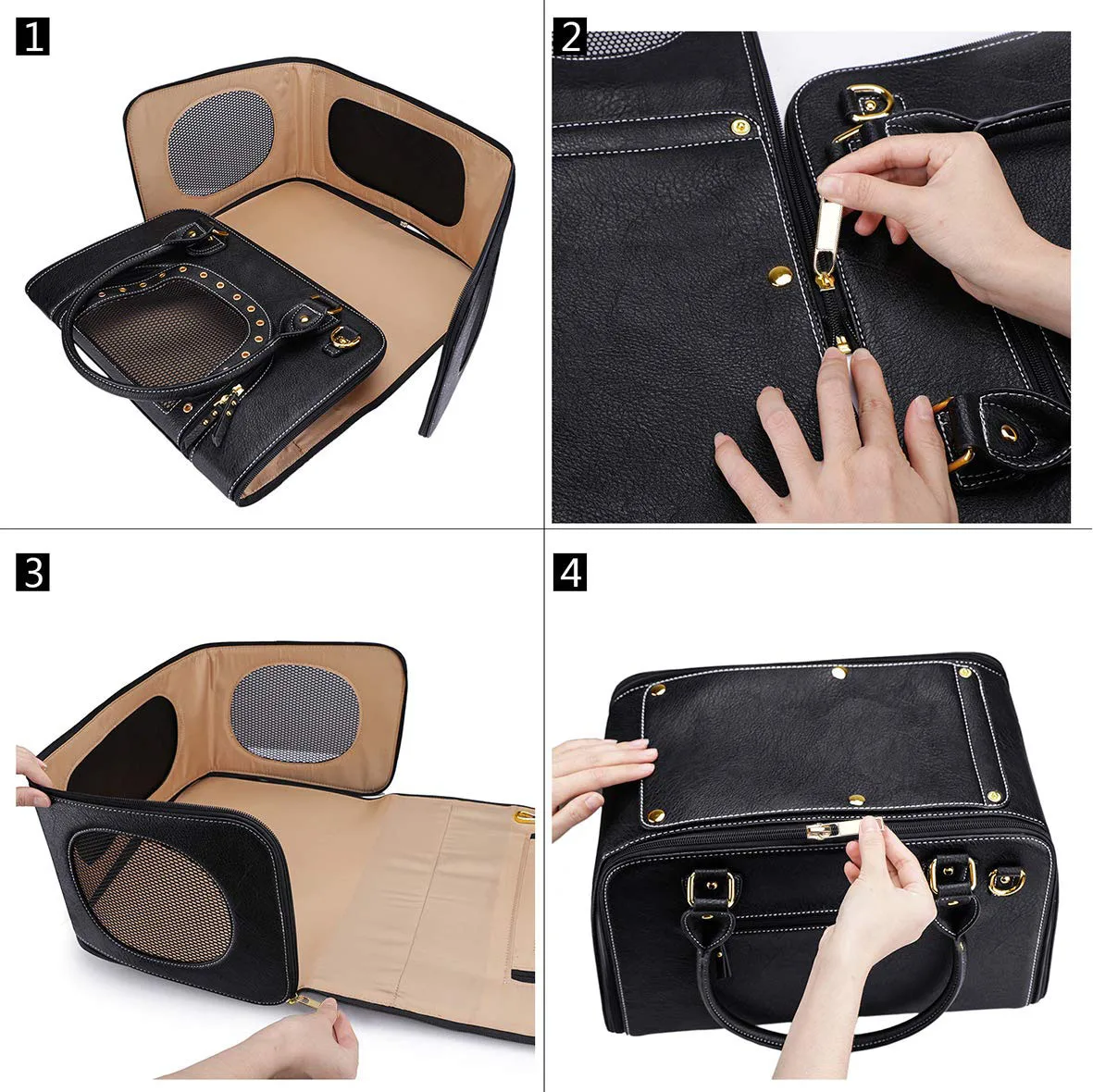
The rectangle as a platform, not a product
The most valuable way to think about a standard rectangle is as a platform that carries variants. One proven pattern supports a size ladder, a colour architecture, a trim hierarchy and a series of limited editions - and every one of those variants generates revenue without new tooling.
Size ladder first. Small at 40 x 27 x 28 cm, medium at 45 x 30 x 32 cm, large at 52 x 35 x 36 cm, all held at the 1.5 ratio. Because only dimensions change, the second and third sizes cost nothing in development and share the same construction specification, the same hardware and the same carton logic.
Colour architecture second. A platform supports a three-tier structure: a permanent core in two neutrals, a seasonal accent that rotates twice a year, and a limited colour that runs for one season only. Because the shape does not change, a limited colour is a low-risk experiment - the inventory is sellable in the core programme if the experiment underperforms.
Trim hierarchy third. The same shell in a standard polyester with basic hardware becomes an opening price point; the same shell in a coated canvas with metal hardware and a printed lining becomes the premium tier. Two price tiers, one pattern, one production line - which is the most efficient way to build a good-better-best structure.
Limited editions are the fourth layer. Collaborations, artist prints, retail exclusives and event colourways all sit on the platform, and because the base product is proven they can be developed in weeks rather than months. This is where a brand creates news without taking product risk.
The platform also de-risks forecasting. Because all variants share components, fabric and trim can be bought against total programme volume rather than per SKU, which reduces both minimum-buy exposure and obsolescence.
And it de-risks quality. A pattern that has run five times has had its failure modes found and fixed; a new shape has not. Platform products have measurably fewer bulk issues, and that shows up in margin rather than in the development budget.
Where the standard shape stops working
The rectangle is not universal, and knowing where it fails is what makes a range plan credible. Four situations justify moving off the standard format, and in each case the move should be to a specific alternative rather than to a generic 'different' shape.
The first is a height constraint. Under-seat clearance, shallow shelving and stack-and-nest retail all punish a 32 cm height. The correct response is a low-profile flat build at 20-26 cm, which trades headroom for floor area and clearance - the approach set out in our flat low-profile format.
The second is a width constraint. Narrow aisles, turnstiles and crowded urban transit punish a 30 cm depth. The answer is a slim narrow-fit shell at 18-24 cm, which recovers volume through length.
The third is a capacity requirement. Long journeys and large breeds need volume that a standard shell cannot give without becoming unwieldy. The answer is a deep body at 34-42 cm or an expandable gusset, rather than simply scaling the standard pattern up until it stops fitting a car.
The fourth is positioning. If the brand's entire proposition is warmth, playfulness or giftability, a rectangle works against it, and a curved silhouette - oval or round - will carry the message that the rectangle cannot. This is a positioning decision and should be made on brand grounds, not on manufacturing convenience.
What does not justify a shape change is the desire to look different. Differentiation achieved through shape is expensive, slow and risky; differentiation achieved through material, colour and trim is cheaper, faster and reversible.
The practical rule: change shape when a dimension constraint or a positioning requirement demands it, and change surfaces when the goal is simply to stand out.
When a range does move off standard, keep the standard rectangle in the line. It anchors the price ladder and gives the non-standard SKUs something to be compared against, which makes them look like choices rather than indulgences.
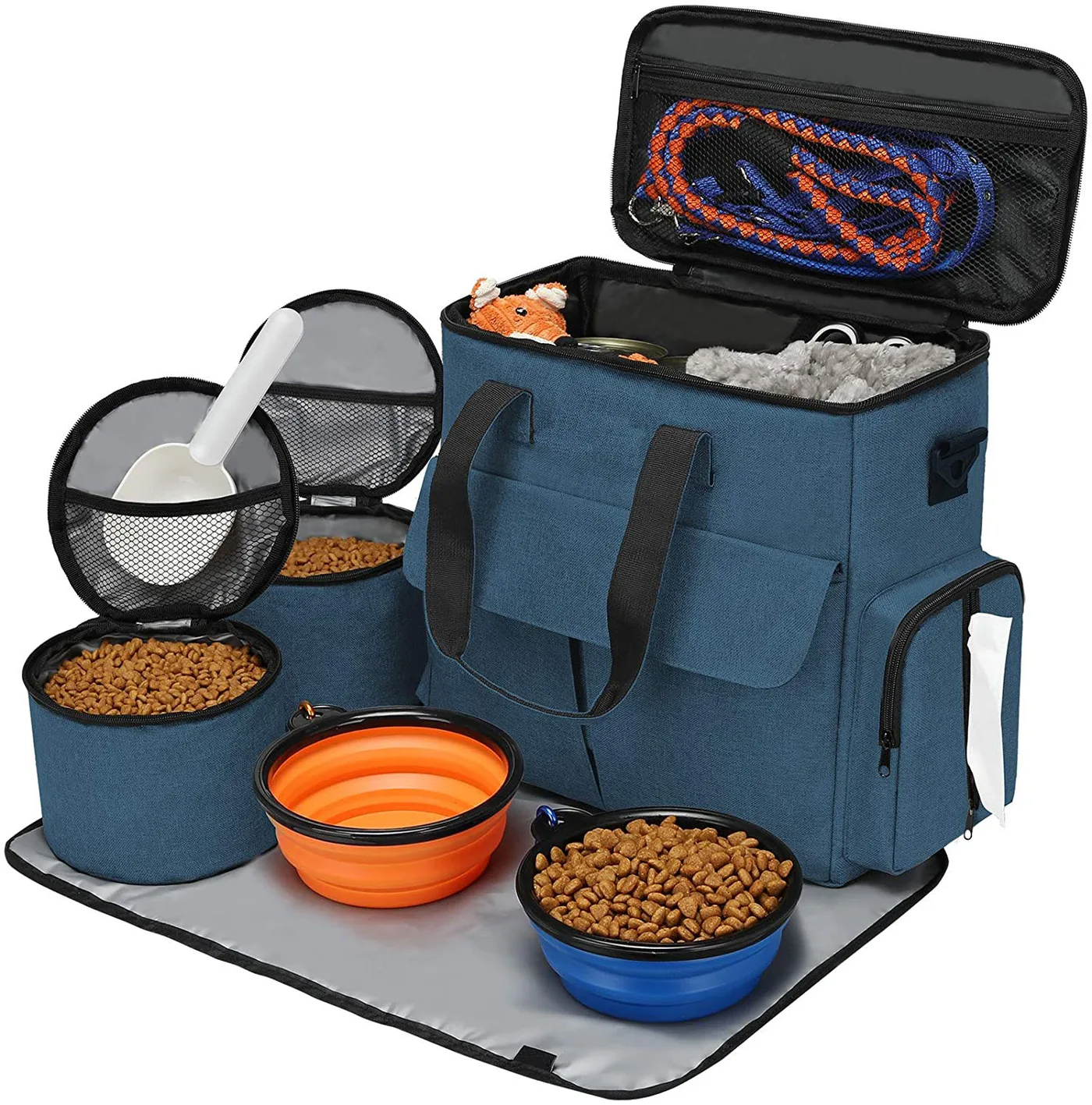
Cost structure of the standard format
The standard rectangle is the cost baseline for the category, and understanding what makes it cheap is the fastest way to understand what makes other shapes expensive. The table sets out the comparison on a private label basis quoted FOB Xiamen, with the standard rectangle at index 100.
| Format | Typical medium size | Tooling | Marker yield | Unit cost index | MOQ | Sampling |
|---|---|---|---|---|---|---|
| Rectangle (standard) | 45 x 30 x 32 cm | Existing dies | 85-90% | 100 | 500 | 6-10 working days |
| Square box | 40 x 40 x 34 cm | USD 200-400 | 83-88% | 106 | 500 | 6-10 working days |
| Slim narrow fit | 48 x 20 x 30 cm | USD 250-450 | 80-86% | 108 | 500 | 6-10 working days |
| Flat low profile | 48 x 32 x 22 cm | USD 200-400 | 84-89% | 102 | 500 | 6-10 working days |
| Round cylinder | 38 cm diameter | USD 550-950 | 72-80% | 124 | 500 | 6-10 working days |
Three lines explain most of the gap. Tooling is zero on standard patterns. Marker yield is highest on rectangular panels. And sewing operations on straight seams with a conventional gusset are the fastest in the category, typically 25-40 percent quicker than curved-seam work.
Material is the one line where the standard shape has no advantage, and that is worth stating plainly: a rectangle uses about the same fabric as a square of equivalent volume and slightly more than a well-nested curved pattern. The saving is entirely in labour, tooling and risk.
Where the standard format saves most is in the hidden costs. Carton dimensions are already proven, packing density is known, freight is predictable, and the first bulk run is unlikely to reveal a geometry problem. For a brand working to a launch date, those are worth more than the unit price difference.
The counter-argument is margin. Because the standard shape is the baseline, it also sets the price expectation, and a standard rectangle rarely supports a premium above 10-15 percent over the category norm regardless of how well it is made. Premium positioning needs a shape story, a material story or a brand story - preferably all three.
Material and trim decisions on a standard shell
When the shape is fixed, material carries the entire product. That is the real consequence of choosing a standard rectangle: every impression the product makes is made by fabric, colour, hardware and edge finish, and none of them is forgiven.
Cover fabric is the first decision and the one customers judge by touch within seconds. A 600D polyester with a PU coating is the workhorse - durable, colourfast, stable and inexpensive. A 900D or 1680D construction adds substance and a more technical reading. A coated canvas at 12-16 oz reads as lifestyle and premium, at the cost of higher variance between rolls and a small weight penalty.
Lamination is what turns fabric into structure. A 2 mm foam bond gives a soft-but-shaped body, 3-4 mm gives a firm panel, and a slip-pocket board gives the flattest surface and the option to fold. On a standard rectangle, which has no shape story to tell, lamination quality is what separates a good product from a mediocre one, and it is the specification most often value-engineered away.
Hardware is the cheapest upgrade in the category. Moving from basic plastic sliders to branded metal sliders, from a plain webbing pull to a moulded pull, or from a steel ring to a matte anodised ring costs between USD 0.40 and 1.60 per unit and changes how the product is perceived more than most design work does. Hardware is touched, and touched things are judged.
Edge and seam treatment is where quality is read subconsciously. Bound internal seams, turned corners and consistent stitch density all register as care, even when a customer could not name what they noticed. On a standard shape there is nothing else to notice.
Compliance is not optional. Restricted-substance screening across fabric, foam, lining, zip tape and inks should be part of every programme, and a report from a recognised laboratory such as SGS is what most retail buyers will ask to see before approval.
Abrasion and fastness should be specified rather than assumed, with reference to the methods published by AATCC. On a rectangular shell the lower gusset and the base corners are the wear points, and they are the areas a returned product will show first.
Finally, the lining. On a standard shape the interior is the last unexploited surface: a pale lining makes the interior read larger, a printed lining adds private-label character for pennies, and a removable padded insert turns maintenance into a feature.
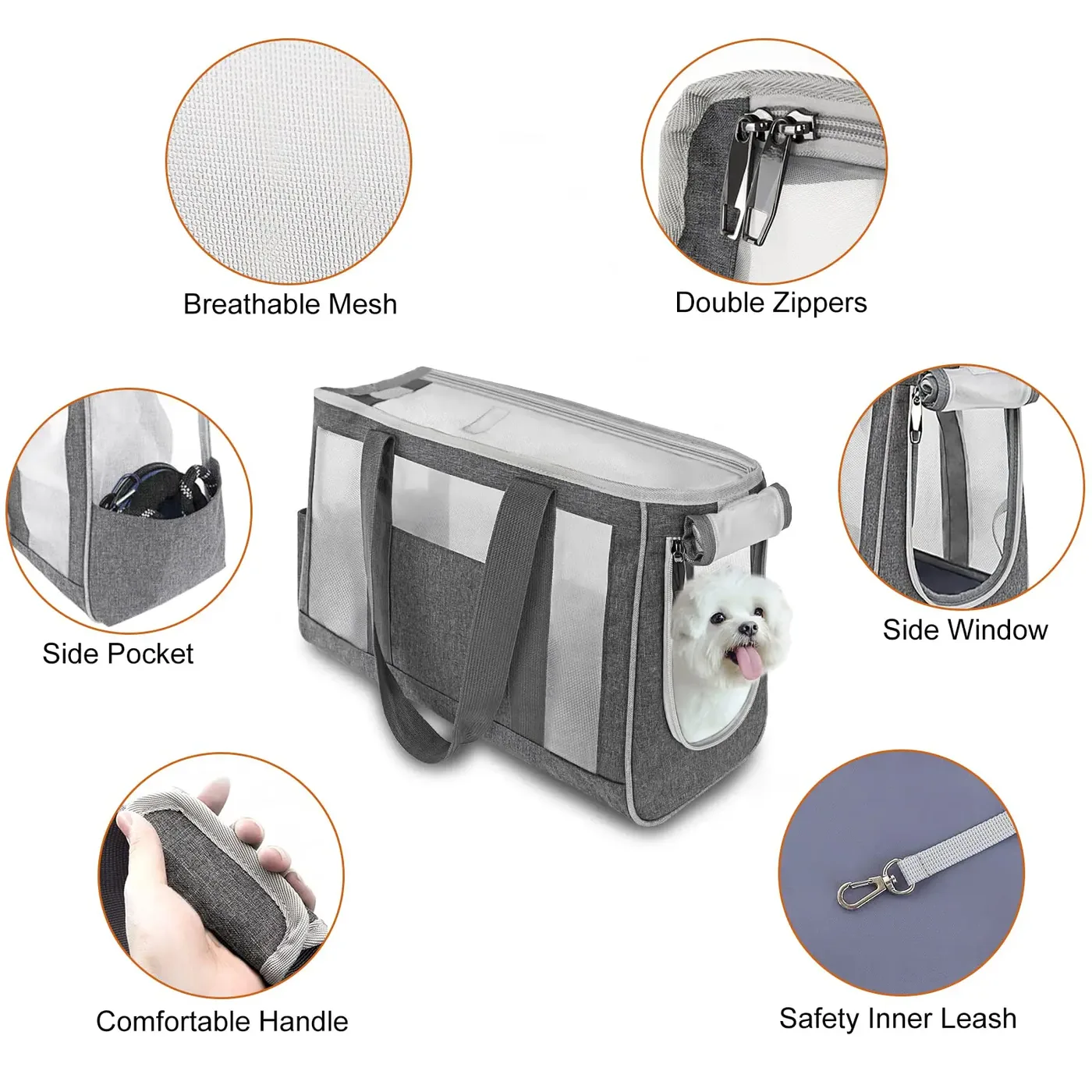
Branding the standard: differentiation without retooling
A standard rectangle has to be branded harder than a distinctive shape, because it has no silhouette to be recognised by. The compensation is that it has the largest, flattest, most predictable branding surface available, which makes almost every method viable.
Composition first. A rectangular front panel of 45 x 32 cm supports a proper layout: a primary mark in the upper third, a secondary descriptor centred below, and a small woven label at the lower edge. That three-part hierarchy reads as designed rather than as a logo slapped on a bag, and it can be applied identically across the size ladder.
Method selection should follow the price tier. Screen print for opening price points; heat transfer or silicone patch for mid tier where gradient and detail matter; embroidery for premium tier where texture and permanence are the message. Embroidery on a laminated panel needs a stabiliser behind it, or the foam compresses and leaves a ring around the mark.
Colour is the strongest differentiator available without tooling. A two-tone treatment - body in a core neutral, front panel or gusset in a seasonal accent - creates a recognisable identity that can be recoloured every season against a Pantone reference. Confirming against a standard from Pantone with a stated tolerance keeps the identity stable across reorders.
Print placement on a rectangular panel should align to the geometry. Marks parallel to the panel edges, with margins of 8-12 percent of panel width, read as deliberate; anything rotated or inconsistently placed reads as an error, and on a plain rectangle there is nothing to distract from it.
Secondary surfaces multiply the brand cheaply. Zip pull tabs, webbing jacquard, lining print, carton print and hangtag all carry the mark for very little money, and together they create the impression of a completely branded product rather than a printed one.
One caution on consistency. Because the standard shape is used across tiers and seasons, artwork placement must be documented as coordinates on the panel rather than as a description, or the same mark will drift between runs and the range will look inconsistent on a shelf.
Where a brand wants a flagship, the answer is not a new shape but a limited-edition treatment: a special colourway, a printed lining, a numbered woven label and a printed carton. All four are cheap, all four are reversible, and together they read as an event.
Sampling, approval and repeat-season discipline
Standard-format programmes usually need two sample rounds rather than three, because the pattern is proven. Round one is a materials and construction sample in the intended fabric, lamination and hardware, produced in 6-10 working days. It exists to confirm hand-feel, stiffness, colour and trim quality rather than geometry.
Round two is the decorated pre-production sample from bulk materials, with final print placement and final packaging. Because the shape is known, this round can be compressed, and many programmes approve from it directly - which is why the standard format is the fastest route from brief to bulk in the category.
Even so, three checks should not be skipped. Load the sample to rated capacity and stand it on a flat surface for an hour. Open and close every zip twenty times. And pack the unit into its carton and drop the carton once from 30 cm. These three take under an hour and catch most bulk problems.
Testing should be proportionate. Restricted-substance screening is mandatory for export. Mechanical checks aligned with ASTM mechanical test methods are worth having where a load or durability claim is made, and they are cheap to add to a report that is already being commissioned.
Bulk inspection for standard shapes focuses on the surfaces rather than the geometry: seam alignment, baseboard fit, print registration against the documented coordinates, stitch density consistency and hardware finish. These are inspected to AQL 2.5 alongside standard appearance criteria.
Repeat seasons are where the platform pays. Holding one written specification - fabric reference, lamination build, hardware code, Pantone reference, print coordinates, carton specification - means the second run matches the first, and the range stays coherent for years rather than drifting season by season.
That document is the real asset of a standard-format programme. A brand that owns its specification can move production, reorder at will and extend the range without re-learning anything, which is worth more than any single shape advantage.
Production capability
- SGS-verified production space of 4,950 m², 149 machines, 7 assembly lines
- Pet carrier and pet bag output since 2014 from a 137-person team
- 200,000 units shipped monthly under BSCI and ISO 9001 systems
People Also Ask
Is a rectangular carrier the best all-round shape?
For most programmes, yes. It fits an animal's body, a car footwell, a shelf bay and a cutting marker better than any alternative, and it lets the budget go into fabric and trim instead of geometry.
What corner radius suits a rectangular carrier?
20-30 mm. It softens the shape enough to look considered while staying clearly rectangular; a zero radius looks unfinished and 60 mm turns the shape into an oval.
How tall should a carrier be relative to its width?
Between 0.9 and 1.2 times the width. Taller than 1.3 the unit becomes top-heavy and tips; shorter than 0.8 it looks flat and loses usable headroom.
Can a standard carrier fit under an airline seat?
A 32 cm height usually does not. Air-travel programmes should specify a low-profile variant at 20-22 cm and confirm the specific airline's cabin policy.
What is the cheapest way to make a standard bag look premium?
Hardware and edge treatment. Branded metal sliders and bound internal seams change perceived quality more than most design work, at under USD 2 per unit.
How do I keep reorders consistent across seasons?
Hold one written specification covering fabric reference, lamination build, hardware code, Pantone reference, print coordinates and carton specification.
Frequently Asked Questions
What size is a standard rectangular pet carrier?
A medium is typically 45 x 30 x 32 cm, with a length-to-width ratio of about 1.5. Small runs around 40 x 27 x 28 cm and large around 52 x 35 x 36 cm at the same ratio.
Why is the standard rectangle the cheapest format?
Existing dies and proven patterns mean no tooling, the highest marker yield at 85-90 percent, and the fastest sewing operations in the category. The saving is in labour, tooling and risk rather than in material.
What length-to-width ratio should a carrier use?
Between 1.4 and 1.6. Below 1.3 it reads as a square box; above 1.7 it reads as luggage. Holding one ratio across the size ladder is what makes a range look designed.
What is the MOQ for a standard format programme?
MOQ 500 units per colourway, the lowest entry point in the category. Because no tooling is required, this is also the lowest-risk way to test a market.
How long does sampling take on a standard pattern?
6-10 working days, and usually two rounds rather than three because the geometry is already proven. Bulk production runs 35-50 days after approval.
How do I calculate interior dimensions?
Subtract the panel build from each exterior dimension - typically 15-25 mm per side for laminated panels. A 45 x 30 cm exterior with 3 mm foam gives roughly 41 x 26 cm of usable floor.
When should a brand move off the standard shape?
When a height, width or capacity constraint genuinely demands it, or when brand positioning requires a warmer silhouette. Wanting to look different is not sufficient justification.
Can one standard pattern support a size range?
Yes. Only absolute dimensions change, so small, medium and large share construction, hardware and carton logic with no additional tooling.
How do I add a premium tier without new tooling?
Change material, lamination, hardware and lining rather than geometry. Coated canvas, metal sliders, a printed lining and a bound seam finish can move a product up two price tiers.
What hardware upgrade gives the best return?
Moving from basic plastic to branded metal sliders and matte anodised rings, at USD 0.40-1.60 per unit. Hardware is touched, and touched components are judged disproportionately.
How is a standard run inspected?
Seam alignment, baseboard fit, print registration against documented coordinates, stitch density and hardware finish, inspected to AQL 2.5.
Does the standard shape support a premium price?
Rarely more than 10-15 percent over category norm, regardless of build quality. Premium positioning needs a material, colour or brand story as well.
Should the standard rectangle stay in a range that adds new shapes?
Yes. It anchors the price ladder and gives non-standard SKUs something to be compared against, which makes them read as deliberate choices.
Talk to QUANZHOU JUNYUAN BAGS about a pet carrier program: MOQ 500 pieces per colourway, samples in 6-10 working days, bulk production in 35-50 days under AQL 2.5 inspection.
Get a free quote Request a sample