Deep Pet Carrier: Extra Space Design Guide
A deep pet carrier with extra space is built to a front-to-back depth of 34-42 cm rather than the usual 30-32 cm, which lifts usable interior volume by roughly 18-32 percent at the same length. The trade-off is carton cube: expect 12-20 percent fewer units per container and a unit cost index of 104-112.
Depth is the cheapest way to add interior volume, and the most expensive way to add shipping cube - which is exactly why it needs to be decided deliberately rather than inherited from a pattern that was drawn for a different purpose. Extra depth suits brands selling generosity, utility and long-journey comfort, and it suits pets that sprawl rather than curl. What it does not suit is a price-led e-commerce programme where dimensional weight dominates the landed cost.
- Sampling: structural samples with the revised gusset and floor panel in 6-10 working days, load-tested at 60 percent of rated capacity.
- Minimums: MOQ 500 units per colourway, moving to 800 where a reinforced base frame is specified.
- Schedule: bulk production runs 35-50 days after sample approval, with tooling counted inside that window.
- Quality: gusset symmetry, base flatness and seam creep under load are inspected to AQL 2.5.
- Terms: T/T 30/70, FOB Xiamen, with carton dimensions cube-optimised and validated against the planned annual volume rather than the first shipment alone.
- Design note: publish interior dimensions before exterior ones, because the volume claim is what the depth is being bought for, and it is the one specification a shopper can verify without assistance.
A custom cat carrier is restrained by behaviour rather than by weight, so locking sliders and bound internal seams matter more than load ratings.
What extra depth buys, and what it costs
Interior volume is a product of three dimensions, and depth is the one that competitors change least. Most of the market sits at 30-32 cm front to back because that is what the legacy patterns were drawn at, not because anyone re-tested it. Pushing to 34-42 cm adds 18-32 percent usable volume at the same floor length, which is the difference between a pet turning around comfortably and a pet turning around with effort.
The gain is not linear. Beyond roughly 40 cm of depth the extra volume stops being useful, because the pet cannot reach the far end and the owner cannot see into the back of the shell. Deep designs therefore work best when paired with a wider opening and an interior tether point positioned toward the middle of the floor rather than at the far corner.
The cost side is freight. A deeper carton increases dimensional weight on air freight and reduces units per container on sea freight, typically by 12-20 percent for the same length and height. On a USD 2,000 container that is a real number, and it is why deep shapes are usually specified for programmes with a higher retail price that can absorb it.
There is also a structural cost. Depth increases the span that the gusset has to stabilise, and a longer span under the same load deflects more. In engineering terms it is a beam problem: deflection rises with the cube of span, so even a modest depth increase justifies a rethink of the gusset stack and the base.
And there is a perception cost worth naming. A very deep bag can read as bulky rather than generous, particularly in photography where depth is compressed and the silhouette looks heavy. Deep programmes photograph best three-quarter on, with one end panel angled toward the camera so the shape reads as volume rather than mass.
Depth also changes how the product behaves in a customer's home. A deep carrier stored in a hallway or a car boot occupies floor area rather than shelf area, and brands selling into apartment-dense markets should pair the deep shape with a fold-flat variant so storage does not become the objection.
Used with intent, though, depth is the clearest volume story a brand can tell, and unlike a feature claim it can be verified by the customer in one glance at a shelf.
Depth as a brand promise
Shape vocabulary is consistent across consumer categories: generous proportions signal abundance and care, tight proportions signal precision. A deep pet carrier belongs to the first family. It suits brands positioned around road trips, outdoor weekends, multi-pet households and the idea that the pet has room rather than merely space.
The promise has to be backed by specification. A brand that claims extra room and then ships a shell whose base sags inward under a 5 kg load has made a claim it cannot keep, and the failure will be photographed. Deep programmes should therefore treat structure as part of the brand asset, not as a cost to be value-engineered away in the second season.
Colour supports the message. Deep bodies carry saturated, warm and earth-toned palettes well - clay, forest, rust, deep teal - because large surfaces hold saturation without feeling loud. Pale colours on a deep body tend to read as institutional, the way hospital equipment does, which is the opposite of the intended warmth.
Naming reinforces it. Ranges built around depth do better with names that describe capacity or journey rather than cuteness, and the spec sheet should lead with interior dimensions before exterior ones. When a buyer compares two lines side by side, the one that publishes interior figures wins the argument on merit.
The risk is inconsistency across a range. If the deep shape is one SKU among five standard-depth SKUs, the brand promise fragments. Either commit to depth as a family characteristic across the core sizes, or position the deep unit explicitly as a long-journey model within the range.
Deep shapes also age well in a catalogue. Because they are less fashion-dependent than novelty silhouettes, they can stay in the line for several seasons while trim and colour rotate, which spreads the tooling investment over a longer commercial life.
Deep shapes also simplify the merchandising story for staff. A shop assistant can demonstrate generosity in one gesture by opening the mouth wide; a technical feature such as a ventilation system takes a paragraph to explain and is often skipped entirely at the point of sale.

Gusset engineering: the part that does the work
On a deep shell the gusset stops being a closing strip and becomes the primary stabiliser. It carries the span, resists the inward pull of the loaded floor, and defines whether the silhouette holds a straight line or develops a waist. Getting the gusset right is the single highest-leverage decision in a deep-body programme.
Three constructions are in common use. A single-ply gusset of cover fabric and lining is cheapest and only viable below about 34 cm. A three-ply build - outer fabric, 3-5 mm foam, lining - is the workhorse for 34-40 cm and adds roughly USD 0.40-0.80 per unit. A laminated gusset with an inserted stay is used beyond 40 cm, where the span needs help to resist bowing.
Corner geometry matters as much as material. A square-cornered gusset concentrates stress at four points and is where deep bags split. Radiusing the gusset ends by 25-40 mm spreads the load and, as a bonus, produces a softer visual transition that suits the generous brand message.
Seam allowance is the quiet failure. Deep bodies put sustained tension on the gusset-to-panel seam, and a 10 mm allowance will creep over months of use. Specifying 15 mm with a second row of stitching, or a bound seam, removes the problem for a few cents.
Finally, the gusset is a branding surface that most programmes waste. A deep gusset seen from three-quarter angle is one of the largest uninterrupted planes on the product, and a small repeated motif or a woven tape set into the gusset seam reads as considered design rather than as added logos.
Testing should be explicit: load to rated capacity, hold for 24 hours, and measure gusset bow before and after. A permanent set of more than 3 percent means the specification needs another ply.
One cost-saving temptation to resist is reducing the foam ply to hit a unit price target. The saving is roughly USD 0.30-0.50 per unit; the cost is a visible waist in the silhouette after three months of use, which is a warranty and reputation problem rather than a specification problem.
Floor, base and centre of gravity
A deeper body moves the centre of gravity and lengthens the moment arm acting on the base. The practical consequence is that a deep carrier with a standard baseboard will rock, and rocking is the single most damaging thing a floor model can do to perceived quality.
The fix is a baseboard with increased fore-aft stiffness rather than more thickness. A 5-6 mm laminated board with a bonded cross-grain layer resists the rocking axis far better than a thicker single-grain board, at similar weight. Where the programme can carry the cost, a perimeter rim in 3 mm steel or a moulded polymer frame turns the base into a chassis.
Floor covering deserves attention because it is the surface the pet actually contacts and the surface that wears first. A removable padded insert is standard in deep programmes - it protects the floor, washes easily and, in retail, is the part a customer touches to judge quality. Specifying the insert in a contrasting colour to the shell is a cheap way to add perceived value.
Interior geometry should be designed, not left to the pattern. A deep shell benefits from a slight inward taper toward the back so the pet naturally settles toward the middle, plus a tether anchor placed at 40-50 percent of floor length rather than at the extreme end where it encourages pulling against the back wall.
Weight distribution when carried also changes. A deep bag sits further from the body, increasing the effective load on the wearer by a perceptible margin even at identical mass. Wider strap contact - 45-55 mm rather than 38 mm - compensates, and a sternum strap becomes genuinely useful rather than decorative at this geometry.
Load testing against published mechanical methods is worth specifying; our production team runs deflection and drop checks aligned with ASTM mechanical test methods so the claim has a document behind it.
Openings, access and visibility
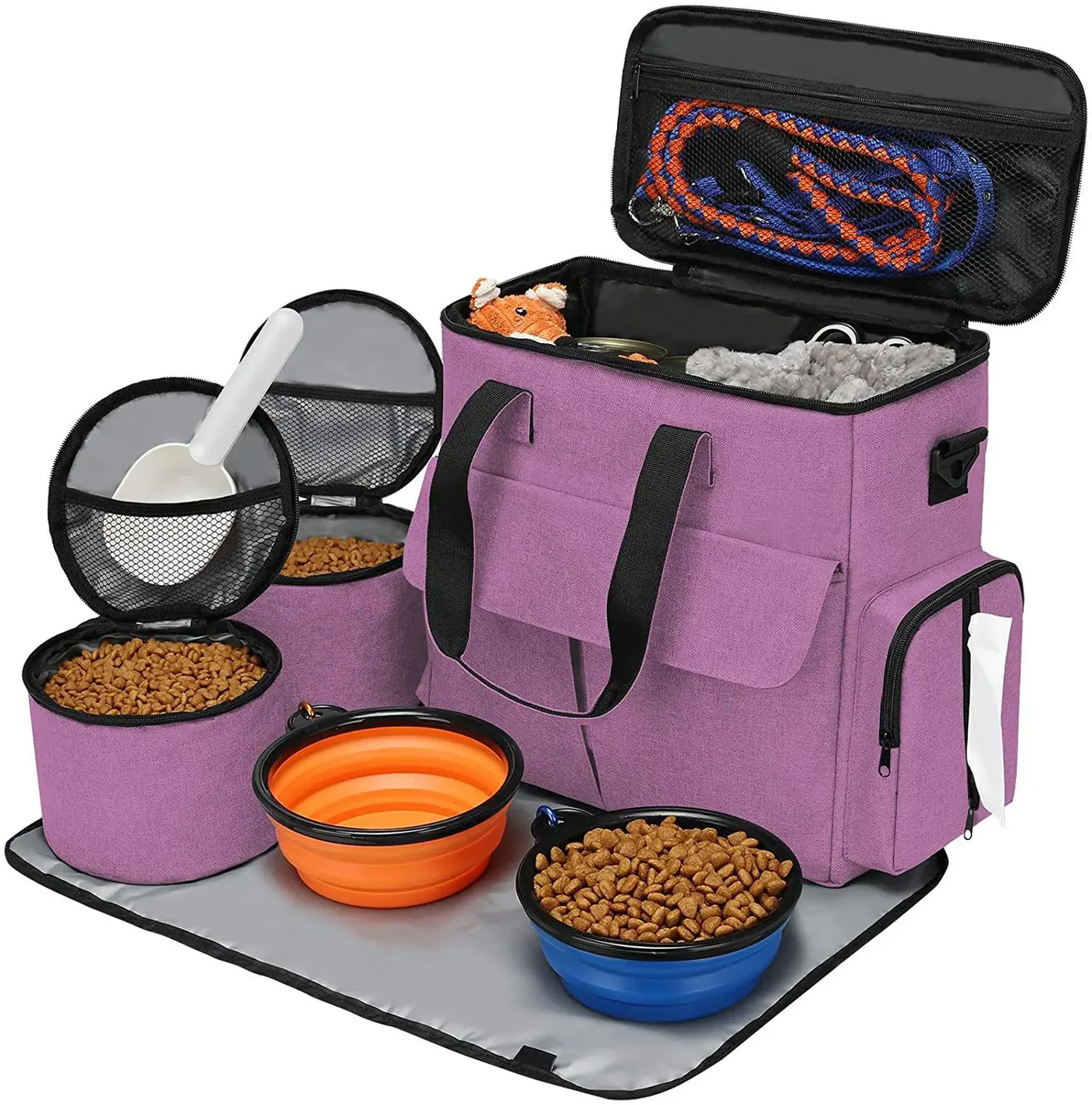
Depth creates an access problem that shallow shapes never face: the far end of the interior is out of arm's reach and out of sight. Two openings are the standard answer - a top aperture for loading and an end aperture for reach-in and for the pet to look out. The end opening is also the detail that makes a deep bag feel friendly rather than cavernous.
Zip path geometry decides whether the top aperture opens wide enough. A U-shaped path running down both side walls by 10-14 cm gives a mouth that opens to roughly 80 percent of the top panel area; a path that only crosses the top gives about 55 percent. On a deep body, the wide mouth is worth the extra zip length because the alternative is a customer wrestling a pet through a slot.
Mesh placement follows the same logic. On a deep shell, side-wall mesh is largely hidden by the body's own depth when viewed three-quarter on, so ventilation panels belong on the ends and on the upper front. End mesh also gives the pet a forward view, which reduces the sense of enclosure that deep interiors can create.
Visibility is a retail requirement too. Shoppers want to see inside, and a dark deep interior reads as a void. A pale lining, a light-coloured floor insert and one interior pocket in a contrasting colour make the cavity legible in a photograph, which is what sells online.
Closure hardware should be sized to the aperture. A deep bag's mouth spans a long run and the zip needs to be a #8 or #10 coil rather than a #5, with a pull large enough to operate when the bag is on the floor. Locking sliders are worth specifying for travel-adjacent ranges.
One practical detail: a top opening on a deep body benefits from a stay that holds the flap open while loading. A covered spring wire in the top rail is the usual solution and it also stops the mouth collapsing inward in transit. It is one of the few additions that improves daily use rather than merely appearing on a feature list, and it should survive value engineering in later seasons.
Deep-shape variants, tooling and landed cost
Deep programmes are quoted on a combination of pattern tooling, material consumption and cube. The table below summarises how the common variants compare on a private label basis quoted FOB Xiamen, with the standard rectangle set at 100.
| Deep variant | Depth | Gusset build | Tooling | Unit cost index | MOQ | Sampling |
|---|---|---|---|---|---|---|
| Moderate deep | 34-36 cm | Three-ply, 3 mm foam | USD 250-450 | 104 | 500 | 6-10 working days |
| Full deep | 37-40 cm | Three-ply, 5 mm foam, radiused corners | USD 350-650 | 108 | 500 | 6-10 working days |
| Deep with framed base | 38-42 cm | Laminated gusset, steel rim | USD 600-1,100 | 112 | 800 | 8-10 working days |
| Deep dual-opening | 36-40 cm | Three-ply, top rail wire | USD 450-800 | 110 | 500 | 6-10 working days |
| Standard rectangle (baseline) | 30-32 cm | Single-ply closing strip | Existing dies | 100 | 500 | 6-10 working days |
Material consumption is the quiet driver. A deeper shell uses 8-14 percent more cover fabric and lining per unit, and that scales with volume in a way tooling does not. On a 5,000-unit run this is usually larger than the entire tooling charge, which is why deep programmes should be costed on total programme spend rather than on unit price alone.
Landed cost is where the shape decision is really made. Adding 6-8 cm of depth typically reduces units per 40-foot container by 12-20 percent, which spreads fixed freight across fewer units. Programmes shipping to a single regional warehouse can absorb this; programmes distributing to three continents should model it before committing.
The offset is price position. Deep shapes routinely support a retail price 15-25 percent above the equivalent standard body, because the volume claim is visible and verifiable. That margin is the commercial justification for the shape, and it should appear in the range plan as a deliberate trade rather than an accident.
Programme sequencing helps here. Launch the moderate-deep variant first to establish volume and amortise the shared tooling, then add the framed or dual-opening variants in the second season when the pattern is proven and the freight model is based on real numbers rather than estimates.
Material and colour for large planar surfaces
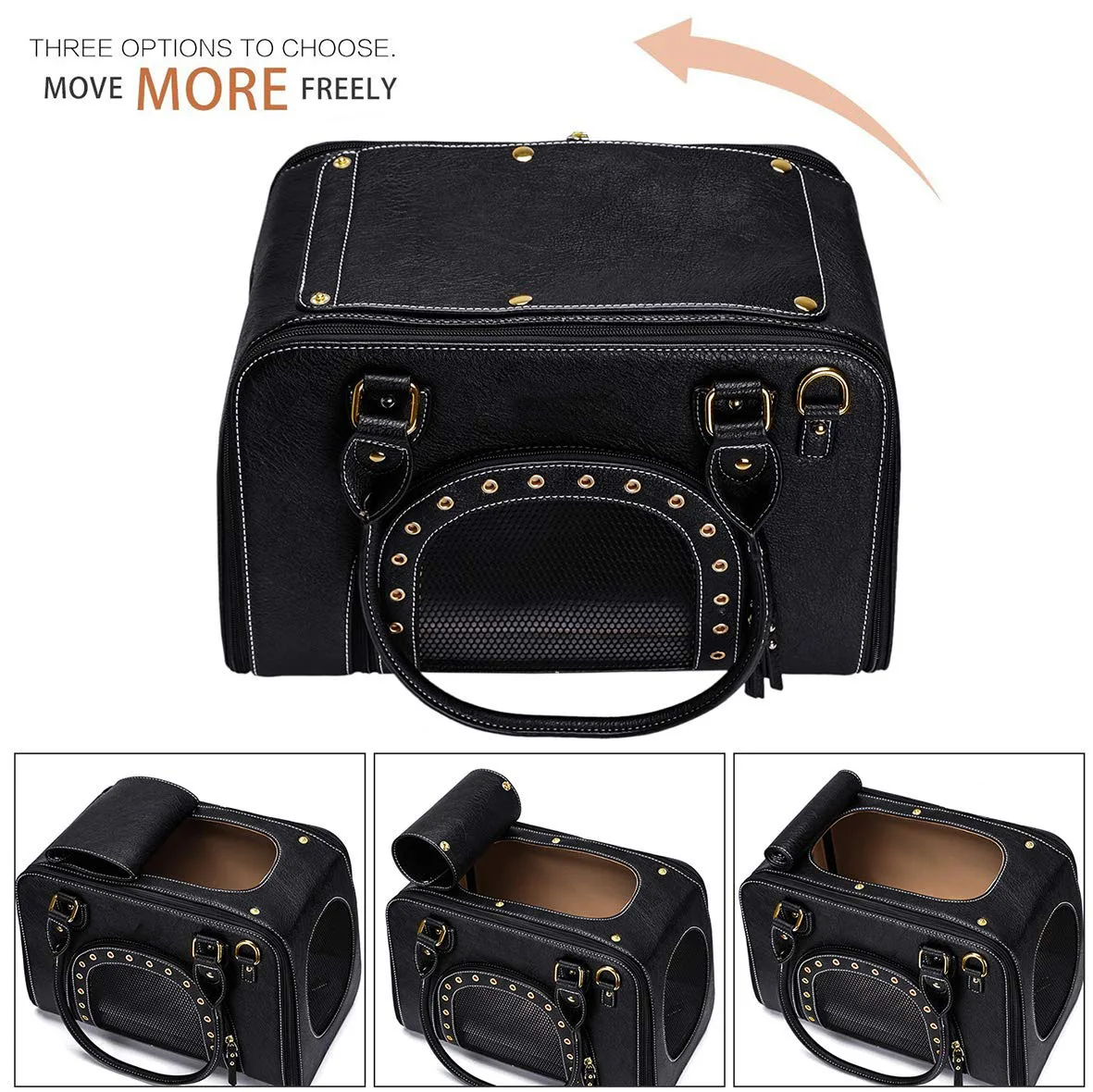
A deep body presents larger flat planes than any other silhouette, and flat planes expose every material weakness: slubs in the weave, shading across a panel, puckering around a seam, print misregistration. Material selection for deep programmes therefore starts with consistency rather than hand-feel.
Woven synthetics in the 600D-900D range with a calendered or PU finish are the safe default because they are dimensionally stable and their surface is uniform. Coated canvas and waxed cotton look better in a lifestyle photograph but vary more between rolls, which on a 40 cm deep panel becomes visible as shading. Where a natural material is required, specify a panel-matching protocol and accept a 6-10 percent cutting waste allowance.
Abrasion matters more on deep bodies because the base and lower gusset contact the ground more often when the bag is set down. Martindale or Wyzenbeek results should be part of the specification, with the test methods published by AATCC used as the reference point. A 600D polyester that survives 20,000 Martindale cycles is a reasonable floor for the lower panels.
Colour consistency across a large plane argues for piece-dyed rather than yarn-dyed fabrics where the programme is seasonal, and for a single dye lot per colourway per season. Lab dips should be approved under the same lighting the retail audit uses; differences between D65 and store LED lighting are most visible on exactly the large surfaces deep shapes create.
Restricted-substance compliance is non-negotiable for export programmes. Cover fabric, lining, foam, zip tape and print inks should all be screened, and a laboratory report from a recognised test house such as SGS is what most retail buyers will ask to see before signing off.
Texture is the differentiator. Because the planes are large, a subtle emboss, a fine ripstop grid or a heather yarn adds interest that a flat plain weave cannot, and it hides the minor creasing that large panels accumulate in transit.
Sampling, testing and packing a deeper carton
Deep programmes should follow a three-round sample sequence. Round one is structural, in bulk cover fabric, with the specified gusset stack and baseboard, produced in 6-10 working days. It exists to be loaded, rocked on a flat surface and carried for twenty minutes; decoration is irrelevant at this stage and is usually omitted.
Round two is the commercial sample: final fabric, final colour, final branding, final hardware. This is the sample photographed for the range deck and shown to retail buyers, and it is the round where print placement on a deep panel gets judged at real viewing distance.
Round three is the pre-production sample made from bulk materials on the actual line, and it is the unit that gets tested. Three tests matter for deep bodies: base deflection under rated load, seam creep over 24 hours, and a drop test from 30 cm with the rated load inside. Any permanent deformation above 3 percent returns the specification to the pattern room.
Carton engineering is the step most programmes leave too late. A deeper product needs a deeper carton, and the carton is what gets quoted for freight. Reducing product depth by 2 cm during development can raise units per container by 6-9 percent, which over a multi-season programme is worth more than most unit-price negotiations.
Packing method should be specified too. Deep soft bodies can be nested two per carton with an interleaved sheet, which recovers much of the cube penalty; framed deep bodies cannot nest and should be quoted on a single-unit carton with corner protection.
Documentation completes the programme: approved pattern, lab dip reference, test reports and signed pre-production sample held together, so that a reorder next season reproduces this season's product rather than an approximation of it.
The last gate is the freight quote itself. Fix it after carton dimensions are final, not before, and model it at the planned annual volume rather than at the first order. Deep shapes look expensive on a 500-unit shipment and entirely reasonable on a 5,000-unit annual programme.
Why brands source here
- Pet carrier programs run since 2014; founding team in sewn goods since 2004
- SGS-verified production floor of 4,950 m² with 137 workers across 7 lines
- Monthly capacity of 200,000 units, audited to BSCI and ISO 9001
People Also Ask
Is a deep carrier better for long car journeys?
Yes, for pets that sprawl. Depth gives room to change posture over a multi-hour trip, which matters more than total volume for joint comfort on long journeys.
Do deep carriers fit in car footwells?
A 36-38 cm deep shell fits most front passenger footwells, but 42 cm usually does not. Check the specific vehicle, and consider a moderate-deep variant for a travel-led range.
How do you stop a deep bag sagging in the middle?
Add a ply to the gusset, radius the corners by 25-40 mm, and increase the seam allowance to 15 mm with a second row of stitching.
Are deep carriers heavier to carry?
The shell is 8-14 percent heavier in material, but the bigger effect is geometry: a deep bag sits further from the body, so use 45-55 mm strap contact and a sternum strap.
What interior colour makes a deep bag look bigger?
A pale lining, a light floor insert and one contrasting interior pocket make the cavity legible in photography and stop the interior reading as a void.
Should a deep carrier have two openings?
Usually yes: a top aperture for loading and an end aperture for reach-in and outlook. The end opening is what makes a deep interior feel friendly rather than cavernous.
Does extra depth affect airline compliance?
It can, because under-seat envelopes are finite. Deep shapes generally suit car and rail travel; air travel programmes should confirm the carrier's cabin policy before finalising depth.
Frequently Asked Questions
What depth makes a pet carrier 'deep'?
Deep programmes run 34-42 cm front to back against a market standard of 30-32 cm. Below 34 cm the volume gain is marginal; above 42 cm the far end of the interior becomes impractical to reach.
How much extra interior volume does depth add?
Typically 18-32 percent usable volume at the same floor length and height. The gain is only useful if the opening and the interior layout are revised to suit it.
Why do deep carriers need a different gusset?
Depth lengthens the span the gusset must stabilise, and deflection rises steeply with span. A three-ply gusset with 3-5 mm foam, radiused corners and a 15 mm seam allowance is the standard answer.
What is the MOQ for a deep private label build?
MOQ 500 units per colourway for unframed deep shapes. Deep bodies with a steel or moulded base frame are quoted at 800 units because the frame jig needs a larger run to amortise.
How long is the sampling cycle?
Structural samples take 6-10 working days; framed variants sit at 8-10 working days. Bulk production runs 35-50 days after sample approval.
Do deep carriers cost more to ship?
Yes. Expect 12-20 percent fewer units per container and higher dimensional weight on air freight. Nesting two soft units per carton recovers much of the penalty.
Which base construction stops a deep bag rocking?
A 5-6 mm laminated board with a bonded cross-grain layer resists the rocking axis better than a thicker single-grain board. A perimeter rim in steel or moulded polymer is the premium option.
Where should ventilation panels go on a deep shell?
End panels and the upper front. Side-wall mesh is largely hidden by the body's own depth at normal viewing angles and contributes less to airflow than it appears to.
What zip specification suits a deep opening?
A #8 or #10 coil with a U-shaped path running 10-14 cm down both side walls, giving a mouth that opens to roughly 80 percent of the top panel area.
Which fabrics suit large deep panels?
Calendered or PU-finished woven synthetics in the 600D-900D range, because they are dimensionally stable and uniform across a large plane. Natural materials need a panel-matching protocol.
How is a deep production run inspected?
Gusset symmetry, base flatness, seam creep under load and zip run smoothness are the four added gates, inspected to AQL 2.5 alongside the standard appearance criteria.
Can deep shapes be nested for shipping?
Soft deep bodies can, two per carton with an interleaved sheet. Framed deep bodies cannot nest and ship one per carton with corner protection.
What retail price premium does extra depth support?
Commonly 15-25 percent above an equivalent standard body, because the volume claim is visible and verifiable at the shelf without any explanation from staff.
Talk to QUANZHOU JUNYUAN BAGS about a pet carrier program: MOQ 500 pieces per colourway, samples in 6-10 working days, bulk production in 35-50 days under AQL 2.5 inspection.
Get a free quote Request a sample