Custom Car Barrier: Backseat Divider Design and Branding
A custom car barrier for a backseat application is specified around four measurable points: an adjustable span covering 110-150 cm of interior width, a mesh panel tension holding under 15 mm of deflection at 200 N of lateral push, a frame that survives 10,000 extension cycles, and a mounting system that installs without tools in under 90 seconds. Those four numbers decide whether the product reads as engineered or improvised.
Our production team runs private label barrier programs on a single commercial frame: MOQ 500 units per colourway, prototypes in 6-10 working days from tech pack sign-off, and bulk production in 35-50 days after sample approval, released at AQL 2.5 with dimension, cycle and mesh tension records attached to the shipment file. Standard terms are FOB Xiamen with T/T 30/70.
The brand work sits in three places. The mesh panel is the largest printable or weavable surface in the travel category and should be treated as a designed graphic, not a neutral infill. The frame finish decides whether the product reads automotive or utility. And the packaging has to solve a real retail problem, because a barrier is bulky, awkward to peg and expensive to ship, so the carton format directly affects the landed margin. Plan two sampling rounds - geometry first, graphic second - and freeze the chassis for two seasons.
A private label pet carrier keeps the buyer artwork on the panel while the compliance text and country-of-origin marking follow the destination market.
Span Geometry: Designing for a Fleet That Keeps Changing
A backseat barrier has to bridge an opening that varies more than most designers expect. Compact hatchbacks sit near 110 cm of interior width behind the front seats, mid-size sedans near 130 cm, and full-size SUVs and estates can exceed 150 cm. A barrier designed at a fixed 130 cm will be slack in a small car and impossible to fit in a large one, which is why adjustable span is the first specification to fix and the last one to compromise.
The efficient architecture is a telescoping upper rail with two locking positions per side plus a spring-loaded end pad that takes up the final 3-5 cm. That combination covers the full 110-150 cm band with a single tooling investment, and it keeps the product stable because the end pads carry constant outward pressure rather than relying on friction alone. Friction-fit designs are cheaper and consistently lose tension within a few weeks of vehicle vibration.
Height is the second dimension and it is more constrained than it looks. A barrier that reaches the headliner on one side and stops below the seat back on the other looks unfinished in a product photograph, and it fails the customer's expectation of a divider. Set the panel height from the top of the rear seat cushion to roughly 15 cm below the headliner, and give the lower skirt enough depth to close the gap at the seat back seam.
Vertical adjustment deserves one more line of specification. Because seat heights vary between a low sports seat and a high SUV bench, a two-position vertical slot in the lower bracket lets one SKU span categories that would otherwise need two. That flexibility is worth more in retail than a marginally lower unit cost, because it shrinks the buyer's range-review risk to a single listing.
There is a merchandising reason to standardise on one adjustable chassis rather than selling two fixed widths. A retailer reviewing the category wants a single listing that covers the whole fleet, because two SKUs occupying the same shelf space with an overlap in the middle creates its own confusion at the fixture and doubles the brand's own forecasting risk. One adjustable product with a printed coverage claim is easier to sell in, easier to forecast and easier for the store staff to recommend without checking a chart.
Mesh Panel Tension, Deflection and the Visual Argument
The mesh panel carries the entire visual identity of a barrier and most of its functional criticism. Customers judge quality by how taut it looks in a photograph, and they judge performance by how much it moves when pushed. Both come down to tension, which is a specification rather than an impression.
A practical target is under 15 mm of centre deflection under a 200 N lateral push, measured on a barrier installed at its maximum span. Hitting that number requires a panel that is cut slightly undersized relative to the frame and stretched during assembly, plus a perimeter that is welded or double-stitched rather than single-stitched. The difference between a taut panel and a sagging one is usually no more than 8 mm of cut tolerance, and it is invisible in the cost sheet.
Mesh selection then divides by story. A tight polyester mesh at roughly 250 gsm reads technical and automotive, keeps visibility high for the driver and takes sublimation print well. A heavier coated grid at 400 gsm reads utility and resists claw damage better, but it blocks more light and looks industrial. Most premium pet brands should take the lighter mesh and sell visibility, because that is the argument a customer can verify in the showroom.
| Specification | Entry build | Premium build | Why it matters |
|---|---|---|---|
| Adjustable span | 110-140 cm, two locks | 110-150 cm, spring-loaded pads | Fleet coverage and stability |
| Mesh | 250 gsm polyester, welded edge | 320 gsm with UV inhibitor, printed | Tension, fade, brand surface |
| Frame | Steel tube, powder coat | Anodised aluminium, matched finish | Weight and corrosion story |
| Mounting | Strap and hook, tool free | Rigid bracket with quick release | Install time under 90 seconds |
| Cycle life | 5,000 extensions | 10,000 extensions | Rattle-free second season |
Rattle is the failure mode that generates the most complaints and the fewest returns, because customers live with it and quietly downgrade their opinion of the brand. Sleeving the telescoping tubes with a nylon bush and specifying a locking detent with a positive click removes almost all of it. It is a small parts decision with an outsized effect on perceived quality.
A related detail concerns the perimeter finish. A welded edge gives the cleanest line and the most consistent tension, but it limits the panel to compatible thermoplastic meshes and raises the tooling cost. A double-stitched and bound edge works with any substrate and is easier to repair in development, at the cost of a slightly softer silhouette. For a first season, the bound edge is usually the pragmatic choice; for a chassis intended to run three seasons, welding pays for itself.
Frame, Finish and the Automotive Colour Language
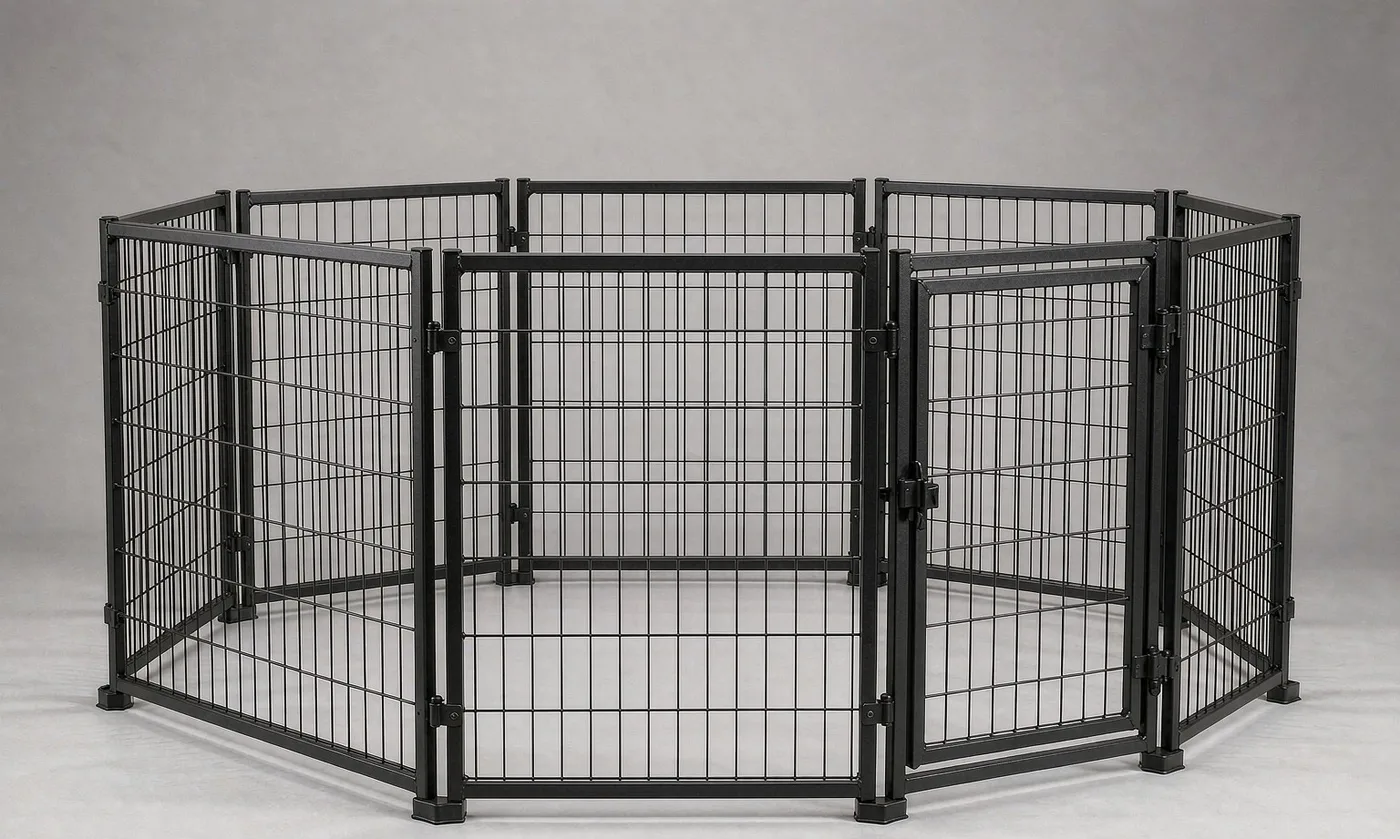
The barrier frame is the only structural part a customer sees, and its finish sets the category reading. A black powder-coated steel tube says utility; an anodised aluminium tube in a matched metallic tone says automotive accessory. For a brand positioned anywhere above entry level, the second reading is worth the roughly 18-25% cost increase, because it places the product beside interior accessories rather than beside cargo equipment.
Colour matching on metal needs its own tolerance. A powder coat can be matched to a brand's secondary colour within roughly two Delta E units, but the same reference on an anodised finish shifts warmer, because anodising builds colour into a translucent oxide layer rather than sitting on top of it. Set separate tolerances per finish, and approve a physical plaque for each - screen approvals of metal finishes are unreliable and are a common source of sampling friction.
Corrosion performance belongs in the spec even for an interior product. Vehicle interiors see spilled drinks, wet dogs and road salt tracked onto floor mats, and a frame that rusts at the weld within a season undermines a premium claim immediately. A minimum 48-hour neutral salt spray result on coated parts, with welded joints sealed before coating, is a reasonable baseline that costs very little to specify.
Weight is the final frame consideration and it is often overlooked. A barrier over roughly 3.5 kg becomes awkward for a customer to install alone, and it pushes the shipping cost of a bulky carton up sharply. Moving from steel tube to aluminium typically removes 30-35% of the frame mass, which improves both the install experience and the freight economics in a single decision.
Finish consistency across a range is where many travel programs quietly lose their premium reading. A barrier frame in one metallic tone sitting beside a seat cover with a different hardware finish reads as two unrelated products from two different brands. Fixing a single hardware and trim finish at the range level - one tone, one texture, one sheen - and applying it from the tether clip through to the barrier frame is the cheapest way to make a four-product travel wall look like a designed collection.
Branding the Largest Surface in the Travel Category
A barrier panel offers somewhere between 4,000 and 7,000 square centimetres of printable area, which is more brand surface than any harness, tether or carrier in the same range. Most programs waste it on a single centred logo. The better approach is to design the panel as a graphic composition with the logo as one element inside it.
Sublimation printing is the default for this surface. It supports gradients, photographic content and illustrative patterns, it adds no stiffness, and it does not crack when the panel flexes. The constraint is light fastness: printed panels sitting behind glass need a target around 4-5 on the blue wool scale, verified through recognised methods from AATCC, or the artwork will fade unevenly within one summer.
Woven options suit brands with a technical identity. A jacquard mesh with an integrated repeating motif cannot fade or peel, and it reads as engineered rather than decorated, which suits an automotive adjacent product. The setup is more expensive and the pattern library is narrower, but for a brand planning three seasons on one chassis the amortised cost is comparable and the durability argument is stronger.
Two practical rules keep the graphic from fighting the product. Keep the upper third of the panel visually quiet, because that is the zone the driver sees through the mirror and a busy pattern there becomes a genuine safety objection. And keep the logo above the lower skirt seam, so that it remains visible when the barrier is installed at minimum span and the panel is partly gathered.
Scale is the other discipline worth stating plainly. Artwork developed for a carrier or a hang tag almost always fails on a barrier panel, because the viewing distance is two to three metres rather than arm's length and the pattern either disappears or becomes noise. Redraw the motif at panel scale, test it as a printed proof at full size, and view it from across a room before approving. This one step prevents the most common design regret in the category.
Packaging a Bulky Product Without Killing the Margin
Barriers are the classic case where packaging engineering decides the commercial outcome. The product is long, awkward and low-density, so a naive carton ships a great deal of air and the freight cost per unit can exceed the packaging cost by a factor of five. Designing the carton around the collapsed product, not the assembled one, is the single biggest lever available.
The standard solution is a two-stage pack: the barrier ships collapsed with the telescoping tubes nested, and the customer extends it once. This typically reduces carton volume by 40-50% against a fully assembled pack, which drops both ocean freight and the retailer's shelf footprint. The trade-off is that the pack must carry a clear first-step instruction, because a customer who cannot work out how to extend the product will return it.
Format choice follows the channel. E-commerce favours a plain corrugated shipper with a printed sleeve, because the outer carton is never seen on a shelf and the sleeve carries the brand at lower cost. Physical retail favours a printed carton with a large front panel and a carry handle, because the barrier will usually be displayed on a lower shelf or an end cap rather than hung.
Transit performance should be specified and tested. A dropped carton that arrives with a bent tube is a full write-off rather than a cosmetic issue, so the pack should be validated against a recognised transit protocol published by ASTM, with corner protection on the tube ends. This is unglamorous work and it protects margin directly.
The in-pack experience also deserves design attention, because a barrier is one of the few pet products a customer unpacks at length. A printed inner panel that appears when the carton opens, carrying the install diagram and the range story, turns an unboxing into a brand moment at negligible cost. Brands that treat the inside of the carton as media rather than void consistently over-perform on review sentiment for bulky items.
Compliance, Labelling and the Retail Technical Pack
A backseat barrier sits close enough to a safety conversation that retail technical reviewers will ask questions, even where no specific standard governs the product. The brands that onboard fastest are the ones that answer before being asked, with a short pack that covers material composition, dimension tolerances, cycle testing and traceability.
Labelling deserves deliberate thought. The panel is a large surface, but a warning block pasted across it destroys the graphic. Reserve a defined quiet zone - typically the lower skirt or a woven tab - for regulatory text, and keep it in the brand's typography so it reads as part of the design rather than an afterthought.
General consumer product expectations published by the U.S. Consumer Product Safety Commission cover the basics of labelling, traceability and small parts, and third-party verification through SGS gives a buyer a report format they already recognise. Neither replaces the brand's own judgement, but together they remove most of the friction from a range review.
One claim to avoid: implying that the barrier prevents injury in a collision. A divider is a distraction-reduction and containment product. Describe what it does - separates, contains, reduces driver distraction - and keep crash language for products that have actually been dynamically tested. Accuracy here protects the listing and the brand's credibility across the rest of the range.
Traceability closes the loop. A batch code stamped on the frame or woven into the skirt tab lets any unit be traced back to a production lot, its inspection record and its material certificates. Retailers rarely ask for this on day one and almost always ask within eighteen months, so building it into the first production run avoids a retrofit that would otherwise require new artwork and new tooling.
Mounting Systems and the Ninety-Second Install
Install experience is where a barrier wins or loses its review score, and it is almost entirely a mounting design question. The commercial target is a tool-free install in under 90 seconds by one person, because anything longer turns into a return when a customer tries it once in a dark car park and gives up.
Two mounting families exist. Strap-and-hook systems wrap around headrest posts and seat backs, and they are universal but slightly fiddly. Rigid bracket systems clip into the seat back frame or the headrest posts, install faster and hold tension better, but they limit fleet coverage. For a premium positioning, the rigid bracket with a quick-release lever is the better answer; for a broad-market listing, straps remain the safer commercial choice.
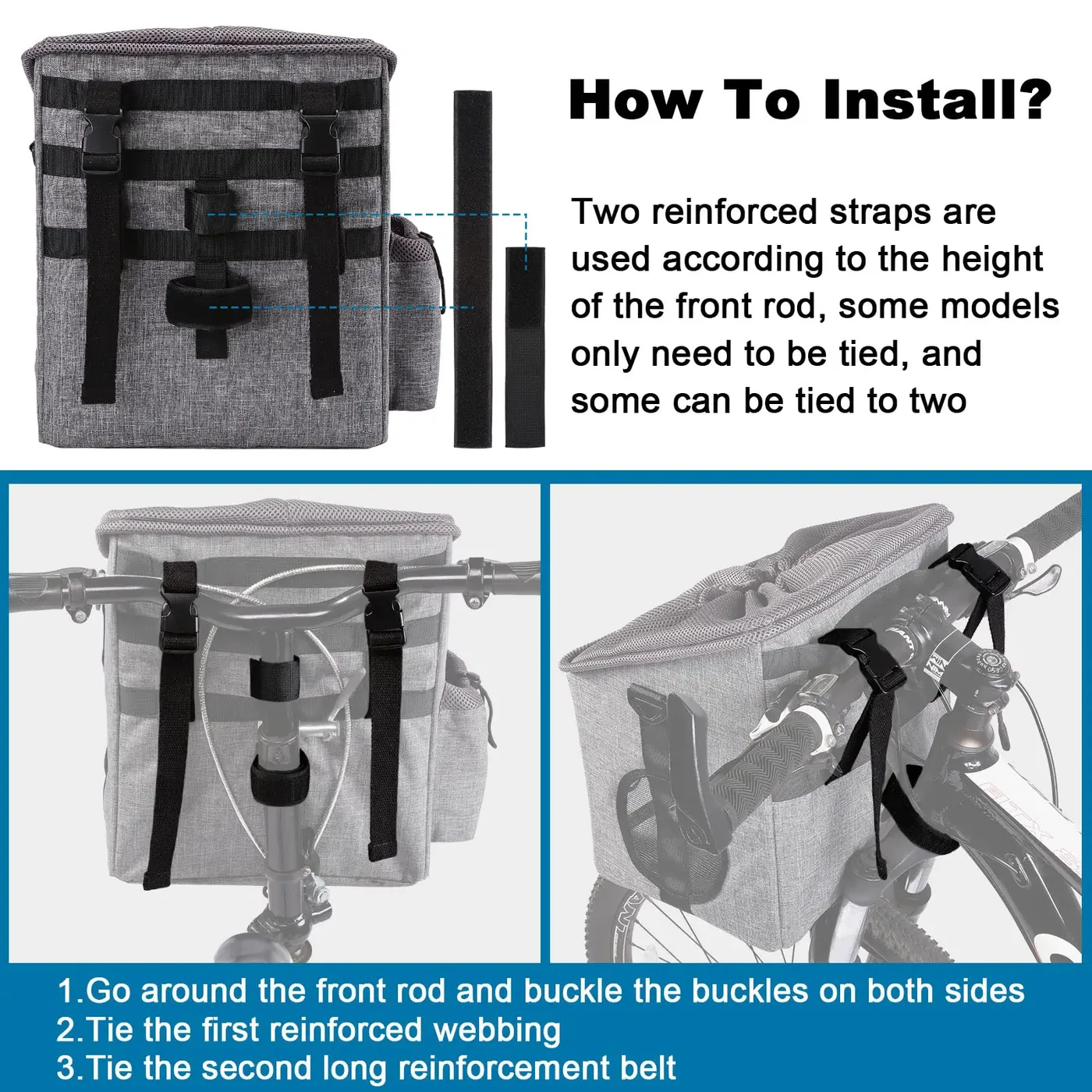
Whichever family is chosen, the instruction leaflet is part of the product. A three-panel diagram with numbered steps, printed at a size that remains legible in low light, does more for satisfaction than any hardware upgrade. Brands that shoot a short install video and put a QR code on the pack consistently see better review scores on the same physical product.
The last detail is reversibility. A barrier that can be installed facing either way, or removed and refitted in seconds, gets used more often, and a product that is used is a product that gets recommended. Designing the end pads symmetrically costs nothing and removes the single most common install error.
One further consideration is the second vehicle. Households with more than one car routinely move products between them, and a barrier that requires re-tuning on every move stops being moved. A memory mark on the telescoping tube - a simple printed index the customer sets once per vehicle - solves this for pennies and noticeably increases how often the product is used, which in turn drives recommendation.
Launch Sequencing and Range Architecture
A barrier should almost never launch alone. It is a considered purchase with a higher price point than the rest of the travel range, and it sells best when the customer has already met the brand through a lower-cost item. The usual sequence is harness and tether first, seat cover second, barrier third, with each step sharing one colour language and one graphic system.
Within the barrier line itself, a good-better-best structure works unusually well. The entry tier uses steel tube, plain mesh and a strap mount; the mid tier adds telescoping span and a printed panel; the top tier moves to aluminium, anodised finish, jacquard mesh and a rigid quick-release bracket. The three tiers share the same frame tooling across the top two, which keeps the engineering investment manageable.
| Launch phase | SKU | Role | Timing |
|---|---|---|---|
| Phase 1 | Harness and tether | Establish brand in travel aisle | Season 1, spring |
| Phase 2 | Seat cover | Build basket and colour recognition | Season 1, summer |
| Phase 3 | Backseat barrier | Considered premium purchase | Season 2, spring |
| Phase 4 | Cargo liner | Complete the system, SUV segment | Season 2, autumn |
| Phase 5 | Limited colourway | Renew interest without re-test | Season 3 |
Timing against the bulk window is the operational discipline behind that plan. With bulk production at 35-50 days and ocean transit to be added, a spring drop needs tech pack sign-off in the preceding autumn. Brands that discover this in January miss the season and end up discounting into a summer clearance, which is far more expensive than the planning discipline would have been.
The closing advice is to treat the barrier as the anchor SKU it has the potential to be. It has the largest brand surface, the highest price point and the strongest system story in the travel range. Given a frozen chassis, a designed panel and a carton engineered for freight, it is also the product most likely to define how a retailer remembers the brand.
The measure of whether the architecture worked is simple to check at the end of season two. If the barrier is generating repeat purchases from customers who already own the harness or the seat cover, the system is working and the next investment should go into colourways rather than structure. If it is selling mostly to first-time buyers, the range has not yet built its funnel and the answer is more marketing weight behind the entry SKUs, not another tier at the top.
Why brands source here
- Pet carrier programs run since 2014; founding team in sewn goods since 2004
- SGS-verified production floor of 4,950 m² with 137 workers across 7 lines
- Monthly capacity of 200,000 units, audited to BSCI and ISO 9001
People Also Ask
What span should a custom backseat barrier cover?
Cover 110-150 cm of interior width with a telescoping rail and spring-loaded end pads. Fixed-width designs lose tension in smaller vehicles and will not fit larger SUVs.
How taut should the mesh panel be?
Target under 15 mm of centre deflection at 200 N of lateral push at maximum span. Achieve it by cutting the panel slightly undersized and stretching it during assembly.
Which is better for a barrier frame, steel or aluminium?
Aluminium removes 30-35% of frame mass, improves the install experience and accepts an anodised finish that reads automotive. Steel is cheaper but heavier and more prone to corrosion at welds.
Can a barrier panel be printed with full-colour artwork?
Yes. Sublimation supports photographic and gradient artwork without adding stiffness, provided a light fastness target of roughly 4-5 on the blue wool scale is specified.
How should a bulky barrier be packed for retail?
Ship collapsed with nested tubes, reducing carton volume by 40-50%. Use a printed sleeve for e-commerce and a handled printed carton for shelf placement.
Does a barrier need crash testing?
A divider is a containment and distraction-reduction product, not a restraint. Avoid crash claims and describe containment, separation and driver visibility instead.
How long should installation take?
Design for a tool-free install under 90 seconds by one person. A rigid bracket with a quick-release lever achieves this; strap systems are more universal but slower.
Frequently Asked Questions
What is the MOQ for a custom backseat barrier?
MOQ is 500 units per colourway. Because the frame tooling is shared across tiers, many brands open with one chassis in two colourways and expand the range in the second season.
How long does sampling take?
Prototypes are delivered in 6-10 working days from tech pack sign-off. Two rounds are standard: the first validates span and tension, the second validates panel graphics and finish.
What is the bulk lead time?
Bulk production runs 35-50 days from sample approval, released at AQL 2.5 and shipped FOB Xiamen on T/T 30/70 terms.
Which documents come with a barrier shipment?
Each lot ships with dimension records, extension cycle results, mesh tension measurements and an AQL 2.5 inspection report referencing the production batch.
Can the frame colour be matched to our brand palette?
Yes, with separate tolerances per finish. Powder coat matches within roughly two Delta E units; anodising shifts warmer and needs its own approved physical plaque.
What mesh weight do you recommend?
Around 250-320 gsm polyester for a premium automotive reading with good driver visibility. Heavier coated grid resists claws better but blocks light and looks industrial.
How do you prevent frame rattle?
Nylon bushes in the telescoping tubes plus a positive-click locking detent remove most rattle. It is a small parts decision with a large effect on perceived quality.
Is a printed panel durable enough for daily use?
Yes, when sublimation is specified with a light fastness and abrasion target. Woven jacquard is an alternative for brands wanting a mark that cannot fade or peel.
What carton format should we choose?
A collapsed pack with nested tubes for e-commerce with a printed sleeve, and a handled printed carton for shelf placement. Both should be validated against a recognised transit test.
Can we reuse the chassis for a second tier?
Yes. Sharing frame tooling across the mid and top tiers keeps engineering investment manageable while supporting a good-better-best structure.
Do we need a special warning label?
Regulatory text should occupy a defined quiet zone on the lower skirt or a woven tab, set in the brand's typography so it reads as part of the design.
When should we sign off the tech pack for a spring launch?
Work backwards from the shelf date: allow 35-50 days for bulk plus transit and store set, and sign off roughly five months ahead, in the preceding autumn.
Can the barrier be installed either way round?
Yes, if the end pads are designed symmetrically. Reversibility removes the most common install error and increases how often the product is actually used.
Talk to QUANZHOU JUNYUAN BAGS about a pet carrier program: MOQ 500 pieces per colourway, samples in 6-10 working days, bulk production in 35-50 days under AQL 2.5 inspection.
Get a free quote Request a sample