Custom Tent: Camping Shelter
A custom pet camping shelter is specified as a pop-up or pole-frame canopy in the 600-900 mm floor range, in a printed polyester or nylon shell with a water-repellent finish, at MOQ 500 units per print. Two decisions set the outcome: whether the structure is a twist-fold pop-up or a two-pole frame, and whether the artwork is rotary printed or transfer printed. Together they determine about 70% of landed cost.
Shelters are the most design-led item in an outdoor pet range, which means the brief has to be resolved before costing rather than after. Our standard commercial envelope is MOQ 500 units per print, samples in 6-10 working days, bulk production in 35-50 days after sample sign-off, and inspection at AQL 2.5 against a written defect list. Payment is T/T 30/70, FOB Xiamen.
The creative work splits into three tracks that run in parallel. Structure: pop-up versus pole frame, floor shape, and pack-down diameter. Surface: base cloth, water-repellent finish, print route and Pantone targets. Identity: logo method, hardware finish, carry bag and hang tag. When those three tracks are decided together, a shelter can be developed and shipped inside one camping season; when they are decided sequentially, the season is lost to re-sampling.
Two commercial points shape the brief from day one. Shelters carry the largest carton volume per unit of revenue in an outdoor range, so pack-down dimensions should be treated as a cost decision and not only a convenience. And because the canopy is the largest printable surface in the capsule, the artwork developed for it usually becomes the seasonal key visual for hang tags, inserts and paid media, which makes it worth commissioning properly rather than adapting existing flat artwork.
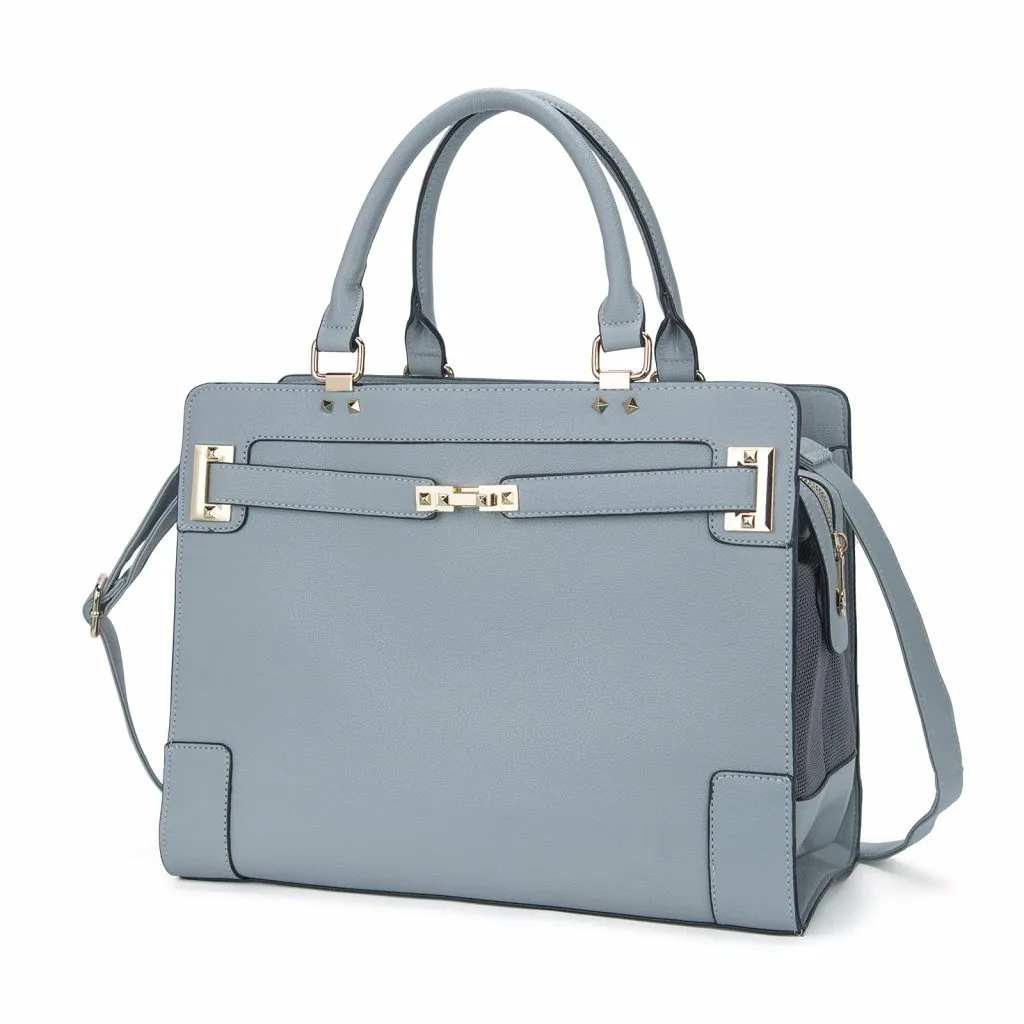
Custom cat carrier shells come in soft, vacuum-formed and injection-moulded variants, and each one carries its own tooling and MOQ pool.
Positioning a Pet Shelter Inside an Outdoor Collection
A camping shelter does a job no other SKU in the range can do: it is the only item that photographs as a scene rather than as a product. A carrier, a bowl and a leash are photographed on white; a shelter is photographed on a mountainside with a dog asleep inside it. That single image is usually what earns the brand its seasonal feature, its email slot and its social content. Designing the shelter with that photograph in mind - not just the product - is the difference between a SKU and a campaign.
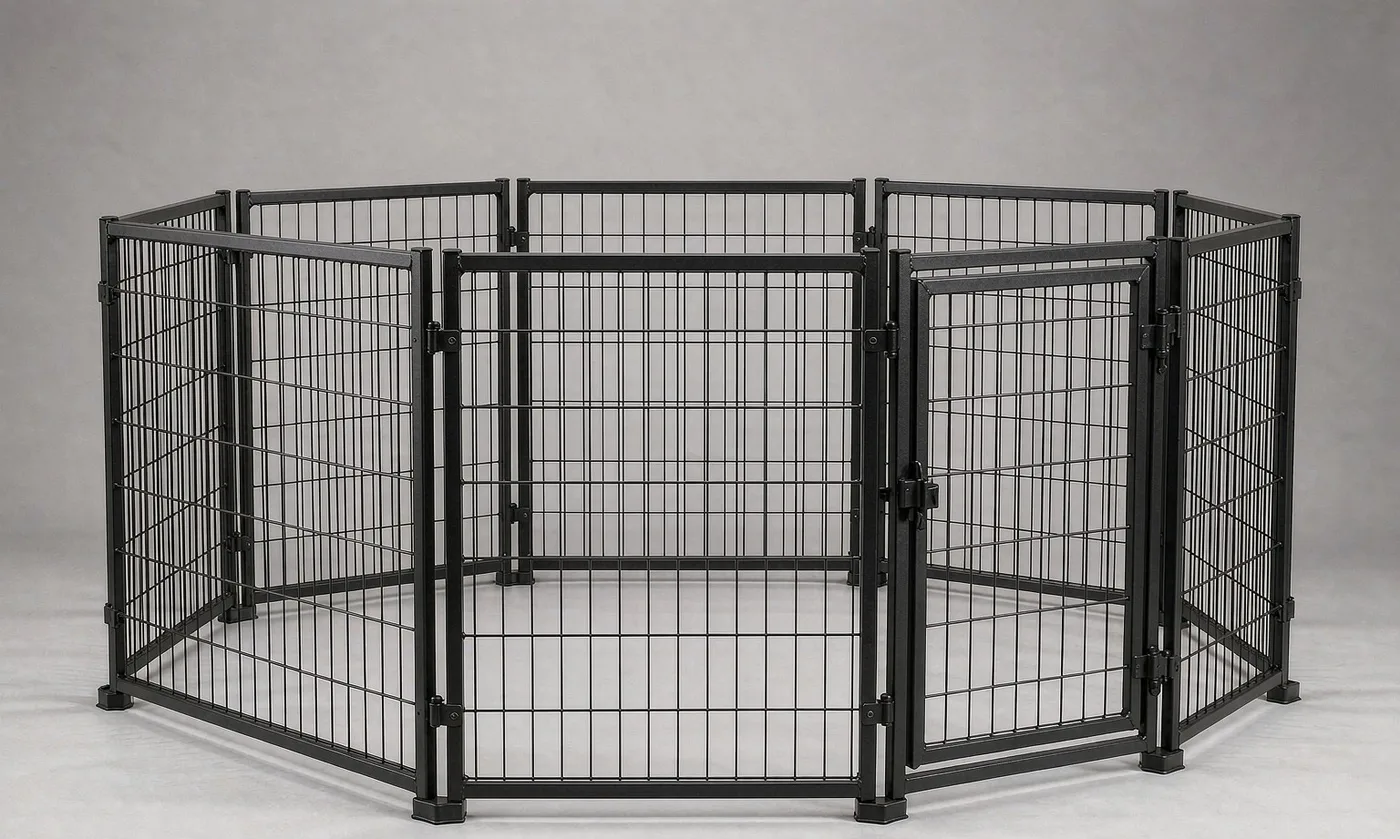
Commercially, the shelter is a halo product. It rarely carries the highest volume, but it sets the perceived quality of everything around it. Retailers will often accept a capsule on the strength of the shelter and then fill the order with accessories. Structuring a range so the shelter leads and the sleeping bag, the outdoor play pen and the travel kit follow is the most reliable way to win a seasonal planogram.
There are two distinct buyer mindsets to design for, and they want different things. The camping buyer wants weather performance, pack size and weight, and reads technical language happily. The home-and-garden buyer wants a den-like object that looks good on a patio, and reads colour and shape. Deciding which one you are designing for should happen in the first week, because it changes the fabric, the print and the photography.
Price architecture follows from that choice. A technical shelter justifies its price through fabric denier, hydrostatic head and pole material, all of which can be printed on the hang tag. A lifestyle shelter justifies its price through print quality, shape and finish, which cannot be printed but can be photographed. Both routes work; mixing them produces a product that is too expensive for one buyer and too plain for the other.
The most common strategic mistake in this category is treating the shelter as a novelty. Novelty shelters are bought once, photographed once, and then replaced by a cheaper version the following year. A shelter designed as part of a repeatable outdoor system - same palette, same logo placement, same carry-bag language as the rest of the range - gets reordered annually and becomes an anchor SKU.
Shelter Geometry: Pop-Up Versus Pole Frame
Geometry is the first and most consequential decision, because it fixes the pack-down size, the freight profile and the assembly experience. A twist-fold pop-up uses a coiled spring-steel frame sewn into the shell; it opens in seconds and folds into a flat disc. A pole-frame shelter uses two or three shock-corded aluminium or fibreglass poles through sleeves or clips; it takes two to four minutes to pitch and packs into a long bag.
Pop-up wins on assembly experience and on retail demonstration. A shopper or a store associate can open one with a flick of the wrist, which is the single most persuasive moment available in a physical store. It loses on pack-down diameter - a 900 mm pop-up folds to roughly 700 mm across - and on wind stability, because a single-coil frame has little resistance to a gust.
Pole frames win on stability, on weight and on pack-down volume, and they are the correct choice for genuine camping use where the shelter will be pitched on uneven ground and left up. They lose on the in-store demo, which for a lifestyle buyer is where the sale is made.
- Round pop-up, 700 mm: den-like, fastest demo, best for small breeds and patio use.
- Square pole frame, 900 mm: packable, stable, the genuine camping option, best freight efficiency.
- Hexagonal hybrid, 1000 mm: highest perceived value, most complex to engineer, suits premium collections.
- Open-front sun shade, 1100 mm: seasonal extension, no door panel, lowest fabric area per unit of shelf impact.
Three geometry details separate a considered design from a generic one. Floor shape should match the way a dog actually lies down - a slightly rectangular footprint with rounded corners beats a perfect circle. Door height should be low enough to feel enclosed but high enough that the dog does not duck, which in practice means 60-65% of the peak height. And the peak should be positioned slightly forward of centre so rain sheds away from the opening rather than into it.
Ventilation is not optional and is best designed in from the start rather than added. A rear mesh panel placed high, plus a low vent on the shaded side, creates airflow without letting rain in. Shelters without through-ventilation are the ones that come back with condensation complaints, and condensation reads to the customer as a quality defect even when it is a physics problem.
Canopy Fabric, Coating and Weather Performance
Fabric choice drives both performance and print fidelity, and the two do not always point the same way. A 190T polyester taffeta is the volume default: cheap, stable, prints cleanly, and accepts a polyurethane coating well. A 210D or 420D oxford is heavier, more abrasion-resistant and reads more technical, but print detail softens slightly on the coarser weave. Ripstop nylon is the premium option for genuinely packable shelters and prints well, but costs significantly more per metre.
Water performance is expressed as hydrostatic head - the height of a water column the fabric sustains before leaking. Around 800 mm is shower-resistant, 1500 mm handles sustained rain, and 3000 mm is a genuine storm rating. For a pet shelter, 1500 mm is the sensible target: it survives a full day of rain without the cost and stiffness of a 3000 mm coating, and stiffness matters because a stiff canopy creases badly when folded.
| Shell fabric | Weight | Hydrostatic head | Print fidelity | Cost index | Reads as |
|---|---|---|---|---|---|
| 190T polyester taffeta, PU coated | 70 g/m² | 800-1500 mm | High | 1.00 | Lifestyle, home and patio |
| 210D oxford, PU coated | 110 g/m² | 1500 mm | Medium-high | 1.22 | Technical outdoor, mid band |
| 420D oxford, TPU coated | 180 g/m² | 2000-3000 mm | Medium | 1.55 | Premium camping, expedition look |
| 70D ripstop nylon, silicone | 55 g/m² | 1500 mm | High | 1.68 | Ultralight packable, weight-led brands |
Two performance checks belong in every tech pack. Colour fastness to light and to rubbing should be tested to published textile methods maintained by AATCC, because a canopy that fades unevenly looks older than it is and is the most common cause of returns after one season. Any fabric in contact with an animal for extended periods should also carry OEKO-TEX certification, which is now an explicit filter on several major marketplaces rather than a nice-to-have.
Seams are the weak point of any shelter. A taped or sealed seam costs a little more and removes the failure mode entirely; an untaped sewn seam will wick water along the thread. Specify seam sealing on the canopy's horizontal seams at minimum, and make it a printed claim on the hang tag - it is one of the few technical details a non-technical buyer recognises.
Print, Pattern and Colour on a Three-Dimensional Surface
A canopy is a curved, seamed, folded surface, and printing on it is a different discipline from printing a flat panel. The three routes are rotary screen print, heat transfer and digital sublimation. Rotary is the volume workhorse and gives excellent colour saturation at low unit cost above a few thousand metres, but carries a screen charge per colour. Heat transfer handles photographic artwork and small runs with no screen cost. Sublimation gives full-bleed edge-to-edge artwork with no hand-feel change and no colour limit, but requires a polyester-dominant cloth.
Pattern design has to survive folding. Large-scale motifs break up along fold lines and look accidental after the first pack-down; small repeat patterns and directional stripes survive far better. If the brand mark is part of the pattern, place it away from the primary fold crease, which on a twist-fold pop-up runs diametrically across the disc.
Colour should be specified against Pantone references with separate approvals for the shell and for any trim, because polyester and webbing take dye differently and will not match from a single formula. Approve a fabric swatch under a light box rather than a monitor proof; the gap between screen and cloth in this category is routinely larger than the brand's tolerance.
Two-tone design is the strongest visual tool available on a shelter. A darker lower band and a lighter upper band makes the product look stable and grounded, hides ground dirt, and creates a natural horizon line for the logo to sit on. It also solves a practical problem: the lower third of any outdoor shelter is the part that gets dirty first, and a darker lower band doubles the number of weekends before it looks tired.
Trim colour should be treated as part of the system, not as an afterthought. Webbing, zip tape, binding and guy lines in a single accent colour, repeated across the sleeping bag and the travel kit, is what makes a capsule read as designed. Leaving trim in generic black is the fastest way to make an expensive print job look like a commodity product.
Logo Placement and Hardware Branding
On a shelter, the logo has three jobs: identify the product in a photograph, survive folding, and not dominate the pattern. The primary position is the front upper panel, centred or offset to the right of the door opening depending on the door geometry. The secondary position is the carry bag, which is what the customer sees most often after purchase. The tertiary position is the peak or the guy-line adjuster, which is what shows up in social photography.
Method depends on surface. On a flat woven label sewn into a seam, a damask woven label gives crisp small text and a premium hand-feel. On the canopy itself, heat transfer handles multi-colour logos without screens, while a silicone or rubber badge gives a technical outdoor read and survives abrasion better than print. On aluminium hardware, laser etching is the only method that will not wear off.
| Position | Recommended method | Minimum size | Durability | Brand read |
|---|---|---|---|---|
| Front upper canopy panel | Heat transfer or silicone badge | 45 mm wide | High | Primary identity, photo-visible |
| Carry bag | Woven label or embroidery | 30 mm wide | Very high | Post-purchase recognition |
| Door lower band | Screen print, single colour | 35 mm wide | Medium | Secondary reinforcement |
| Pole hub or adjuster | Laser etch | 15 mm wide | Very high | Premium detail, technical brands |
| Hang tag and insert card | Full-colour digital print | n/a | n/a | Full brand story, care instructions |
Artwork rules are unforgiving on textiles. Keep stroke weights above 1 mm at final size for print and 0.6 mm for embroidery; avoid gradients in screen print; and always supply vector artwork with Pantone call-outs, not a JPEG. A logo redrawn by the print house to make it printable will not match the rest of the range, and a mismatch across a capsule is more damaging than no logo at all.
Consider a secondary mark. Many outdoor brands run a small icon - a paw, a mountain, a compass - alongside the wordmark, sized for the small surfaces a shelter offers. The icon is what becomes recognisable at thumbnail size on a marketplace listing, where the wordmark is illegible.
Pack-Down Engineering and the Carry Solution
Pack-down behaviour is the specification most often omitted from the brief and most often complained about online. A shelter that folds to a flat disc stores easily under a bed. A shelter that folds to an irregular shape does not fit anything and ends up in a garage. The brief should state the target pack-down dimensions and the folding sequence as explicit requirements, not as outcomes.
The carry bag is the product the customer lives with. It should be slightly larger than the folded shelter - 5-10% of slack makes packing realistic rather than a wrestling match - and it should have a compression strap, a grab handle and a shoulder strap. A drawcord-only bag is the single most common complaint in this category.
Weight matters more than brands expect, because the shelter is carried to a campsite along with everything else. Under 1.5 kg is comfortable for a small shelter; 2.5-3.5 kg is acceptable for a pole-frame 900 mm model if the carry bag distributes the load. Publish the packed weight on the hang tag and the listing; hiding it produces returns.
The instruction sheet deserves real design attention. Folding a pop-up is counter-intuitive, and the standard diagram of two hands twisting a disc is genuinely difficult. The best-performing instruction sheets in this category use three large frames, one sentence each, with the twist direction shown by an arrow rather than by perspective drawing, plus a QR code to a 20-second video. Returns drop measurably when the video exists.
Packaging the shelter inside its own carry bag at the point of sale, rather than shipping the bag loose in the carton, is worth the small assembly cost. It removes the most common in-store failure - a shopper who cannot work out where the bag goes - and it lets the retailer display the packed size honestly next to the pitched unit.
Finally, design for the second season, not just the first. A replacement-pole set, a repair patch and a re-printable carry bag are low-cost line extensions that keep the SKU alive and give the brand a reason to appear in the customer's inbox again. Extending the life of one shelter is cheaper than acquiring a new customer.
Merchandising a Three-Dimensional Product on a Shelf
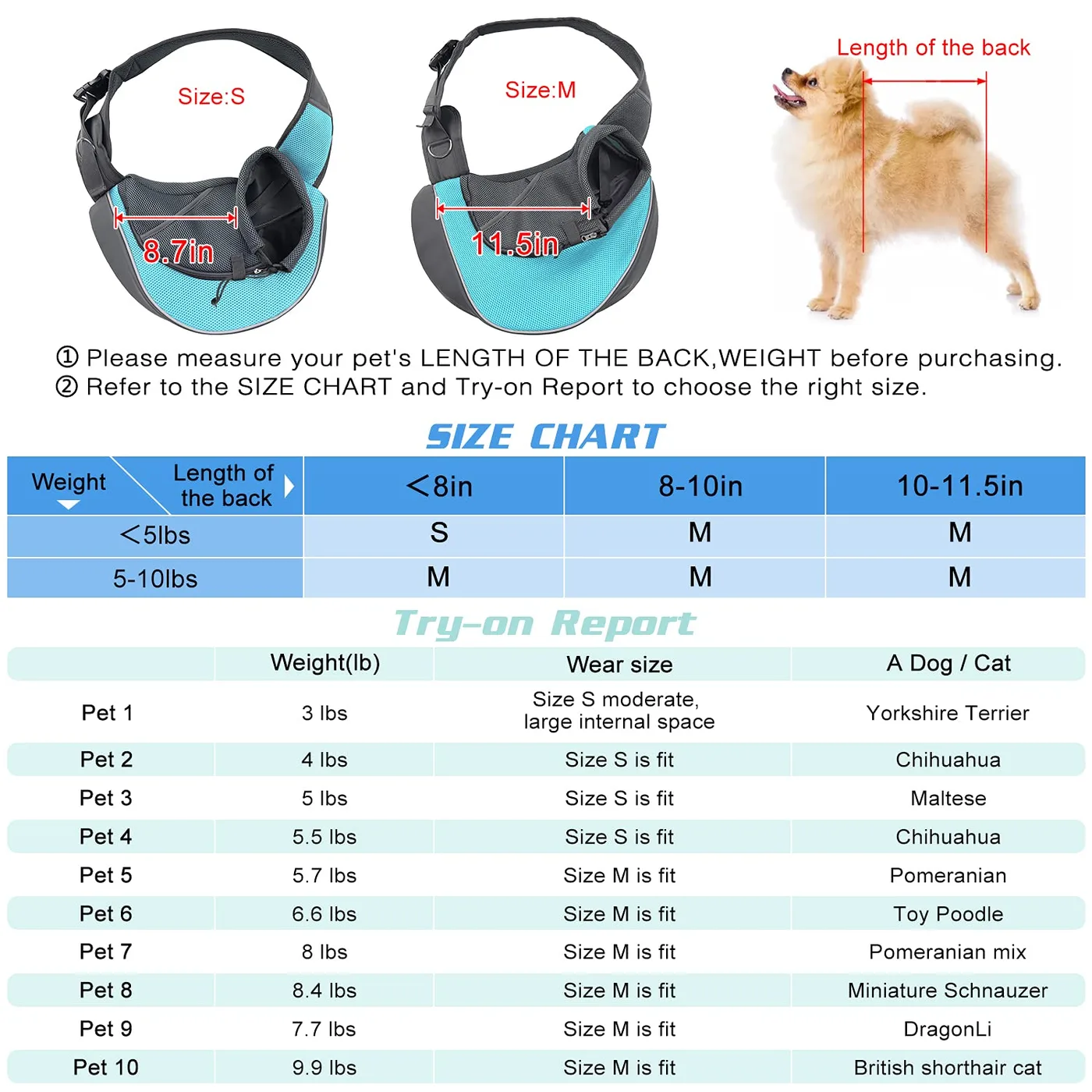
A shelter cannot be merchandised the way a flat-pack product can. Pitched, it needs roughly a square metre; boxed, it looks like any other carton. The solution most brands land on is a hybrid: one pitched display unit on the feature, with boxed stock stacked beside it and a folded-thickness sample within reach so the shopper can judge the pack size.
The pitched display unit is the whole game in physical retail, and it is worth engineering deliberately. It should pitch in under two minutes with no tools, hold its shape for a full season under store lighting, and carry the logo on the panel that faces the main aisle. If the display unit is simply a production unit taken out of a carton, it will sag by week three and the feature will look tired.
For online, the listing set that converts is consistent: one hero shot pitched in context, one shot with the door open and the interior visible, one scale shot with a dog of a stated weight inside, one folded-beside-a-tape-measure shot, and one detail shot of the logo and zip. The scale shot is the one that prevents the most returns, because sizing is the hardest thing to judge from a photograph.
Colour storytelling at shelf should use the same three-tier palette as the rest of the capsule: one core neutral, one signature colour, one seasonal accent. On a shelter, the accent is best used on the door panel and the carry bag, because those are the parts a shopper touches first and remembers afterwards.
Store staff are the weakest link in shelter merchandising, and the fix is design rather than training. A single laminated pitch card attached to the display unit, showing three frames of the folding sequence, converts a hesitant associate into a demonstrator within a minute. Brands that ship that card with the display unit consistently report stronger feature compliance than brands that rely on a printed manual in the carton.
Cross-merchandising is underrated here. A shelter photographed with the matching sleeping bag inside it, the travel bowl beside it and the travel kit hanging from the guy line sells all four. Put that image on the carton, on the insert card and on the listing, and let the capsule sell itself rather than relying on the retailer to group the SKUs.
Sampling, Testing and the Camping Season Calendar
Shelter sampling runs in two rounds. Round one validates geometry and pack-down using a stock fabric in a neutral colour - the question is whether the shape works and whether it folds to the target size. Round two is the real sample: production fabric, production print, production trim and the finished carry bag. Budget 6-10 working days for each and resist shipping a shelter to retail without the second round, because print on the curved canopy is the one thing that cannot be judged from a flat swatch.
Testing should be scoped early. Textile colour fastness and any restricted-substance requirements fall under frameworks published by ECHA for the EU market, and general consumer product obligations are administered by the U.S. Consumer Product Safety Commission in the US. Independent verification through SGS on the first lot of a new fabric is inexpensive relative to the cost of a recall or a delisting, and it gives the retailer's compliance team a document they can file.
Bulk runs 35-50 days after sample approval. The constraint is almost always print capacity rather than sewing capacity, particularly for rotary print, where your artwork has to be scheduled onto a print run. Locking artwork two weeks before you need production to start is the single most effective thing a brand team can do to protect a seasonal launch date.
Inspection at AQL 2.5 should include a written critical-defect list specific to shelters: seam leakage, pole-sleeve tear-out, print misregistration beyond tolerance, and folding-frame wires that have pierced the shell. That last defect is invisible until the unit is folded, so inspectors should fold a sample from each carton rather than only examining pitched units.
The calendar for a northern-hemisphere camping season starts with the brief in November, artwork and colour locked by January, samples approved by February, retailer range reviews in March, bulk in April, and stock live by late May. Because shelters are seasonal, the disciplined move is to treat the artwork as the reusable asset: keep the print, change the accent colour, and the second season's development cost drops by roughly half.
Production capability
- SGS-verified production space of 4,950 m², 149 machines, 7 assembly lines
- Pet carrier and pet bag output since 2014 from a 137-person team
- 200,000 units shipped monthly under BSCI and ISO 9001 systems
People Also Ask
Are pet camping tents waterproof?
Quality shelters are water-resistant rather than fully waterproof, and the rating is given as hydrostatic head. Around 1500 mm will handle sustained rain; below 800 mm is shower-resistant only. Sealed seams matter as much as the coating.
How do you clean a pet camping shelter?
Brush off dry dirt, wipe the canopy with a mild soap solution and a soft cloth, and dry fully before packing to avoid mildew. Machine washing is not recommended for coated canopies because it degrades the water-repellent finish.
What size pet tent do I need?
Choose a floor dimension that lets the dog stand, turn and lie down with the legs extended. A 700 mm floor suits small breeds, and a 900 mm floor suits medium breeds up to roughly 20 kg.
Can a pet tent be used indoors?
Yes. Pop-up shelters work well as indoor dens because they fold flat for storage and give an enclosed retreat. Indoor use puts more emphasis on washability and less on hydrostatic head.
Do pet tents need ventilation?
Yes. A high rear mesh panel plus a low side vent creates airflow without admitting rain. Without through-ventilation, condensation builds up overnight and reads to the customer as a product defect.
Can you print a full-colour photo on a tent?
Heat transfer and dye sublimation both handle photographic artwork. Sublimation bonds the image into the fibre so it will not crack, but it requires a polyester-dominant shell and gives best results on light base colours.
Frequently Asked Questions
What is the MOQ for a custom pet camping shelter?
MOQ is 500 units per print. If you run two colourways that share the same print but differ in trim colour, the trim difference can usually be absorbed within the same order, but a second full print artwork is a second MOQ.
Should we choose a pop-up or a pole-frame shelter?
Pop-up if the product is sold in-store or positioned as a patio den, because the two-second demo is the sale. Pole frame if it is sold as genuine camping gear, because stability and pack-down volume matter more than demo speed.
What waterproof rating should we specify?
A hydrostatic head of around 1500 mm is the sensible target for a pet shelter. It handles sustained rain without the stiffness and cost of a 3000 mm coating, and stiffness causes creasing when the canopy is folded.
Which print method gives the best result on a canopy?
Rotary screen print for volume colour saturation, heat transfer for photographic artwork and smaller runs, and sublimation for full-bleed designs on polyester-dominant cloth. Choose based on run length and artwork type, not on unit cost alone.
How long does sampling take?
Two rounds at 6-10 working days each: a geometry round in stock fabric and a production round with the real print and trim. Skipping the second round is the most common cause of disappointing first lots.
Can the canopy be printed edge to edge?
Yes, with sublimation on a polyester-dominant cloth. With rotary or transfer print, plan a margin at the seams and at the fold crease, because artwork that crosses a crease will not register after packing.
What inspection standard applies to shelters?
AQL 2.5, with a defect list covering seam leakage, pole-sleeve tear-out, print misregistration and frame wires piercing the shell. Inspectors should fold sample units, since several defects only appear once packed.
How big is the packed shelter?
A 700 mm pop-up typically folds to a flat disc around 700 mm across and 60-80 mm thick; a pole-frame 900 mm model packs to a bag roughly 600 mm long. Set target pack-down dimensions in the brief rather than accepting whatever the structure gives.
Do we need fabric certification?
OEKO-TEX certification is strongly advised because several marketplaces now filter on it, and colour fastness should be tested to AATCC methods so a canopy does not fade unevenly after one season outdoors.
Can we add a logo to the carry bag as well?
Yes, and you should - the carry bag is the part the customer sees most after purchase. A woven label or embroidery at 30 mm or wider is the most durable option and reads premium.
What is the bulk lead time?
35-50 days after written sample approval. Print capacity is usually the binding constraint, so locking artwork about two weeks before production is due to start protects the launch date better than any expediting.
How should a shelter be displayed in store?
One pitched display unit on the feature, boxed stock stacked beside it, and a folded sample within reach so shoppers can judge pack size. The display unit should be engineered to hold its shape for a full season under store lighting.
Can the same print be reused next season?
Yes, and it should be. Keeping the print and changing only the accent trim colour roughly halves second-season development cost and keeps the SKU recognisable to returning customers.
Talk to QUANZHOU JUNYUAN BAGS about a pet carrier program: MOQ 500 pieces per colourway, samples in 6-10 working days, bulk production in 35-50 days under AQL 2.5 inspection.
Get a free quote Request a sample