Extra Large Pet Carrier: Giant Breed
An extra large pet carrier covers 15-22 kg with an interior floor of about 75 x 44 cm, an interior height of 43 cm and an empty weight near 1.75 kg. Above roughly 22 kg of total carried load, a soft bag stops being the honest product and a wheeled carrier or a vehicle crate becomes the right answer.
The XL rung is not a bigger large bag; it is a different product category with a different set of rules, and brands that treat it as a graded-up L end up with warranty claims and reviews they cannot recover from. Practically, that means a structural frame rather than a shaped board alone, load-rated attachment points with documented reinforcement, a carry mode that does not depend on one hand, and a published empty weight the customer can add to their animal's. Commercial minimums are MOQ 500 pieces per colourway, and at this rung our team usually advises a single colourway in the first season, because turnover rarely supports more and because a specialist product sells on authority rather than on choice. Sample development runs 6-10 working days per round, and XL needs three: construction, confirmation, and a load, carry and compression test on the finished sample. Bulk runs 35-50 days after sign-off and deposit clearance, released only after final random inspection at AQL 2.5 with a written report. Terms are T/T 30/70, FOB Xiamen. Our production team will decline requests that push this rung past a defensible load rating, and that refusal is part of the service - an over-claimed XL is the fastest way to damage a brand that has spent two seasons building trust.
A private label pet carrier keeps the buyer artwork on the panel while the compliance text and country-of-origin marking follow the destination market.
Extra Large Is a Different Product Category
The most useful thing a brand can decide about the XL rung is whether to make it at all. Below 15 kg, a carrier is a convenience product that most pet owners will use occasionally and judge generously. Above it, the product enters a space where the animal's comfort, the owner's physical capability and the product's structural honesty are all in play at once, and where a failure is memorable in a way that a small-bag failure never is.
Three things change at the boundary. First, load stops being a rounding error: 22 kg of animal plus 1.75 kg of bag is a weight most people cannot carry one-handed across a car park, and the product must offer a carry mode that acknowledges it. Second, economics change: the unit costs more, sells far fewer pieces, and occupies disproportionate carton cube, so the rung has to be justified as a range authority rather than as a volume driver. Third, the audience changes: XL buyers are often dealing with a specific situation - a senior dog, a post-operative recovery, a dog that cannot manage stairs - and they are buying competence rather than style.
That third point is the commercial opportunity. A brand that publishes honest dimensions, a tested load rating and clear use cases for the XL rung earns a reputation that lifts every other rung in the range, because the customer assumes the same discipline was applied to the bag they actually bought. In our experience the XL bag is read as evidence about the brand, not merely as a product.
The counterpart is that a badly specified XL does damage disproportionate to its sales volume. It generates the longest reviews, the most photographs, and the highest likelihood of a retailer asking questions. Treat the rung as a reputational instrument and resource it accordingly.
The citable conclusion: build XL as a specialist product with a specialist specification, or do not build it - the middle path of a graded-up L with a bigger number on the hang tag is the only genuinely bad option.
The XL Specification Envelope
The envelope below is our working default for the rung, and every line in it exists because something failed when it was omitted. The board is structural rather than cosmetic, the zip is sized for opening length rather than for appearance, and the empty weight is a published figure rather than an internal one. Where a client wants to deviate, the deviation should be recorded in the tech pack with a reason rather than left to the sample room.
| Parameter | L (reference) | XL | XXL (limit case) | Engineering reason |
|---|---|---|---|---|
| Interior floor L x W | 65 x 38 cm | 75 x 44 cm | 85 x 50 cm | Body length plus 10-15 percent |
| Interior height | 38 cm | 43 cm | 48 cm | Sitting height of a giant breed |
| Rated pet weight | 10-15 kg | 15-22 kg | 22-28 kg | Structural, not marketing |
| Exterior L x W x H | 70 x 41 x 40 cm | 81 x 48 x 45 cm | 92 x 54 x 50 cm | Carton cube and freight class |
| Empty weight | 1.35 kg | 1.75 kg | 2.20 kg | Published so the buyer can add |
| Ventilation area | 900 cm2 | 1,080 cm2 | 1,280 cm2 | Heat grows faster than volume |
| Floor structure | 12 mm board | 15 mm board plus frame | Full frame plus rails | Dish and impact resistance |
| Zipper gauge | #8 coil | #8 or #10 coil | #10 coil | Opening length over 80 cm |
Two entries deserve a note. The XXL column is included not because we recommend it but because clients ask for it, and the honest framing is that beyond roughly 22 kg of animal the total carried weight exceeds what any hand-carried soft product should claim. Where a client needs that capacity, the right product is a wheeled carrier or a vehicle crate, and we say so at brief stage.
Empty weight is published deliberately. A customer standing in a store can add 1.75 kg to their dog's weight, and a brand that lets them do that arithmetic themselves converts better over time than one that hides the number and absorbs the complaint later.
Ventilation at 1,080 cm2 looks enormous on paper and is only just sufficient at this volume. Because a large animal blocks mesh simply by lying against it, the distribution rule matters more than ever: two opposing faces minimum, one field above the mid-line, and no decoration that closes more than a small fraction of the open area.
Giant Breed Body Database and the Limits of Fit
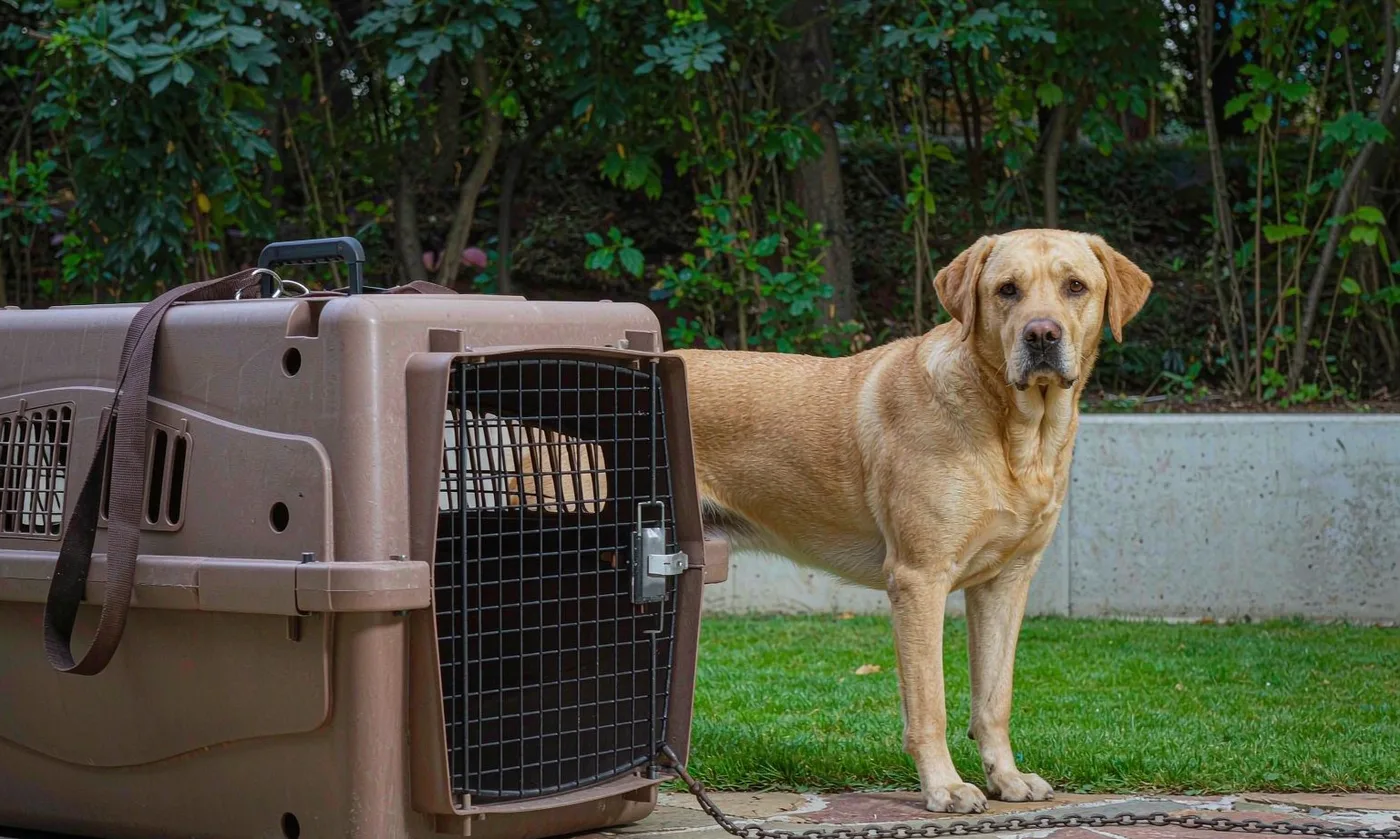
The giant band is where a weight-based chart finally breaks down completely, because the same 20 kg can be a lean, long-legged sighthound or a compact, heavy-boned mastiff adolescent with almost twice the shoulder width. A brand serving this rung needs a body database with both dimensions recorded and needs to publish both, or the fit conversations will be handled by customer service one email at a time.
Practical groupings work better than breed lists. Long-and-lean animals - sighthound crosses, some herding breeds - need floor length and will accept 40 cm of width happily. Broad-and-heavy animals - mastiff and bulldog types - need width and interior height and will be uncomfortable in a long narrow floor even if the length is generous. Tall animals - standard poodles, some retrievers - need interior height most of all, because their sitting height exceeds their lying footprint.
Growth is a serious specification issue at this rung. A 20 kg adolescent mastiff will reach 45 kg, and a customer who buys an XL for a growing giant breed will outgrow it within months and may blame the product. State clearly on the packaging that the rung is rated to 22 kg adult weight, and give customer service a script for the growth conversation rather than leaving it to chance.
There is a hard ceiling that no amount of pattern work removes: a dog that cannot physically enter the aperture will not use the bag regardless of how generous the floor is. Above roughly 50 cm of shoulder height, entry becomes the limiting factor rather than floor area, and the design answer is a full-length opening or a drop-front rather than a bigger box. Veterinary guidance on handling and transporting large animals is available from the American Veterinary Medical Association and is worth reading before committing to this rung at all.
Frame Engineering: When a Board Is Not Enough
At XL, a shaped board with a lightened centre - the solution that works elegantly at L - is no longer sufficient on its own. The span is too wide, the load too high, and the consequence of dish too visible. The rung needs a frame: a perimeter structure that distributes load into the shell, keeps the floor flat under a 22 kg animal, and survives being set down on a corner.
The frame configuration our team uses for this rung has three elements. A perimeter rail, usually a light aluminium or a moulded polymer section, carries the floor edges and stops the long sides bowing outward. A cross-member or a pair of short rails under the floor transfers load into the perimeter rather than letting the board carry it in bending. And a pair of vertical stays at the end panels stops the bag collapsing inward when it is stood on end, which at this size happens routinely in a car footwell.
The trade-off is weight and cost against collapse. A fully framed XL does not fold flat, ships in a large carton, and costs noticeably more per unit. A semi-framed version with removable rails ships better and stores better but takes longer to assemble and gives the customer one more thing to lose. The decision should be made from the channel: a specialist or veterinary channel accepts the framed version, an e-commerce channel usually needs the semi-framed one.
Frame joints are where these products fail. A rail joined with a friction fit will work in the sample and walk loose in month three, so joints must be mechanically fixed or permanently bonded, and the joint area must be inspectable on the line. Require a pull and a cycle test on the joint rather than on the assembly, because the assembly test hides the failure until it is too late.
The entry aperture problem at giant breed scale
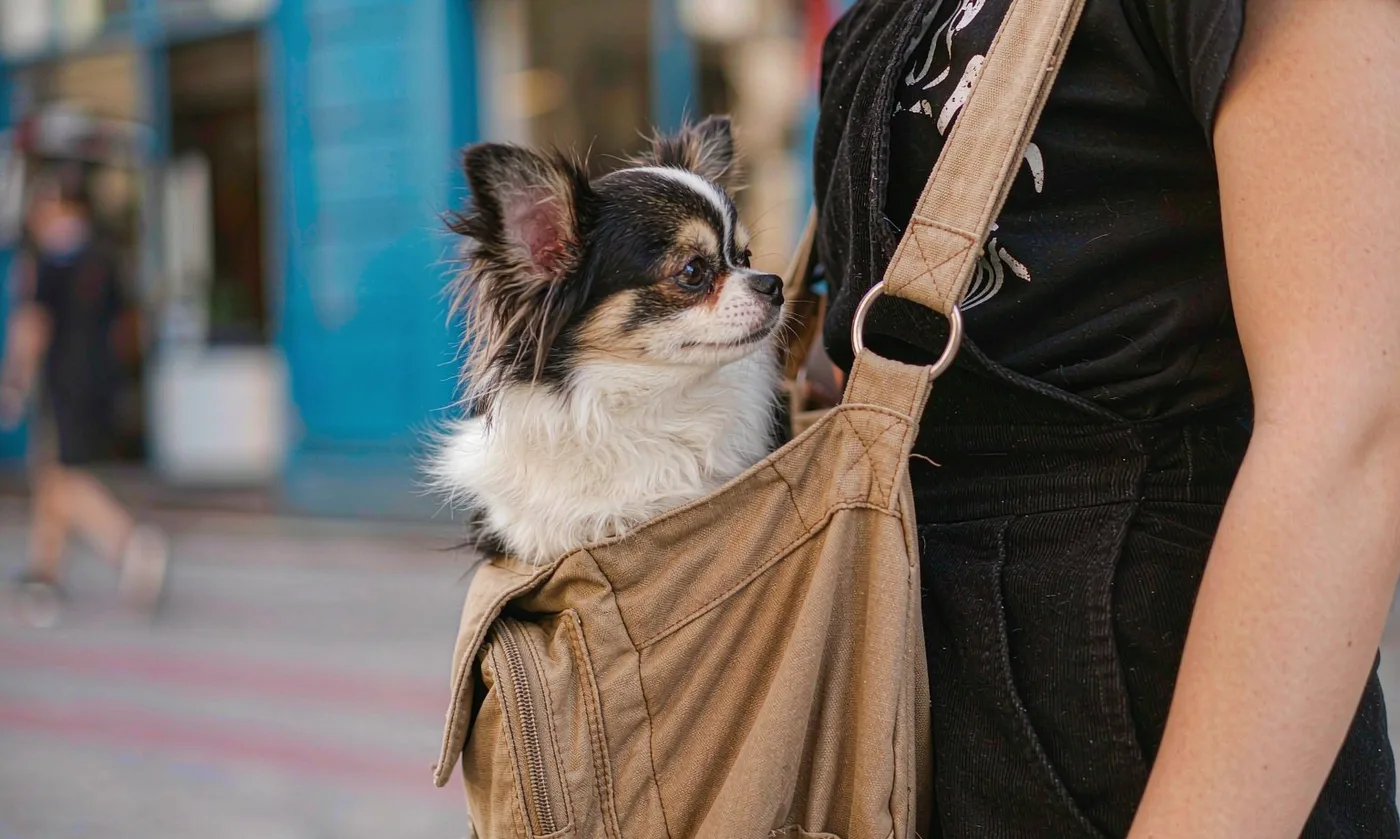
Floor area is rarely the binding constraint at XL; the aperture is. A 22 kg animal with a 55 cm shoulder height cannot comfortably step over a 45 cm opening, and a dog that has to be lifted and folded through an aperture will refuse the bag on the second attempt no matter how generous the floor is. The design answers are a drop-front panel that opens the full height of one end, a full-perimeter lid, or a two-stage opening where the top and one end unzip together to create an L-shaped aperture. Our team prefers the drop-front for this rung because it lets the animal walk in rather than be placed, which is the difference between a product that gets used and one that gets stored.
What to put on the XL hang tag
Most hang tags waste their best surface on adjectives. At this rung the customer is a spec reader, so the tag should carry numbers: interior floor, interior height, exterior dimensions, rated weight, empty weight and ventilation area, plus one line naming the carry mode and one line naming the intended use cases. A tag laid out as a small specification table outperforms a lifestyle image at this price band, and it pre-empts the two questions that otherwise arrive by email within a week of purchase: will it fit, and can I lift it.
Carry Modes That Actually Work Above Eighteen Kilograms
Carry design at XL has one job: admit that one-handed carrying is over. A brand that puts a single padded handle on a 22 kg rated bag is making a claim about human physiology that no customer will confirm, and the product will be reviewed accordingly.
Three modes work. A wheeled base with a telescoping handle removes the load entirely and is the most honest solution, at the cost of shipping cube, retail category and price band - it makes the product luggage in the customer's mind. A backpack harness with a padded waist belt and a sternum strap genuinely works for short distances on a cooperative animal, and it is the mode most specialist brands choose because it keeps the product in the soft-goods category. A two-person carry system, with reinforced grab handles at both ends, is the simplest honest answer and the one veterinary and recovery users appreciate most.
Whichever mode is chosen, the attachment must be load-rated and documented. A backpack harness on an XL bag puts the entire load through four attachment points into the shell, and those points need reinforcement patches captured into the seams, spread across at least 60 mm, with the webbing stitched through patch and shell. Independent product testing and restraint programmes published by the Center for Pet Safety are the reference a serious buyer will raise in this conversation.
Handle drop and grab position should be dimensioned from the loaded centre of gravity, which for a 22 kg animal that has shifted forward sits roughly 45 percent along the floor. Grab handles at both ends should be positioned so two people can lift level, which means symmetrical placement and a stated drop measured under load rather than on an empty sample.
Ventilation, Heat and Welfare at the Top of the Range
Heat management is the decisive welfare issue at this rung. A 22 kg dog generates a large amount of heat, and the interior surface area available to shed it does not keep pace. The practical consequence is that an XL bag designed in a studio can become genuinely unsafe on a warm day in a parked car, and the brand that sells it carries that risk whether or not it was warned.
The specification response is generous open area on opposing faces, one field above the mid-line, and a mesh gauge that will not be destroyed by claws at this scale. The design response is to make the ventilation fields large and unmistakable rather than decorative, because a customer should be able to see at a glance that the bag breathes. The commercial response is to state the ventilation area as a number on the packaging, which converts an anxiety into a reason to buy.
Interior temperature should be tested rather than argued. Our team runs a simple check on XL samples: place a heat source equivalent to a resting animal of the rated weight inside the closed bag, hold it at ambient temperature, and log the interior rise over an hour. A bag that climbs more than a few degrees above ambient under those conditions needs more open area before it goes on sale.
Packaging should also carry a plain-language ventilation instruction rather than a reassurance. A single line telling the owner how much open area the bag provides, and reminding them that no soft carrier is a substitute for a ventilated vehicle on a warm day, is the kind of statement that protects both the animal and the brand, and it costs nothing to print.
Use-case honesty closes the loop. An XL carrier is genuinely valuable for veterinary visits, post-operative recovery, car containment and temporary housing during travel. It is not a product for exercising a healthy 22 kg dog, and the packaging should say what the product is for with the same confidence with which it says what it is not for.
Positioning Extra Large: Specialist Channel and Price Band
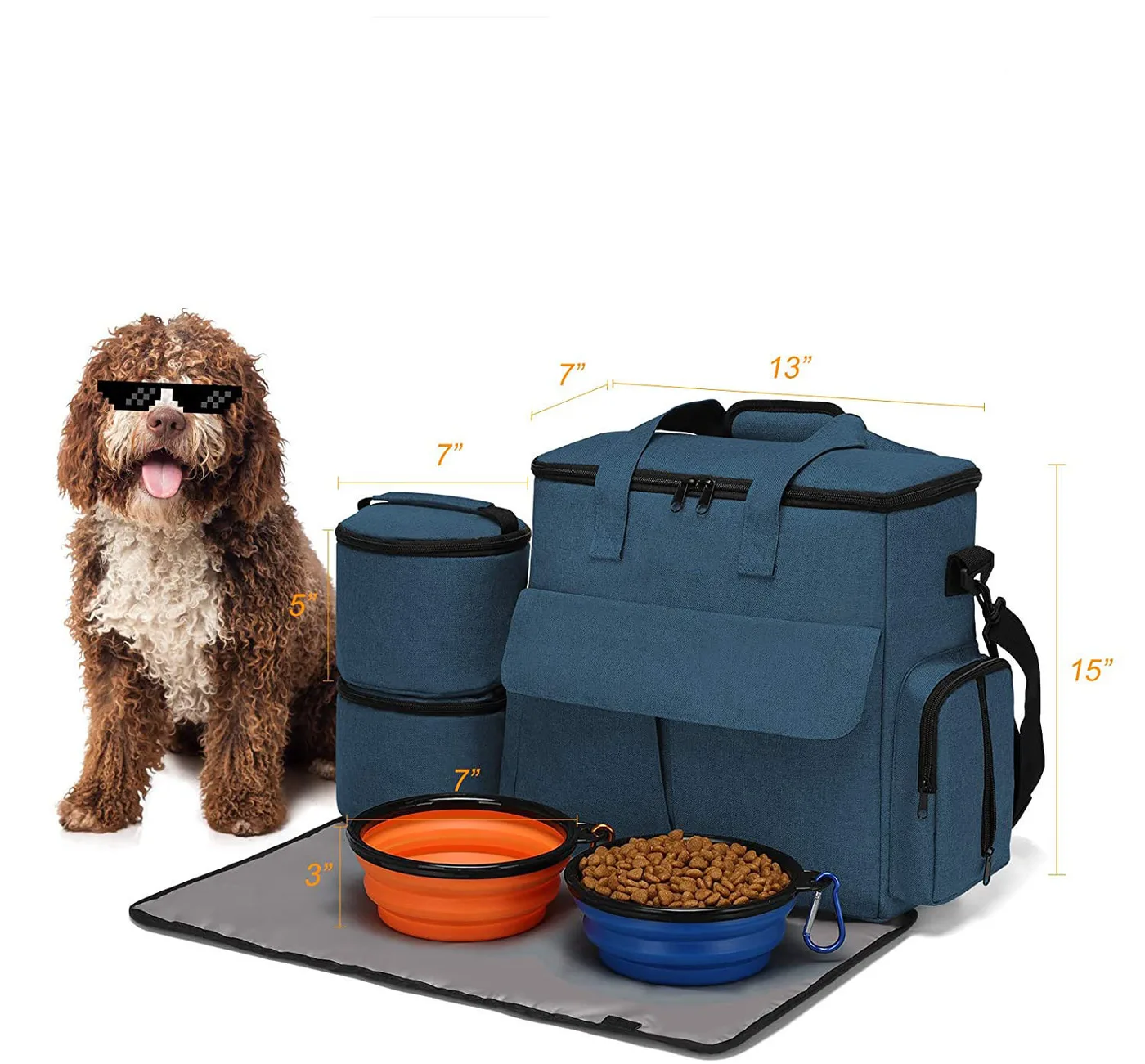
The XL rung sells through different channels than the rest of the ladder and should be merchandised differently. Specialist pet retail, veterinary practices, working-dog and sporting-dog channels, and direct online sales with detailed specification pages are where it converts. Mass retail, where the purchase is made in three seconds from a shelf, is where it fails - the customer cannot evaluate the product quickly and defaults to the cheaper bag next to it.
Price band follows. Because the rung sells in low volume and carries reputational weight, it should be priced as the authority product in the range rather than as a stretched version of the L. Customers at this size are solving a problem, and problem-solvers do not shop on price in the way that gift buyers do.
Specification content is the marketing at this rung. Publish interior dimensions, exterior dimensions, rated weight, empty weight, ventilation area, frame description and carry modes as a table on the product page, and repeat it on the hang tag. Customers buying for a giant breed read specification pages with an intensity no other segment matches, and the brand that gives them numbers wins the sale without a discount.
Where a program wants to extend above this rung, the honest route is a separate product line - a wheeled carrier or a vehicle crate - rather than an XXL soft bag. Our rolling carrier brief covers that route, and the XXL brief sets out where the soft category genuinely ends.
Sampling, MOQ and the Business Case for the XL Rung
XL needs three sample rounds and there is no shortcut around the third. Construction confirms volume, floor and entry; confirmation validates fabric, decoration and packaging; the third is a load, carry and compression test on the finished sample with the rated weight inside, carried, set down, held compressed overnight and inspected the next morning for seam creep, frame set and handle distortion. At 6-10 working days per round, budget four to six weeks of calendar before bulk.
Minimums are MOQ 500 pieces per colourway, which at this rung is a significant commitment relative to likely turnover. Our standard advice is one colourway in the first season, shared across the ladder's hero shade so the dye lot can be combined with the L booking where possible, and a second season decision made from actual sell-through rather than from optimism.
Bulk runs 35-50 days after sign-off and deposit clearance, released only after final random inspection at AQL 2.5 with defects classified critical, major and minor. Independent verification is available through third parties such as SGS, and the quality system behind our partner facilities is maintained to ISO 9001 requirements. At this rung the inspection plan should weight structural items - frame joints, reinforcement placement, attachment stitch density - above cosmetic ones.
The business case, stated plainly: XL will not be the most profitable rung and probably will not be the highest-volume one. Its job is to make the rest of the range believable, to give specialist retailers a reason to list the brand, and to generate the kind of detailed, specification-led content that performs well in search. Judged on those terms, the rung pays for itself; judged on unit margin alone, it never will.
Handled as a specialist product with an honest specification, the extra large rung is the strongest credibility asset in a size ladder. For the rung below it, see our large breed carrier brief.
Why brands source here
- Pet carrier programs run since 2014; founding team in sewn goods since 2004
- SGS-verified production floor of 4,950 m² with 137 workers across 7 lines
- Monthly capacity of 200,000 units, audited to BSCI and ISO 9001
People Also Ask
What is the biggest pet carrier size you can buy?
Soft carriers realistically top out around 75 x 44 cm of floor for animals up to 22 kg. Above that, wheeled carriers and vehicle crates take over as the practical products.
How much weight can a pet carrier hold?
Our XL rung is rated to 22 kg of animal, with the limit set by structure and by what a person can carry rather than by fabric strength alone. Always add the empty weight to the animal's weight.
Do giant breed dogs even use carriers?
Sometimes, for veterinary visits, post-operative recovery and car containment. They are not a walking product, and honest packaging that names the real use cases converts better than a general travel claim.
Why does my extra large carrier bow on the sides?
Missing perimeter frame. At this span, shell fabric between the frame and the lid bows outward under load; a perimeter rail plus a light internal stay controls it and reads as a design line.
Is an XL carrier safe in a warm car?
Heat is the decisive risk at this size. Specify generous opposing ventilation fields, test interior temperature rise with a heat source equivalent to the rated animal, and never present the product as suitable for long stationary use.
Should I buy XL or a rolling carrier for a 25 kg dog?
A rolling carrier. Above roughly 22 kg of animal the total carried weight exceeds what a hand-carried soft bag should claim, and wheels remove the load rather than redistributing it.
Frequently Asked Questions
What size is an extra large pet carrier?
About 75 x 44 cm of interior floor with 43 cm of interior height, rated for 15-22 kg and weighing roughly 1.75 kg empty. It needs a structural frame, not just a thicker board.
Which breeds need the extra large step?
Large working and herding breeds, sighthound crosses, adolescent mastiff and bulldog types, and the largest domestic cats. Match floor length and shoulder width rather than weight alone.
Can one person carry an extra large carrier?
Not comfortably for any distance. Use a wheeled base, a backpack harness with waist and sternum straps, or reinforced grab handles at both ends for a two-person lift.
Why does XL need a frame instead of a thicker board?
Because the span is too wide for a board to carry in bending. A perimeter rail with cross-members distributes load into the shell, keeps the floor flat and stops the long sides bowing outward.
What is the practical upper limit for a soft pet carrier?
Roughly 22 kg of animal. Beyond that, total carried weight exceeds what a hand-carried soft product should claim, and a wheeled carrier or a vehicle crate is the honest product.
How much ventilation does an XL carrier need?
A minimum of 1,080 cm2 across two opposing faces with one field above the mid-line, in a mesh gauge that resists claws at this scale. Test interior temperature rise rather than trusting the number alone.
Is the XL size suitable for a growing giant breed puppy?
Only with clear expectations. State the 22 kg adult rating on the packaging, because a customer buying for an adolescent that will double in weight needs to know the bag will be outgrown.
How many colourways should the XL rung launch in?
One. Turnover rarely supports more than a single colourway in the first season, and a specialist product sells on authority rather than on shade choice.
Why does XL need a third sample round?
For the load, carry and compression test: carry the finished sample at rated weight, set it down, hold it compressed overnight, then inspect for seam creep, frame set and handle distortion the next morning.
What is the minimum order for an XL run?
MOQ 500 pieces per colourway. Where possible, share the hero shade dye lot with the L booking so the two rungs can be combined into one fabric purchase.
Which channels sell the XL rung best?
Specialist pet retail, veterinary practices, working and sporting dog channels, and direct online sales with detailed specification pages. Mass retail rarely converts at this size.
How should the XL bag be priced?
As the authority product of the range rather than as a stretched L. Customers at this size are solving a problem and do not shop on price the way gift buyers do.
Can an extra large carrier be used for air travel?
Almost never in the cabin. Larger animals travel as checked or cargo shipments under airline and live animal transport rules, which require a different product specification entirely.
What inspection focus applies to XL bulk?
Structural items above cosmetic ones: frame joints, reinforcement placement, attachment stitch density and board density. Final random inspection still runs to AQL 2.5 with a written report.
Talk to QUANZHOU JUNYUAN BAGS about a pet carrier program: MOQ 500 pieces per colourway, samples in 6-10 working days, bulk production in 35-50 days under AQL 2.5 inspection.
Get a free quote Request a sample