XXL Pet Carrier: Extra Extra Large
An XXL pet carrier covers 22-28 kg with an interior floor near 85 x 50 cm and an interior height of 48 cm, and it is the last size a soft product can honestly claim. Beyond roughly 28 kg of animal, the correct product is a wheeled carrier or a rigid vehicle crate, not a larger soft bag.
This is the rung our team talks clients out of most often, and the conversation is worth having before any pattern work begins. XXL is a boundary case: it is technically buildable, it sells in very small numbers, and it carries the highest reputational risk in the ladder because a failure at 28 kg is visible, photographable and permanent. Where a client has a genuine use case - a working dog, a veterinary recovery product, a specialist retailer with real demand - we build it with a full frame, load-rated attachments and a two-person carry system. Commercial minimums are MOQ 500 pieces per colourway, which at this rung is a serious inventory commitment and the single strongest argument for launching one colourway only. Sample development runs 6-10 working days per round, and XXL needs three: construction, confirmation, then a load, carry and compression test on the finished sample. Bulk runs 35-50 days after sign-off and deposit clearance, released only after final random inspection at AQL 2.5 with a written report. Terms are T/T 30/70, FOB Xiamen. Our production team will quote the rung honestly, including the recommendation not to build it where the evidence points that way.
Private label pet carrier reorders depend on dye-lot control: the reference is held for twelve months so a repeat matches the approved sample.
XXL Is a Boundary Case, Not a Product Line
Most size ladders end at XL for a reason that has nothing to do with ambition. Beyond roughly 22 kg of animal, three independent constraints start to bind at once: the owner's ability to carry the product, the structure's ability to hold its shape under sustained load, and the animal's willingness to enter an aperture it can barely step through. Any one of those can be engineered around; all three together are why the category thins out.
The consequence for a brand is that XXL should be treated as a boundary decision rather than as a line extension. Asking whether to build XXL is really asking three questions: does the channel have genuine demand, does the brand have a credible use case that no smaller product can serve, and is the organisation prepared to hold inventory for a rung that may turn once or twice a year. If any answer is no, the better product is a wheeled carrier or a rigid crate.
Where the answer is yes, the rung is genuinely valuable. XXL buyers are the most specification-literate customers in the category, they read every number, and they talk to other owners in breed communities. A brand that serves them well acquires an advocate who will recommend the range for years, and a brand that serves them badly acquires a critic with the same reach.
There is also a content argument. Detailed specification pages for the largest size attract the kind of long-tail search traffic that converts at high intent, because the person searching for a giant breed carrier has a specific, immediate problem. That traffic costs nothing extra and lifts the whole domain.
The citable conclusion: build XXL when there is a documented use case and a channel that will move it, and decline it when the motive is simply completing a size run, because a completed run that fails in the field is worse than a range that stops at XL.
The XXL Envelope and Where the Soft Category Ends
The envelope below is the practical ceiling for a soft-sided product. Every figure is a structural statement rather than a marketing one, and each is the point at which our team starts recommending a different product category instead. Where a client needs more than the last column offers, the correct response is a design conversation about wheels or a crate rather than a bigger pattern.
| Parameter | XL (reference) | XXL (ceiling) | Beyond: change category | Limiting factor |
|---|---|---|---|---|
| Interior floor L x W | 75 x 44 cm | 85 x 50 cm | Rigid crate | Pattern stability and freight cube |
| Interior height | 43 cm | 48 cm | Rigid crate | Shoulder height of a giant breed |
| Rated pet weight | 15-22 kg | 22-28 kg | Wheeled or crate | Human carry capability |
| Exterior L x W x H | 81 x 48 x 45 cm | 92 x 54 x 50 cm | Wheeled | Doorways, car boots, parcel limits |
| Empty weight | 1.75 kg | 2.20 kg | Wheeled | Total carried load |
| Ventilation area | 1,080 cm2 | 1,280 cm2 | Crate | Heat versus structural openings |
| Floor structure | 15 mm board plus frame | Full frame plus rails | Moulded base | Bending over an 85 cm span |
| Carry mode | Backpack or wheeled | Two-person grab handles | Wheeled | Single-handler physiology |
The two most consequential lines are rated weight and carry mode. At 28 kg of animal plus 2.2 kg of bag, no single person is carrying this product anywhere, and the design must say so by providing two reinforced grab handles positioned for a level lift. A mid-sized handle on a bag this size is not an oversight; it is a claim the product cannot support.
Freight is the commercial constraint that surprises clients. A 92 x 54 x 50 cm carton is expensive to ship and often crosses parcel surcharge thresholds, which means the landed cost is driven as much by cube as by materials. That is the reason a rigid or wheeled alternative is sometimes cheaper to deliver even when it costs more to make.
Ventilation at 1,280 cm2 is close to the practical maximum for a soft shell, because every additional opening removes structure from a product that is already at its structural limit. This is the point at which a crate with an open bar front becomes the better engineering answer, and it is worth saying plainly rather than forcing the soft pattern further.
Structural Reality: Rails, Frame and Load Distribution
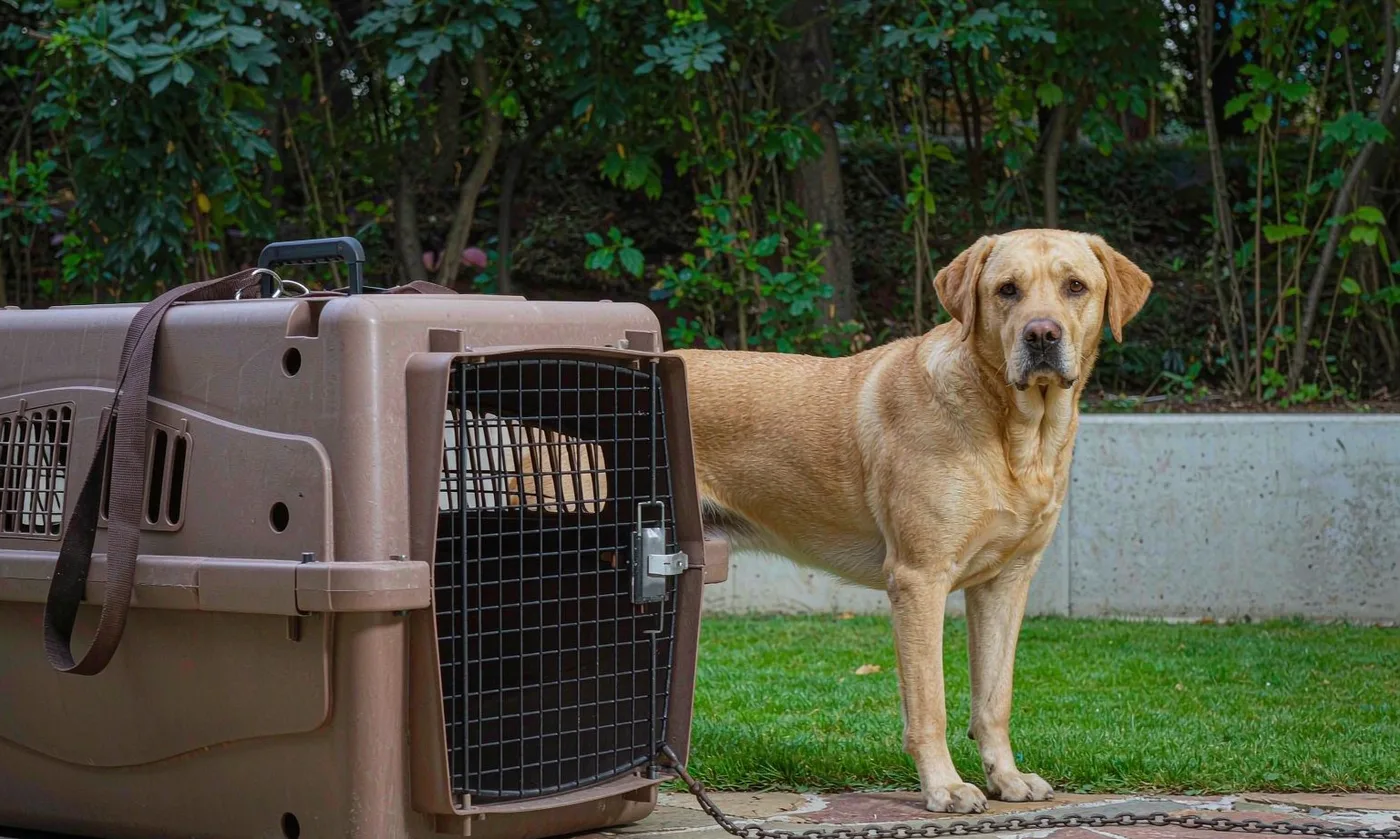
At XXL there is no version of this product that works with a board alone. The span is 85 cm, the load is up to 28 kg, and the shell between supports is doing structural work whether or not the spec acknowledges it. The rung needs a frame system with defined load paths, and the frame needs to be specified as carefully as any other component in the bill of materials.
The configuration that works has four elements. A full perimeter rail carries the floor edge and prevents the long sides bowing. Two cross-rails under the floor transfer load into the perimeter rather than letting the floor panel carry it in bending. Vertical corner stays stop the bag collapsing when stood on end, which happens routinely in a vehicle. And a top rail or stiffened lid edge keeps the aperture square, because an aperture that has gone out of square is the reason a large animal stops being able to enter.
Joints are the failure point. A frame assembled with friction fits will pass a showroom inspection and loosen within months of real use, so every joint must be mechanically fixed or permanently bonded, and the joint must be inspectable during production rather than buried inside a closed seam. Require a pull test and a cycle test on the joint itself, because an assembly-level test hides joint failure until the product is in the field.
Load distribution into the shell is the second half of the problem. A frame that concentrates load at four points will tear the shell at those points regardless of how strong the frame is, so the frame must distribute into a reinforced hem or into webbing that runs continuously around the base. That continuous load path is the single most important construction detail at this rung, and it is the one most often omitted in a graded-up pattern.
Where a documented basis is required, our team references recognised test methods published by standards bodies such as ASTM International and records the result in the tech pack. At this size, a documented method is not paperwork - it is the difference between a defensible product and an argument.
Two-Person Carry and the End of Single-Handler Design
Carry design at XXL should begin by discarding the assumptions behind every smaller rung. There is no shoulder strap that makes sense, no backpack harness that is safe for the handler with 28 kg of live animal shifting inside, and no single handle that a customer will use twice. The product needs a two-person lift system, and it needs to be designed as one rather than improvised from two small handles.
The specification is straightforward and frequently ignored. Two grab handles, one at each end, positioned symmetrically about the loaded centre of gravity, each reinforced with a patch captured into the seam and extending at least 60 mm below the load line, each with a clear opening of at least 110 mm so a gloved hand fits. The handles should be tested together with the rated load inside, not individually on a bench.
Grab position relative to the centre of gravity is what determines whether two people can lift level. For an animal that has shifted forward, the loaded centre sits roughly 45 percent along the floor, so handles placed at the geometric quarter points will produce a tilting lift. Place them from the loaded centre and state the dimension in the tech pack.
Where the product will move any distance, wheels are the honest answer and should be offered rather than treated as a competitor product. A removable wheeled base - a chassis the bag straps onto - keeps the soft product in the range while solving the distance problem, and it lets the brand sell an accessory rather than losing the customer to a luggage category. Our rolling carrier brief covers that configuration.
Packaging should state the carry mode plainly. A customer who knows the bag is a two-person lift will plan for it; a customer who discovers it in a car park will write about it.

Air Cargo and Ground Transport: Documentation, Not Marketing
The XXL rung is the one point in a size ladder where air transport becomes a documentation exercise rather than a packaging claim. An animal of this size does not travel in a cabin; where it flies at all it travels as checked baggage or as cargo, and the requirements are set by the airline and by the live animal transport framework published by IATA rather than by the product's marketing.
Practical implications for the design are specific. Ventilation must be on at least three sides for many cargo and checked configurations, not the two that suffice in cabin-sized products. The floor must be leak-proof, which drives a welded or coated liner rather than a stitched one. Aperture security matters more, because a cargo environment is handled by people who do not know the animal, which pushes toward a locking or two-stage closure. And the product must carry a live-animal label area and a feeding and watering instruction panel as a designed surface rather than as a sticker added later.
Our team advises clients to treat the checked and cargo case as a separate specification rather than as a claim to be attached to the standard product. A brand that designs one product and prints three transport claims on it will eventually meet a check-in agent who disagrees, and that conversation happens in public.
Ground transport is the more common reality and deserves the design attention. An XXL bag used in a vehicle needs a way to be secured - webbing loops or a sleeve that accepts a seat belt or a cargo anchor - because an unsecured 30 kg object in a moving vehicle is a safety problem for everyone inside it. Build the securing points in from the start; retrofitting them later is always visible.
Interior Environment: Heat, Bedding and Posture
Interior environment design at XXL is closer to crate design than to bag design, and the rules change accordingly. A 28 kg animal lying on a fabric floor generates heat, compresses the bedding flat within an hour, and needs a surface that manages moisture rather than absorbing it. Three decisions follow.
Flooring comes first. A removable comfort pad is standard at smaller sizes and inadequate here, because the animal's weight compresses it to nothing and the animal ends up on the structural floor. The specification should be a two-layer system: a firm, closed-cell base layer that maintains loft, and a removable absorbent top layer that can be washed. Both layers should be specified by density and thickness, and the top layer should be replaceable as a spare part.
Moisture management follows. At this size, an accident is not a small event, and a lining that wicks moisture into the frame pocket will produce odour that no amount of airing removes. A welded or coated liner with a sealed seam, rather than a stitched one, is the correct specification, and it should extend up the walls far enough to contain a spill rather than letting it reach the frame.
Posture and bedding depth close the loop. Large breeds lie on their side with legs extended, which means floor length drives comfort more than floor area does, and an 85 cm floor is the minimum for a 28 kg animal to do that. Publish the length rather than the area, because length is the number that determines whether the product is humane rather than merely large.
Welfare guidance on transporting large animals, including ventilation and bedding expectations, is published by the American Veterinary Medical Association and should be read before this rung is specified rather than after it is sampled.
Who Actually Buys XXL: Channels and Genuine Use Cases
The XXL buyer is not a lifestyle shopper. In our experience the rung sells into four situations, and a brand that understands them will write better specification content than a brand that assumes the buyer wants a bigger version of the same product.
The first is the working and sporting dog channel: handlers moving dogs between vehicles, accommodation and venues, who need containment, ventilation and a product that can be cleaned. The second is veterinary and recovery use, where a large dog needs to be transported after surgery and the product is effectively medical equipment. The third is breed-specific communities, where a few owners of genuinely giant animals have exhausted every alternative. The fourth is specialist retailers who stock one XXL unit as a range authority and reorder annually.
None of those channels buy on colour. All of them buy on specification, cleaning and durability, which means the product's selling surfaces are its spec table, its lining construction and its spare-part availability rather than its shade range. Our brand team advises clients to invest in a detailed specification page and a replaceable pad programme rather than in a second colourway.
Spare parts are the overlooked revenue line at this rung. A customer who can buy a replacement pad, a replacement liner and a replacement grab handle will keep a well-built XXL bag for years, and will tell other owners that the brand supports its products. That reputation is worth more than the margin on the spares.
Sampling, MOQ and the True Cost of an XXL Program
XXL needs three sample rounds and a longer calendar than any other rung. Construction confirms volume, aperture and frame fit; confirmation validates fabric, decoration and packaging; the third is a load, carry and compression test with the rated weight inside - carried by two people, set down on a corner, held compressed overnight, and inspected the next morning for seam creep, frame set and joint movement. At 6-10 working days per round, budget four to six weeks before bulk.
Minimums are MOQ 500 pieces per colourway. At this rung that is a real inventory commitment, and our standard advice is one colourway, in the ladder's hero shade, with a second season decision made from sell-through rather than from optimism. Where possible the booking is combined with the XL run so the two rungs share a dye lot.
The true cost includes freight cube, which at 92 x 54 x 50 cm dominates the landed figure, and holding cost, because a rung that turns once a year ties up capital for four quarters. Those two lines are the reason the unit margin on XXL often looks healthy on a costing sheet and disappointing in a profit and loss statement.
Bulk runs 35-50 days after sign-off and deposit clearance, released only after final random inspection at AQL 2.5 with defects classified critical, major and minor. Independent verification is available through third parties such as SGS, and the quality system behind our partner facilities is maintained to ISO 9001 requirements. The inspection plan for XXL should weight structural items - frame joints, rail placement, hem reinforcement and stitch density - above cosmetic ones.
Making the Decision: Build, Adapt or Redirect
There are three honest answers to a request for an XXL carrier, and a good partner will give all three rather than simply quoting the first. Build it, when there is a documented use case, a channel with real demand, and a willingness to hold inventory for a slow-turning rung. Adapt an existing product, when the requirement can be met with a removable wheeled chassis or an extended floor on the XL pattern - which is frequently the case and always cheaper. Redirect, when the real requirement is a rigid crate or a vehicle containment system, which is the correct answer above roughly 28 kg and often at lower weights too.
The decision framework our team uses is short. How many units will the named channel actually take in twelve months, and is that number above the minimum? Does the animal physically enter the aperture, tested rather than estimated? Can the handler move the loaded product safely, and is there a documented carry mode? Is the interior environment defensible on heat and moisture at rated weight? Four yes answers mean build; two no answers mean redirect.
Where the decision is to build, do it properly: full frame, documented load paths, two-person carry, sealed liner, replaceable bedding, and a specification page that states every number. A half-specified XXL is the most expensive product a young brand can ship.
Where the decision is to redirect, say so early and say why. Clients remember the advice that saved them a season far longer than they remember a quotation they accepted, and the ranges that stop honestly at XL - with a wheeled or crate partner product alongside - consistently outperform the ranges that stretch one pattern too far.
For the rung below this one, see our extra large carrier brief, and for the ladder logic behind both, the custom pet carrier size guide.
Production capability
- SGS-verified production space of 4,950 m², 149 machines, 7 assembly lines
- Pet carrier and pet bag output since 2014 from a 137-person team
- 200,000 units shipped monthly under BSCI and ISO 9001 systems
People Also Ask
What is the difference between XL and XXL pet carriers?
XL covers 15-22 kg with a 75 x 44 cm floor and a board plus light frame; XXL covers 22-28 kg with an 85 x 50 cm floor, a full frame with rails and a two-person carry system.
Can a 30 kg dog travel in a soft carrier?
Not safely by hand. At that weight a wheeled carrier or a rigid vehicle crate is the honest product, because the limiting factor is what a handler can move rather than what the fabric holds.
How do I measure a giant breed for a carrier?
Body length from the base of the neck to the base of the tail, shoulder width at the widest point, and shoulder height standing. Length usually drives the choice, because giant breeds lie with their legs extended.
Are XXL carriers airline approved for cargo?
Airlines and live animal transport rules set the requirements, not the product. Design to them - more ventilation sides, sealed floor, secure closure - and let the traveller confirm acceptance with their carrier.
Why is the aperture so important at large sizes?
Because entry becomes the binding constraint before floor area does. A dog that cannot step through the opening will not use the bag, so a drop-front or full-perimeter lid is required rather than a larger box.
What should I look for in a carrier for a giant breed?
A full frame with rails, two-person grab handles, a sealed liner, a two-layer flooring system, published interior dimensions and a stated ventilation area. Specification over styling, every time.
Frequently Asked Questions
What size is an XXL pet carrier?
About 85 x 50 cm of interior floor with 48 cm of interior height, rated for 22-28 kg and weighing roughly 2.2 kg empty. It requires a full frame with rails, not a board alone.
Is XXL the largest pet carrier size?
It is the practical ceiling for a soft-sided product. Beyond roughly 28 kg of animal, a wheeled carrier or a rigid vehicle crate is the correct category rather than a larger bag.
Can one person carry an XXL carrier?
No. The rung needs two reinforced grab handles positioned symmetrically about the loaded centre of gravity, tested together at rated weight, with at least a 110 mm clear opening for a gloved hand.
Why does XXL need a frame rather than a thicker board?
An 85 cm span with up to 28 kg of load cannot be carried by a panel in bending. A perimeter rail plus cross-rails and corner stays keeps the floor flat and the aperture square.
Does an XXL carrier work for air travel?
Not in the cabin. Animals of this size travel as checked baggage or cargo under airline and live animal transport rules, which demand more ventilation sides, a leak-proof floor and a secure two-stage closure.
What flooring does a very large carrier need?
A two-layer system: a firm closed-cell base that maintains loft, and a removable absorbent top layer that can be washed and replaced. A single comfort pad compresses flat under a 28 kg animal.
How much ventilation does an XXL carrier need?
Around 1,280 cm2, which is close to the practical maximum for a soft shell. Every additional opening removes structure, which is why a barred crate becomes the better answer beyond this point.
Who buys XXL carriers?
Working and sporting dog handlers, veterinary and recovery users, owners of genuinely giant breeds, and specialist retailers stocking one unit as a range authority. All buy on specification rather than on colour.
Should the XXL rung launch in more than one colourway?
No. One colourway in the ladder's hero shade, ideally booked alongside the XL run so the two rungs share a dye lot. Turnover does not justify a second shade.
How long does an XXL program take?
Four to six weeks of sampling across three rounds at 6-10 working days per round, then 35-50 days of bulk after sign-off and deposit clearance.
Why is XXL expensive to land even when unit cost looks fine?
Freight cube and holding cost. A 92 x 54 x 50 cm carton crosses parcel surcharge thresholds, and a rung that turns once a year ties up capital for four quarters.
Can an XXL bag be secured inside a vehicle?
It should be, and the securing points must be built in from the start. Webbing loops or a sleeve that accepts a seat belt or cargo anchor turns an unsecured heavy object into a safe one.
Are spare parts available for the largest sizes?
Yes, and we recommend offering them. A replacement pad, liner and grab handle programme keeps a well-built XXL product in service for years and generates the kind of loyalty that colourways cannot.
When should a brand decline to build XXL?
When there is no documented use case, no channel that will move the minimum, or no safe way for a handler to move the loaded product. Completing a size run is not a sufficient reason.
Talk to QUANZHOU JUNYUAN BAGS about a pet carrier program: MOQ 500 pieces per colourway, samples in 6-10 working days, bulk production in 35-50 days under AQL 2.5 inspection.
Get a free quote Request a sample